


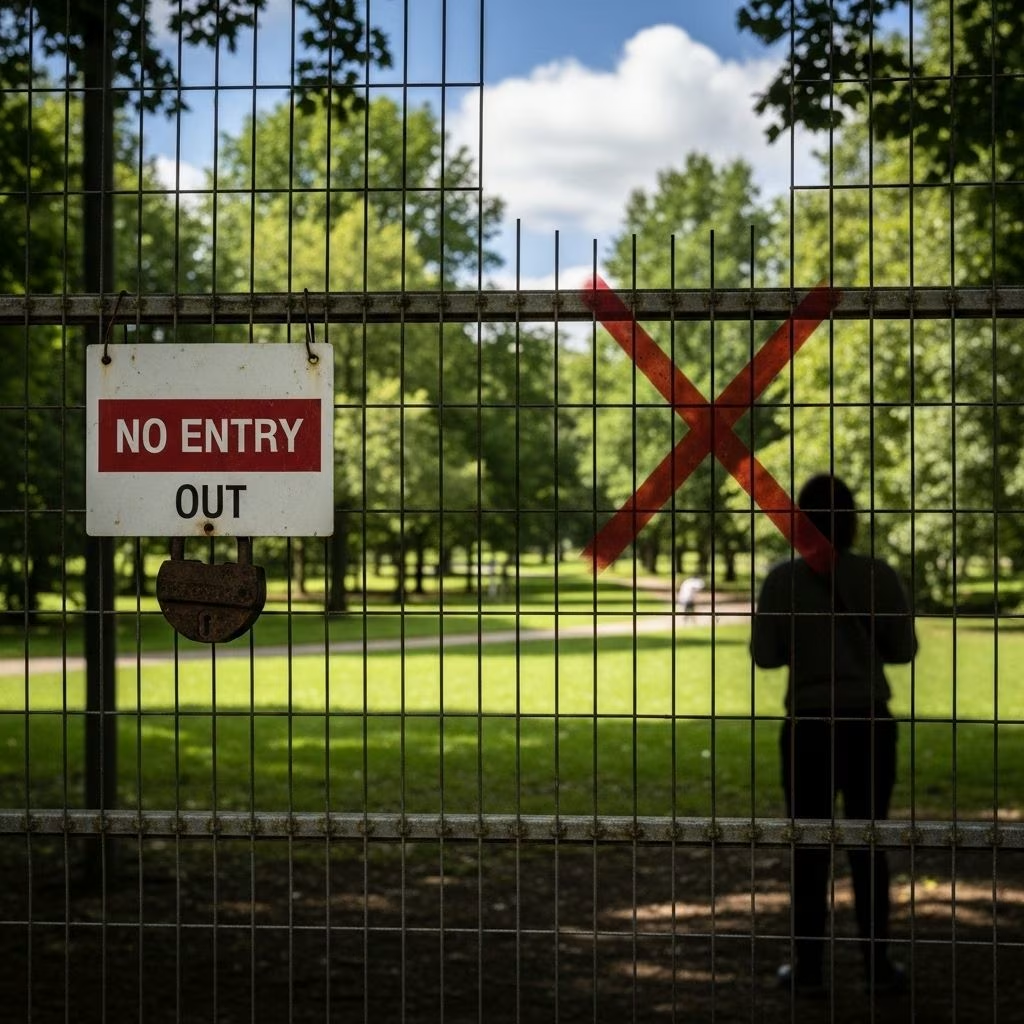
Nature-rich green spaces are vital to urban health, mental well-being, and environmental resilience. Yet, many people—especially those in disadvantaged or marginalized communities—face significant barriers when accessing wild green spaces. While the environmental and psychological benefits of connecting with nature are profound, safety concerns often restrict who ventures outdoors, where they go, and how green space is experienced. This article investigates the roots of these concerns, their health and social impacts, and what communities can do to build greener, safer, more equitable spaces for everyone.
The Importance of Wild Green Spaces
Wild green spaces—parks, forests, meadows, and riverbanks—are essential for both ecological health and the well-being of people living in densely populated urban areas. Research consistently demonstrates:
- Physical health benefits including increased physical activity, reduced rates of heart disease, and lower obesity risk.
- Mental health improvements such as lower stress, reduced symptoms of anxiety and depression, and increased feelings of happiness and belonging.
- Environmental advantages like improved air quality, reduction of urban heat island effects, and natural stormwater filtration.
- Community cohesion and safety—well-maintained green spaces foster social connections, encourage community stewardship, and have been shown to lower certain types of crime.
Without regular access to these spaces, both individuals and communities experience poorer health and diminished environmental quality.
How Safety Concerns Restrict Access to Green Spaces
Despite their clear benefits, many people hesitate to use wild green spaces. The main obstacle cited across studies and community surveys is concern for personal safety. Common worries include:
- Risk of violent crime or property theft
- Fear of harassment or discrimination (especially among women and marginalized groups)
- Unsafe interactions with unsupervised animals or other people
- Lack of lighting, inadequate policing, or poor visibility due to overgrown vegetation
- Neglected infrastructure (falling fences, broken benches, unmaintained trails)
The perception of danger can be nearly as impactful as the actual occurrence of crime. Studies have documented a reduction in outdoor activity and green space use when residents report feeling unsafe—even if local crime rates are relatively low.
Distance, Design, and the “Threshold of Access”
Distance to parks and wild areas also acts as a major barrier, but the issue is often compounded by perceived safety en route to or within the green space itself. Recent studies show that while traditional planning tools use a 300–400 meter (about a 5–10 minute walk) radius as an acceptable access threshold, many urban residents are willing to travel much farther, sometimes several kilometers, to access better-maintained and safer parks. However, if a nearby park is seen as unsafe, its existence does little to promote health or recreation for the community.
Root Causes of Safety Concerns
The underlying reasons for safety fears in green spaces can be both structural and social:
- Neglect and underinvestment: Poorly maintained or abandoned green spaces become hotspots for illegal dumping, substance abuse, or criminal activity.
- Historic and systemic inequities: Communities with a legacy of redlining or resource neglect—often communities of color—have fewer green spaces, and those that exist are less likely to be maintained, increasing both real and perceived dangers.
- Insufficient policing and community oversight: Lack of community presence or formal monitoring reduces social control and makes places feel riskier.
- Isolation and lack of amenities: Remote, unlit, or unfrequented areas feel (and often are) more dangerous, particularly for women and youth.
- Negative media coverage: Accentuating incidents of crime in parks may overstate actuality but reinforces collective fears.
The Cycle of Neglect
Once safety fears cause people to avoid wild green spaces, a cycle of neglect can set in:
- Lower overall visitation means fewer “eyes on the park,” reducing informal social control.
- This isolation can attract those seeking privacy for illicit activity.
- Declining use and increased risk reduce pressure on authorities to invest in improvements, perpetuating the problem.
Impacts of Restricted Access on Health and Equity
Exclusion from wild green spaces due to safety fears has major consequences:
- Physical inactivity, contributing to elevated rates of chronic diseases such as obesity, diabetes, and cardiovascular problems.
- Reduced mental health and increased social isolation, with nature-deprived communities experiencing higher stress, depression, and anxiety.
- Environmental inequities, such as hotter microclimates, poorer air quality, and fewer ecosystem services in neighborhoods with inadequate or unused green spaces.
- Worsening social fragmentation as opportunities for positive social interaction, youth engagement, and community building are lost.
For children, especially, missing out on wild play and exploration can have lifelong consequences on development, risk-taking ability, and emotional regulation.
Who Is Most Affected?
Safety-driven restrictions on green space use are not felt equally. The burdens fall most heavily on:
- Low-income communities, particularly those with a history of discriminatory housing or planning policies
- Communities of color, who are more likely to live in areas with less park funding, fewer amenities, and less maintenance
- Women, children, and the elderly, who report higher fears of assault or harassment in isolated or inadequately monitored spaces
- People with disabilities, who may experience unsafe pathways, limited access, or lack of adaptive features
| Group | Barriers Faced |
|---|---|
| Low-income families | Fewer nearby parks, inadequate maintenance, higher crime perception |
| Communities of color | Legacy of underinvestment, discriminatory policies, fewer safe options |
| Women & LGBTQ+ | Increased risk/fear of harassment or violence |
| Children & elderly | Greater vulnerability in isolated spaces, fewer amenities for all ages |
| People with disabilities | Non-accessible trails and features, lack of safe transit options |
Case Studies: Real-world Examples
Philadelphia’s Vacant Lot Greening (LandCare Program)
The Pennsylvania Horticultural Society’s LandCare Program transformed over 13,000 vacant lots—about one-third of the city’s unused land—by clearing debris, planting grass and trees, and sharing maintenance duties with community partners. Results included:
- Up to 30% reduction in violent crimes near remediated sites.
- Nearly 60% reduction in residents’ fear of going outdoors.
- 76% increased use of these green spaces for recreation and social activities.
Youngstown, Ohio and Flint, Michigan
Other cities—such as Flint and Youngstown—have studied community-engaged vacant lot greening interventions. In Flint, active neighborhood involvement in transforming blighted areas was associated with a nearly 40% reduction in assaults and overall violent crime. Youngstown’s efforts reinforced these findings, demonstrating consistency across diverse urban contexts.
Best Practices and Policy Solutions
Communities and local governments have a range of strategies for overcoming safety challenges associated with wild green spaces. Effective action requires both structural improvements and a shift in social perceptions.
- Investment in regular maintenance—litter removal, trail repair, lighting, and landscaping deter criminal activity and increase residents’ willingness to use parks.
- Community-driven greening programs—engaging residents both in design and stewardship builds a sense of ownership and peer monitoring.
- Equitable distribution—prioritizing investment in historically disenfranchised or neglected areas to address environmental justice gaps.
- Proactive policing and visibility—community policing models, park rangers, and the “eyes on the street” effect all reduce opportunities for crime.
- Inclusive design for all ages and abilities—universal accessibility, activity zones, and gender-sensitive features support diverse users.
- Clear signage and wayfinding—reduces disorientation and improves perceived safety.
- Lighting and “defensible space” landscaping—pruning, open sightlines, and strategic lighting increase perceived and real security.
- Public relations and programming—festivals, guided walks, exercise classes, and other activities attract users and build positive associations.
By employing a mix of these approaches, Municipalities can create an upward spiral: more use, greater safety, and even more use, generating a resilient public space culture.
Challenges in Implementation
Implementing safety-boosting measures in wild green spaces is not without obstacles:
- Chronic underfunding: Municipal budgets often prioritize “hard infrastructure” or policing over park upgrades.
- Resistance to change: Residents may fear that increased activity or policing will bring unwanted attention or gentrification.
- Complex needs: Diverse communities require tailored solutions, not one-size-fits-all programs.
- Long-term commitment: One-off cleanups are less effective without sustained maintenance and engagement.
Successful case studies show that meaningful community engagement, strong leadership, and measurable outcomes are key to breaking the cycle of unsafe, unused green space and opening doors for all residents to connect with nature.
Frequently Asked Questions
Q: Why do many people avoid wild green spaces?
A: Top reasons cited include fear of crime, lack of maintenance, absence of lighting or policing, and concerns about harassment or accessibility. Perceived safety is as important as actual crime rates in shaping use.
Q: Do well-maintained parks really reduce crime?
A: Yes. Research in cities like Philadelphia and Flint has shown significant reductions in violent crime and resident fears after basic improvements and community stewardship were put in place.
Q: Which populations face the greatest barriers to green space access?
A: Low-income communities, communities of color—especially in formerly redlined areas—women, children, elderly, and people with disabilities report the highest barriers, often because of both physical obstacles and compounded safety fears.
Q: How can cities make wild green spaces safer and more inclusive?
A: Regular maintenance, community involvement, equitable investment, active programming, accessible design, and policing that respects diverse users all help build safer, welcoming parks for everyone.
Q: Is addressing safety enough to ensure full green space use?
A: Safety is crucial but not sufficient. Equitable access also requires proximity, inclusive amenities, and programming that reflects the needs and preferences of different cultural and age groups.
References
- https://www.neefusa.org/story/health-and-environment/how-greening-communities-can-reduce-violence-and-promote-health
- https://pmc.ncbi.nlm.nih.gov/articles/PMC10900791/
- https://www.cityhealth.org/resource/greenspace-overview/
- https://www.epa.gov/G3/green-streets-and-community-open-space
- https://mdi.georgetown.edu/pbi/greenspace/
- https://www.nga.org/news/commentary/public-health-and-green-spaces/
- https://pmc.ncbi.nlm.nih.gov/articles/PMC8582763/


