


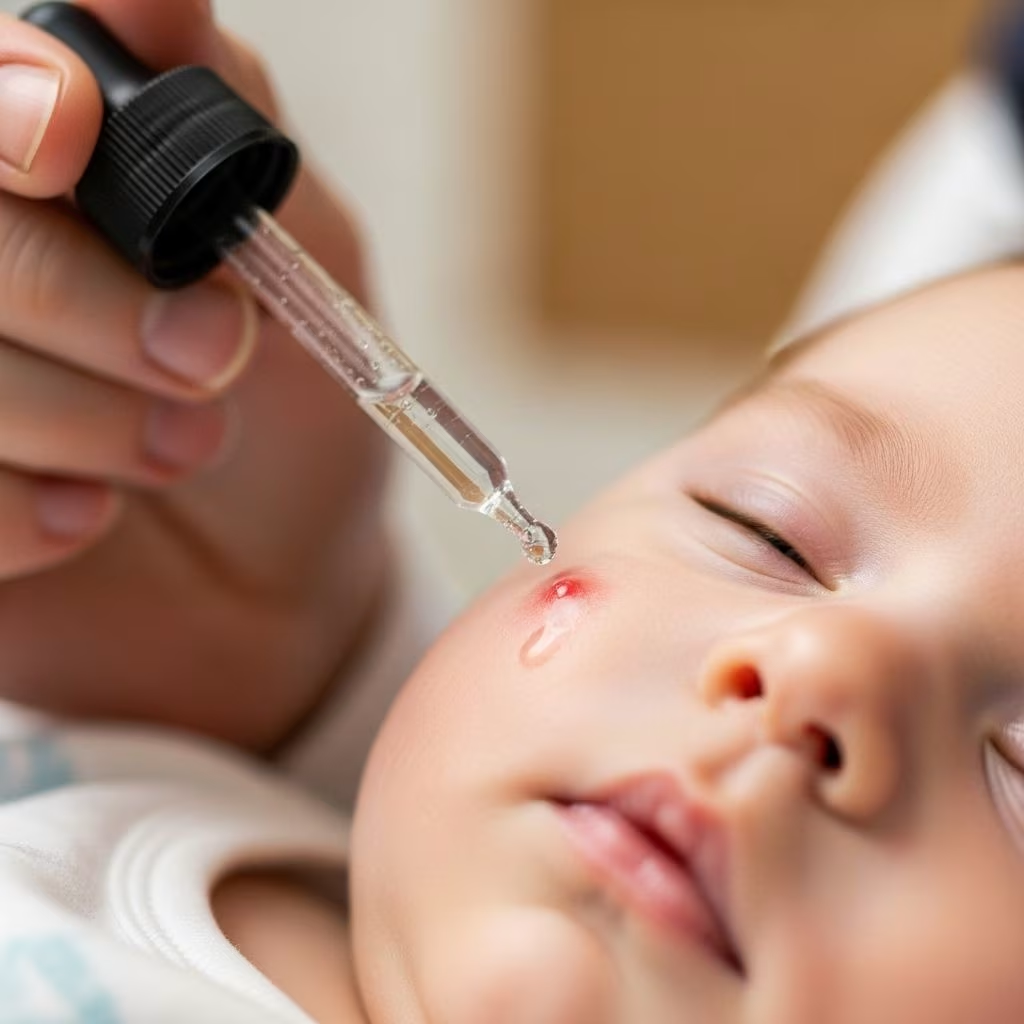
Introduction to Infantile Hemangiomas
Infantile hemangiomas (IHs) are benign vascular tumors that occur in approximately 4 to 5% of infants. They are self-limiting, meaning they typically resolve on their own, but can cause complications such as pain, ulceration, or permanent disfigurement if left untreated. The need for effective treatments has led to the exploration of various therapeutic options, including topical beta blockers.
What are Topical Beta Blockers?
Topical beta blockers, such as timolol, have been increasingly studied for their potential in treating IHs. These medications work by reducing the size and color of the hemangioma, thereby alleviating symptoms such as bleeding and discomfort. They are particularly beneficial for superficial or ulcerated IHs, where direct application is feasible.
Efficacy of Topical Beta Blockers
Studies have shown that topical beta blockers can be effective in managing symptoms of IHs, especially in cases where oral treatments are not suitable or have adverse effects. For instance, a case study involving an ulcerated IH demonstrated that topical timolol significantly reduced bleeding and improved the appearance of the hemangioma over a period of weeks.
Benefits Over Other Treatments
Topical beta blockers offer several advantages over traditional treatments like oral corticosteroids or surgery. They are associated with fewer systemic side effects, making them safer for long-term use in infants. Additionally, their localized action reduces the risk of systemic complications, which is particularly important in pediatric patients.
Comparison with Oral Propranolol
Oral propranolol is widely recognized as a first-line treatment for IHs due to its efficacy and rapid response. However, it can have systemic side effects such as hypoglycemia and sleep disturbances. Topical beta blockers, on the other hand, provide a more localized effect with fewer systemic risks. A combined therapy of oral propranolol and topical timolol has been shown to be highly effective and well-tolerated for compound IHs.
Safe Usage and Monitoring
While topical beta blockers are generally safe, their use should be closely monitored, especially in infants. Continuous assessment is crucial to ensure that the treatment is effective and to address any potential issues promptly. Monitoring also helps in identifying cases where systemic therapy might be necessary due to limited response to topical treatment.
Role in Preventing Rebound Growth
Some studies suggest that topical beta blockers may have a role in preventing rebound growth in IHs when oral propranolol is tapered off. This aspect highlights the potential for topical treatments to be part of long-term management strategies, especially after the initial regression of the hemangioma with systemic therapy.
FAQs
Q: What are the common side effects of topical beta blockers in infants?
A: While topical beta blockers are generally well-tolerated, close monitoring is necessary due to the potential for systemic absorption and effects like hypoglycemia or bradycardia, though these are rare.
Q: Can topical beta blockers be used as a first-line treatment for all types of IHs?
A: Topical beta blockers are most effective for superficial or ulcerated IHs. They may not be suitable for all types, especially those that are deep-seated or large, where oral propranolol might be preferred.
Q: How long does it take to see results from topical beta blocker treatment?
A: The response to topical beta blockers can vary, but improvements are typically observed within a few weeks. Continuous monitoring is recommended to assess the effectiveness of the treatment.
Conclusion
Topical beta blockers, particularly timolol, represent a valuable option for managing infantile hemangiomas, especially in cases where topical application is feasible. Their localized action minimizes systemic risks, making them a safer choice for infants. While they are not appropriate for all cases of IHs, their efficacy and safety profile make them an important part of the treatment arsenal, both as a standalone therapy and in combination with systemic treatments like oral propranolol.
References
- https://www.enttoday.org/article/topical-beta-blocker-effective-first-line-treatment-for-infantile-hemangioma/
- https://pmc.ncbi.nlm.nih.gov/articles/PMC7015739/
- https://www.nature.com/articles/srep19765
- https://pmc.ncbi.nlm.nih.gov/articles/PMC4078206/
- https://www.frontiersin.org/journals/pharmacology/articles/10.3389/fphar.2024.1515901/full
- https://jamanetwork.com/journals/jamadermatology/fullarticle/421304
- https://www.medicaljournals.se/acta/content/html/10.2340/00015555-2681
- https://www.frontiersin.org/journals/oncology/articles/10.3389/fonc.2018.00605/full
- https://publications.aap.org/pediatrics/article/143/1/e20183475/37268/Clinical-Practice-Guideline-for-the-Management-of


