


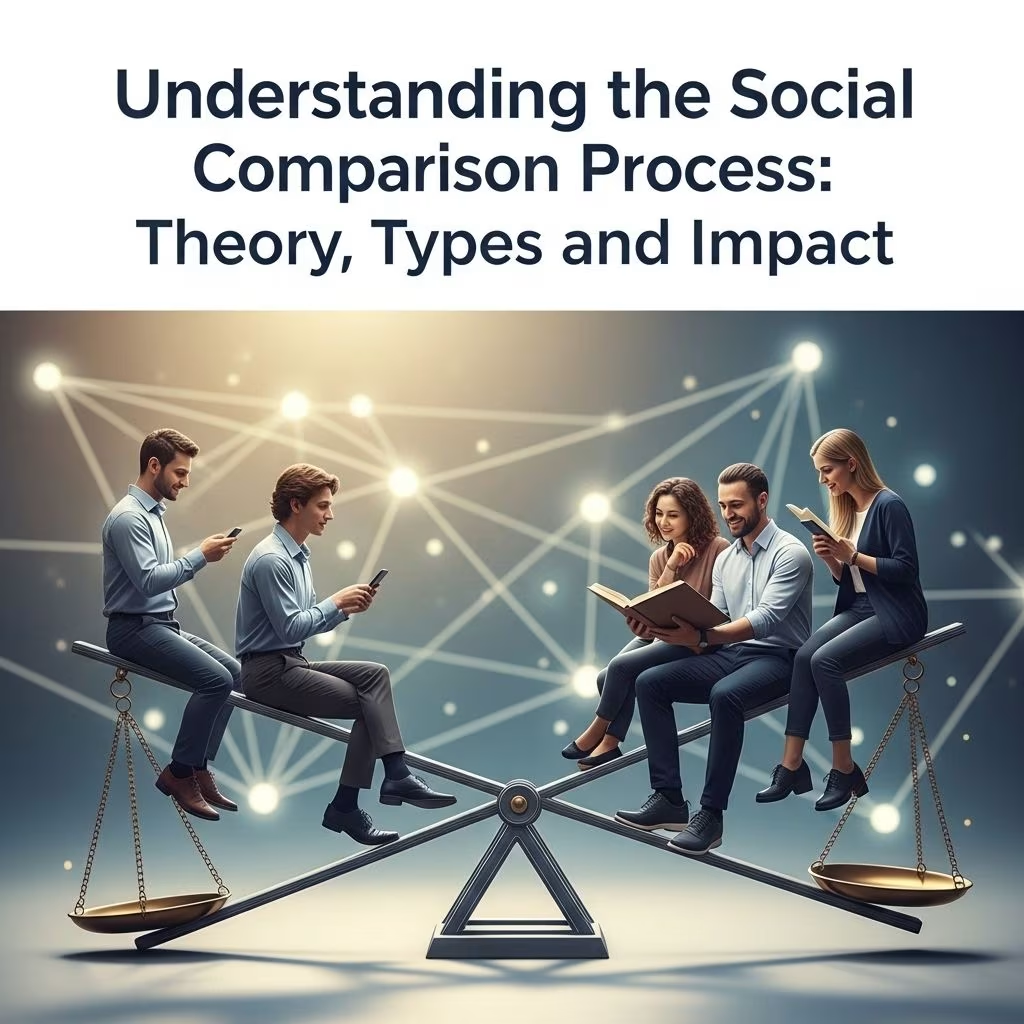
What Is the Social Comparison Process?
The social comparison process is a fundamental psychological mechanism where individuals evaluate their own opinions, abilities, and worth by contrasting themselves with others. This natural and often automatic process affects how people judge themselves and their place in the world, influencing everything from motivation and self-esteem to mental health and social relationships.
Key Features of Social Comparison
- Humans have an innate drive to self-evaluate and seek meaning in their actions and abilities.
- When objective standards are unavailable, people rely on social cues and others’ performances as reference points.
- Comparisons can be upward (toward those judged superior) or downward (toward those judged worse off), each affecting mood and motivation differently.
Origins of Social Comparison Theory
Social comparison theory was first formulated by psychologist Leon Festinger in 1954 in response to the question of how people know themselves when objective benchmarks are lacking. He suggested:
- People need accurate self-evaluation for personal growth and functioning.
- Others serve as living yardsticks for comparison—especially when tasks or attitudes are ambiguous or lack clear objective measurement.
- Most comparisons are made with similar others, providing the most relevant and informative feedback.
Subsequent research has expanded Festinger’s theory to include additional motivations—such as self-enhancement and self-improvement—and recognized the complex consequences of comparison.
Why Do We Compare Ourselves to Others?
Social comparison fulfills several key psychological needs:
- Self-Evaluation: Determining where we stand in terms of ability, performance, or status.
- Self-Enhancement: Seeking comparisons that make us feel better about ourselves.
- Self-Improvement: Looking to others as models or sources of inspiration for growth.
- Emotional Regulation: Managing feelings through comparisons, such as feeling gratitude or hope.
- Social Connection: Clarifying group norms and fitting in with peers.
For instance, a student unsure about their academic abilities may compare their exam scores to classmates for reassurance or motivation. In workplaces, employees use colleagues’ performance as a benchmark for their own progress and worth.
Main Types of Social Comparison
| Type | Direction | Description | Common Effects |
|---|---|---|---|
| Upward Comparison | Toward those perceived as better off | Comparing oneself with those who have higher status, greater ability, or more positive traits. |
|
| Downward Comparison | Toward those perceived as worse off | Comparing oneself with those who have lower status, lesser ability, or are in worse situations. |
|
| Lateral (Horizontal) Comparison | Toward those seen as similar | Comparing oneself with peers or those sharing similar circumstances. | Offers accurate feedback and realistic self-appraisal |
How the Social Comparison Process Works
Social comparison occurs automatically and often outside conscious awareness. The process includes the following steps:
- Trigger: Encountering another person, performance, or status (e.g., seeing a peer’s achievement on social media).
- Category Selection: Choosing a comparison target, typically someone seen as relevant, similar, or significant.
- Evaluation: Contrasting one’s own performance, situation, or traits with those of the target.
- Emotional Response: Experiencing feelings such as pride, envy, gratitude, or disappointment.
- Behavioral Outcome: Adjusting one’s own goals, motivation, self-esteem, or actions based on the comparison.
For example, an employee who perceives a coworker receiving a promotion may compare their skills and achievements, leading either to motivation to improve or a feeling of inadequacy.
Consequences and Impact of Social Comparison
Social comparison affects different aspects of psychological functioning:
- Self-Esteem: Upward comparison can sometimes lower self-esteem when differences feel insurmountable, while downward comparison can offer temporary boosts.
- Motivation: Upward comparison can spark aspirations and inspire personal growth, or, if perceived as unattainable, can discourage and demotivate.
- Mood: Repeated negative upward comparisons are linked to feelings of inadequacy, anxiety, and even depression.
- Social Behavior: Social comparisons can drive competitiveness, cooperation, or withdrawal, depending on perception and context.
- Norm Learning: Observing others’ behavior helps individuals discern social norms, especially in ambiguous situations.
Examples of Social Comparison in Daily Life
- A college student who measures their academic success by comparing test scores with classmates.
- An athlete who gauges their skills against teammates or competitors.
- An employee who views their career progress relative to that of similarly qualified colleagues.
- Individuals who assess their attractiveness or popularity by contrasting themselves with social media influencers or peers.
Factors That Influence Social Comparison
Several factors affect how and when social comparisons are made and their impact:
- Similarity: Comparison targets are often similar in age, background, or circumstances.
- Proximity: People are more likely to compare with those in close or frequent contact (friends, coworkers).
- Relevance: Comparisons are most frequent in domains important to self-identity (e.g., appearance, career, intelligence).
- Availability of Objective Information: In the absence of clear metrics, reliance on social comparison increases.
- Personality Traits: People high in self-consciousness, perfectionism, or low self-esteem engage in more frequent or painful comparisons.
- Culture: Societies that emphasize competition or achievement foster more extensive social comparison.
Adaptive and Maladaptive Effects of Social Comparison
Social comparison isn’t inherently good or bad—its outcomes depend on context, interpretation, and individual resilience.
Adaptive Outcomes
- Learning effective behaviors by observing role models (upward comparison).
- Finding reassurance and relief from anxiety (downward comparison).
- Refining self-concept through realistic assessment against peers.
- Strengthening group bonds and clarifying personal values.
Maladaptive Outcomes
- Chronically low self-worth caused by repeated upward comparisons to unattainable standards.
- Envy, resentment, and social withdrawal.
- Impaired mental health, including increased risk for depression and anxiety.
- Distorted self-image due to idealized portrayals on social media.
- Basing self-worth solely on surpassing others, undermining intrinsic motivation and satisfaction.
How to Make Social Comparison Work for You
While social comparison is automatic, individuals can manage their response to comparisons to protect mental health and promote growth:
- Practice Self-Awareness: Notice when and with whom you’re comparing yourself. Pause to reflect on whether these comparisons are useful or harmful.
- Reframe Upward Comparisons: Use more accomplished others as sources of learning and inspiration rather than threats to self-worth.
- Limit Exposure to Idealized Content: Curate social media feeds and reduce time spent with unrealistic portrayals on digital platforms.
- Focus on Growth: Emphasize self-improvement over competition. Track your own progress rather than ranking yourself against others.
- Express Gratitude: Downward comparisons can foster appreciation for your circumstances, but practice without demeaning others.
- Foster Supportive Environments: Seek groups that value cooperation, mutual support, and authentic sharing.
Frequently Asked Questions (FAQs)
What is social comparison theory?
Social comparison theory, coined by Leon Festinger in 1954, posits that individuals determine their own social and personal worth by evaluating how they stack up against others, especially in the absence of objective criteria. This process helps individuals define their self-concept and guides attitudes and behaviors.
Why do people compare themselves to others?
People compare themselves to others to evaluate their abilities, form better self-understandings, improve how they function, and regulate emotions. Social comparison is also a way to connect with others and learn acceptable norms in ambiguous situations.
What are the types of social comparison?
The main types are upward comparison (contrasting oneself with those viewed as better off), downward comparison (with those worse off), and lateral comparison (with peers or those similar). Each serves different psychological functions and can have both motivational and emotional effects.
How can upward or downward comparisons impact well-being?
Upward comparisons can motivate growth if the differences seem achievable but may also lead to discouragement or envy if they feel unattainable. Downward comparisons can offer relief or comfort when times are tough but may also foster complacency.
How can individuals limit negative effects of social comparison?
Strategies include self-awareness, setting personal goals distinct from others, focusing on self-growth, choosing positive and inspiring role models, and limiting exposure to unrealistic media or toxic environments.
Takeaway: Social Comparison as a Tool for Growth
Social comparison is a basic human process, shaping how we see ourselves and guiding our behavior. While it can challenge self-esteem or spark envy, managing comparison thoughtfully can turn it into a powerful force for learning, self-acceptance, and motivation. Recognizing and actively directing this process in healthy ways allows individuals to benefit from social awareness while protecting their well-being and sense of purpose.
References
- https://open.ncl.ac.uk/academic-theories/34/social-comparison-theory/
- https://fiveable.me/key-terms/intro-to-sociology/social-comparison-theory
- https://nobaproject.com/modules/social-comparison
- https://taylorlab.psych.ucla.edu/wp-content/uploads/sites/5/2014/10/1989_Social-Comparison-Activity-Under-Threat.pdf
- https://en.wikipedia.org/wiki/Social_comparison_theory
- https://www.psychologytoday.com/us/basics/social-comparison-theory
- https://positivepsychology.com/social-comparison/
- https://dictionary.apa.org/social-comparison-theory


