


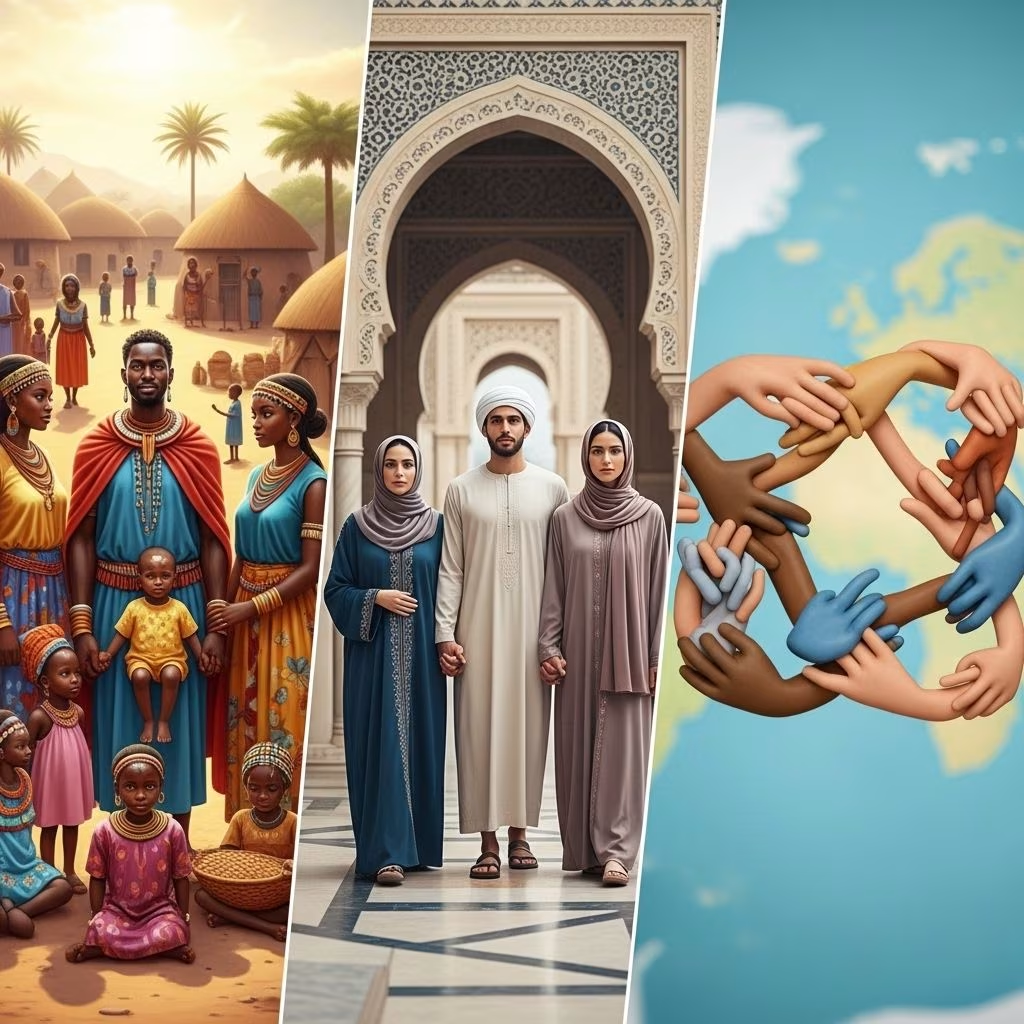
What Is Polygamy?
Polygamy is the practice of having more than one spouse simultaneously. The term is derived from the Late Greek polygamía, meaning “state of marriage to many spouses.” In contrast to monogamy (marriage to only one spouse), polygamy allows for multiple marital partners and is also referred to as plural marriage.
While monogamy is the most widespread marital practice globally, polygamy has played a significant role in many cultures and societies, influencing family structures, social customs, and legal frameworks.
Types of Polygamy
- Polygyny: A man is married to multiple women at the same time. This is the most common form of polygamy.
- Polyandry: A woman is married to multiple men at the same time. Polyandry is less common globally.
- Group Marriage: Multiple men and women marry each other, forming a family unit with several adult spouses.
Polygyny
Polygyny represents the classic image of polygamy, where one man marries more than one woman.
- Sororal Polygyny: The man marries two or more biological sisters.
- Nonsororal Polygyny: The man marries unrelated women.
Polygyny is often intertwined with social status and economic resources, as maintaining multiple spouses requires considerable wealth. In numerous societies throughout Africa and the Middle East, polygyny remains a sign of prosperity and status.
Polyandry
Polyandry, though rare, occurs in select cultures such as among the Nyinba in Nepal.
- Fraternal Polyandry: A woman marries multiple brothers.
- Nonfraternal Polyandry: A woman marries unrelated men.
Fraternal polyandry is practiced in part to consolidate family wealth and ensure economic stability, as all husbands contribute resources to the household.
Group Marriage
Group marriage involves several men and women forming a collective family unit. Although rare and not customary in any major society, group marriage represents a form of polygamy where all adults are considered spouses to one another.
Polygamy vs. Monogamy: A Comparison
| Feature | Polygamy | Monogamy |
|---|---|---|
| Number of Spouses | More than one simultaneously | Only one at a time |
| Main Types | Polygyny, Polyandry, Group Marriage | Classical or Serial |
| Legal Status | Illegal or restricted in most countries | Legal nearly everywhere |
| Cultural Prevalence | Common in parts of Africa, Middle East, Asia | Predominant in Europe, North America |
| Socioeconomic Impact | Associated with higher status/wealth | Neutral |
How Common Is Polygamy?
Globally, polygamy is rare. According to the Ethnographic Atlas and Pew Research, most societies favor monogamy. However, polygyny occurs frequently in the so-called “polygamy belt” across West and Central Africa, with countries like Burkina Faso, Mali, Gambia, Niger, and Nigeria reporting the highest rates.
Polyandry is extremely rare, found in very few societies, such as certain Himalayan communities.
- Out of 1,231 societies studied (1960–1980):
- 588 had frequent polygyny
- 453 had occasional polygyny
- 186 were monogamous
- Only 4 had polyandry (recent studies: 53 communities)
Polygamy remains a cultural tradition where legal or tolerated, often correlating with social class and economic resources.
Reasons for Practicing Polygamy
- Cultural Tradition: Polygamy is deeply rooted in many societies as a traditional family structure.
- Economic Advantage: More spouses can pool resources, share labor, and enhance social status.
- Religious Beliefs: Certain religions and sects allow or encourage polygamy, e.g., some interpretations of Islam and Mormon fundamentalism.
- Social Security: In environments with high mortality rates, polygamy can ensure better survival for children and family continuity.
Legal Status of Polygamy
Polygamy is illegal or restricted in most countries, including the United States and much of Europe. Laws typically only recognize monogamous marriages; entering into multiple legal marriages constitutes bigamy, which is a crime.
- Polygamist marriages may occur unofficially in places where the practice is outlawed (e.g., spiritual marriages, religious ceremonies not recognized by civil law).
- Some countries in Africa, the Middle East, and Asia have laws or traditions that permit polygamy, often with restrictions (usually polygyny).
- Efforts to reform polygamy laws sometimes stir controversy and debate over human rights and gender equality.
Polygamy in Popular Culture
Recent reality TV shows and documentaries have increased the visibility and discussion of polygamy and plural marriage, often presenting diverse arrangements beyond the stereotypical scenario. Popular shows highlight both challenges and advantages faced by polygamist families, influencing public perceptions.
Psychological and Social Impact of Polygamy
- Support Networks: Larger family units provide more support for household tasks and child-rearing.
- Potential for Conflict: Jealousy, competition, and resource distribution can cause tension among multiple spouses.
- Gender Equality Issues: Polygamous arrangements, especially polygyny, raise questions about equal rights and autonomy for women.
- Children’s Welfare: The impact on children varies widely depending on the family dynamics, parental care, and social stigma.
Gender and Consent Issues in Polygamy
The complexity of polygamous arrangements means issues of consent, autonomy, and gender equality are deeply debated.
- Consent: Some people enter polygamous marriages willingly, motivated by faith or culture; others may be pressured or coerced.
- Women’s Rights: Critiques argue that polygyny may reinforce patriarchal structures and restrict women’s autonomy, while defenders highlight positive economic or social aspects.
- Legal Protection: Where polygamy is illegal, adult partners, especially women, may lack legal protections for spouses.
Controversies and Criticisms
Polygamy has long been controversial, provoking debate over religious freedom, gender rights, child welfare, and legality.
- Human Rights Concerns: Some argue polygamy can be linked to exploitation of women and children, especially where marriages are coerced or arranged at young ages.
- Legal Debates: Movements in some countries seek to reform polygamy laws, balancing cultural tradition with rights protection.
- Social Stigma: In places where polygamy is outlawed, families may face discrimination, secrecy, or lack of legal recourse.
Polygamy Around the World: Prevalence by Region
| Region | Status | Common Form | Comments |
|---|---|---|---|
| West & Central Africa | Legal/traditional | Polygyny | Highest global rates; tied to economic/social status |
| Middle East | Legal in specific contexts | Polygyny | Permitted by some religious interpretations |
| Asia (Himalayan regions) | Legal/traditional in isolated communities | Polyandry | Practiced for economic consolidation |
| North America, Europe | Illegal | N/A | Rare, sometimes practiced unofficially |
Frequently Asked Questions (FAQs)
Is polygamy legal in the United States?
No, polygamy is illegal in the United States. Only monogamous marriages are recognized by law, and bigamy (having more than one legal spouse) is a criminal offense.
Are there different types of polygamy?
Yes, there are three main types: polygyny (one man, multiple women), polyandry (one woman, multiple men), and group marriage (multiple men and women in one family unit).
Where is polygamy most common?
Polygamy is most common in parts of West and Central Africa and present in some Middle Eastern and Asian communities. Polyandry, specifically, is only found in select Asian regions.
What are the cultural reasons for practicing polygamy?
Polygamy can result from traditions, religious beliefs, economic benefit, and social customs. It’s often linked to family lineage, resource consolidation, and prestige.
Is polygamy always harmful to women?
Not necessarily; experiences vary by culture and individual circumstances. However, critics argue polygyny can reinforce gender inequality, while others note that some women benefit from shared resources or support.
Can children from polygamous families experience stigma?
Yes, particularly in cultures where polygamy is illegal or socially unacceptable. This can affect inheritance rights, education, and psychological well-being.
Does polygamy exist in the animal kingdom?
In biology, polygamy describes mating patterns where animals have multiple mates. However, these are typically sexual arrangements rather than social or marital bonds as in humans.
Conclusion
Polygamy is a complex marriage system practiced in various forms throughout history and across cultures. Its prevalence, legality, and implications are shaped by socioeconomic, religious, and political factors. As societies evolve, the debate over polygamy’s role and legitimacy continues, reflecting changing norms around family, gender, and human rights.
References
- https://people.howstuffworks.com/rules-of-polygamy.htm
- https://study.com/academy/lesson/plural-marriages.html
- https://en.wikipedia.org/wiki/Polygamy
- https://fiveable.me/key-terms/ap-gov/polygamy
- https://sk.sagepub.com/ency/edvol/the-social-history-of-the-american-family/chpt/polygamy
- https://www.pewresearch.org/short-reads/2020/12/07/polygamy-is-rare-around-the-world-and-mostly-confined-to-a-few-regions/
- https://fiveable.me/key-terms/africa-before-1800/polygamy


