


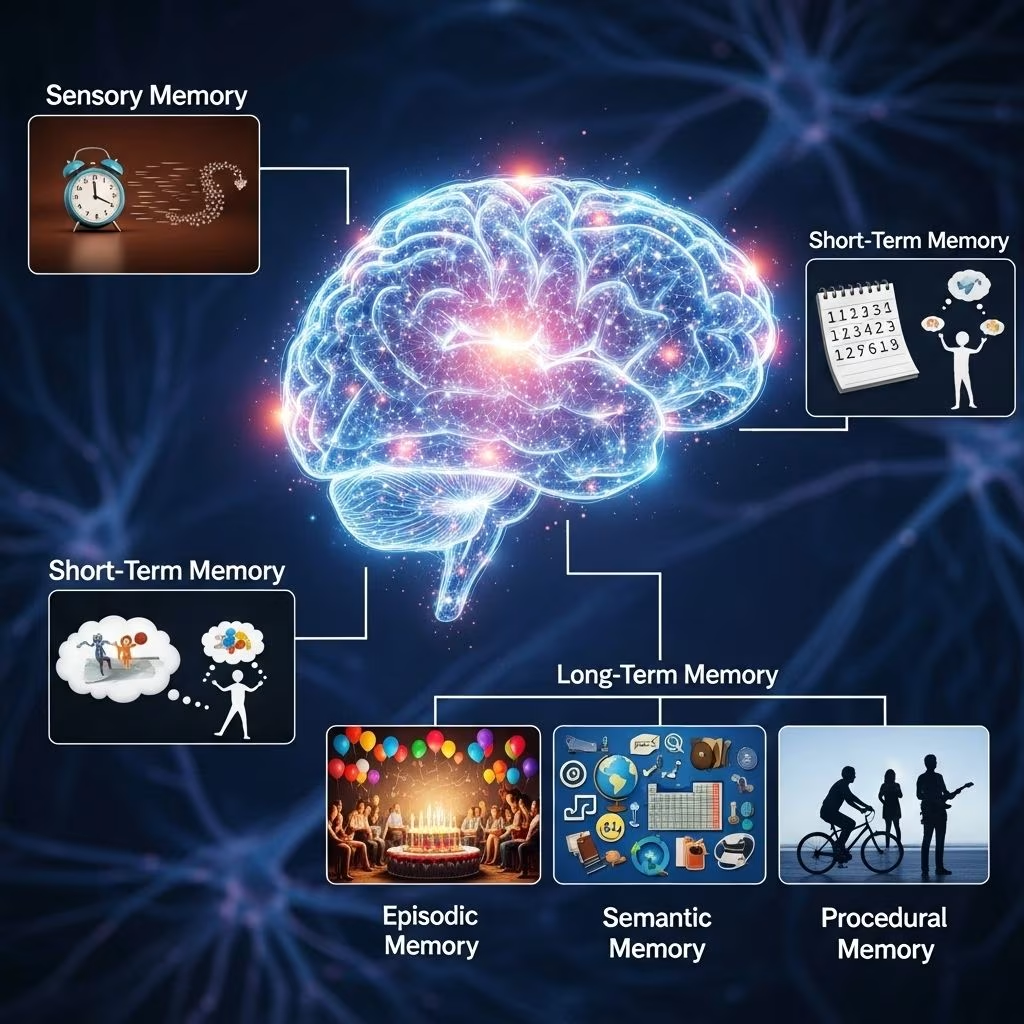
Human memory is a complex faculty that allows us to encode, store, and retrieve information. It underpins everything from recognizing faces and recalling facts to performing daily tasks without conscious effort. Scientists classify memory into several types, each with distinct characteristics and functions. This guide explores the many facets of memory, how they work, and their roles in our everyday lives.
What Is Memory?
Memory refers to the brain’s ability to obtain and retain information, drawing on past experiences to inform present behavior and decision-making. It involves three fundamental processes:
- Encoding: The process of perceiving information and transforming it into a format suitable for storage.
- Storage: The maintenance of encoded information over time.
- Retrieval: The action of recalling or using previously stored information when needed.
These processes occur across various types and stages of memory, enabling us to remember a wide spectrum of information and skills.
Main Types of Memory
Memory is typically classified into two overarching categories that branch into several subtypes:
- Explicit (Declarative) Memory: Conscious, intentional recollection of factual information or experiences.
- Implicit (Non-Declarative) Memory: Unconscious retention that influences thoughts or behaviors without intentional recall.
Table: Overview of Main Memory Types
| Memory Type | Description | Examples |
|---|---|---|
| Explicit (Declarative) | Facts and events people can consciously recall | Recalling names, historical dates, personal events |
| Implicit (Non-Declarative) | Experiential memory, often unconscious | Riding a bike, classical conditioning |
Explicit (Declarative) Memory
Explicit memory involves information that must be consciously recalled, such as facts or events. It is further divided into two key subtypes:
Episodic Memory
Episodic memory is responsible for the conscious recall of specific events or experiences from your life. It allows you to remember personal moments, complete with context, emotions, and sensory details.
- Remembering your last birthday celebration
- Recalling the details of your first job interview
- Reliving your first day at school
This memory type enables us to mentally travel back in time, experiencing past events as though they were happening anew.
Functions and Importance
- Facilitates autobiographical recollection
- Supports decision-making and social interaction
- Central to forming a sense of personal identity
Semantic Memory
Semantic memory encompasses general world knowledge accumulated over a lifetime, including facts, concepts, vocabulary, and information not tied to a specific time or place.
- Knowing Napoleon was a French emperor
- Recalling that Paris is the capital of France
- Understanding how a computer works
Unlike episodic memory, semantic memory is not about personal experiences but the shared body of knowledge that aids comprehension and communication.
Implicit (Non-Declarative) Memory
Implicit memory deals with information unconsciously retained and used, often influencing actions or thoughts without intentional recollection.
Procedural Memory
Procedural memory is responsible for knowing how to do things. It pertains to skills and routines performed automatically, often developed over sustained practice. This memory form is crucial for motor skills and habitual responses.
- Riding a bicycle without consciously recalling every movement
- Tying shoelaces
- Typing on a keyboard
- Playing a musical instrument
Procedural memory is often remarkably resistant to forgetfulness and can remain intact even when other memory types are affected by injury or illness.
Priming
Priming is a process where exposure to one stimulus unconsciously influences the response to another stimulus. It is an effect of implicit memory that can affect perceptions and behaviors without deliberate effort.
- Recognizing a word more quickly after hearing a related word
- Automatically filling in missing letters in familiar words
- Being more likely to use certain words or display particular behaviors after being subconsciously exposed to related cues
Classical Conditioning
This is a form of implicit memory, enabling us to associate two stimuli and produce a learned response, often beyond conscious awareness.
- Salivating when smelling food that reminds you of childhood meals
- Feeling nervous at the sound of a dentist’s drill
Other Types of Memory
Sensory Memory
Sensory memory refers to the very brief retention of sensory information after the original stimulus has ceased. Each sense forms a distinct sensory memory register (e.g., iconic for vision, echoic for hearing).
- Seeing a flash of lightning linger in visual awareness
- Retaining an echo of the last note after music ceases
- Temporarily noticing the smell of fresh bread
Sensory memory is fleeting, generally lasting less than a second, but it allows the brain just enough time to select information for further processing.
Short-Term Memory
Short-term memory enables you to hold a small amount of information in your conscious mind for a short period (generally seconds to about a minute). It serves as a temporary workspace for immediate cognitive tasks, such as solving math problems or remembering instructions long enough to carry them out.
- Remembering a phone number long enough to dial it
- Following a list of spoken instructions
Working Memory
Working memory is closely related to, but distinct from, short-term memory. It not only stores but also manipulates information in real time, supporting complex cognitive activities.
- Calculating the tip for a restaurant bill in your head
- Following multi-step directions while remembering where you left off
- Holding a question in mind while listening to new information
Strong working memory is associated with higher problem-solving skills and effective learning.
Prospective Memory
Prospective memory involves remembering to perform actions in the future. It is essential for managing plans and obligations in daily life.
- Remembering to take medication at the right time
- Bringing an umbrella when rain is forecast
- Going to a scheduled appointment
How Does Memory Work?
Memory operates through a series of stages and processes that work together to form and retrieve memories:
- Encoding is gathering and processing sensory input so it can be stored.
- Storage refers to holding information over time, either in short-term or long-term repositories.
- Retrieval allows access to stored memories as needed.
Each type of memory employs unique neural networks and can be affected differently by aging, injury, or disease.
Factors That Affect Memory
Memory performance is not static; it can fluctuate due to numerous internal and external factors, including:
- Age: Some memory types are more vulnerable to aging, especially episodic and working memory.
- Health Conditions: Disorders such as Alzheimer’s disease or brain injuries can disproportionately impact certain memory systems.
- Stress and Mood: High stress or negative emotions can interfere with encoding and retrieval.
- Sleep and Nutrition: Deficiencies in sleep or essential nutrients can impair memory function.
Understanding these influences can help promote strategies for maintaining memory health over the lifespan.
Memory and Brain Health
Certain areas of the brain specialize in forming and retrieving different types of memories:
- The hippocampus is key for episodic and semantic memory.
- The frontal and parietal lobes support working memory and executive functions.
- The basal ganglia and cerebellum are important for procedural memory.
- Neocortex plays a vital role in storing long-term and remote memories.
Damage or degeneration in these areas can result in selective impairments, illustrating how diverse our memory systems are.
Memory Disorders
Problems with memory can arise from neurological diseases, psychiatric conditions, or aging. Some notable conditions include:
- Dementia: Especially impacts episodic and working memory; advanced stages may affect procedural memory.
- Alzheimer’s disease: Primarily damages recent episodic memory initially.
- Amnesia: Involves loss of ability to form, retain, or retrieve memories, often after brain injury.
- Other Conditions: Depression, anxiety, and sleep disorders can also affect memory processing.
Improving and Supporting Memory
While some memory decline is normal with age, there are evidence-based strategies to bolster memory function:
- Get regular sleep and manage stress
- Engage in mentally stimulating activities
- Exercise regularly and keep a balanced diet
- Use mnemonic devices and organizational aids (lists, calendars)
- Practice mindfulness and attention-focused techniques
Frequently Asked Questions (FAQ)
What are the main types of long-term memory?
Long-term memory divides into explicit (episodic and semantic) and implicit (procedural, priming, and classical conditioning) memory.
How does working memory differ from short-term memory?
Working memory both stores and manipulates information briefly, supporting computational tasks and complex reasoning; short-term memory primarily serves as a simple retention system for small amounts of information without manipulation.
What role does procedural memory play in daily life?
Procedural memory enables automatic routine actions, such as walking, typing, or driving, often without conscious thought, supporting independence and efficiency.
Can memory skills be improved?
Yes—cognitive exercises, physical activity, healthy sleep, and mnemonic techniques can all strengthen different aspects of memory.
How does aging affect memory?
Aging often impairs episodic and working memory the most, while semantic and procedural memories tend to be more resilient, particularly in healthy individuals.
Conclusion
Memory is multifaceted, encompassing diverse types that serve unique and critical roles in shaping who we are, how we learn, and how we function. By understanding the differences and functions of explicit, implicit, sensory, short-term, long-term, and working memory, we gain key insights into both typical functioning and what happens when memory falters. This knowledge supports not only personal growth and learning, but also compassionate caregiving and clinical treatment for those affected by memory disorders.
References
- https://www.webmd.com/alzheimers/types-of-memory
- https://memory.ucsf.edu/brain-health/memory
- https://www.labvanced.com/content/research/en/blog/2025-03-types-of-memory/
- https://opentextbc.ca/introductiontopsychology/chapter/8-1-memories-as-types-and-stages/
- https://www.psychologytoday.com/us/basics/memory/types-of-memory
- https://pmc.ncbi.nlm.nih.gov/articles/PMC7965175/
- https://openstax.org/books/psychology-2e/pages/8-1-how-memory-functions
- https://my.clevelandclinic.org/health/articles/memory
- https://courses.lumenlearning.com/suny-hvcc-psychology-1/chapter/how-memory-functions/


