


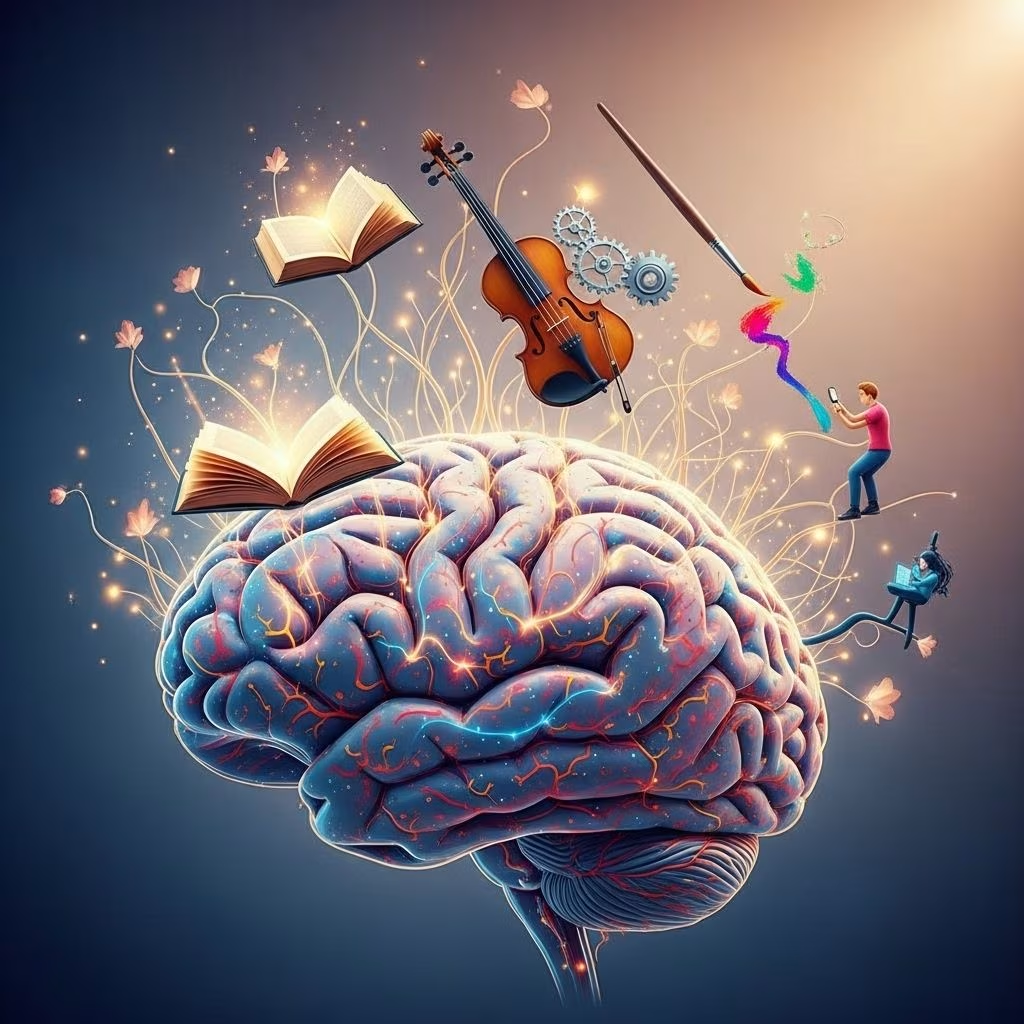
Brain plasticity, also known as neuroplasticity, refers to the brain’s remarkable ability to reorganize and adapt its structure and function in response to learning, experience, and even injury. Far from being a static organ, your brain is in a continuous state of change, reshaping itself throughout life to optimize functioning and respond to new circumstances.
What Is Brain Plasticity?
Brain plasticity is the biological process that enables the nervous system to alter its activity and organization in response to both internal and external stimuli. These changes can involve structural, functional, or chemical alterations in the brain’s neural networks.
Even something as simple as remembering a new fact or learning a new skill results in real, observable changes to your brain’s wiring, demonstrating the ongoing nature of neuroplasticity throughout life.
- Neuroplasticity = the brain’s ability to change, adapt, or reorganize its neural pathways.
- Happens in response to learning, experience, sensory input, or recovery from injury.
- Involves both strengthening existing connections and forming new ones.
How Brain Plasticity Works
Neuroplasticity operates at several scales in the brain, from individual neuronal changes to large-scale rewiring of entire brain regions. These adjustments occur through:
- Neurogenesis: Generation of new neurons, especially in certain brain regions.
- Synaptic Plasticity: Modifying the strength or number of connections (synapses) between neurons.
- Cortical Remapping: Larger regions of the brain adapt for new roles, sometimes after injury.
Neuroplastic change happens via two main processes:
- Strengthening: Synaptic connections used often become stronger, facilitating faster communication and learning.
- Pruning: Connections used less frequently weaken and may be eliminated, improving brain efficiency (synaptic pruning).
These processes allow the brain to fine-tune its networks for optimal or adaptive functioning, enhancing learning and enabling recovery.
Types of Brain Plasticity
Neuroplasticity can be categorized by the type and scale of changes:
- Functional plasticity: The brain’s ability to move functions from damaged areas to undamaged ones. For example, after a stroke damages speech centers, other brain regions may adapt to compensate.
- Structural plasticity: The brain’s capacity to change its physical structure due to learning, environment, or experience (like forming new synapses during learning a language or musical skill).
- Synaptic plasticity: Increasing or decreasing the strength of synaptic connections between individual neurons, forming the cellular basis for learning and memory.
- Cortical remapping: Large-scale reorganization, such as when entire sensory regions change function after sensory deprivation or injury.
Additional Forms of Plasticity
- Homologous area adaptation: Shifting functions to corresponding regions on the opposite side of the brain.
- Cross-modal reassignment: Assigning a sensory region (like the visual cortex) to process information from another sense (as in blind individuals using visual cortex for touch or hearing).
How Learning and Experience Shape the Brain
Everyday experiences continually reshape the structure and function of the brain:
- Learning new skills: Playing an instrument, mastering a sport, or speaking a new language all increase neural connections.
- Memory formation: Creating and recalling memories involves strengthening and reorganizing synaptic pathways.
- Enriched environments: Exposure to stimulating, varied experiences boosts neuronal growth and enhances cognitive ability.
Plasticity is especially pronounced during childhood and adolescence due to greater brain flexibility at these stages. However, substantial plasticity remains in adults, allowing for continued learning and improvement across the lifespan.
Examples of Neuroplasticity at Work
- Musicians: Studies show that learning to play an instrument enlarges and strengthens brain areas connected to motor control, auditory processing, and memory.
- Bilinguals: Learning a second language increases the density and efficiency of neural networks supporting language and executive function.
- Spatial training: Taxi drivers develop larger hippocampal regions responsible for spatial memory due to extensive navigation experience.
Brain Plasticity and Recovery from Injury
One of the most powerful aspects of neuroplasticity is the brain’s ability to adapt and recover after injury, such as stroke or traumatic brain injury:
- Compensatory rewiring: Healthy brain areas can adapt to take over functions lost due to damage, enabling partial or sometimes near-complete recovery.
- Therapies & rehabilitation: Interventions like physical, occupational, and cognitive therapies harness neuroplasticity by encouraging the brain to form new pathways and relearn lost skills.
- Bypassing damaged areas: The brain can create novel routes for information and control, essentially routing tasks around nonfunctional regions.
Neuroplastic processes begin shortly after injury at the molecular level and can extend for months or years, often guided by the intensity and type of rehabilitation activities.
Notable Examples
- A person who has experienced a stroke and lost movement in one arm may, through repetitive therapy, regain some function as new circuits are strengthened in undamaged motor areas.
- After losing a sense (such as vision), other sensory regions may expand to process more touch or auditory information—a phenomenon observed in individuals who are blind from birth.
Mechanisms of Brain Plasticity
The biological basis for plasticity lies in the capacity of neurons and supporting brain cells to adjust both their structure and function. Major mechanisms include:
- Synapse modification: Repeated activation of neural circuits strengthens their connections (long-term potentiation), while seldom-used circuits weaken (long-term depression).
- Dendritic growth: Branch-like neurons (dendrites) expand, allowing for additional connections and increased complexity.
- Neurogenesis: In certain regions (like the hippocampus), new neurons continue to be generated throughout life, supporting learning and memory.
- Molecular cascades: Signal molecules and gene expression drive the formation of new neural network architectures in response to external stimuli.
Table: Key Components of Brain Plasticity
| Component | Description | Role in Plasticity |
|---|---|---|
| Neurons | Nerve cells transmitting signals | Create and reinforce new connections |
| Synapses | Junctions between neurons | Sites of strengthening/pruning |
| Dendrites | Branching extensions of neurons | Growth adds new connection points |
| Neurotrophic factors | Chemicals promoting neuron growth | Stimulate synapse formation and survival |
Factors Influencing Brain Plasticity
While neuroplasticity is a continuous process throughout life, its rate and effectiveness can depend on many factors:
- Age: The brain is most plastic during early childhood. However, adults retain significant, though reduced, plastic potential.
- Genetics: Genetic factors can influence baseline rates of neurogenesis and synaptic change.
- Environment: Exposure to stimulating environments, learning, exercise, and social interaction all boost plasticity.
- Injury or disease: Brain damage often serves as a powerful trigger for adaptive plastic changes.
- Stress and psychological states: Chronic stress or mental health disorders may impair plasticity, while positive learning experiences and mental stimulation enhance it.
Potential Drawbacks of Brain Plasticity
Though neuroplasticity is largely beneficial, there are contexts in which it can have negative effects:
- Maladaptive changes: Persistent pain or certain psychiatric conditions (e.g., addiction, chronic anxiety) may involve neuroplastic changes that reinforce undesirable behaviors or responses.
- Loss of certain skills: As new skills are learned, less-used connections can be pruned away, sometimes resulting in loss of previous abilities.
Brain Plasticity Across the Lifespan
Research shows neuroplasticity is most robust during the early years of development, a critical period for language, motor skills, and sensory integration. However, plasticity continues well into adulthood and aging:
- Children: Experience rapid, expansive plastic changes that lay the foundation for cognitive and emotional abilities.
- Adolescents and adults: Learning, experience, and therapy continue to reshape the brain, though the pace of change slows with age.
- Aging adults: Continued engagement in learning, social, and physical activity helps preserve neuroplastic potential and support cognitive function.
Enhancing and Supporting Brain Plasticity
Many lifestyle strategies have been shown to support or enhance neuroplasticity throughout life:
- Lifelong learning, curiosity, and exposure to novel experiences
- Physical exercise, especially aerobic activity, stimulates neurogenesis and growth factors beneficial for the brain
- Social engagement and healthy relationships promote cognitive stimulation and plastic change
- Balanced nutrition, supporting brain health and cellular maintenance
- Good sleep habits, allowing for memory consolidation and brain repair
These approaches help optimize neuroplasticity and may reduce risk for age-related cognitive decline and neurodegenerative diseases.
Frequently Asked Questions about Brain Plasticity
What is the difference between brain plasticity and neuroplasticity?
There is no difference; the terms are used interchangeably to describe the brain’s ability to reorganize and adapt its structure and function in response to experience and injury.
Can adults change their brains as much as children?
Although children have a higher baseline level of plasticity, adults are still capable of significant neural change through persistent learning, rehabilitation, and cognitive challenges.
What activities increase brain plasticity?
Engaging in learning new skills, exercising, socializing, solving problems, exposure to new environments, and practicing mindfulness are all activities that enhance the brain’s plastic potential.
Why is neuroplasticity important for recovery after brain injury?
Neuroplasticity enables surviving brain regions to adapt, reorganize, and form new pathways that compensate for lost functions, providing the biological foundation for recovery.
Are there negative types of plasticity?
Yes. Sometimes, maladaptive plasticity may reinforce problematic patterns, such as chronic pain or compulsive behaviors, underlining the need for positive and guided interventions.
Conclusion
Brain plasticity is one of the most remarkable attributes of the human brain. By understanding how our experiences, environment, and choices influence neural wiring, we can intentionally foster positive brain changes across the lifespan. Whether learning, recovering, or adapting, brain plasticity remains at the heart of personal growth and enduring brain health.
References
- https://en.wikipedia.org/wiki/Neuroplasticity
- https://www.simplypsychology.org/brain-plasticity.html
- https://www.ncbi.nlm.nih.gov/books/NBK557811/
- https://news.mit.edu/2018/mit-scientists-discover-fundamental-rule-of-brain-plasticity-0622
- https://health.clevelandclinic.org/neuroplasticity
- https://faculty.washington.edu/chudler/plast.html


