


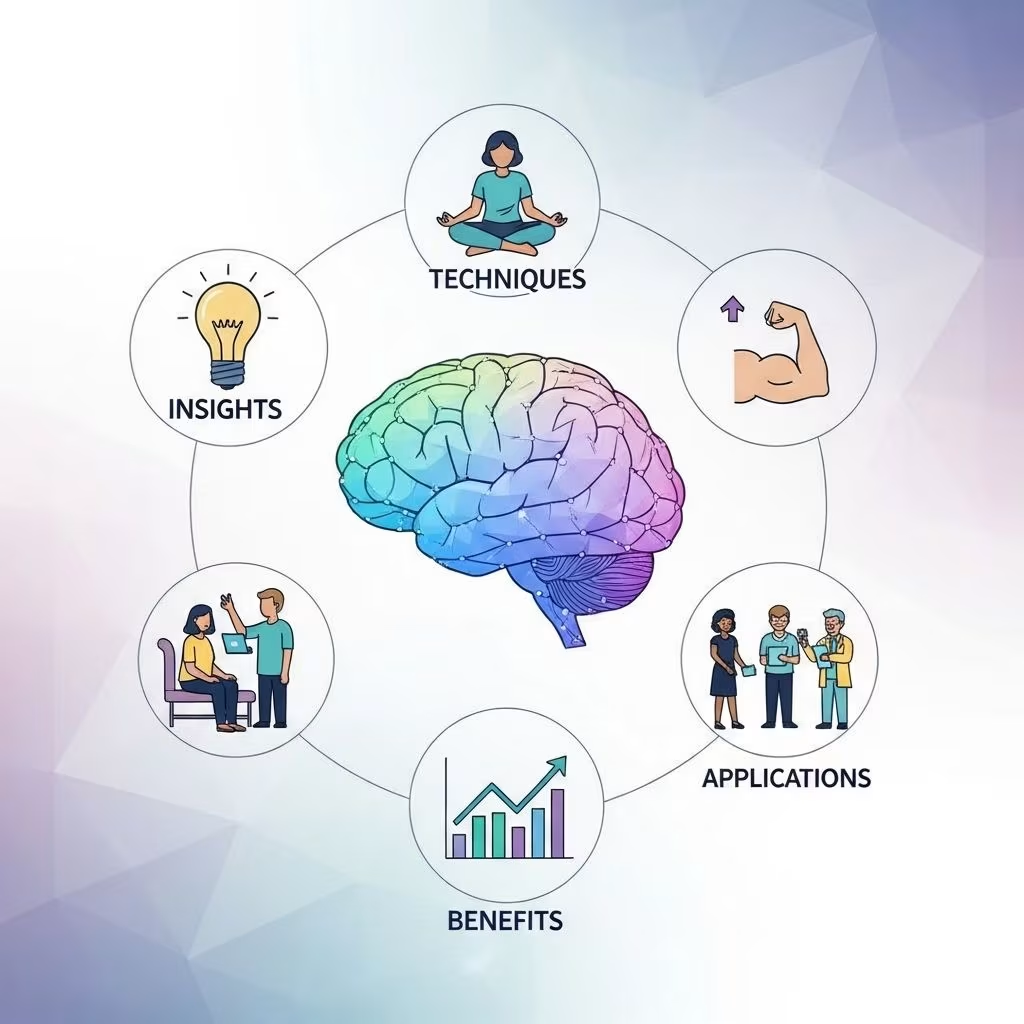
Cognitive Behavioral Therapy (CBT) is a structured, evidence-based form of psychological treatment focused on identifying and changing negative thought patterns, emotional responses, and behaviors. Widely adopted by mental health professionals, CBT is known for its practical, goal-oriented approach and proven effectiveness across a wide spectrum of mental and behavioral health conditions.
How Cognitive Behavioral Therapy Works
CBT operates on the principle that our thoughts, feelings, and behaviors are intricately linked. By recognizing and modifying unhelpful or distorted thoughts, individuals can positively influence their emotions and actions. CBT is grounded in the belief that our perceptions of events, rather than the events themselves, shape our emotional and behavioral responses.
- Core Principle: Thoughts, emotions, and behaviors are interconnected; changing one can alter the others.
- Focus: Emphasis is on ‘here and now’ problems, rather than exploring past events.
- Goal-oriented: Therapy is directed toward achieving specific, measurable, and time-limited objectives.
- Collaborative: Patient and therapist work together, fostering a strong therapeutic alliance to identify challenges and test solutions.
Key Principles of CBT
Several foundational concepts define cognitive behavioral therapy:
- The Cognitive Model: Suggests that people’s emotions and behaviors are influenced by their perceptions and beliefs about events, not by the events themselves.
- Cognitive Levels: CBT identifies three core levels of cognition:
- Core beliefs: Deep-seated, often unconscious beliefs about oneself and the world.
- Dysfunctional assumptions: Conditional rules or attitudes that derive from core beliefs.
- Automatic thoughts (NATs): Quick, often negative interpretations or self-talk that occurs in response to situations.
- Problem-Oriented Structure: Sessions are highly structured, focusing on current difficulties and collaboratively setting specific goals.
- Skills-Based: CBT aims to equip clients with practical skills to manage and change maladaptive thinking and behavioral patterns.
Common Techniques Used in CBT
CBT sessions employ a variety of techniques tailored to the individual’s needs. These techniques can include both cognitive and behavioral methods:
- Guided Discovery: The therapist helps the individual reflect on their thoughts and explore alternative perspectives.
- Socratic Questioning: Using open-ended questions, the therapist helps the person challenge the validity and utility of their beliefs.
- Behavioral Experiments: Clients test the accuracy of beliefs or predictions through real-life experiments.
- Activity Scheduling: Planning and engaging in positive, mood-enhancing activities to counteract avoidance or withdrawal.
- Homework Assignments: Between-session tasks reinforce new learning and skills application outside therapy.
- Thought Records: Journaling to track distorted thought patterns and triggers.
- Exposure Therapy: Gradual exposure to feared objects or situations to reduce avoidance and anxiety.
- Relaxation Training and Mindfulness: Developing skills to reduce physiological arousal and improve awareness of the present moment.
The 3 C’s of CBT: Catch, Check, Change
One popular and accessible way to describe the CBT process is using the 3 C’s Method:
- Catch: Notice and identify the negative thoughts that trigger emotional or behavioral responses.
- Check: Reflect on the accuracy and helpfulness of these thoughts. Are they realistic? Are they based on assumptions?
- Change: Reframe the thoughts to be more realistic, balanced, and helpful, leading to better emotional outcomes and healthier behaviors.
Structure of a CBT Session
CBT sessions are typically more structured than other forms of talk therapy. Each session may include:
- Quick review of mood and progress since last session.
- Linking to previous session topics to maintain continuity.
- Setting a mutually agreed-upon agenda for the session.
- Reviewing homework or experiments performed between sessions.
- Addressing prioritized problems using targeted cognitive and behavioral techniques.
- Assigning new homework and summarizing insights or action points at session end.
CBT for Different Conditions
Cognitive behavioral therapy is a flexible intervention, supported by extensive research as effective for a variety of mental health issues. Common conditions for which CBT is used include:
- Depression and Mood Disorders: CBT is a first-line treatment for major depressive disorder and dysthymia.
- Anxiety Disorders: Includes generalized anxiety disorder, social anxiety disorder, panic disorder, obsessive-compulsive disorder (OCD), and specific phobias.
- Post-Traumatic Stress Disorder (PTSD): Empirically supported as an effective intervention for trauma processing and recovery.
- Eating Disorders: Such as bulimia nervosa and binge eating disorder.
- Substance Use Disorders: CBT helps to modify patterns related to addiction and relapse prevention.
- Sleep Disorders: Including insomnia and other sleep-related issues.
- Chronic Pain and Medical Conditions: Supports coping with symptoms and improving quality of life.
What Happens During CBT?
During CBT, clients work with a trained mental health professional to:
- Identify troubling situations or conditions in their life.
- Become aware of thoughts, emotions, and beliefs about these problems.
- Recognize negative or inaccurate thinking patterns.
- Challenge and reframe unhelpful thoughts with more adaptive and realistic perspectives.
- Practice new skills through homework assignments, role-playing, or behavioral experiments.
Clients are encouraged to actively participate in their own treatment, with the therapist providing guidance, support, and feedback every step of the way.
Effectiveness and Evidence Base
CBT is among the most empirically validated forms of therapy, with robust evidence supporting its use for diverse psychiatric and psychological conditions:
- Numerous systematic reviews and meta-analyses have found CBT to be more effective than placebo and, in many cases, as effective as medication for conditions like depression and anxiety.
- CBT is recommended as a first-line intervention in treatment guidelines for depression, anxiety, PTSD, and several other disorders.
- Effects are often maintained after treatment ends, as clients learn skills to become their own therapist and manage future challenges independently.
Benefits of Cognitive Behavioral Therapy
| Benefit | Description |
|---|---|
| Structured and Time-limited | Focus on specific goals within a set number of sessions for efficient treatment. |
| Collaborative | The therapist and client form a partnership to explore and solve problems together. |
| Skills-Based | Clients learn practical strategies for coping with challenges and managing symptoms independently. |
| Effective for Multiple Conditions | CBT is supported by extensive research for mental health disorders and certain physical health problems. |
| Can Be Combined with Medication | CBT can enhance the effectiveness of medication for some conditions or provide an alternative when medication is unsuitable. |
| Adaptable | CBT techniques can be personalized to each individual’s needs and circumstances. |
CBT Versus Other Forms of Therapy
| Therapy Type | Main Characteristics | CBT Key Differences |
|---|---|---|
| CBT | Structured, time-limited, problem-focused, skills-based | Emphasizes present-focused change via thought and behavior modification |
| Psychodynamic Therapy | Explores unconscious processes and past experiences | CBT focuses more on current problems and conscious thoughts |
| Humanistic Therapy | Emphasizes personal growth, empathy, and self-actualization | CBT uses structured techniques versus an open-ended, explorative process |
Limitations and Considerations
While CBT is highly effective for many individuals and conditions, it may not be suitable for everyone or all psychological concerns. Some limitations include:
- Motivation and Participation: The structured, active nature of CBT requires significant client participation and motivation.
- Suitability for Complex Diagnoses: For complex trauma, personality disorders, or severe cognitive impairment, CBT may need adaptation or supplemental approaches.
- Emotional Discomfort: Addressing difficult thoughts and behaviors can temporarily increase anxiety or distress.
- Not a Quick Fix: Lasting change often requires persistence, practice, and time.
How to Find a CBT Therapist
CBT should be provided by a qualified mental health professional, such as a clinical psychologist, psychiatrist, licensed professional counselor, or trained CBT therapist. Qualifications to look for include:
- Professional licensure relevant to mental health
- Experience with CBT and your primary concern or diagnosis
- Comfort with structured, collaborative, and goal-oriented therapy
- Openness to feedback and ongoing assessment of progress
Many professional organizations and mental health platforms provide directories to help individuals find credentialed CBT therapists near them—either for in-person or virtual appointments.
Frequently Asked Questions (FAQs)
Q: How long does a typical CBT treatment last?
A: CBT is generally a short-term approach, typically lasting from 5 to 20 sessions, depending on the individual’s needs and the complexity of the presenting concerns.
Q: Can CBT be done online?
A: Yes, many therapists now offer CBT via telehealth platforms, and digital CBT programs have also proven effective for some conditions.
Q: Do I need a mental health diagnosis to benefit from CBT?
A: While CBT is commonly used to treat diagnosable disorders, its principles and skills can benefit anyone seeking to manage stress, improve coping, or enhance personal growth.
Q: Is medication required alongside CBT?
A: For many conditions, CBT is effective on its own, but in certain cases, combining it with medication may be more beneficial. This decision should be made collaboratively with a healthcare provider.
Q: What if I struggle with homework or between-session activities?
A: Discuss these barriers with your therapist—part of CBT’s collaborative nature is finding ways to support your participation and tailor interventions to your life.
References
- https://reachbh.org/what-principle-underlies-cognitive-behavioral-therapy/
- https://journals.sagepub.com/doi/10.1177/1755738012471029
- https://www.ncbi.nlm.nih.gov/books/NBK470241/
- https://www.apa.org/ptsd-guideline/patients-and-families/cognitive-behavioral
- https://my.clevelandclinic.org/health/treatments/21208-cognitive-behavioral-therapy-cbt
- https://www.mayoclinic.org/tests-procedures/cognitive-behavioral-therapy/about/pac-20384610
- https://www.nhs.uk/mental-health/talking-therapies-medicine-treatments/talking-therapies-and-counselling/cognitive-behavioural-therapy-cbt/
- https://pmc.ncbi.nlm.nih.gov/articles/PMC8489050/


