


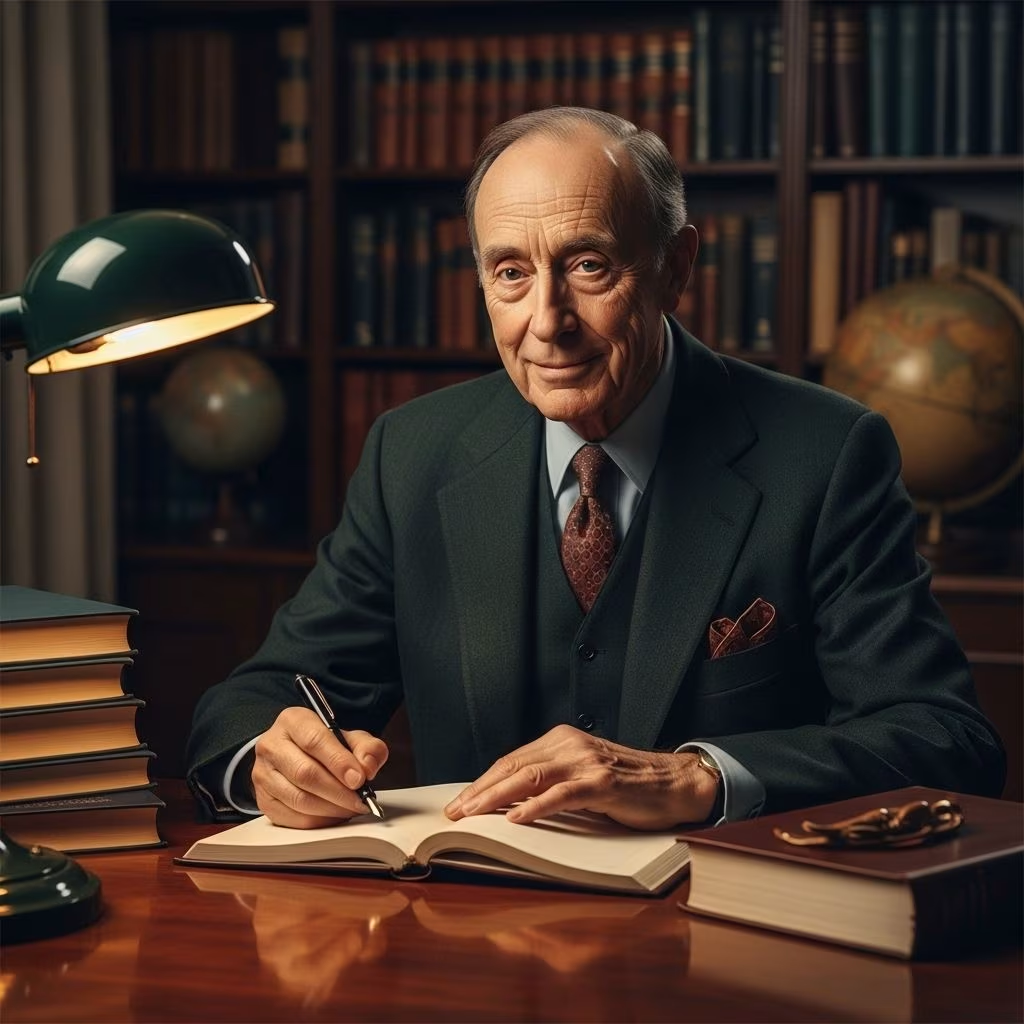
Erik Erikson: Pioneer of Psychosocial Development Theory
Erik Homburger Erikson (1902–1994) profoundly shaped our understanding of human growth with his theory of psychosocial development. His legacy extends beyond psychology, influencing fields like education, anthropology, and social policy, through his lifelong exploration of how identity and society intertwine.
This article details Erikson’s early life, career, major theoretical contributions, and the continuing relevance of his work, mirroring the organization of key biographical sources.
Quick Facts
- Born: June 15, 1902, Frankfurt am Main, Germany
- Died: May 12, 1994, Harwich, Massachusetts, U.S.
- Fields: Psychoanalysis, Developmental Psychology
- Key Work: Theory of Eight Stages of Psychosocial Development
- Awards: Pulitzer Prize
Early Life and Personal Challenges
Erik Erikson was born in Germany to a Danish mother. His paternity was never clarified, contributing to feelings of confusion about identity in his youth—a theme that ran through his later research.
Intellectually inclined but also artistically gifted, Erikson initially pursued art school before his trajectory shifted toward psychoanalysis, thanks to the mentorship of Anna Freud (Sigmund Freud’s daughter) in Vienna.
Facing the rise of Nazism and the challenges of being of Jewish descent, Erikson emigrated with his wife, Joan Serson Erikson, to the United States in 1933.
Transition to Psychoanalysis and Early Career
Erikson embarked on his training in psychoanalysis under Anna Freud’s guidance. At the Vienna Psychoanalytic Institute, he gained insight into the emotional needs and development of children, publishing his first academic paper in 1930.
After moving to the U.S., Erikson practiced child psychoanalysis in Boston and joined the faculty at Harvard Medical School. His expanded interests led him to study how individuals’ creative consciousness operates and interacts with society and culture.
Academic Positions and Research Focus
- Harvard Medical School: Child psychoanalysis and teaching roles.
- Yale University: Joined the Institute of Human Relations in 1936.
- Fieldwork Among Native Americans: Studied Sioux children at Pine Ridge Reservation and later the Yurok Indians in California, examining how culture affects identity and personality development.
- University of California, Berkeley: Became a professor of psychology in 1942.
Erikson’s experiences with diverse cultural communities shaped his understanding of the universality and variations of developmental crises and the institutional solutions that societies offer.
Major Contributions: The Eight Stages of Psychosocial Development
Erikson’s seminal theory, published in Childhood and Society (1950), describes human development as a sequence of eight psychosocial stages, each defined by a key conflict or “crisis” that must be resolved for healthy personality growth.
| Stage | Age Range | Conflict | Core Virtue | Outcome |
|---|---|---|---|---|
| 1. Trust vs. Mistrust | Infancy (birth–18 months) | Can I trust the world? | Hope | Trust in caregivers builds security |
| 2. Autonomy vs. Shame & Doubt | Toddler (2–3 years) | Can I do things myself? | Will | Independence develops with support |
| 3. Initiative vs. Guilt | Preschool (3–5 years) | Is it okay for me to act on my own? | Purpose | Initiative flourishes when exploration is encouraged |
| 4. Industry vs. Inferiority | School Age (6–11 years) | How can I be good? | Competence | Schoolwork builds self-esteem and skills |
| 5. Identity vs. Role Confusion | Adolescence (12–18 years) | Who am I and where am I going? | Fidelity | Identity forms through exploration |
| 6. Intimacy vs. Isolation | Young Adulthood (19–40 years) | Can I love and be loved? | Love | Creating meaningful relationships |
| 7. Generativity vs. Stagnation | Adulthood (40–65 years) | Can I make my life count? | Care | Productivity and mentorship |
| 8. Integrity vs. Despair | Late Adulthood (65+ years) | Is it okay to have been me? | Wisdom | Acceptance of life’s narrative |
Erikson believed that resolution of these stages is flexible; earlier crises can be revisited and renegotiated throughout life, rather than being irreversibly fixed.
His wife, Joan Erikson, later proposed a ninth stage addressing new challenges faced in advanced old age, highlighting that development continues throughout the lifespan.
Key Principles of Psychosocial Theory
- Epigenetic Principle: Each stage builds on the previous ones, and unresolved crises may return at later points.
- Social and Cultural Context: Developmental outcomes are influenced not only by biology, but also by environment and culture.
- Lifelong Process: Identity development and ego strength evolve over the entire life cycle.
Influence of Cultural Studies
Erikson’s field studies—such as those with the Sioux and Yurok peoples—demonstrated that identity formation is shaped by social institutions, cultural taboos, and collective solutions to common problems.
His work stands out for integrating anthropological insights with psychological theory.
Major Publications and Works
- Childhood and Society (1950): Comprehensive statement of the eight-stage theory; edited by Joan Erikson.
- Young Man Luther (1958): Historical and psychoanalytic exploration of Martin Luther’s identity transformation.
- Gandhi’s Truth (1969): Psychohistory examining Mahatma Gandhi and the origins of nonviolent activism.
- Life History and the Historical Moment (1975): Essays connecting psychoanalysis to history and philosophy.
- The Life Cycle Completed (1982): Review of his developmental framework.
- Vital Involvement in Old Age (1986, with Joan Erikson and Helen Q. Kivnik): Exploration of engagement in later years.
- A Way of Looking at Things (1987): Posthumous collection edited by Stephen Schlein.
Later Career, Controversies, and Honors
- Refusal to Sign Loyalty Oath: Resigned from the University of California in 1950 because of the political climate.
- Austen Riggs Center: Served as a senior clinician and researcher.
- Harvard Return: Lecturer, professor, and later professor emeritus (1960–1994).
- Pulitzer Prize Winner: Erikson’s work was recognized for its breadth and interdisciplinary reach.
Legacy and Continuing Impact
- Influence in Psychology: Erikson’s integration of social, cultural, and biological elements into developmental theory transformed approaches to therapy, education, and social policy.
- Identity Theory: His “identity crisis” concept remains foundational in describing adolescent and adult challenges.
- Multidisciplinary Applications: Erikson’s ideas continue to inform research in gerontology, education, counseling, and beyond.
Frequently Asked Questions (FAQs)
Q: What sets Erik Erikson’s theory apart from Sigmund Freud’s?
A: While Freud focused on psychosexual development with an emphasis on childhood, Erikson expanded the developmental process across the entire lifespan and centered on psychosocial rather than psychosexual crises, integrating social and cultural factors.
Q: What is an “Identity Crisis” in Erikson’s framework?
A: An identity crisis refers to the struggle individuals, especially adolescents, face when trying to establish a clear sense of self amidst changing experiences, societal expectations, and personal aspirations.
Q: Are Erikson’s stages fixed, or can previous crises be revisited?
A: Erikson’s theory suggests that while stages follow a fixed sequence, their resolution is ongoing and may be reactivated throughout life, especially during significant personal changes or life events.
Q: How did Erikson’s personal history affect his theories?
A: Erikson’s early questions about his own identity prompted his lifelong investigation into the crisis stages of identity formation. His migration and cross-cultural experiences also inspired his research on the role of society and institutions in development.
Q: What was Joan Erikson’s contribution to Erikson’s theory?
A: Joan Erikson, Erikson’s wife and collaborator, added a ninth stage to the psychosocial model, focusing on the unique developmental tasks and challenges encountered in advanced old age.
Summary Table: Erikson’s Stages and Outcomes
| Stage | Description | Positive Outcome | Negative Outcome |
|---|---|---|---|
| Trust vs. Mistrust | Infants learn to trust caregivers | Hope | Fear/Suspicion |
| Autonomy vs. Shame & Doubt | Toddlers assert independence | Will | Self-doubt |
| Initiative vs. Guilt | Children initiate activities | Purpose | Guilt |
| Industry vs. Inferiority | Mastery of skills | Competence | Inferiority |
| Identity vs. Role Confusion | Explore and form identity | Fidelity | Confusion |
| Intimacy vs. Isolation | Form intimate relationships | Love | Isolation |
| Generativity vs. Stagnation | Contribute to society | Care | Stagnation |
| Integrity vs. Despair | Reflect on life’s meaning | Wisdom | Despair |
Conclusion
Erik Erikson’s work stands as a cornerstone in psychological science, blending personal experience with groundbreaking exploration of identity, society, and personal growth. His eight stages of psychosocial development remain vital in understanding human nature and guiding professionals in psychology, education, and beyond.


