


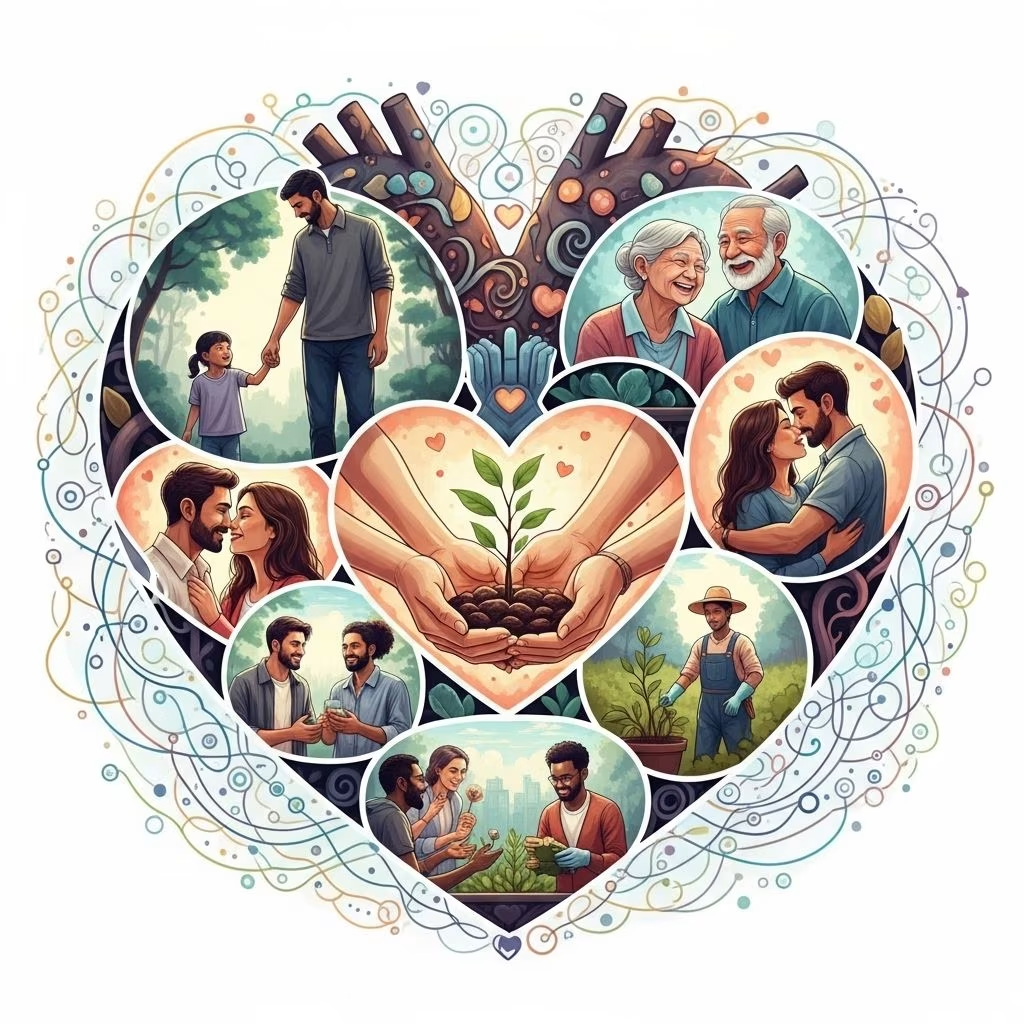
Types of Love: Exploring the Rich Dimensions of Human Connection
Love is a multi-faceted, powerful emotion that impacts nearly every aspect of our psychology, relationships, and social well-being. Throughout history, philosophers, psychologists, and scientists have tried to define and categorize love to better understand its profound effects on individuals and societies. Modern research and theory reveal that not all love is the same—there are many distinct forms, each with unique traits, motivations, and outcomes. This article examines the various types of love, their defining features, the science behind them, and their influences on our lives.
What is Love?
While love is often described as a feeling of deep affection, psychologists and scientists emphasize that love is a complex of emotions, behaviors, and beliefs associated with strong feelings of warmth, protectiveness, respect, and connection. Love can drive nurturing, cooperation, support, and even motivate altruism. It bridges cultures, ages, and species, forming the backbone of our closest relationships and the foundation of communal living.
- Affection: The emotional bond that makes us care deeply for someone’s well-being.
- Attachment: The desire for closeness and security with another person.
- Passion: Intense feelings of desire and attraction.
- Commitment: The conscious decision to maintain a long-term connection.
Love uniquely activates processes in our brains that enhance social bonding and emotional regulation, involving areas such as the ventral tegmental area and reward centers.
Sternberg’s Triangular Theory of Love
One of the most influential frameworks for understanding love is the Triangular Theory of Love, developed by psychologist Robert Sternberg. This theory identifies three fundamental components of love:
- Intimacy: Emotional closeness and the sharing of personal thoughts and feelings.
- Passion: Physical attraction and sexual or romantic arousal.
- Commitment: The intent to maintain the relationship through good times and bad.
Sternberg asserts that combinations of these three elements result in seven distinctive types of love, each described by the interplay or lack of intimacy, passion, and commitment.
Seven Types of Love in Sternberg’s Theory
| Type of Love | Intimacy | Passion | Commitment | Description |
|---|---|---|---|---|
| Non-love | No | No | No | Lack of all three components. Most casual, everyday interactions. |
| Liking | Yes | No | No | Emotional intimacy without passion or long-term commitment; friendships. |
| Infatuation | No | Yes | No | Intense physical or romantic attraction absent deeper connection or decisions. |
| Empty Love | No | No | Yes | Commitment without emotional intimacy or physical passion, e.g., some arranged marriages. |
| Romantic Love | Yes | Yes | No | Combines emotional connection and sexual attraction, but no formal commitment yet. |
| Companionate Love | Yes | No | Yes | Long-term emotional bond and commitment, typical of close friends or long marriages after passion has faded. |
| Fatuous Love | No | Yes | Yes | Quick commitment driven by passion without intimacy, e.g., whirlwind romances. |
| Consummate Love | Yes | Yes | Yes | The “ideal” type: combines all three dimensions for a balanced, lasting connection. |
Other Major Theories and Types of Love
While Sternberg’s model is widely cited, many psychologists and researchers have expanded on or offered alternative frameworks to further explore the subtleties of love.
Eros, Ludus, Storge, Mania, Agape, Pragma
- Eros: Passionate, romantic love driven by physical and sexual attraction.
- Ludus: Playful or game-like love, lacking commitment.
- Storge: Affectionate love found in family relationships and close friendships.
- Mania: Obsessive or possessive love filled with passion and insecurity.
- Agape: Selfless, altruistic love that values the well-being of others above one’s own.
- Pragma: Practical love built on reason, compatibility, and shared goals.
Lee’s color wheel theory illustrates how people experience and combine these styles in distinct ways, producing highly individualized forms of love.
The Science Behind Love
Neuroscientists and psychologists have identified how different types of love activate distinct areas in the brain. Studies reveal that love for romantic partners, children, friends, pets, and nature are processed in overlapping—but not identical—cognitive and emotional circuits.
- Romantic and parental love strongly activate brain regions related to reward, emotional regulation, and social cognition (midline areas such as the precuneus, posterior cingulate, and medial prefrontal cortex).
- Love for close relationships differs neurologically from more distant love (for strangers, pets, or nature), confirming the depth and attachment underlying interpersonal bonds.
- Love for nature or strangers involves more ventral occipitotemporal and parietal brain regions, suggesting a different processing style focused on broader empathy and aesthetic appreciation.
Common Types of Love We Experience
Love touches many dimensions of our lives. The most influential models collectively suggest the following major forms:
- Romantic Love: The classic notion—passionate desire, emotional intimacy, and often a sense of obsession. Includes physical and psychological attraction and often leads to relationships, marriage, or partnership.
- Companionate Love: The warm, enduring affection and commitment between family members, close friends, or longtime partners. Often, the fiery passion fades, but deep attachment and loyalty continue.
- Infatuation: Marked by intense feelings of physical desire but missing deeper connection or commitment. While exhilarating, infatuation often proves temporary.
- Altruistic (Agape) Love: Caring for others selflessly without expecting anything in return. Includes parental love, compassionate love in friendships, and humanitarian concern for others.
- Attachment and Bonding: The secure feeling of being connected and safe with someone, essential in early child-caregiver relationships and sustaining long-term marriges and friendships.
- Pragmatic Love: Built on practical considerations and compatibility, common in some long-standing relationships or arranged partnerships.
How Love Influences Our Lives
Each type of love plays unique roles in shaping behavior, well-being, and social life:
- Friendship encourages emotional openness, honesty, and mutual support.
- Romance often increases attention, motivation, and creativity but can be distracting or obsessive.
- Companionate love forms the basis for strong support systems and lifelong bonds.
- Altruistic love fuels cooperation, volunteerism, and social harmony.
- Commitment drives loyalty and stability within families and communities, enhancing resilience and emotional health.
Understanding the differences between love types can improve personal insight, foster better relationships, and guide healthy choices in love life, friendship, and community.
Love Languages
Individual preferences for expressing and receiving love often fall into categories known as love languages. Examples include words of affirmation, acts of service, receiving gifts, quality time, and physical touch, highlighting that people may experience and prioritize aspects of love differently.
Frequently Asked Questions (FAQs)
What is the difference between romantic love and companionate love?
Romantic love combines passion and intimacy and is typically more intense and sexual, while companionate love centers on deep emotional intimacy and commitment, often enduring even after romantic passion fades.
Can infatuation lead to true love?
Infatuation alone is typically fleeting, driven by physical attraction. However, with time and deeper connection, it can evolve into consummate or romantic love when intimacy and commitment are added.
How does love affect mental and physical health?
Love strengthens social bonds and emotional regulation, reducing stress and promoting overall well-being. Secure, supportive relationships can lower disease risk, improve mood, and boost resilience.
Is all love the same in the brain?
No. While all love activates reward and social cognition circuits, love for romantic partners, family, pets, and nature involve distinct patterns and regions in the brain depending on the relationship’s closeness.
What is altruistic love?
Altruistic love (agape) is selfless caring for others’ well-being and happiness, regardless of personal gain.
Conclusion: Why Understanding Types of Love Matters
Human experience is enriched by the diversity of love—in romance, family, friendship, and compassion. Recognizing the varieties and dynamics of love helps nurture healthier relationships, greater self-awareness, and a deeper appreciation for the connections that sustain us. Whether passionate or pragmatic, fleeting or lifelong, love remains the foundation of our lives, driving joy, growth, and meaning.
References
- https://psychcentral.com/relationships/the-psychology-of-love
- https://academic.oup.com/cercor/article/34/8/bhae331/7741043
- https://greatergood.berkeley.edu/article/item/what_is_love_scientists_have_answersbut_they_dont_all_agree
- http://pzacad.pitzer.edu/~dmoore/psych199/1986_sternberg_trianglelove.pdf
- https://pmc.ncbi.nlm.nih.gov/articles/PMC7248243/
- https://hms.harvard.edu/news-events/publications-archive/brain/love-brain
- https://health.clevelandclinic.org/understanding-love-stages-and-languages


