


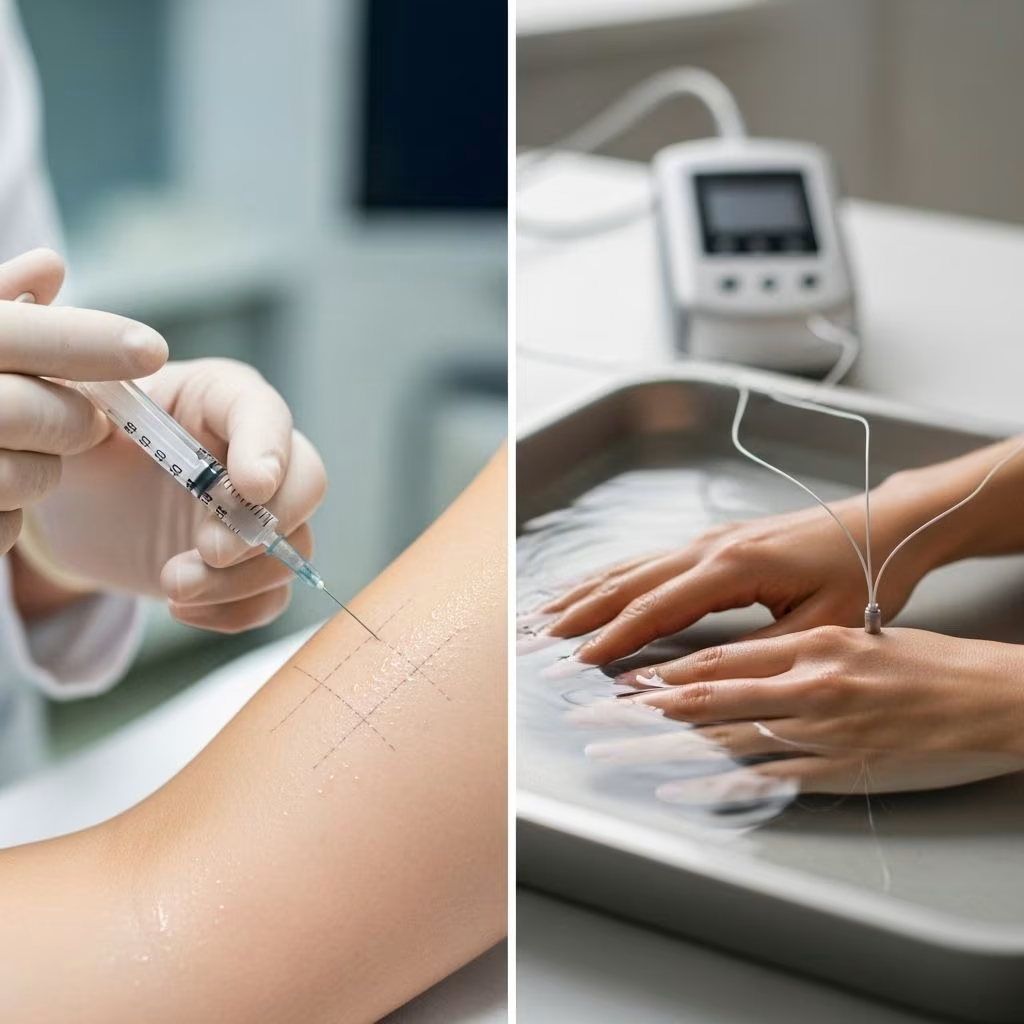
Hyperhidrosis, commonly known as excessive sweating, is a condition impacting millions of individuals globally. It can cause significant discomfort, social anxiety, and distress, especially when standard deodorants and antiperspirants fail. Among the medical options, Botox injections and iontophoresis are prominent treatments, offering alternatives for patients seeking relief from persistent sweating. This article comprehensively compares their mechanisms, efficacy, safety, side effects, cost, and ideal patient profiles to assist in making an informed treatment decision.
Understanding Hyperhidrosis
Hyperhidrosis is characterized by sweat production exceeding what is necessary for normal thermoregulation. It can be focal (affecting specific areas) or generalized and occurs regardless of temperature or activity level. The most commonly affected regions include the underarms (axillae), palms, soles, and face. While the exact prevalence varies, estimates suggest over six million people in the United States alone suffer from hyperhidrosis, making it a significant clinical concern.
- Types: Primary hyperhidrosis (idiopathic, often focal) and secondary hyperhidrosis (due to medical conditions or medications).
- Commonly affected areas: Underarms (axillary), palms, soles, face, and groin.
- Impact: Affects day-to-day life, work, relationships, and can lead to embarrassment, anxiety, or depression.
Botox for Hyperhidrosis
Botox, or botulinum toxin type A, is a neurotoxin most commonly associated with cosmetic treatments. However, its medical use in managing hyperhidrosis is supported by robust clinical evidence. Botox injections are FDA-approved for axillary hyperhidrosis and are also used off-label for palmar, plantar, and craniofacial sweating.
Mechanism of Action
Botox works by blocking the nerve signals—specifically, it inhibits acetylcholine release at the neuromuscular junctions of sweat glands. This effectively prevents sweat glands from producing excessive sweat, offering symptomatic relief in target areas.
Procedure Details
- Fine needles inject small amounts of Botox into the affected skin, typically in a grid-like pattern.
- A session lasts roughly 15–30 minutes depending on the area treated.
- Effects are noticeable within a few days and peak after about 1–2 weeks.
Efficacy
- Reduces sweating by about 80–85% in the underarms and a similar percentage for palms.
- High satisfaction rates: approximately 94–98% of patients report significant improvement for up to six months.
- Demonstrated improvements in quality of life, as measured by disease severity and dermatology-specific scales.
Duration of Results
- Effects last three to six months, after which further treatment is required.
- Repeat injections are safe but necessary for continued symptom control.
Safety and Side Effects
- Common: Site pain, swelling, minor bruising, temporary muscle weakness (especially in palms).
- Rare: Infection, allergic reactions.
- Approved by the FDA for axillary use, considered safe when administered by trained professionals.
Advantages
- Non-surgical and minimally invasive.
- No recovery time; most patients return to normal activities immediately.
- Well-suited for patients with focal, severe, or refractory sweating.
Limitations
- Cost: Higher per-session cost than iontophoresis, especially for large areas or multiple sessions.
- Password: Requires repeated treatments every few months.
- Pain: Injections can be uncomfortable, particularly on palms or soles.
Iontophoresis for Hyperhidrosis
Iontophoresis is a physical therapy mostly used for palmar (hand) and plantar (feet) hyperhidrosis. It involves using a device to deliver a mild electrical current through the affected skin submerged in water, which reduces sweat production. The mechanism is not entirely understood, but it is thought to temporarily block sweat gland function or disrupt sweat duct flow.
Mechanism of Action
- Electric current (usually under 20 mA) is passed through tap water, generating ions that block sweat gland activity.
- Sessions usually take 20–40 minutes.
- A course starts with treatments several times per week, followed by maintenance sessions once symptom control is achieved.
Efficacy
- Effective for many patients—reported to reduce sweating by 60–80% for hands and feet.
- Widely considered a first-line therapy, particularly for palmar and plantar hyperhidrosis.
- Less evidence for efficacy in axillary (underarm) or craniofacial hyperhidrosis.
Duration of Results
- Relief only persists with regular maintenance; discontinuing sessions leads to return of sweating.
- Frequency of maintenance varies: most patients need treatment every 1–2 weeks thereafter.
Safety and Side Effects
- Generally well-tolerated; non-invasive, no drugs involved.
- Side effects: minor skin irritation, dryness, tingling or discomfort at the site, rarely blisters or burns.
- Not recommended for patients with pacemakers, metal implants, or certain skin conditions.
Advantages
- Home-use devices allow self-treatment once technique is mastered.
- Lower long-term cost compared to repeated injectable treatments.
- No systemic side effects or drug interactions.
Limitations
- Time-consuming: requires frequent sessions, especially during initial period.
- Less effective for some body areas (e.g., underarms, face).
- May cause discomfort or minor skin irritation.
Botox vs. Iontophoresis: Direct Comparison Table
| Aspect | Botox | Iontophoresis |
|---|---|---|
| Efficacy | 80-85% reduction in sweating for axillae/palms, high satisfaction | 60-80% reduction for palms/soles, variable for axillae |
| Onset of Action | 2–7 days after injection | After a few sessions (within 1–2 weeks) |
| Duration | 3–6 months per treatment | Ongoing; maintenance every 1–2 weeks |
| Areas Treated | Axillae, palms, soles, face (FDA-approved for axillae) | Palms, soles (best); less effective for axillae/face |
| Side Effects | Pain, swelling, bruising, temporary weakness | Dryness, irritation, tingling, rarely burns |
| Invasiveness | Minimally invasive (injections) | Non-invasive (no needles/drugs) |
| Cost | Higher per session (may be covered by insurance) | One-time cost for device; low ongoing cost |
| Home Use | No, requires clinical setting | Yes, possible after instruction |
| Special Considerations | Avoid in neuromuscular disease, allergy to components | Avoid with pacemakers, metal implants, certain skin diseases |
Pros and Cons of Each Treatment
Botox
- Pros:
- Rapid, dramatic reduction in sweating
- Improves quality of life and confidence
- FDA-approved, extensive safety record
- Cons:
- Expensive and requires repeat clinical visits
- Temporary results (3–6 months)
- Potential for injection discomfort, side effects
Iontophoresis
- Pros:
- Effective for hands and feet in many patients
- Home-based therapy after instruction
- Lower long-term cost
- Cons:
- Requires frequent, ongoing treatments
- Variable efficacy for underarms or face
- Mild skin irritation, not suitable for patients with certain devices or conditions
Choosing the Best Treatment for Hyperhidrosis
The choice between Botox and iontophoresis depends on multiple factors, including:
- Location of sweating: Palmar and plantar hyperhidrosis often responds well to iontophoresis; axillary and craniofacial areas may achieve better relief with Botox.
- Severity: Severe or refractory cases may benefit from Botox’s high efficacy, especially when other methods fail.
- Convenience and lifestyle: Those preferring at-home, self-administered treatment may favor iontophoresis.
- Cost and insurance coverage: Iontophoresis devices entail an upfront cost; Botox sessions may be covered by insurance for medically recognized hyperhidrosis but can be expensive if self-paid.
- Medical contraindications: Certain health conditions may make one treatment preferable over the other.
- Patient preference: Comfort with injections, desire for rapid results, and willingness to commit to maintenance all play a role.
Frequently Asked Questions (FAQs)
Q: How quickly will I notice results from Botox or iontophoresis?
A: Botox injections usually produce noticeable results within 2–7 days, often reaching maximum effect in 1–2 weeks. Iontophoresis typically requires several sessions before sweat reduction is observed, often within one to two weeks of starting treatment.
Q: Is one treatment safer than the other?
A: Both treatments have good safety records. Botox carries risks related to injections (pain, bruising, muscle weakness), while iontophoresis can cause mild skin irritation but is noninvasive. Choice depends on patient needs and health status.
Q: Do the effects last permanently?
A: No. Botox provides temporary relief (3–6 months), requiring ongoing injections. Iontophoresis demands ongoing maintenance treatments (usually weekly or biweekly); stopping either therapy results in symptom recurrence.
Q: Can I use both treatments together?
A: In some resistant cases, dermatologists may combine these modalities—such as using Botox for axillary hyperhidrosis and iontophoresis for palmar sweating. Please consult your physician before combining treatments.
Q: Which is more cost-effective?
A: Iontophoresis is generally more cost-effective over time, especially for those requiring lifelong therapy. Botox has higher upfront and ongoing costs but may be reimbursed with a qualifying hyperhidrosis diagnosis and insurance approval.
Conclusion
Botox and iontophoresis offer effective strategies for managing hyperhidrosis, with distinct advantages and limitations. Botox’s rapid, pronounced effect makes it ideal for focal, resistant, or high-impact sweating, particularly where insurance covers costs. Iontophoresis delivers a drug-free, home-based solution, especially advantageous for patients with palmar and plantar hyperhidrosis who prioritize convenience and cost savings. Ultimately, the best treatment is highly individualized—guided by affected area, severity, personal preferences, cost considerations, and overall quality-of-life improvement.
References
- https://www.skindeepmedspa.com/pros-and-cons-of-botox-for-hyperhidrosis/
- https://pmc.ncbi.nlm.nih.gov/articles/PMC8316174/
- https://pmc.ncbi.nlm.nih.gov/articles/PMC10374185/
- https://www.uclahealth.org/news/article/botox-injections-one-way-treat-hyperhidrosis-sweating
- https://www.healthline.com/health/botox-for-sweating
- https://jamanetwork.com/journals/jamadermatology/fullarticle/399784
- https://www.mhealthfairview.org/blog/Botox-For-Excessive-Sweating-How-Does-It-Work
- https://www.botoxone.com/hyperhidrosis/efficacy


