


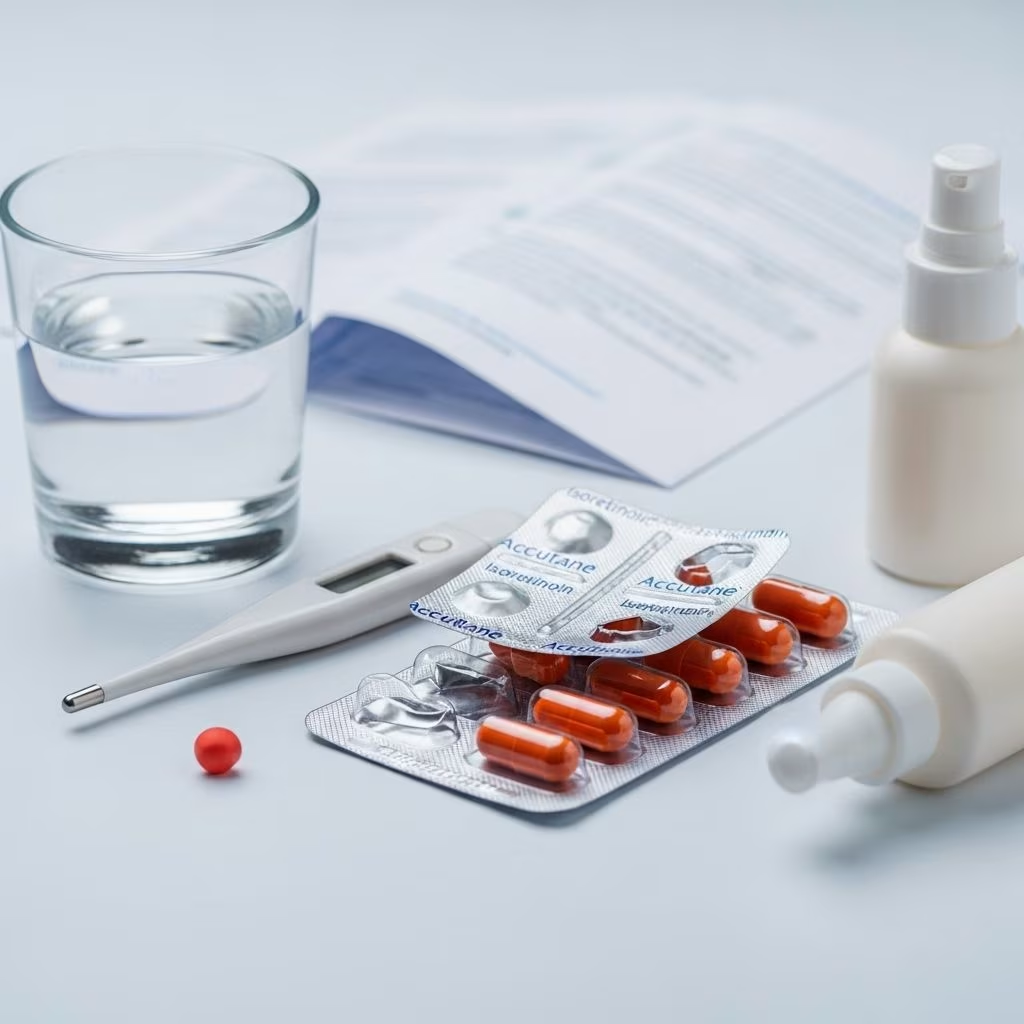
Accutane Treatment: Dosage, Side Effects, and Full Overview
Severe acne can cause not only physical discomfort but also significant emotional distress and scarring. For patients whose acne has not responded to traditional therapies, Accutane, known generically as isotretinoin, offers a potent prescription solution proven effective for stubborn and cystic acne cases. This article delivers a comprehensive overview of Accutane, addressing dosing, safety protocols, potential side effects, and best practice recommendations to guide patients and healthcare professionals through treatment.
What Is Accutane?
Accutane is the brand name for the drug isotretinoin, a powerful oral retinoid derived from vitamin A approved by the FDA for treating severe acne unresponsive to other treatments. Though the Accutane brand itself is no longer marketed in the US, isotretinoin is widely prescribed under different names, including Absorica, Amnesteem, Claravis, and Zenatane (isotretinoin and Accutane are often used interchangeably) .
How Accutane Works
Isotretinoin targets the core mechanisms driving severe acne:
- Reduces the size and activity of sebaceous glands, leading to decreased sebum (oil) production and less blockage of hair follicles .
- Normalizes skin cell turnover, reducing buildup of dead cells that can clog pores.
- Decreases keratinization, helping prevent comedone (acne lesion) formation .
- Alters the follicular microenvironment, lowering levels of Cutibacterium acnes bacteria .
- Exerts anti-inflammatory and immunomodulatory effects, reducing redness and swelling .
This multifactorial approach makes isotretinoin the most effective known treatment for severe nodular and cystic acne, and it also shows benefit in preventing scarring and hyperpigmentation related to chronic acne .
Who Is Accutane For?
Accutane is reserved for patients with severe, disfiguring acne that has not responded to conventional treatments, including topical retinoids, oral antibiotics, and hormonal therapy . Dermatologists may consider isotretinoin for:
- Severe nodular or cystic acne (acne vulgaris)
- Acne that leads to scarring or significant psychosocial distress
- Cases of moderate but persistent acne unresponsive to other therapies (off-label)
FDA guidelines approve use for patients aged 12 and older . The medication may also be considered for select inflammatory skin conditions, genodermatoses, or off-label dermatologic uses under close supervision .
Pre-Treatment Considerations and Safety Requirements
Due to its potential for serious side effects, isotretinoin therapy is carefully regulated. Before beginning treatment:
- Patients must undergo a comprehensive medical evaluation, including discussion of risks, benefits, and contraindications .
- Female patients of child-bearing potential require documented negative pregnancy tests (performed at least 30 days apart) and commitment to two forms of effective birth control .
- All patients must be enrolled in the FDA-mandated iPLEDGE REMS safety program to monitor dispensing and prevent fetal exposure .
- Baseline laboratory tests (blood counts, liver function, lipids) are often performed before starting therapy .
- Patients are counseled not to donate blood or share medication during treatment .
- Monthly dermatologist visits are required for prescription renewal, with additional requirements for pregnancy testing in females who can become pregnant .
Accutane Dosage and Administration
The typical dosing range for Accutane varies, as it is tailored to body weight and clinical response:
- Most regimens use 0.5–1 mg/kg/day, divided into one or two doses with a fatty meal for optimal absorption .
- Doses may be started low and titrated upward based on tolerance and side effects.
- The total cumulative dose during treatment is often targeted between 120–150 mg/kg to maximize efficacy and minimize relapse risk .
- Patients receive a 30-day supply at a time due to safety controls, with mandatory follow-up visits before each refill .
- Only capsules taken orally are used.
Sample Accutane Dosage Table
| Body Weight (kg) | Initial Dose (mg/day) | Maximum Dose (mg/day) | Total Cumulative Dose (mg) |
|---|---|---|---|
| 60 | 30-40 | 60 | 7200–9000 |
| 70 | 35-50 | 70 | 8400–10500 |
| 80 | 40-60 | 80 | 9600–12000 |
This table illustrates dosage estimates; exact protocols should be set by the prescribing dermatologist and take patient tolerability into account.
Expected Treatment Duration
- Standard Accutane courses last 4–6 months, though some cases may require longer or shorter durations .
- Dermatologists examine specific clinical progress to determine if a second course, adjusted dosing, or extended therapy is indicated .
- Most patients achieve substantial clearing or remission after one course .
Monitoring and Follow-Up During Treatment
For safety and efficacy, patients must comply with:
- Monthly dermatologist visits for progress monitoring and to refill prescriptions .
- Routine lab tests (liver enzymes, lipid panels) to detect side effects .
- Regular pregnancy tests for females of child-bearing potential .
- Close tracking of side effects, psychological symptoms, and lifestyle factors.
Common Side Effects
While Accutane is highly effective, it comes with a risk of multiple side effects, most of which are dose dependent and reversible with cessation :
- Dryness of skin, lips, nose, and eyes
- Temporary initial worsening of acne
- Skin sensitivity to sunlight (photosensitivity); sunburn risk is increased
- Joint and muscle aches
- Nosebleeds
- Vision changes, especially night vision
- Headaches
- Hair thinning or loss
- Mood fluctuations (irritability, low mood)
- Increased sensitivity to contact lenses
Most side effects minimize or resolve with dose adjustment or after discontinuing the medication.
Serious and Rare Side Effects
Some side effects are rare but serious and require immediate medical attention:
- Birth defects — Most critical risk; isotretinoin is highly teratogenic. Pregnancy during treatment is strictly contraindicated. Even minimal exposure carries risk of severe fetal abnormalities .
- Severe mood disorders — Reports of depression or suicidal ideation; close monitoring for changes in mental health is recommended .
- Liver function abnormalities and elevated blood fats (triglycerides and cholesterol) .
- Gastrointestinal symptoms — rare risks for inflammatory bowel disease or hepatitis.
- Muscle breakdown (rhabdomyolysis) — extremely rare, may present with severe muscle pain.
- Vision changes (including permanent loss), hearing loss — exceptionally rare.
Immediate cessation and medical evaluation are required if any serious adverse events develop.
Summary Table: Common vs. Serious Side Effects
| Common Side Effects | Serious/Rare Side Effects |
|---|---|
| Dry skin & lips | Birth defects (pregnancy) |
| Photosensitivity | Severe mood changes |
| Nosebleeds | Liver injury / abnormal labs |
| Joint pain | Inflammatory bowel symptoms |
| Temporary worsening of acne | Vision/hearing loss (very rare) |
Long-Term Outcomes and Remission
The remarkable success of isotretinoin lies in its potential to offer long-term or permanent remission of severe acne . Studies report:
- A single course delivers prolonged or permanent clearing for most patients.
- Relapse rates depend on total cumulative dose, acne severity, and individual factors.
- Repeat courses or continued topical therapy may be needed for relapsing cases.
- Quality of life and self-esteem commonly improve following isotretinoin therapy .
Dermatologists may continue monitoring and offer maintenance or adjunct therapies as needed to preserve results.
Post-Treatment Maintenance and Skincare Guidelines
During and after Accutane therapy, supportive skincare and lifestyle measures are essential:
- Use gentle, fragrance-free cleansers and non-comedogenic moisturizers .
- Protect skin from sunlight: daily application of broad-spectrum sunscreen SPF 30+ .
- Avoid abrasive scrubs, waxing, or laser treatments during and for at least six months post-treatment.
- Consult with your dermatologist before resuming any topical retinoids or exfoliants.
- Maintain regular follow-up for skin checks and support.
- Practice healthy lifestyle habits: balanced diet, hydration, stress management.
Frequently Asked Questions (FAQs)
Q: Is Accutane safe for teenagers?
A: Yes. FDA guidelines allow isotretinoin for patients 12 and older with severe, treatment-resistant acne, under close supervision .
Q: How long before I see improvement?
A: Many patients notice improvement after 1–2 months, with significant clearing by the end of the typical 4–6 month course .
Q: What precautions must females take before starting Accutane?
A: Females of child-bearing potential must use two forms of birth control, undergo multiple pregnancy tests, and avoid pregnancy throughout and for at least one month after therapy .
Q: Can I take other acne medications while on Accutane?
A: Some topical treatments may be continued; however, your dermatologist will tailor recommendations to minimize irritation and optimize outcomes .
Q: Will my acne come back after treatment?
A: Most patients achieve long-term clearing or remission, but mild relapse is possible, particularly if the cumulative dose was low or acne is extremely severe. Further courses or topical maintenance may be considered by your provider .
Q: Is regular bloodwork necessary?
A: Yes. Routine laboratory tests monitor for changes in liver function, cholesterol, and other parameters to detect complications early .
Q: What should I avoid during Accutane treatment?
A: Avoid vitamin A supplements, waxing, laser procedures, excessive sunlight, alcohol (in excess), and blood donation during and for a period following therapy .
Q: Are there alternatives to Accutane?
A: Topical retinoids, antibiotics, hormonal therapies, or other oral agents may suffice for mild to moderate acne but typically lack the power to address severe, scarring cases where Accutane is necessary .
Q: How do I get Accutane?
A: Accutane is only available by prescription from licensed dermatologists after all safety requirements and evaluations are met. Online or unregulated sources are unsafe and illegal .
Final Remarks
Accutane (isotretinoin) has transformed severe acne treatment, offering hope and long-term results for those who have struggled with chronic, stubborn acne. With strict safety protocols in place, thorough patient education, and careful medical supervision, isotretinoin remains a cornerstone of dermatologic therapy. Patients considering Accutane should discuss all risks, benefits, and alternatives in detail with their dermatologist to ensure the highest standards of safety and effectiveness throughout treatment.
References
- https://dermwellesley.com/isotretinoin-accutane-information-for-patients/
- https://www.rencicderm.com/treatments/accutane-isotretinoin
- https://www.aad.org/public/diseases/acne/derm-treat/isotretinoin/side-effects
- https://pmc.ncbi.nlm.nih.gov/articles/PMC10464604/
- https://www.aad.org/public/diseases/acne/derm-treat/isotretinoin
- https://www.ncbi.nlm.nih.gov/books/NBK525949/
- https://www.mayoclinic.org/drugs-supplements/isotretinoin-oral-route/description/drg-20068178
- https://www.apderm.com/treatment/isotretinoin-accutane/


