


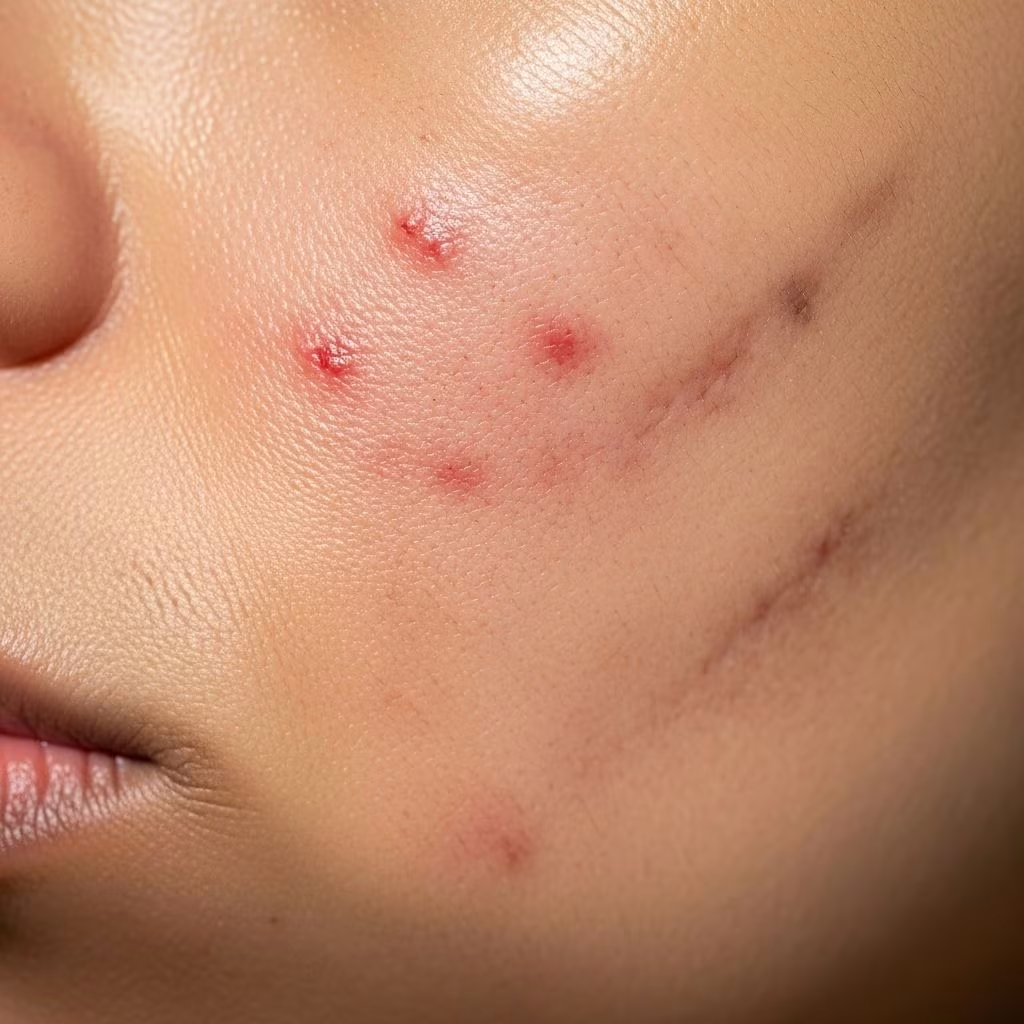
Acne can leave more than just temporary blemishes—it often results in lingering dark spots or textural scars that affect skin tone and texture. Understanding the causes of post-acne marks and the most effective treatments is crucial for achieving clearer and more even skin. This comprehensive guide covers everything you need to know about clearing acne scars, managing dark spots, and treating hyperpigmentation, drawing on the best available research and professional advice.
Understanding Acne Scars and Hyperpigmentation
After an active acne breakout, skin often displays residual marks. There are two main types:
- Acne Scars: These are physical changes to skin texture. They can manifest as depressions (atrophic scars) or raised tissue (hypertrophic and keloid scars).
- Post-Inflammatory Hyperpigmentation (PIH): These are flat, discolored marks—typically brown, red, or purple—that develop after the skin’s inflammatory response to an acne lesion.
While acne scars involve a loss (or excess) of tissue and impact the skin’s surface, hyperpigmentation refers to increased pigment production triggered by inflammation, leaving the affected area darker than the surrounding skin.
Acne Scars vs. Hyperpigmentation: Key Differences
| Feature | Acne Scars | Hyperpigmentation |
|---|---|---|
| Appearance | Pitted (atrophic), raised (hypertrophic), or wavy (rolling) | Flat, dark or red spots |
| Cause | Collagen disruption and tissue loss (or excess growth) | Increased melanin from inflammation |
| Persistence | Can be permanent without intervention | Often fades with time but may take months/years |
| Common Treatments | Microneedling, lasers, fillers, radiofrequency | Topicals (vitamin C, retinoids, hydroquinone), peels, sun protection |
Factors That Influence Scarring and Hyperpigmentation
- Skin Tone: Darker skin types are more prone to hyperpigmentation, while fairer skin may scar more visibly.
- Acne Severity: Nodular or cystic acne increases the risk for both permanent scarring and pigmentation.
- Sun Exposure: Without protection, UV rays can worsen dark spots and slow healing.
- Genetic Predisposition: Family history impacts how skin responds to injury and inflammation.
- Picking/Squeezing: Manipulating acne increases local inflammation and worsens pigmentation.
Proven Skincare Ingredients for Fading Dark Spots
Several over-the-counter and prescription active ingredients demonstrate efficacy for fading dark spots, improving skin texture, and reducing hyperpigmentation:
- Vitamin C (L-ascorbic acid): A potent antioxidant that inhibits melanin production, brightens the skin, and boosts collagen.
- Retinoids (Retinol, Tretinoin): Stimulate skin cell turnover, helping to fade discolorations and encourage new, healthier skin.
- Hydroquinone: A dermatologist-recommended bleaching agent that lightens dark spots by inhibiting melanin formation. Should be used under supervision for short-term cycles.
- Niacinamide: Reduces pigment transfer in skin, is anti-inflammatory, and helps improve tone and barrier function.
- Kojic Acid: Naturally derived, inhibits tyrosinase to brighten skin and reduce spots.
- Azelaic Acid: Lightens PIH and has anti-acne properties.
- Mandelic Acid: An alpha hydroxy acid (AHA) that gently exfoliates and fades discoloration, especially useful for sensitive skin.
- Sunscreen (Broad Spectrum, SPF 30+): Critical for prevention and treatment, as sun exposure worsens existing spots and triggers new ones.
Example Effective Skincare Routine for Post-Acne Marks
- Mild cleanser
- Vitamin C serum in the morning
- Moisturizer with niacinamide
- Daily broad-spectrum sunscreen (SPF 30+)
- Retinoid in the evening (as tolerated)
- Targeted spot treatments (e.g., hydroquinone, azelaic acid) as prescribed
Professional & In-Office Treatments
For persistent or severe cases, clinical interventions often accelerate results. Professional options address both textural scars and PIH:
Non-Invasive Procedures
- Chemical Peels (AHAs/BHAs): Glycolic and salicylic acid peels exfoliate the top skin layers, enhance cell turnover, and lighten pigmentation.
- Microdermabrasion: Offers gentle resurfacing to smooth out uneven texture and fade superficial hyperpigmentation.
- Microneedling (with or without Platelet-Rich Plasma, PRP): Tiny controlled injuries stimulate collagen production, improve atrophic scars, and even pigmentation.
Advanced and Energy-Based Therapies
- Laser Resurfacing: Fractional lasers (such as Fraxel, PicoSure, and Clear + Brilliant) break down scar tissue, stimulate new collagen, and selectively target pigment.
- Radiofrequency (RF) Microneedling: Combines needles and radiofrequency energy to renew deeper skin layers, excellent for textural and pigment concerns.
- Light-Based Therapy (e.g., BroadBand Light, BBL): Uses intense light to reduce redness, discoloration, and stimulate collagen with minimal downtime.
Other Dermatologist Interventions
- Dermal Fillers: Hyaluronic acid-based fillers effectively lift indented (atrophic) scars for improved contour.
- Steroid Injections: Used for treating hypertrophic/keloid scars by reducing inflammation and flattening raised tissue.
- Botox: May help relax tissue surrounding certain deep acne scars to improve their appearance, but repeat treatments are needed.
Combining treatments can provide synergistic effects, but your dermatologist will tailor the approach to your scars and skin type.
Treating Diverse Skin Tones: Special Considerations
Darker skin tones (Fitzpatrick types IV-VI) require extra care. Common treatments must be adjusted to prevent side effects such as worsening pigmentation or irritation.
- Gentle, non-bleaching agents (e.g., vitamin C, niacinamide, azelaic acid) are often safest and should form the foundation of at-home routines.
- Chemical peels formulated for dark skin (Mesopeels, Cosmelan): Developed for safety and effectiveness in pigmentation-prone skin, these peels reduce spots without causing skin lightening or unevenness.
- Sun protection is vital, as UV exposure can exacerbate PIH. Use mineral or chemical broad-spectrum sunscreen suitable for your skin type.
- Patch testing is recommended before starting any new product or in-office treatment.
Always consult a board-certified dermatologist experienced with diverse skin tones to avoid complications like hypopigmentation (light spots) or further irritation.
Prevention: Reducing Future Scars and Hyperpigmentation
- Avoid picking or squeezing pimples—this increases inflammation and pigment release.
- Start acne treatment early to reduce the risk of inflammation-induced pigment changes.
- Use sunscreen daily, even indoors, to prevent both new breakouts and the darkening of existing spots.
- Maintain a gentle, consistent skincare routine without over-exfoliating.
- Monitor how your skin responds to each new product—introduce one active ingredient at a time.
Building an At-Home Routine
Consistency is crucial. Here’s a sample regimen to enhance your skin’s repair process and maximize spot-fading ingredients:
- Morning:
– Gentle cleanser
– Antioxidant serum (Vitamin C)
– Lightweight moisturizer with niacinamide
– Broad-spectrum sunscreen (SPF 30+) - Evening:
– Mild cleanser
– Chemical exfoliant (AHAs/BHAs) 2-3 times per week, if tolerated
– Retinoid product
– Deep hydrator/moisturizer - Weekly or as-tolerated:
– Spot treatments (hydroquinone, kojic acid, azelaic acid)
– Facials or gentle masks
Frequently Asked Questions (FAQs)
Can home remedies like lemon juice fade dark spots?
No. Natural acids in lemon can irritate skin and worsen pigmentation, especially in sensitive or darker skin. Stick to dermatologist-approved actives.
How long does it take to see results from scar or dark spot treatments?
Improvements in hyperpigmentation can be noticeable within 4-8 weeks with consistent care, while significant acne scar reduction from clinical treatments may require several sessions and months of healing.
When should I see a dermatologist?
If spots don’t fade after 3-6 months of over-the-counter care, if scars are severe, or if you have concerns about product safety with your skin tone, consult a professional.
Is sunscreen really necessary for dark skin?
Yes. Darker skin tones are still prone to hyperpigmentation from sun exposure. Sunscreen is essential for all skin tones in preventing and treating dark spots.
Can scars and hyperpigmentation be prevented completely?
They can be minimized. Early acne management, no picking, and robust sun protection offer the best prevention.
Further Resources
- American Academy of Dermatology: Dark spot fading tips for every skin type
- Healthline: How to Treat Acne-Related Hyperpigmentation
- Mayo Clinic: Best treatments for acne scars
For best results, personalize your regime with the guidance of a dermatologist, especially for stubborn cases or when trying advanced treatments.
References
- https://www.healthline.com/health/beauty-skin-care/hyperpigmentation-acne
- https://dermatologyseattle.com/top-non-surgical-methods-for-treating-severe-acne-scarring-effectively/
- https://www.brunnermd.com/2023/03/29/acne-scars-or-hyperpigmentation/
- https://www.michelegreenmd.com/acne-scar-treatment-dark-skin
- https://www.cerave.com/skin-smarts/skin-concerns/acne/how-to-get-rid-of-post-acne-marks
- https://peaceoutskincare.com/collections/dark-spots
- https://www.theinkeylist.com/products/hyperpigmentation-scar-solution-routine
- https://www.aad.org/public/everyday-care/skin-care-secrets/routine/fade-dark-spots
- https://www.mayoclinic.org/diseases-conditions/acne/expert-answers/acne-scars/faq-20058101


