


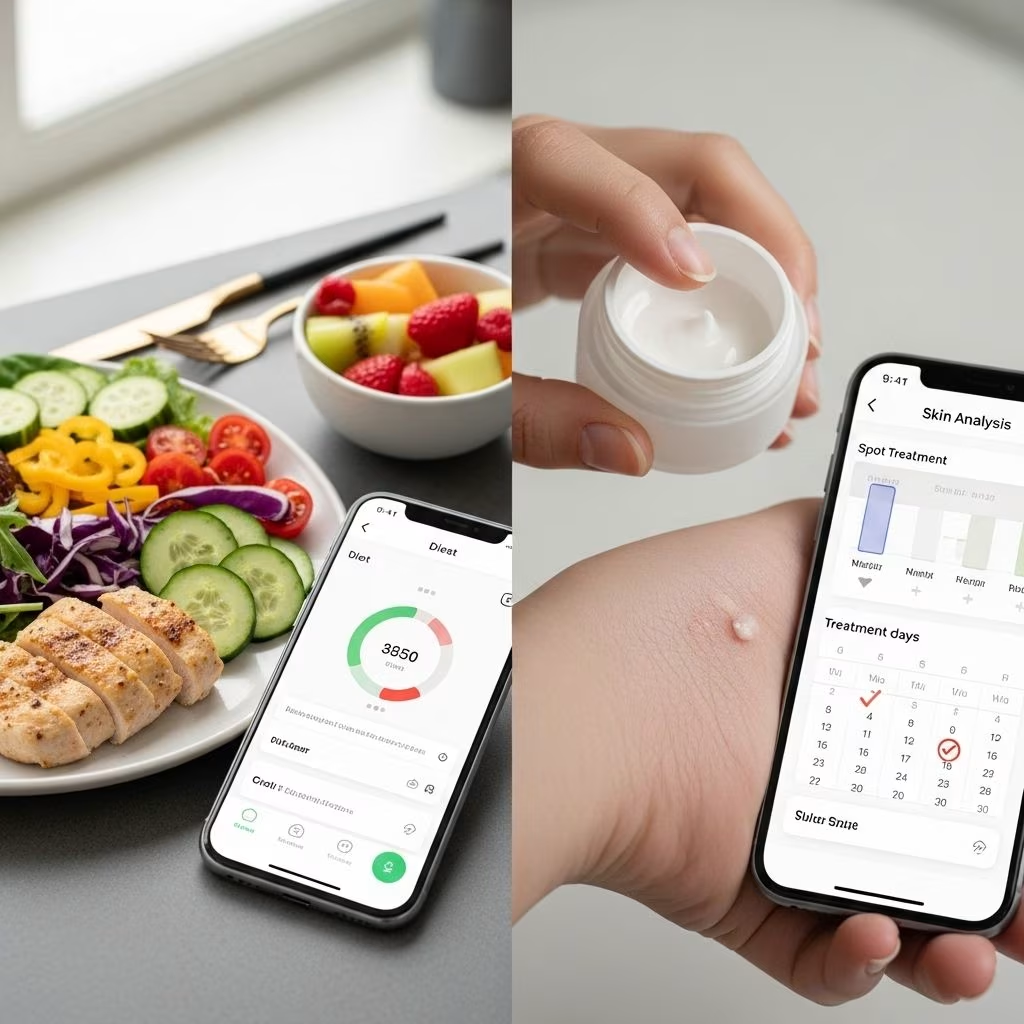
Diet & Spot Treatment Efficacy Tracking: Comprehensive Frameworks for Personalized Health
Dietary habits and the use of spot treatments are pivotal factors influencing individual wellness, especially in the realms of metabolic health and skin appearance. Recent advances in technology have revolutionized the way researchers, clinicians, and consumers track and evaluate the efficacy of dietary programs and spot-based therapies. This guide presents the essential concepts, cutting-edge tools, and research-backed strategies for effective diet and spot treatment monitoring, enabling evidence-based personalization of health interventions.
Introduction: Why Track Diet & Spot Treatment Efficacy?
The ability to systematically track dietary intake and spot treatment efficacy not only accelerates clinical research but also empowers individuals striving to optimize their health outcomes. Objective and standardized monitoring approaches are instrumental in revealing the true impact of a diet or topical regimen, facilitating early adjustments and supporting long-term improvements.
Key Drivers
- Increasing prevalence of diet-related chronic illnesses and dermatological conditions.
- Need for precision nutrition and tailored dermatological therapies.
- Growth of digital health technologies, enabling real-time data collection.
Diet Tracking: Methods and Technologies
Modern diet tracking blends traditional approaches with emerging digital and biomarker-based solutions to accurately capture individual dietary patterns. Below is an overview of principal methodologies and technologies:
Traditional Self-Reported Dietary Assessment
- Food Diaries & 24-Hour Recalls: Individuals record all food and beverages consumed over specific periods. Despite being widely used, these methods suffer from underreporting, recall bias, and subjective estimation of portion sizes.
Limitations: Data accuracy is often compromised by misreporting and recall error. - Food Frequency Questionnaires (FFQs): Designed to assess habitual eating patterns over months to years. Frequent in public health studies but limited by the risk of over-generalization.
Digital Applications and Mobile Tools
- Smartphone Apps: Allow users to log foods in real-time using vast food databases, often incorporating barcode scanning and image recognition.
Advantages: Improve adherence, engagement, and accuracy for weight loss interventions and daily intake monitoring. - Wearable Cameras: Capture photographic records of all food consumed, providing objective data and minimizing recall bias. These tools are increasingly utilized in studies to verify self-reported dietary data.
- Automated Tracking Devices (e.g., Bite Counters): Wearable tech that tracks eating events, counting bites to estimate intake.
- AI-Assisted Apps: Use chatbots and artificial intelligence to guide users, assess triggers for eating lapses, and provide personalized feedback.
Biomarker-Based Dietary Assessment
- Urine & Capillary Blood Samples: Assess nutritional biomarkers, such as sodium, potassium, and vitamins, serving as objective indicators of dietary exposure and compliance.
Emerging Role: Validates self-reported intake and helps identify misreporting. - Metabolomics & Microbiomics: Gut microbiome profiling can track responses to dietary interventions, adding molecular insight into habitual dietary patterns.
Comparison of Diet Tracking Methods
| Method | Strengths | Limitations |
|---|---|---|
| Food Diary | Simple, widely used | Recall bias, underreporting |
| Smartphone App | Portable, database-driven, user engagement | User compliance needed, data privacy issues |
| Wearable Camera | Objective, minimizes recall bias | Privacy, requires image analysis |
| Biomarkers | Objective, physiological evidence | Resource-intensive, invasive |
Spot Treatment Monitoring: Approaches and Frameworks
Spot treatments — such as acne creams, anti-inflammatory gels, or hyperpigmentation correctors — are central to dermatological care. Their efficacy must be tracked with accuracy to ensure desired skin outcomes and inform adjustments.
Key Monitoring Strategies
- Photographic Documentation: Regularly captured images document changes in skin lesions, discoloration, or inflammation over time. Image analysis can quantify improvements or adverse effects.
- Skin Biomarker Analysis: Emerging non-invasive techniques (such as tape stripping for cytokine measurement) provide objective biomarkers of spot response, especially in therapeutic trials.
- App-Based Symptom Logging: Users record subjective assessments (redness, pain, dryness) via dedicated apps, supporting trend analysis and adherence monitoring.
- Clinical Scoring Systems: Dermatologists utilize standardized scoring (e.g., Global Acne Grading System) for quantifying baseline severity and treatment response during clinic visits.
Challenges in Spot Treatment Efficacy Tracking
- Subjectivity in visual and symptomatic assessment.
- Inconsistent adherence to treatment protocol.
- Variation in lesion size, color, and severity.
- Environmental and lifestyle confounders (diet, hygiene, stress).
Integrative Technologies: Bridging Diet and Treatment Monitoring
The intersection of nutrition and dermatology offers fertile ground for innovations that track both diet and treatment efficacy synchronously. Integrative platforms are emerging, harnessing cross-modal data for more holistic assessments.
Multiplatform Data Collection
- Combination Apps: Integrated digital platforms to record dietary intake, skin symptoms, and treatment applications in one dashboard, allowing analysis of nutrition-treatment-skin outcome interactions.
- Computer Vision and AI: Algorithms can automatically analyze skin image changes and correlate these with dietary patterns logged in real time, providing actionable insights for both researchers and individuals.
- Cloud-Based Analytics: Data stored securely allows large-scale aggregation and machine learning analysis, supporting population studies and precision recommendations.
Data Collection & Analysis: Metrics and Models
Robust data collection and standardized analytics are foundational to reliable tracking. The methodologies below reflect current best practices:
Dietary Intake Metrics
- Grams Per Day: Quantification via direct measurement, wearable cameras, or app-based logging.
- Healthy Eating Index (HEI): Scores diet quality based on adherence to evidence-based guidelines, used in clinical research for intervention efficacy.
- Self-Reported Adherence Scores: Individuals rate diet adherence (e.g., 0–10 scale), supplementing objective intake data.
- Biomarker Concentration (μg/ml): Validates dietary exposure and compliance from spot urine/capillary blood samples.
Spot Treatment Efficacy Metrics
- Lesion Counts: Number of visible spots over time, determined via photos and clinician scoring.
- Redness & Size Assessments: Measured through digital imaging technology or standardized color charts.
- Skin Biomarker Analysis: Pro-inflammatory cytokines, hydration, and lipid markers indexed after spot treatment application.
- Patient-Reported Outcome Measures: Includes pain, itching, discomfort, and satisfaction ratings submitted through apps or surveys.
Statistical Modelling
- Concordance Correlation Coefficient: Used to determine agreement between objective intake and self-reported assessment for dietary studies.
- Longitudinal Analysis: Tracks changes over time, allowing for seasonal or cyclical variations in diet and skin response.
- Multivariate Modelling: Integrates multiple data types (diet, biomarkers, images) to predict efficacy and outcomes.
Practical Applications: Diet and Spot Treatment Efficacy in Real-World Settings
Translating research frameworks into everyday use enables more individuals to benefit from systematic monitoring and evidence-informed adjustments.
Personalized Nutrition Programs
- Customized Diet Plans: Adjusted according to tracked intake, adherence levels, biomarker feedback, and subjective well-being.
- Feedback Loops: Real-time app notifications prompt dietary and behavioral corrections, enhancing adherence.
- Population Health Interventions: Large-scale monitoring informs community nutrition policies and targeted interventions.
Spot Treatment in Dermatology
- Home-Based Monitoring: Patients use phone cameras to document and analyze treatment progress, sharing information securely with clinicians.
- Clinical Trials: Rigorous tracking of diet and topical applications enables more reliable efficacy measurement, supporting regulatory approval.
- Integrated Lifestyle Tracking: Diet, stress, and sleep tracking alongside spot treatment enables multifactorial analysis.
Challenges and Limitations
Despite advances, several obstacles persist in diet and spot treatment efficacy tracking:
- Underreporting and Misreporting: Self-recorded data often diverges from actual intake, necessitating additional objective measures.
- Data Privacy and Security: Sensitive health data in apps and cloud platforms demands stringent controls.
- App Engagement: Sustained use remains a challenge, requiring gamification and behavioral reinforcement features.
- Measurement Consistency: Variations in devices, user input, and environmental conditions can affect accuracy.
- Cost and Accessibility: Biomarker assays and advanced wearables are often costly and not universally available.
Frequently Asked Questions (FAQs)
Q: What is the most accurate way to track dietary intake?
A: The most accurate methods involve combining objective technologies, such as wearable cameras and biomarker analyses, with validated digital self-report tools. While digital apps improve accessibility and engagement, physiological biomarkers provide necessary validation for real-world accuracy.
Q: How can I assess if a spot treatment is working?
A: Systematic photographic documentation (preferably using a standardized app), symptom logging (pain, redness), and short-term biomarker measurements can provide meaningful feedback. Sharing tracked data with a dermatologist enhances accuracy and ensures proper adjustments.
Q: Are app-based trackers secure and reliable?
A: Many apps incorporate robust security measures, but users should review privacy settings and consent protocols. Reliability often depends on user engagement and the comprehensiveness of the food database or skin scoring algorithms used.
Q: How quickly can diet changes affect skin health outcomes?
A: This depends on individual biology and condition severity. Some improvements (e.g., reductions in inflammation) may be noticed within weeks of dietary adjustment, but sustained benefits likely require months of consistent behavior and monitoring.
Conclusion
The synergy between advanced diet tracking tools and spot treatment monitoring technologies is reshaping personal and clinical management of nutrition and skin health. As wearable devices, mobile apps, and biomarker assays grow increasingly accessible, individuals and healthcare providers can monitor efficacy more precisely, adopt proactive interventions, and support long-term wellness objectives through data-driven decision-making.


