


Introduction
Maximizing the bioavailability of active ingredients in skincare is a science-driven strategy for achieving visible, targeted skin improvements. This process hinges on delivering the right concentration of active molecules deep within the skin, overcoming the formidable skin barrier. In this guide, we explore the mechanisms, challenges, and latest advances—providing actionable insights for researchers, formulators, and skincare enthusiasts seeking enhanced efficacy from topical treatments.
Bioavailability in Skin Care: What and Why?
Bioavailability in cosmetic and dermatological science refers to the proportion of an active ingredient that becomes available at its site of action after application. Unlike systemic pharmaceuticals—where bioavailability describes entry into the bloodstream—in topical skincare, it refers to the rate and volume of an ingredient able to permeate the skin barrier, reach deeper layers (epidermis and sometimes dermis), and exert its intended biological effects.
- Higher bioavailability means greater efficacy, faster results, and more efficient use of skincare actives.
- Low bioavailability leads to poor penetration, leaving actives stranded on the skin’s surface and limiting potential benefits.
Common actives targeting anti-aging, hydration, pigmentation, and barrier repair (e.g., retinol, hyaluronic acid, peptides) must cross at least the epidermal barrier to interact with viable skin cells and trigger desired changes.
Challenges of the Skin Barrier
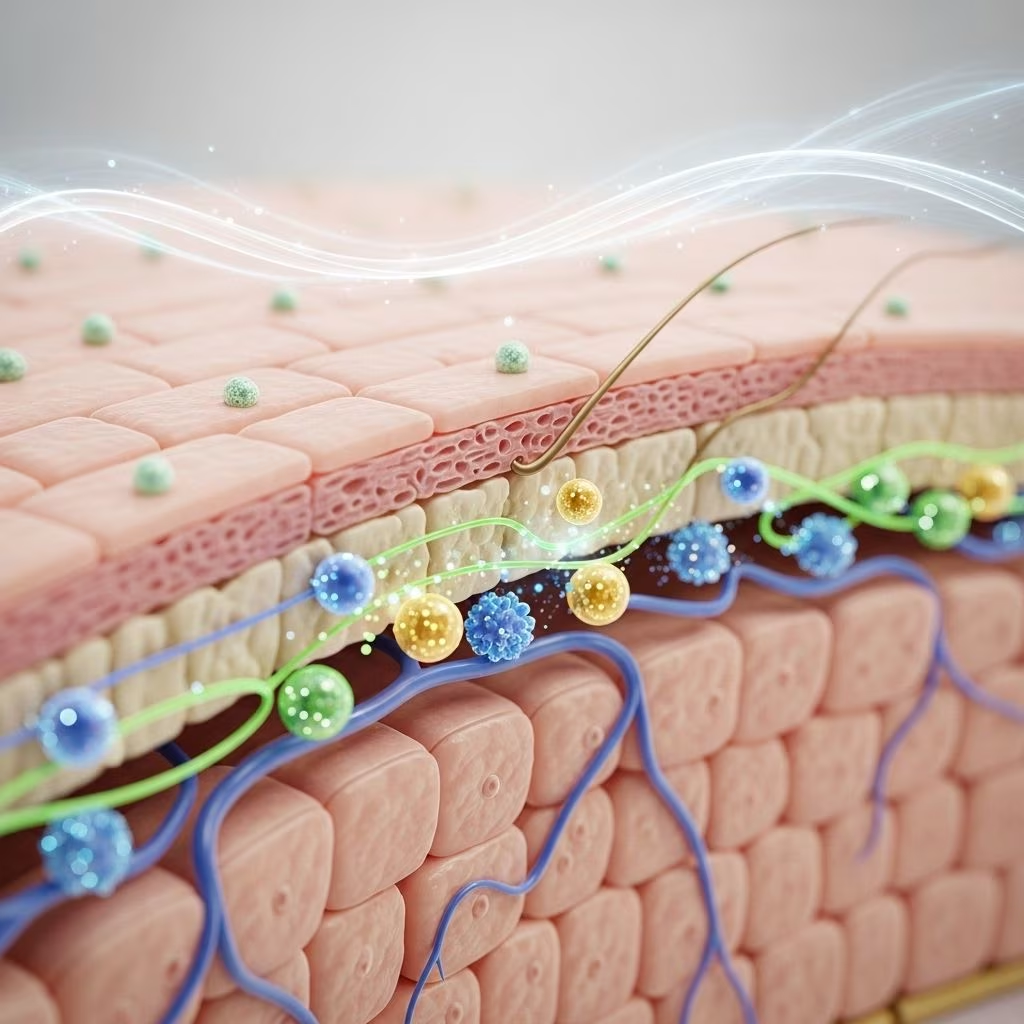
The primary obstacle to bioavailability is the stratum corneum, the outermost skin layer composed of tightly-packed dead cells (corneocytes) surrounded by a dense matrix of lipids. This structure confers resistance to dehydration and environmental hazards, but also severely restricts penetration of most cosmetic ingredients.
- Lipophilic Barrier: The lipid-rich lamellae of the stratum corneum are more permeable to oil-soluble molecules than water-soluble ones.
- Size Matters: Large molecules, such as hyaluronic acid, struggle to pass through without assistance.
- pH Compatibility: Skin’s natural acidity (~pH 5.5) can destabilize some actives, decreasing their chance to penetrate or remain active within the skin.
- Surface-Level Absorption: Without strategic formulation, most actives remain only on the skin’s surface, limiting their biological impact.
This tightly regulated barrier helps maintain homeostasis, but poses significant hurdles for topical therapies seeking meaningful effects beneath the surface.
Penetration vs. Absorption: Key Differences
While often used interchangeably, penetration and absorption refer to separate steps in the delivery of skincare actives:
- Penetration: The movement of an ingredient from the skin’s surface into (and possibly through) the epidermal layers.
- Absorption: The uptake and utilization of an ingredient by skin cells and possibly entry into systemic circulation.
A product’s effectiveness depends on both—penetration ensures the ingredient reaches its site of action, while absorption activates the ingredient’s intended cellular or biochemical process.
Delivery Systems: Boosting Skin Penetration
Advanced delivery systems play a pivotal role in maximizing the penetration and bioavailability of actives. Proper encapsulation, molecular engineering, and carrier choice can help traverse the skin barrier far more efficiently than actives alone.
- Lipid Nanoparticles: Nano-sized lipid carriers enhance penetration of both hydrophilic and hydrophobic ingredients by mimicking natural skin lipids and interacting favorably with the stratum corneum.
- Liposomes: Phospholipid vesicles encapsulate actives, shielding them from degradation and facilitating delivery into deeper skin layers. Lecithin, for instance, closely resembles natural cell membranes, fusing with the skin to deliver ingredients more effectively.
- Solid Lipid Nanoparticles: Particularly useful for unstable or sensitive actives, these carriers improve penetration while providing a sustained release effect.
- Nanostructured Lipid Carriers: Flexible carriers mix solid and liquid lipids, improving loading capacity and controlling release rates.
By leveraging the chemistry of skin lipids and careful particle size engineering, these systems dramatically increase the likelihood of actives reaching viable skin layers intact.
Types of Penetration Enhancers
Penetration enhancers are chemical, physical, or biological agents that temporarily increase the permeability of the stratum corneum, allowing actives to enter deeper layers. Understanding their types is crucial for both safety and efficacy.
| Type | Example | Mechanism | Considerations |
|---|---|---|---|
| Chemical Enhancers | Ethanol, Propylene Glycol, DMSO | Disrupt skin lipids, increase fluidity, enhance solubility of actives | May cause irritation or sensitization; effectiveness depends on concentration |
| Natural Enhancers | Oleic acid, essential oils (e.g., eucalyptus, peppermint), terpenes | Fluidize lipid layers, gently loosen barrier | Preferred for sensitive skin; generally gentler |
| Physical Methods | Microneedling, iontophoresis | Create micro-channels or use energy to drive actives deeper | Clinical supervision recommended; higher efficacy for select actives |
Formulation Strategies for Maximizing Bioavailability
Maximizing bioavailability is a multi-factorial challenge requiring expertise in ingredient science, carrier systems, and skin physiology. Key formulation strategies include:
- Molecular Size Reduction: Decreasing the molecular weight of actives, as with peptide fragments, improves their chances of penetrating the skin barrier.
- Use of Phospholipids: Lecithin and other natural phospholipids mimic cell membranes, fusing with the skin barrier to dramatically improve penetration and retention.
- Synergistic Carrier Systems: Combining liposomes with nanoemulsions, or solid lipid nanoparticles with penetration enhancers, achieves greater bioavailability than any single strategy.
- Solubility Optimization: Adjusting pH or using co-solvents ensures actives remain stable, soluble, and able to penetrate.
- Emulsion Type Control: Oil-in-water vs. water-in-oil formulations can influence which actives penetrate and at what rate.
- Active Concentration: Sufficient active load is essential, but not all excess will penetrate—the flux rate and saturation solubility must be balanced.
- Minimizing Barriers: Enzymatic or gentle exfoliation may be used to remove superficial dead cells, clearing pathways for actives.
A successful product often combines several of these formulation techniques, ensuring the chosen actives reach their maximum potential for skin enhancement.
Measuring and Optimizing Penetration
Rigorous testing and quantification of penetration are critical to verify product efficacy. Laboratory methods include:
- In vitro transdermal absorption tests: Use excised human or animal skin to assess rate and degree of active penetration.
- Transdermal cell culture models: Simulate human skin’s layers to predict penetration safely.
- Receptor fluid analysis: Confirms delivery by measuring actives found on the distal side of the skin layers after application.
- Mathematical flux rate: Quantifies how much active crosses per unit time—critical for comparing formulations.
By combining these assessments, formulators can optimize products, validate claims, and ensure maximum bioavailability in real-world use.
Innovative Techniques in Skin Penetration
Recent innovations have opened new frontiers in safe, targeted skin penetration. These include:
- Smart Carriers: Responsive particles that release actives only in response to specific triggers (e.g., pH change, enzymes), minimizing waste and irritation.
- Biomimetic Formulations: Using molecules identical to those found in healthy skin (like sunflowers’ lecithin) for high compatibility and extraordinary absorption.
- Recycled and Sustainable Ingredients: Phospholipids harvested from by-products, supporting environmental sustainability while enhancing efficacy.
- Film-Forming Systems: Components that create a micro-thin layer on skin, reducing water loss and prolonging active delivery.
- Combination Therapies: Pairing topical actives with physical methods, like microneedling or microcurrent, for exponential absorption improvement.
- High-throughput Testing Models: Automated, rapid screening of hundreds of formulations to identify those with superior penetration and safety profiles.
These advances, when applied judiciously, yield not only increased bioavailability but also more tailored results for different skin types and concerns.
Frequently Asked Questions (FAQs)
Q: Why do some skincare products feel effective yet deliver minimal results?
A product’s tactile qualities (smoothness, scent, initial moisturization) are often due to surface-level absorption. If the actives do not penetrate the stratum corneum, long-term results are limited.
Q: Are natural penetration enhancers as effective as synthetic ones?
Natural enhancers (e.g., oleic acid, essential oils) provide gentler permeability increases, suitable for sensitive skin. Synthetic agents tend to be more potent but may risk irritation if not carefully formulated.
Q: Does exfoliating before applying actives improve penetration?
Yes. Removing surface dead cells via gentle exfoliation can clear the pathway, allowing actives to reach deeper layers more efficiently. Over-exfoliation should be avoided, as it compromises the skin barrier.
Q: How can I choose products with optimal bioavailability?
Look for products formulated with advanced delivery systems (e.g., liposomes), penetration enhancers, and clinical data supporting penetration claims. High bioavailability is rarely guaranteed by concentration alone.
Q: What safety issues are linked to penetration enhancers?
Overuse or high concentrations of some penetration enhancers (especially chemical types) may cause irritation, sensitivity, or barrier disruption. Selecting well-tested formulas and performing patch tests are advised.
Conclusion
Maximizing bioavailability through skincare active penetration is the key to a truly effective topical regimen. Understanding the interplay of skin’s natural barriers, choosing scientifically-proven delivery systems, leveraging penetration enhancers, and using validated formulation strategies ensures that actives reach and benefit target skin layers. As cosmetic biotechnology advances, consumers and formulators alike gain access to safer, more potent solutions, unlocking real—and lasting—skin transformation.
References
- https://beyondmenscare.ch/en/blog/articles/bioavailability
- https://kblcosmetics.com/blogs/news/what-is-bioavailability-and-how-does-it-affect-skin-care
- https://www.letsmakebeauty.com/blog/post/why-your-skincare-needs-penetration-enhancers-maximizing-active-performance
- https://www.revivalabs.com/understanding-the-difference-in-skincare-penetration-and-skincare-absorption/
- https://www.ulprospector.com/knowledge/9837/pcc-how-to-improve-the-bioavailability-and-efficacy-of-skin-care-actives/
- https://skintypesolutions.com/blogs/skincare/absorption-of-skincare-ingredients
- https://pmc.ncbi.nlm.nih.gov/articles/PMC7027575/
- https://www.youtube.com/watch?v=4ytIoZaOU0o


