


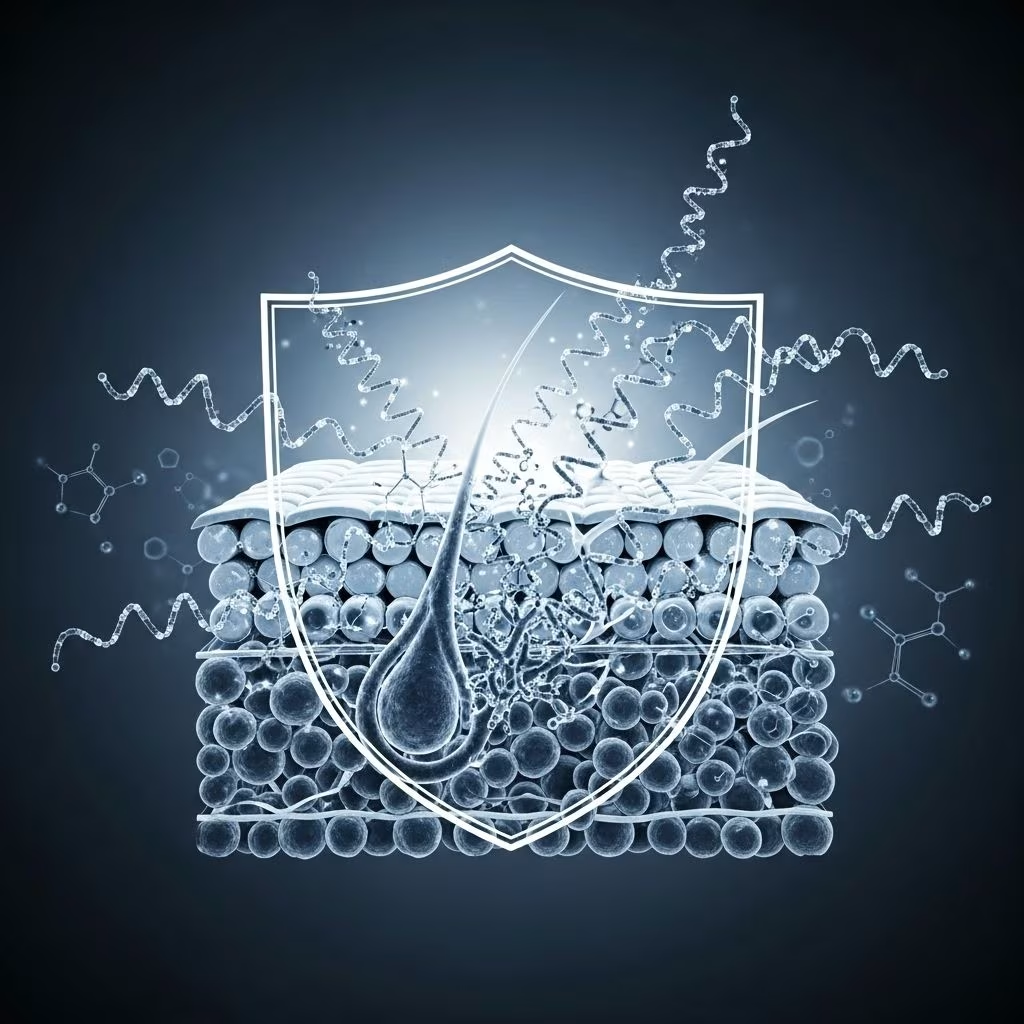
Peptides have emerged as powerful agents in both skin health and performance optimization, celebrated for their ability to fortify the barrier, accelerate recovery, and synergize with other active routines. From athletic performance to skincare, the strategic use of peptides has redefined how we support repair, resilience, and results. This comprehensive guide explores the science behind peptides, their barrier-strengthening properties, and how they work in synergy with other routine actives for optimal wellness.
Understanding Peptides: Structures and Types
Peptides are short chains of amino acids, typically comprising two to fifty residues, that serve as intermediate structures between single amino acids and full proteins. Their versatility and bioactivity make them key tools in both medical and cosmetic therapies. Unlike larger proteins, peptides readily penetrate tissues and interact with specific receptors due to their size and structure, granting them a broad array of physiological effects .
- Signal peptides: Communicate between cells, triggering various repair or growth responses.
- Carrier peptides: Facilitate the transport of essential elements like copper, aiding enzymatic functions.
- Neurotransmitter-inhibitor peptides: Modulate nerve responses, reducing sensations like pain or micro-movements involved in wrinkle formation.
- Enzyme-inhibitor peptides: Control enzymatic activity involved in degradation (e.g., inhibit collagenases to protect structural integrity).
The diversity of peptide types underpins their utility across barrier fortification, tissue repair, and synergistic effects with other actives in wellness and aesthetics.
The Skin Barrier and Role of Peptides
The skin barrier, particularly the stratum corneum, acts as the body’s frontline defense against environmental assaults, moisture loss, and pathogens. Disruptions to this barrier can result in increased transepidermal water loss (TEWL), sensitivity, inflammation, and impaired healing. Peptides support the barrier through several key mechanisms:
- Collagen and Elastin Stimulation: Certain peptides trigger fibroblasts to increase collagen and elastin synthesis, essential components of barrier strength and resilience .
- Natural Moisturization: Peptides assist the skin in boosting production of natural moisturizing factors (NMFs), aiding hydration and barrier flexibility.
- Repair and Recovery: By signalling for cellular regeneration and suppressing inflammation, peptides accelerate barrier recovery following irritation or injury.
- Protection Against Environmental Stress: Antioxidant peptides help neutralize oxidative stress that can degrade barrier function.
This combination of structural reinforcement, improved hydration, and reduced inflammation makes peptides foundational in active skincare routines designed around barrier health and resilience.
Peptide Benefits in Active Routines
Peptides are integral not just for barrier support but for a range of active routines aiming for optimization, whether in skin care, recovery, or endurance. Their benefits include:
- Accelerated Recovery: Reducing inflammation and promoting angiogenesis (formation of new blood vessels) for quicker healing and less downtime .
- Muscle and Tissue Repair: Enhancing collagen synthesis for stronger connective tissues and improved muscle recovery after activity .
- Endurance and Performance: Certain peptides stimulate erythropoiesis (production of red blood cells), supporting better oxygen delivery and endurance .
- Hormonal Regulation: Some peptides mimic or modulate hormone activity (notably growth hormone), influencing muscle growth, metabolism, and tissue repair.
- Fat Metabolism: Stimulate breakdown of fats while preserving muscle mass, supporting healthy body composition maintenance.
- Synergy with Other Actives: Facilitate and enhance the action of potent active ingredients (e.g., retinoids, antioxidants) without excessive irritation.
By improving barrier function and directly signaling repair and regeneration, peptides amplify the effectiveness of comprehensive active routines.
Mechanisms of Barrier Support
The ability of peptides to enhance the barrier is multi-faceted, reflecting their action at various layers of molecular and tissue biology:
- Strengthening Cell Junctions: Peptides boost the production of essential proteins that reinforce tight and adherens junctions, minimizing water loss and pathogen entry.
- Regulation of Inflammation: Peptides modulate inflammatory cytokines, reducing microdamage and preventing chronic inflammatory stress that weakens the barrier .
- Antioxidant Defense: Some peptides donate electrons or upregulate endogenous antioxidant pathways, neutralizing free radicals induced by UV and pollution.
- Promotion of Lipid Synthesis: Key for the barrier’s hydrophobic properties, some peptides stimulate lipid production, boosting softness and resilience.
- Repair of Micro-injuries: By stimulating localized regeneration, peptides accelerate healing of minor abrasions, micro-tears, or irritant-triggered disruptions.
The cumulative effect is enhanced barrier integrity, optimal hydration, and a more robust response to environmental or stress challenges—key for sustained active routines.
Synergy: Peptides and Other Actives
Peptides deliver optimal results when combined synergistically with other actives. Their calming, reparative effects often counterbalance the irritation or dehydration that can accompany retinoids, exfoliants, or acids, permitting more aggressive regimens with minimized risk.
| Active Ingredient | Synergy with Peptides | Typical Result |
|---|---|---|
| Retinoids | Peptides reduce irritation, boost repair | Faster results, less flaking |
| Vitamin C (ascorbic acid) | Peptides support collagen matrix, maintain hydration | Improved firmness, brighter tone |
| Exfoliating acids (AHA/BHA) | Peptides accelerate repair, reduce sensitivity | Smoother texture, stronger barrier |
| Niacinamide | Synergizes for calming, anti-inflammatory effect | Faded redness, improved tone |
| Growth Factors | Peptides amplify regenerative cascade | Optimized rejuvenation and repair |
For athletic routines, peptides can be combined with protein supplementation, adaptogens, and recovery protocols to maximize performance, minimize injury risk, and optimize repair between sessions .
Peptides in Sports Nutrition & Recovery
Peptides have seen rising application in sports nutrition, offering practical benefits for both professional athletes and active individuals. Their advantages include:
- Enhanced Muscle Recovery: Minimizes soreness, expedites repair after intense exertion, and supports connective tissue adaptation .
- Optimized Oxygen Delivery: By stimulating red blood cell production, peptides support improved oxygenation, reducing fatigue and boosting endurance .
- Joint and Skeletal Health: Collagen-supporting peptides reduce risk of joint, tendon, and ligament injuries—common in endurance and strength sports.
- Metabolic Benefits: Modulate fat metabolism, helping maintain muscle while promoting healthy body composition.
- Reduced Inflammatory Damage: By downregulating inflammatory cytokines, aid in long-term recovery from overuse or acute injury .
Research in this area is promising, but ongoing studies continue to clarify the best peptide sequences and dosing strategies for targeted athletic and recovery goals .
Safety and Considerations
While peptides offer many benefits, certain precautions are warranted:
- Product Quality: Use only medical-grade or well-formulated peptide products from reputable sources to avoid contaminants or inefficacy.
- Dosage and Frequency: Peptide action is dose-dependent; excessive use can lead to desensitization or, rarely, immune response. Follow expert or product guidelines.
- Synergistic Use with Caution: Not all combinations are ideal—some actives may destabilize peptides or compete for absorption. Always introduce new actives slowly.
- Allergy/Reaction Risk: Despite being generally safe and well tolerated, patch-test topical peptides or consult a healthcare provider before systemic peptide use.
The safety profile of peptides is generally more favorable than steroids or some pharmaceuticals, but individualized approaches are essential .
Best Practices in Integrating Peptides
Whether optimizing your skincare or workout recovery, incorporating peptides strategically will yield the best results. Consider the following:
- Identify Your Main Goal: Barrier repair, anti-aging, muscle boost, or recovery? Different peptide types excel in different domains.
- Time Application: For skincare, peptides often perform best after cleansing and before moisturizing, both AM and PM. In sports, consistent daily or per-workout timing is ideal.
- Stack Wisely: Pair peptides with synergistic actives (niacinamide, vitamin C, hyaluronic acid) for barrier and skin glow; use with protein and adaptogens for workouts.
- Monitor Reaction: Track skin or performance response, adjusting usage should any irritation or fatigue arise.
- Stay Consistent: Peptides yield the best benefits with regular, sustained use as part of an integrated routine.
Frequently Asked Questions (FAQ)
Q: Can peptides be used with retinoids or acids?
Yes, peptides often help counteract the potential irritancy of retinoids and acids by accelerating skin repair and reducing inflammation, making such combinations suitable for most skin types .
Q: Are there risks to long-term peptide use?
Most evidence suggests that peptides are safe for sustained use, particularly topically or as part of regulated supplementation. Rarely, allergic reactions or desensitization can occur; monitoring tolerance and product quality is advised .
Q: How do peptides compare to traditional protein supplementation?
Unlike intact proteins, peptides are smaller, absorb more rapidly, and can exert targeted effects (e.g., tissue repair, barrier fortification) beyond general protein nutrition .
Q: Do all peptides produce the same results?
No—the effects of peptides depend on sequence, length, and bioactivity. Signal peptides, carrier peptides, and others have distinct roles in repair, hydration, and communication .
Q: Can peptides help with joint or tendon injuries?
Peptides supporting collagen and connective tissues promote healing and resilience in joints, tendons, and ligaments, especially beneficial for active individuals and athletes .
Conclusion
Peptides are integral bioactives in modern active routines, offering a dual benefit: reinforcing the body’s biological barrier and acting synergistically with other actives for enhanced recovery, performance, and skin health. Their role as signaling and structural molecules facilitates accelerated healing, resilience, and optimized results for both high-performing athletes and those seeking daily wellness. As research progresses, the precise integration of peptides will continue to elevate regenerative routines and barrier-focused strategies, paving the way for more robust, effective, and resilient active lifestyles.
References
- https://pmc.ncbi.nlm.nih.gov/articles/PMC8622853/
- https://www.onusiv.com/blog/6-biggest-benefits-of-peptides
- https://pliability.com/stories/best-peptides-for-athletic-performance
- https://pmc.ncbi.nlm.nih.gov/articles/PMC9223426/
- https://www.healthline.com/health/peptides-for-skin
- https://www.nature.com/articles/s41392-022-00904-4
- https://palmbeachdermatologygroup.com/peptides-in-skincare-and-the-science/
- https://www.gerrishmedesthetics.com/the-promise-of-peptides-medical-benefits-and-future-potential/


