


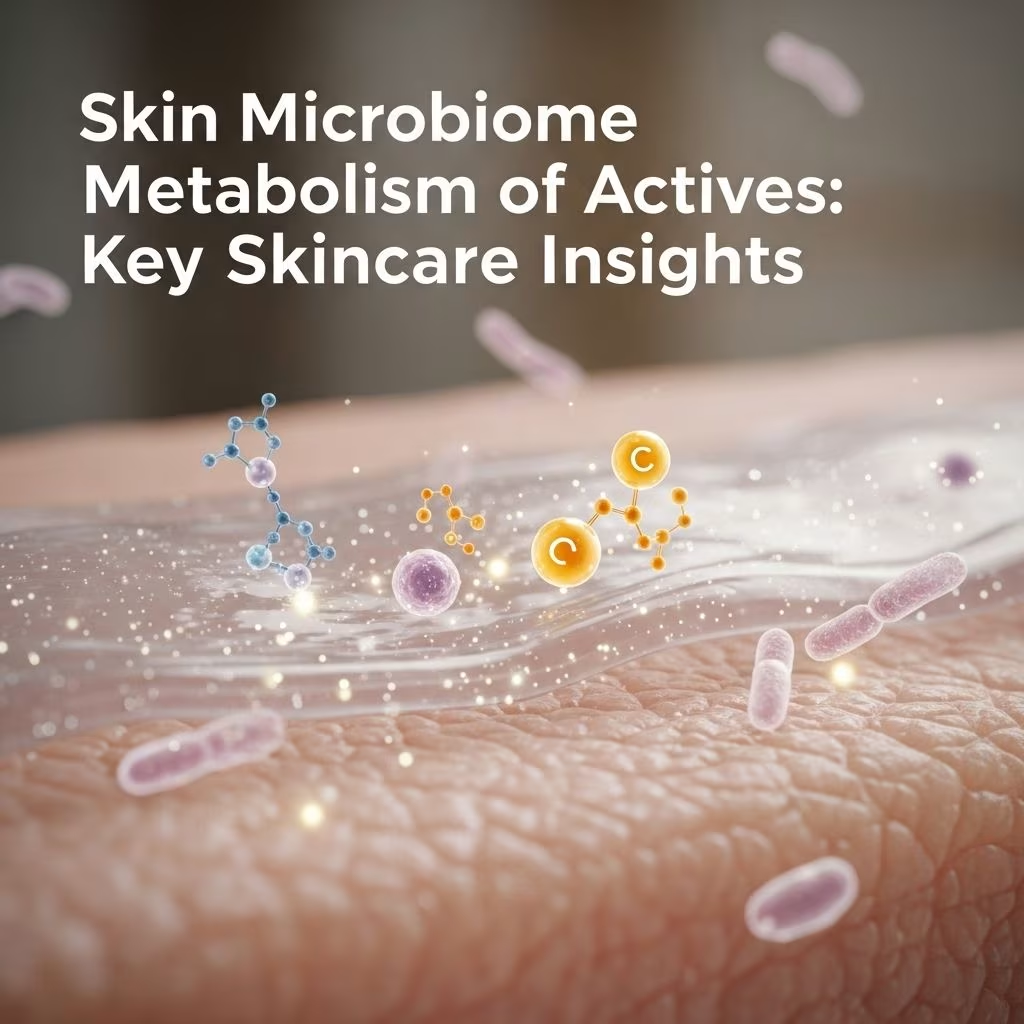
The human skin microorganisms—a collective known as the skin microbiome—play a pivotal role in protecting, nourishing, and interacting with the skin barrier. With the rise of advanced skincare formulations, understanding how this microbiome metabolizes active ingredients is critical for efficacy and safety. This article delves deep into the dynamic relationship between the skin microbiome and active ingredient metabolism, including the ramifications for dermatology, product development, and personalized care.
Introduction: The Dynamic Skin Ecosystem
The skin is the body’s largest organ and its interface with the external world. The surface is colonized by trillions of bacteria, fungi, and viruses that comprise an intricate microbial community—the skin microbiome. Far from being passive bystanders, these microbes actively metabolize compounds derived from the environment, skincare products, and the skin itself, thereby directly influencing skin health, appearance, and disease susceptibility.
Skin Microbiome: Overview and Key Functions
The skin microbiome consists primarily of bacterial genera such as Staphylococcus, Corynebacterium, Cutibacterium (formerly Propionibacterium), and fungal species such as Malassezia. This ecosystem’s composition is shaped by:
- Intrinsic factors: Genetics, immune system status, skin site physiology
- Extrinsic factors: Climate, hygiene habits, cosmetic use, pollution
Key functions of the skin microbiome include:
- Outcompeting pathogens to maintain barrier integrity
- Producing metabolites (fatty acids, organic acids) that modulate skin pH and immunity
- Metabolizing host and environmental compounds, including skincare actives
Table: Key Skin Microbiome Genera and Their Functions
| Genus | Main Functions | Relevant Metabolites |
|---|---|---|
| Corynebacterium | Produces fatty acids, interacts with lipids | Short-chain fatty acids |
| Cutibacterium (C. acnes) | Hydrolyzes sebum, involved in acne pathogenesis | Propionic acid, enzymes (e.g., glucosidase) |
| Staphylococcus | Modulates pH, interacts with immune system | Organic acids, bacteriocins |
| Malassezia | Hydrolyzes skin lipids, associated with dandruff | Lipases, esterase enzymes |
The Skin Barrier and the Cutaneous Metabolome
The skin barrier is formed primarily by the stratum corneum (outermost layer), skin lipids, and microbial inhabitants. The cutaneous metabolome refers to the vast suite of small molecules present at the skin surface, which includes:
- Lipids (free fatty acids, squalene, ceramides)
- Proteins and peptides
- Natural moisturizing factors (amino acids, lactates)
- Exogenous compounds (pollutants, skincare ingredients)
- Microbial metabolites (organic acids, bioactive compounds)
Interaction dynamics: The skin microbiome utilizes, modifies, and produces metabolites that interact not just with the skin, but with applied substances, influencing their skin bioavailability and transformation.
Metabolism of Active Ingredients by the Skin Microbiome
The process of converting or modifying compounds, including skincare actives and drugs, by microbial enzymes is known as biotransformation. The skin microbiome functions as a biochemical barrier, metabolizing actives such as:
- Arbutin – a skin-lightening agent metabolized by microbial α-glucosidase to form hydroquinone, which possesses potent skin-lightening but also irritant and toxic potential.
- Niacinamide – widely used for barrier strengthening and pigmentation, can be hydrolyzed to nicotinic acid by bacterial nicotinamidase, potentially leading to irritation in sensitive individuals.
- Lipids and Fatty Acids – long- and short-chain fatty acids are produced, consumed, or modified by different bacterial genera, altering the skin’s pH, barrier, and moisture.
- Polyaromatic and Plant-Derived Actives – some polyphenols, terpenoids, and phytoactives are transformed by bacterial enzymes, which may enhance or diminish their efficacy and toxicity.
Examples of Microbial Metabolism of Skincare Actives
| Active Ingredient | Microbial Enzyme | Metabolite Formed | Potential Effects |
|---|---|---|---|
| α-Arbutin | α-glucosidase (C. acnes) | Hydroquinone | Effective whitening, potential toxicity/irritation |
| Niacinamide | Nicotinamidase (PncA) | Nicotinic acid | Barrier strengthening, but may cause itching/flushing |
| Squalene, linoleic acid | Lipases, oxidases | Fatty acids, peroxides | Moisturization, altered microbial profile |
Experimental models have shown the skin microbiome to be competent at metabolizing these compounds, sometimes generating metabolites that are more active or more likely to cause irritation than the original compound.
Implications for Skin Health and Disorders
The metabolism of actives by the skin microbiome has far-reaching effects. Beneficially, metabolite generation can enhance skin protection, modulate inflammation, and improve outcomes of topical therapies. Negatively, it can result in the creation of irritants, allergens, or unforeseen metabolites that impact skin integrity.
- Acne and Seborrheic Skin: Excess sebum fosters C. acnes growth and increases hydrolytic activity, affecting active ingredient breakdown and potentially promoting inflammation.
- Atopic Dermatitis (AD): AD skin shows distinctive microbial and metabolic profiles; for example, increased short-chain fatty acids and altered amino acid metabolism that correlate with the abundance of genera such as Staphylococcus. These metabolites can affect skin pH, barrier function, and susceptibility to irritation by skincare actives.
- Contact Dermatitis and Irritation: Some active ingredients are hydrolyzed to forms that provoke local tingling, itch, or rash, often relating to individual microbiome configurations and metabolic capacities.
Genetics, Microbiome, and Active Ingredient Response
Genetic differences affect both the host immune response and the composition of the skin microbiota, explaining inter-individual variability in response to skincare products and topically-applied drugs.
How External Factors Influence Skin Microbiome and Metabolism
The composition and metabolic activity of the skin microbiome—and in turn, the way active ingredients are metabolized—are strongly influenced by:
- Cosmetic and Skincare Products: Surfactants, preservatives, and actives may promote or inhibit specific microbes, shifting the skin’s metabolic balance. Regular use of certain products can either deplete protective commensals or favor opportunistic species, altering skin response to active ingredients.
- Diet and Lifestyle: High-fat diets or nutrient deficiencies can alter sebum composition, impacting skin lipid metabolism and thus microbial colonization.
- Environment and Hygiene: Urban living, climate, and personal habits transform the skin’s physicochemical environment, in turn modulating which microorganisms predominate and how they metabolize compounds.
Case Study: Sebum-Rich Skin and Active Metabolism
Recent research using in vitro models demonstrates that increasing sebum or certain lipid components boosts C. acnes abundance, decreases Staphylococcus spp., and enhances the hydrolysis of actives such as arbutin to hydroquinone. Such shifts highlight the link between the skin’s biochemical landscape, skincare product bioactivity, and consumer safety.
Applications in Cosmetic Science & Dermatology
Understanding skin microbiome-active ingredient interactions is revolutionizing both clinical and cosmetic dermatology. Key emerging directions include:
- Microbiome-Informed Product Development: Reformulating actives and delivery systems to minimize undesirable microbial transformation or tailor the microbiome toward beneficial profiles.
- Safety Assessment: Early metabolic screening of actives using skin microbiome models to predict the formation of irritants, allergens, or toxic compounds before products reach the market.
- Adjunctive Treatments: Using prebiotics, postbiotics, or microbiome transplants alongside actives to optimize skin health and therapeutic outcomes.
Future Directions and Personalized Skincare
The future of skincare lies in individualized approaches that account for genetic, environmental, and microbial differences. Advances in omics technologies—such as metagenomics, metabolomics, and transcriptomics—allow:
- Profiling of individual skin microbiomes for custom product recommendations
- Analyzing metabolite fingerprints to predict irritation or efficacy risk
- Developing probiotics or engineered microbes that enhance the metabolism of actives into safer or more potent forms
Clinical translation will hinge on safe, reproducible testing models and regulatory frameworks that recognize the impact of microbiome-active ingredient metabolism on both efficacy and safety.
Frequently Asked Questions (FAQs)
Q: What is the skin microbiome?
A: The skin microbiome refers to the diverse community of bacteria, fungi, and other microorganisms living on the skin. They maintain barrier function, outcompete pathogens, and interact with both the body and topically applied products.
Q: How does the skin microbiome metabolize active ingredients?
A: The microbiome produces enzymes that can break down, modify, or activate skincare actives and drugs, affecting their efficacy and risk of adverse effects. For instance, skin bacteria can convert arbutin to hydroquinone and niacinamide to nicotinic acid, altering their skin effects.
Q: Can products designed for one person cause irritation in another?
A: Yes. Microbial composition and metabolic activity vary between individuals, so a product that is gentle for one person may generate irritating metabolites on another’s skin due to differences in active metabolism.
Q: How can skincare harness the benefits of the skin microbiome?
A: By selecting or designing actives that either support beneficial microbes, avoid metabolite toxicity, or even use the microbiome to produce desirable compounds, skincare can become more effective and safer for diverse populations.
Q: What are the research frontiers in skin microbiome and active ingredient metabolism?
A: Cutting-edge research encompasses individualized product development, in vitro models for metabolic screening, and precision therapeutics that integrate genetics, metabolomic, and microbiome data to guide optimal skincare regimes.
References
- https://www.nature.com/articles/s41467-025-58377-2
- https://www.frontiersin.org/journals/microbiology/articles/10.3389/fmicb.2024.1349674/full
- https://pmc.ncbi.nlm.nih.gov/articles/PMC9712873/
- https://pmc.ncbi.nlm.nih.gov/articles/PMC7998121/
- https://www.frontiersin.org/journals/cellular-and-infection-microbiology/articles/10.3389/fcimb.2023.1210724/full


