


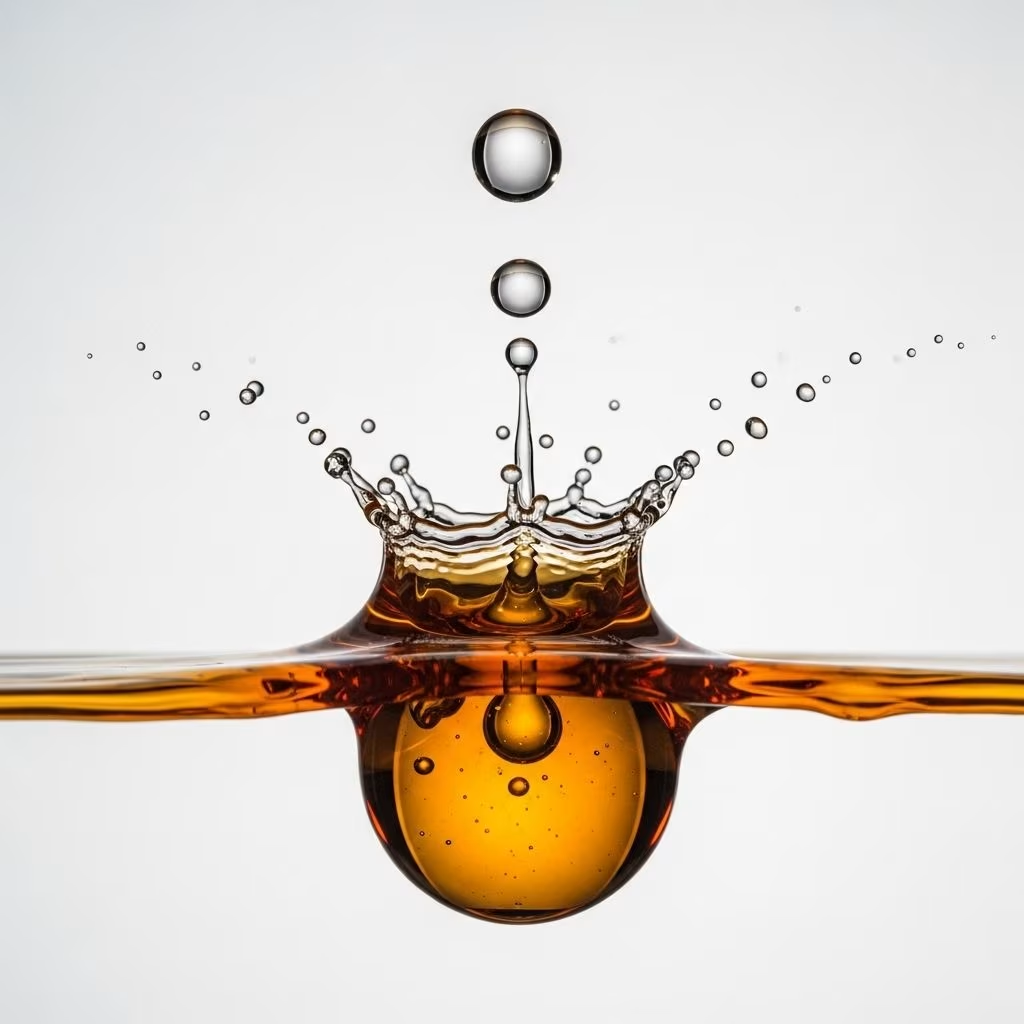
Introduction to Diluting Skincare Actives
Skincare actives are potent ingredients designed to target specific skin concerns, such as aging, acne, and hyperpigmentation, while promoting healthy skin. However, these ingredients can be fragile and prone to degradation, especially when mixed with water or other ingredients that may dilute their potency. This article delves into the concept of diluting skincare actives, the reasons behind it, and the impact on their efficacy.
Understanding Skincare Actives and Their Potency
Skincare actives like vitamin C, retinol, and hyaluronic acid are celebrated for their benefits in improving skin texture and addressing various skin issues. For instance, hyaluronic acid is known for its ability to attract and retain moisture, enhancing skin hydration and elasticity. However, to be effective, these ingredients must be present in sufficient concentrations. Research has shown that many products contain less than the optimal amount of active ingredients, a practice known as “fairy dusting” or “pixie dusting,” where only a small amount of the active ingredient is added to a product simply to claim its presence.
The Impact of Dilution on Skincare Efficacy
Diluting skincare actives can significantly reduce their potency. When these ingredients are combined with other components, especially water, their effectiveness can be compromised. Water is a common diluent in skincare products, but it can cause many active ingredients to degrade quickly, leading to reduced efficacy over time. For example, waterless skincare concentrates are gaining attention for maintaining higher potency compared to water-based formulations.
Reasons for Diluting Skincare Actives
There are several reasons why skincare actives might be diluted:
- Stability and Shelf Life: Some active ingredients are unstable and degrade quickly, especially when exposed to air, light, or water. Diluting these ingredients can help stabilize them, extending their shelf life.
- Skin Sensitivity: Undiluted active ingredients can be too harsh for sensitive skin, leading to irritation. Diluting them can make them more tolerable for a wider range of skin types.
- Cost-Effectiveness: Including high concentrations of active ingredients can be expensive. Diluting them allows manufacturers to reduce costs while still claiming the presence of these beneficial ingredients.
Effective Concentrations of Skincare Actives
To achieve optimal results, skincare actives need to be present in specific concentrations. For example, niacinamide is effective at 2% for improving skin barrier function, while at higher concentrations (4-5%), it can have significant brightening effects. Similarly, hyaluronic acid works best between 1 to 2%.
Layering Skincare Actives for Enhanced Efficacy
Layering skincare products is a technique that can enhance the efficacy of actives by applying them in a strategic order. Typically, products with a lower pH (such as AHAs and BHAs) are applied first, followed by neutral or higher pH products like hyaluronic acid and retinol. This approach can help maintain skin pH balance while maximizing the absorption of active ingredients.
Waterless Skincare: A Solution to Potency Loss
Waterless skincare products are gaining popularity as they can maintain higher concentrations of active ingredients without the diluting effects of water. These products often come in the form of concentrates or serums, which, when used correctly, can provide more potent results with less product volume.
Choosing Between Single-Ingredient and Multi-Ingredient Products
The decision between using single-ingredient products or multi-ingredient products depends on individual skin needs and concerns. Single-ingredient products can allow for precise control over active ingredient concentrations, reducing the risk of interactions or dilution. However, multi-ingredient products can offer a comprehensive approach to addressing multiple skin concerns simultaneously.
Medical Grade Skincare: Higher Concentrations of Actives
Medical-grade skincare products often contain higher concentrations of active ingredients compared to over-the-counter products. These products are designed to provide more potent effects but may require professional guidance due to their strength.
Q: Why do skincare actives need to be in specific concentrations?
A: Skincare actives need to be in specific concentrations to be effective. If they are too diluted, they may not provide the desired benefits, while too high concentrations can cause irritation.
Q: What is the benefit of using waterless skincare products?
A: Waterless skincare products can maintain higher potency of active ingredients since water can cause degradation. They often provide effective results with less product use.
Q: How should I layer skincare actives for maximum efficacy?
A: You should layer skincare products starting with those that have a lower pH (like AHAs and BHAs), followed by products like hyaluronic acid and retinol, to maintain skin pH balance and maximize absorption.
References
- https://exponentbeauty.com/blogs/dose/active-ingredients
- https://euphorielbeauty.com/blogs/insights/waterless-skincare-concentrates-work-better-than-water-based
- https://danglifestyle.co/skincare-actives/
- https://blog.reneerouleau.com/understanding-ingredient-percentages/
- https://skininspired.in/blogs/news/how-to-layer-active-ingredients-in-skincare-the-right-way
- https://www.joannaczech.com/blogs/czechlist/understanding-the-science-of-serums-potent-formulas-for-skincare
- https://www.teasurgery.com/blog-post/what-is-medical-grade-skin-care
- https://www.theestablished.com/self/beauty/how-do-you-choose-between-single-or-multi-ingredient-skincare-products
- https://drsambunting.com/en-us/blogs/sam-bunting/7-layering-techniques-for-skincare-results


