


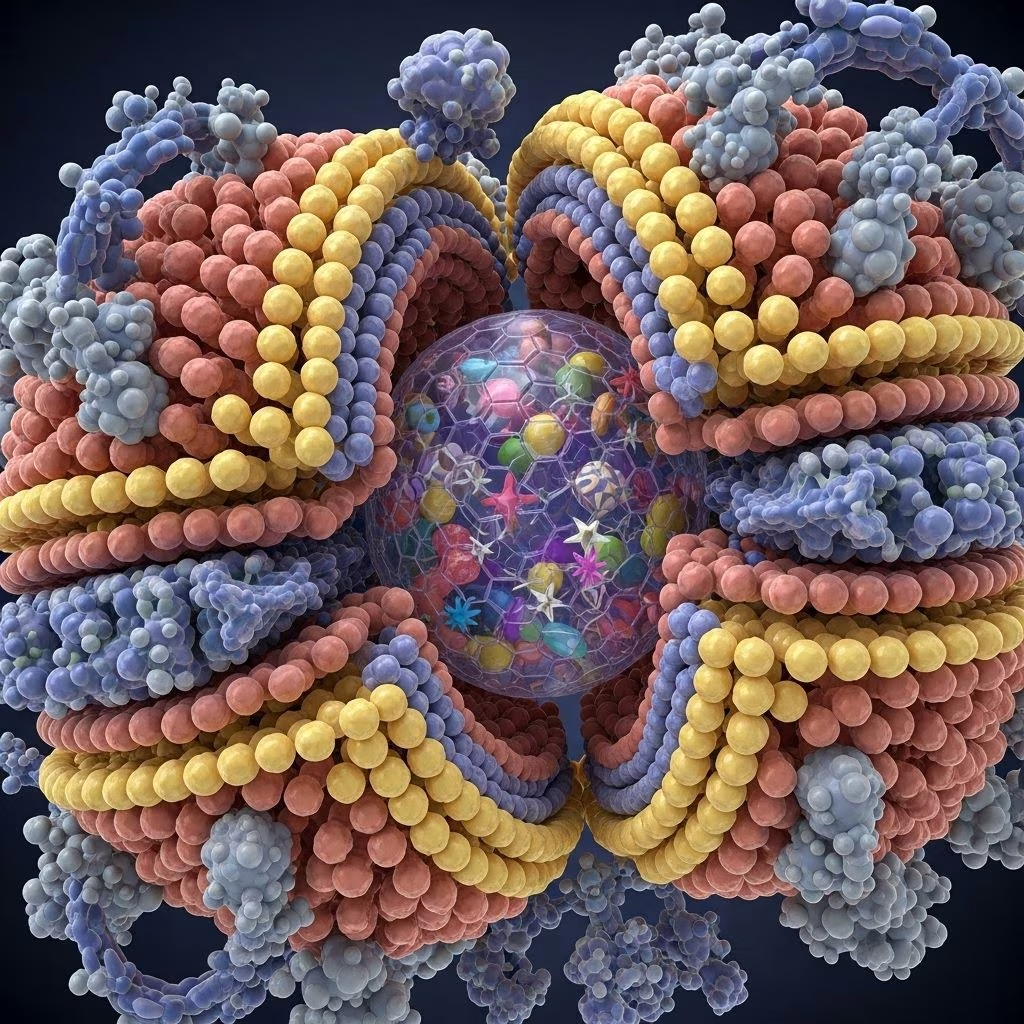
Lipids and waxes are fundamental components empowering the next generation of delivery systems for drugs, nutrients, and bioactive molecules. Their unique physicochemical properties enable encapsulation, targeted transport, and controlled release, revolutionizing the pharmaceutical and food industries. This article provides an extensive exploration of how lipids and waxes engineer effective active delivery systems, spanning their structures, functionalities, mechanisms, current advancements, and future prospects.
Introduction
Active delivery systems are sophisticated technologies designed to encapsulate and transport bioactive agents—such as pharmaceuticals, vaccines, or nutrients—to specific sites within the body or targeted areas in food matrices. Among the broad spectrum of materials available, lipids and waxes stand out for their biocompatibility, versatility, and tunable properties.
Lipid-based and wax-based carriers offer numerous advantages, including enhanced delivery efficiency, protection against degradation, improved bioavailability, and potential for controlled release. Their physicochemical diversity and structural adaptability have propelled their use across medical, cosmetic, and food industries, spurring ongoing research and innovation.
Physicochemical Properties of Lipids and Waxes Enabling Active Delivery
The effectiveness of lipid and wax-based delivery systems stems from their intrinsic physicochemical properties, which can be finely adjusted to suit the load and destination of the active agent:
- Composition, Structure, and Crystallinity: Waxes are typically crystalline materials comprising long-chain fatty acids and alcohols, hydrocarbons, aldehydes, and ketones. Lipids encompass diverse classes such as triglycerides, phospholipids, and cholesterol, providing a wide range of melting points, solubilities, and bilayer behaviors.
- Hydrophobicity: Both lipids and waxes are hydrophobic, enabling the efficient encapsulation of lipophilic molecules and drugs.
- Phase Behavior and Fluidity: Cholesterol and phospholipids can modulate membrane fluidity, which directly influences the stability and permeability of carrier systems. The choice of saturated versus unsaturated lipids and chain length alters phase transition temperatures, crucial for optimizing carrier function.
- Surface Charge (Zeta Potential): The net charge impacts colloidal stability, circulation time in vivo, and cellular uptake. Cationic lipids, for example, are used for nucleic acid delivery due to their strong electrostatic interactions with cell membranes.
- Metabolizability and Safety: Natural lipids and waxes are generally safe and metabolizable, minimizing toxicity concerns.
Types of Lipid and Wax-Based Delivery Systems
Sophisticated formulations have been developed using lipids and waxes as the principal matrix, each with distinct structures and encapsulation abilities. The most representative systems include:
| Carrier Type | Description | Typical Use |
|---|---|---|
| Solid Lipid Nanoparticles (SLNs) | Particles made from solid lipids at room/body temperature, stabilized with surfactants. | Drug delivery, nutrient encapsulation, cosmetics. |
| Nanostructured Lipid Carriers (NLCs) | Hybrid structures containing both solid and liquid lipids, offering higher loading capacity. | Advanced drug delivery, dermal/cosmetic formulations. |
| Oleogels | Semi-solid systems created by gelation of edible oils using waxes or low-molecular-weight gelators. | Fat replacers, encapsulation of bioactives in food. |
| Liposomes | Bilayer vesicles containing an aqueous core, mimicking cell membranes. | Drug, vaccine, gene, and nutrient delivery. |
| Pickering Emulsions | Emulsions stabilized by solid particles (such as wax crystals) instead of surfactants. | Food stability, flavor/active protection, pharmaceuticals. |
Role of Waxes in Lipid-Based Delivery
- Stabilization: Waxes improve the solid integrity of lipid matrices, especially in NLCs and SLNs, reducing leakage and improving stability under various conditions.
- Customization: Blending different waxes allows for tuning of melting points and release profiles to match target application requirements.
- Controlled Crystallinity: The crystalline nature of waxes aids in sustained and controlled release, essential for long-term delivery applications.
Mechanisms of Active Delivery in Lipid and Wax-Based Systems
Lipids and waxes enable multiple mechanisms for the encapsulation, transport, and regulated release of active compounds. These mechanisms are tailored to the intended route—oral, dermal, intravenous, or intramuscular—and the nature of the loaded cargo.
- Encapsulation and Protection: Hydrophobic matrices shield sensitive actives against chemical degradation (oxygen, light, enzymes), preserving efficacy until target delivery.
- Cellular Uptake Enhancement: Positively charged (cationic) lipids interact with negatively charged cell membranes, facilitating uptake of nucleic acids and proteins via endocytosis or direct fusion.
- Triggered and Sustained Release: Release profiles can be modulated by carrier composition, phase state, environmental triggers (pH, enzymes), and the degree of crystallinity. Wax-based systems often favor sustained, controlled release.
- Targeted Delivery: Surface modification with ligands allows for active targeting to specific tissues or cellular receptors, increasing the efficiency and precision of delivery.
Applications in Pharmaceutical Delivery
Lipid and wax-based delivery technologies are foundational in modern pharmaceutical formulations for small molecule drugs, proteins, peptides, nucleic acids (RNA, DNA), and vaccines. Their advantages include improved solubility, enhanced stability, and increased bioavailability.
- Oral Drug Delivery: Lipid formulations help overcome poor water solubility and pre-systemic metabolism, as seen with many poorly bioavailable drugs. Waxes aid in formation of stable oral carriers, protecting the drug through the stomach and enabling absorption in the intestine.
- Injectable Formulations: LNPs and liposomes engineered with selected lipid and surface chemistries deliver mRNA vaccines, anticancer drugs, and gene therapies directly to target tissues while minimizing systemic side effects.
- Dermal and Transdermal Systems: Waxes and NLCs modulate drug permeation through the skin, suitable for local and systemic therapies (pain relief, hormone therapy, vaccination).
- Gene and Nucleic Acid Delivery: Cationic lipids form complexes with DNA or RNA, shielding genetic material and enhancing cellular entry, essential for gene therapy and RNA-based treatments.
- Vaccine Delivery: Lipid nanoparticles have enabled the delivery of mRNA vaccines, allowing for stabilization, protection from enzymatic degradation, and efficient cytosolic release after cellular uptake.
Case Study Table: Key Examples in Pharmaceutical Applications
| Application | Carrier Type | Benefit |
|---|---|---|
| COVID-19 mRNA Vaccines | Lipid Nanoparticles | Efficient cell transfection, mRNA stability, and immune activation. |
| Oral delivery of poorly soluble drugs | Solid Lipid Nanoparticles | Enhanced solubility, protection, and GI stability. |
| Topical anti-inflammatory delivery | Nanostructured Lipid Carriers containing wax esters | Sustained dermal release, improved permeability. |
| Gene Therapy (DNA, siRNA) | Ionizable Cationic Lipids | Efficient complexing and entry into target cells. |
Applications in Food and Nutritional Delivery
In the food industry, lipid and wax-based carriers are instrumental for the encapsulation and delivery of flavors, vitamins, colors, preservatives, and probiotics. Their functions include protection against degradation, masking of unpleasant tastes or odors, and enhancement of bioavailability.
- Encapsulation of Lipophilic Nutrients: Vitamins (A, D, E, K), omega-3 fatty acids, and herbal extracts are efficiently delivered via lipid and wax-based carriers to improve stability and intestinal absorption.
- Sustained Release in Food Matrices: Wax-based oleogels and Pickering emulsions provide long-term release of flavors, colorants, or antioxidants in processed foods.
- Masking of Unpleasant Properties: Encapsulation suppresses undesirable odors or flavors of some actives, facilitating their inclusion in sensitive food products.
- Fat Replacers: Oleogels created using waxes mimic the texture of conventional fats but with lower saturated fat content, supporting healthy eating trends.
Stability, Safety, and Biocompatibility
A crucial advantage of lipid and wax-based delivery systems is their inherent safety, owing to the use of biocompatible and, frequently, food-grade materials. Factors influencing stability include environmental conditions, lipid/wax composition, and the presence of anti-oxidants or stabilizers.
- Biodegradability and Low Toxicity: Natural lipids and waxes are metabolized via normal biological pathways, minimizing accumulation and toxicity risk.
- Colloidal Stability: Surface charge, crystallinity, and use of appropriate surfactants or stabilizers are vital for preventing aggregation and ensuring shelf life.
- Protection of Sensitive Agents: Hydrophobic matrices guard against hydrolysis, oxidation, and enzymatic degradation through gastrointestinal transit or during food processing.
Emerging Trends and Future Prospects
The field is rapidly evolving, shaped by advances in materials science and biotechnology, as well as the escalating demand for safe, effective, and targeted delivery in health and nutrition.
- Surface Engineering and Active Targeting: The development of ligand-modified lipid and wax-based carriers allows for site-specific delivery and reduced off-target effects, enhancing the efficacy and safety of therapies.
- Green Manufacturing: Eco-friendly processes, renewable resources, and non-toxic solvents are prioritized for production, boosting regulatory acceptance and sustainability.
- Personalized Medicine and Precision Nutrition: Modular lipid/wax compositions enable the design of bespoke carriers tailored to individual patient or consumer profiles.
- Smart/Responsive Systems: Carriers capable of responding to specific biological or environmental triggers (e.g., pH, redox, temperature) are increasingly integrated for on-demand release capabilities.
Frequently Asked Questions (FAQs)
Q: What are the main benefits of using lipid and wax-based delivery systems?
A: The primary benefits are protection of sensitive actives from degradation, improved absorption and bioavailability, controlled or triggered release, capability to target specific tissues or sites, and high safety due to biocompatibility.
Q: How do waxes improve the performance of drug delivery systems?
A: Waxes enhance the structural stability of the carrier, enable precise control over the release of actives, help maintain the integrity during processing and storage, and can be blended for highly customized formulations.
Q: Are there any concerns with the use of synthetic cationic lipids?
A: Yes, while synthetic cationic lipids can significantly boost delivery efficiency, they may cause toxicity at high doses or with repeated exposure. The inclusion of biodegradable linkers and optimization of formulations can mitigate these issues.
Q: What is the significance of surface charge in lipid nanoparticles?
A: Surface charge affects nanoparticle stability, cellular uptake, and biodistribution. Positively charged lipids can enhance nucleic acid delivery but must be balanced for safety and biocompatibility.
Q: Can these systems be applied to both pharmaceuticals and foods?
A: Absolutely. Lipid and wax-based carriers are extensively used in both fields, with regulatory-grade materials and formulations tailored for either pharmaceutical or food safety standards.
Conclusion
Lipids and waxes stand at the forefront of innovation in active delivery systems, offering customizable, safe, and highly effective solutions for the protection, transport, and release of bioactives. Their impact is profound across medical, nutritional, and consumer products, charting a promising path for next-generation therapies and functional foods. Continuing advances in materials design, formulation science, and targeting strategies are set to further unlock their potential, driving a future where delivery systems are smarter, safer, and more efficient than ever.
References
- https://pubmed.ncbi.nlm.nih.gov/33337056/
- https://pubs.acs.org/doi/10.1021/acsnano.1c04996
- https://patents.google.com/patent/WO2015095340A1/en
- https://pmc.ncbi.nlm.nih.gov/articles/PMC4590796/
- https://ift.onlinelibrary.wiley.com/doi/10.1111/1541-4337.12614
- https://pharmacia.pensoft.net/article/115849/
- https://onlinelibrary.wiley.com/doi/full/10.1002/smll.202401990


