


Introduction
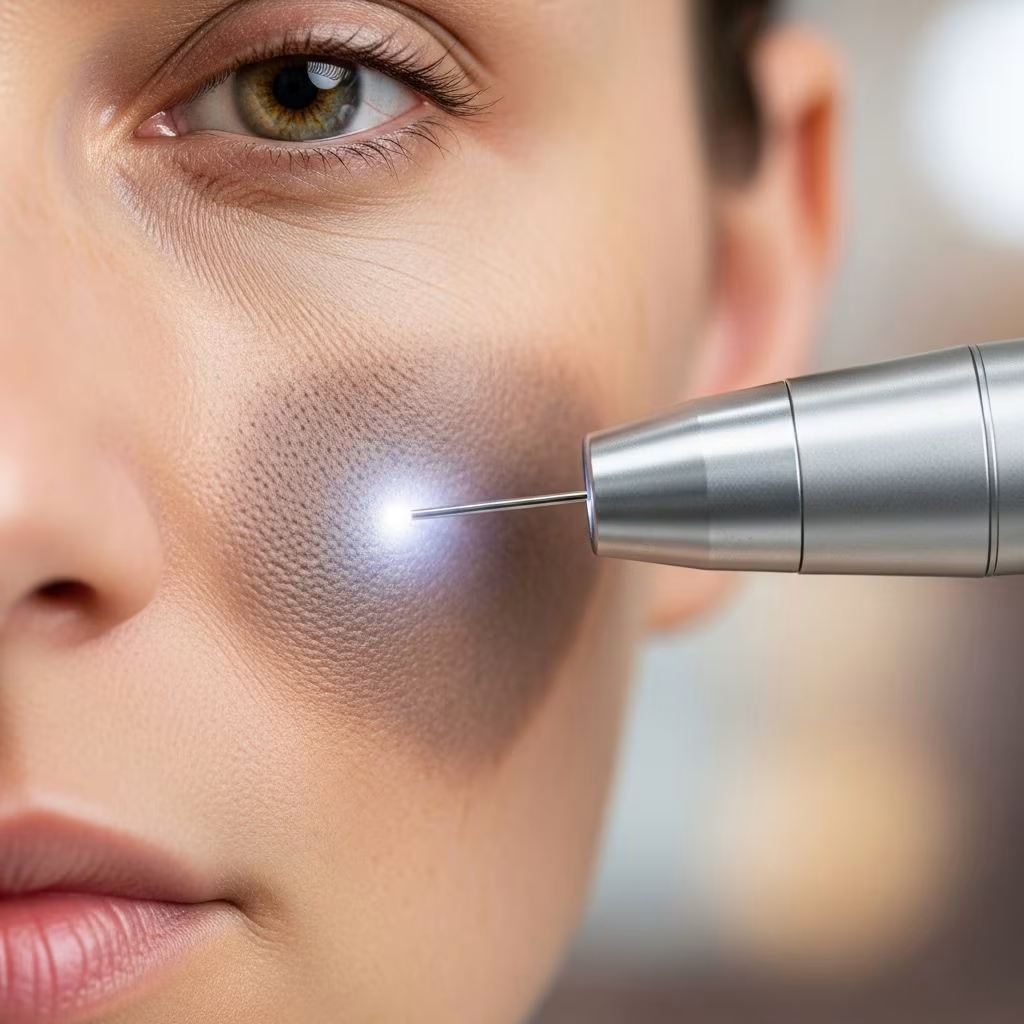
Nevus of Ota is a benign dermal melanocytic disorder characterized by blue-gray or black pigmentation on facial skin and sometimes ocular tissues, typically supplied by the ophthalmic and maxillary branches of the trigeminal nerve. Affecting mainly individuals of Asian descent and those with darker skin tones, this lesion poses significant cosmetic and psychosocial challenges. The introduction of Q-switched laser technology revolutionized the management of Nevus of Ota, providing a targeted, effective, and safe treatment modality previously unavailable through conventional approaches.
Pathophysiology of Nevus of Ota
Nevus of Ota, medically termed as oculodermal melanocytosis, arises from abnormal proliferation of dermal melanocytes. These cells deposit melanin deep within the dermis, leading to persistent bluish or slate-gray patches. The pigmentation most often follows the innervation pattern of the trigeminal nerve, especially in periorbital, malar, and temporal regions.
- The condition often manifests unilaterally, though bilateral cases are also reported.
- Ocular involvement (melanosis bulbi) can pose risks for complications, including glaucoma in rare cases.
- The natural history is typically one of persistence, with pigmentation potentially intensifying with age.
Clinical Presentation and Diagnosis
Patients present with flat, mottled, or confluent macular pigmentation of blue-black or gray hues on the skin, most frequently in periocular and zygomatic regions. Diagnosis relies mainly on clinical observation, with dermoscopy used for confirming the depth and distribution of pigmentation.
- Onset usually occurs at birth or during early childhood.
- Female predominance is observed (up to 80%).
- Associated symptoms may include darkening or pigmentation within the sclera or other ocular structures.
- Diagnosis typically does not require biopsy unless malignancy or other pathologies are suspected.
Traditional Treatment Approaches
Before laser therapy, available options for Nevus of Ota included:
- Cryotherapy
- Dermabrasion
- Surgical excision
- Cosmetic camouflage
These methods were limited by high risks of scarring, incomplete pigment removal, and poor cosmetic results. The persistent nature and dermal depth of pigmentation made complete eradication difficult.
Q-Switched Laser Therapy: Mechanism and Rationale
Q-switched lasers produce ultra-short (nanosecond) pulses of high-energy light, precisely targeting dermal melanosomes while sparing surrounding tissue. The theoretical basis for effective laser therapy is the principle of selective photothermolysis:
- Wavelength specificity: The emission wavelength is chosen to match the absorption spectrum of melanin.
- Pulse duration: Ultra-short pulses (nanoseconds) match the thermal relaxation time of melanosomes, helping confine heat to the pigment and minimize collateral damage.
- Photoacoustic effect: Rapid energy delivery causes thermal expansion and generation of shock waves, shattering melanosomes and enabling their removal by the body.
This selective targeting with minimal downtime or tissue injury has positioned Q-switched lasers as the gold standard for Nevus of Ota management.
Types of Q-Switched Lasers Used for Nevus of Ota
- Q-Switched Nd:YAG Laser (1064 nm): Most commonly used, especially in darker skin types. Offers deeper penetration and lower risk of post-inflammatory hyperpigmentation.
- Q-Switched Ruby Laser (694 nm): Historically used for lighter pigmentation and fair skin. Its shorter wavelength increases the risk of epidermal damage in darker skin.
- Q-Switched Alexandrite Laser (755 nm): Offers intermediate depth of penetration; can be used for lighter or moderate pigment but less common than Nd:YAG.
Clinical Evidence and Outcomes
Multiple clinical studies and case series have validated the safety and efficacy of Q-switched lasers, particularly Nd:YAG, in treating Nevus of Ota:
- Significant cosmetic improvement observed in the majority of patients following several sessions (3–12 sessions depending on pigmentation density and skin type).
- Low incidence of side effects, most of which are transient (erythema, mild blistering, temporary darkening).
- Durable pigment clearance with low recurrence rates over several years of follow-up.
- Figure illustrations in published case reports show near-complete pigment resolution after a series of treatments.
Case Highlights
- A young woman underwent a total of 12 Q-switched Nd:YAG laser sessions over three years and achieved a remarkable reduction in pigmentation with no adverse events.
- Prospective studies involving Indian skin phototypes IV and V demonstrate excellent results with minimal side effects, crucial for populations with increased risk of post-inflammatory changes.
Treatment Protocols and Patient Selection
Optimal outcomes depend on careful patient selection and protocol customization:
- Pigment Depth and Skin Type: Patients with deeper dermal pigment and darker skin tones benefit most from Nd:YAG 1064 nm due to its deeper penetration and lower epidermal interactions.
- Spot Size and Fluence: A spot size (typically around 6 mm), fluence between 2–12.5 J/cm2, and session intervals of 1–2 months are considered optimal.
- Anesthesia: Topical anesthetics may be used to reduce discomfort during treatment.
- Pre- and Post-Treatment Care: Sun avoidance, use of broad-spectrum sunscreen, and post-laser soothing care reduce risk of adverse effects.
For best outcomes, most patients require 4–12 sessions, depending on pigment density, depth, skin type, and response. Progressive lightening over time is expected, with some cases achieving complete pigment clearance.
Combination Therapies: Enhancing Outcomes
Recent research evaluates the benefit of combining Q-switched lasers with fractional CO2 lasers:
- Combination protocols yield more rapid and higher degrees of pigment clearance.
- Patients in combination groups achieve significant improvement with fewer sessions (4 vs 6) compared to Q-switched monotherapy, as well as greater patient satisfaction and faster dermoscopic changes.
Such hybrid approaches are particularly valuable for resistant or deeply pigmented lesions.
Safety, Side Effects, and Long-Term Results
- Short-Term Effects: Erythema, transient blistering, mild edema, and discomfort are common but short-lived.
- Post-inflammatory Hyperpigmentation (PIH): Observed mainly in higher phototypes. Pre- and post-laser sun avoidance, skin priming with lightening agents, and proper laser settings reduce occurrence.
- Scarring and Hypopigmentation: Rare, especially with Nd:YAG (1064 nm). Higher risk with ruby (694 nm) and alexandrite (755 nm) lasers due to greater epidermal targeting.
- Long-Term Outcome: Most patients experience stable results for years, though occasional touch-ups may be warranted.
- Ocular Safety: Eye shields are mandatory during periocular treatments to avoid accidental exposure or retinal injury.
Comparison of Q-Switched Lasers for Nevus of Ota
| Laser Type | Wavelength (nm) | Depth of Penetration | Best For | Risk (PIH/Scarring) |
|---|---|---|---|---|
| Nd:YAG | 1064 | Deep dermal | Darker skin, deep lesions | Low |
| Ruby | 694 | Epidermal/upper dermal | Lighter skin, superficial pigment | Moderate/high |
| Alexandrite | 755 | Intermediate dermal | Moderate/light pigment | Low-moderate |
Frequently Asked Questions
Q: Is the Q-switched laser treatment painful?
Treatment is usually well tolerated. Mild discomfort can occur, which is managed with topical anesthetics before each session.
Q: How many sessions are required for complete clearance?
Most patients require between 4 and 12 sessions, depending on the density, depth of the pigment, and individual skin response.
Q: Are there risks of scarring or permanent pigmentation changes?
Scarring is rare with Nd:YAG lasers. Temporary darkening or post-inflammatory hyperpigmentation may occur, especially in darker skin types, but is generally reversible with appropriate care.
Q: Can children and adolescents undergo Q-switched laser therapy?
Yes, laser therapy is safe for children and adolescents. Early intervention often yields better cosmetic outcomes and may prevent psychological distress.
Q: Do results last, or is recurrence common?
Results are durable in most cases; recurrence is rare when protocols are followed and sun exposure is minimized post-treatment.
Conclusion
Q-switched laser therapy, especially with Nd:YAG 1064 nm technology, represents a breakthrough in the management of Nevus of Ota pigmentation. Its targeted mechanism, minimal downtime, high safety profile, and consistent cosmetic improvement make it the first-line option for this challenging pigmentary disorder. Emerging combination protocols and ongoing research continue to improve patient results, particularly in stubborn or deep lesions. Meticulous assessment, protocol customization, and thorough patient education are essential for optimal outcomes and long-term satisfaction.
References
- https://www.laserandhealthacademy.com/media/objave/academy/priponke/42_45_case_report_saracoglu_qsw_ndyag_treatment_of_nevus_of_ota.pdf
- https://pmc.ncbi.nlm.nih.gov/articles/PMC2840905/
- https://www.pagepress.org/journals/dr/article/view/10276
- https://pmc.ncbi.nlm.nih.gov/articles/PMC10768965/
- https://mednexus.org/doi/10.1097/01.JD9.0000559836.07162.f2
- https://www.dovepress.com/results-and-follow-up-of-a-sequential-q-switched-laser-therapy-for-nev-peer-reviewed-fulltext-article-CCID
- https://jamanetwork.com/journals/jamadermatology/fullarticle/554582


