


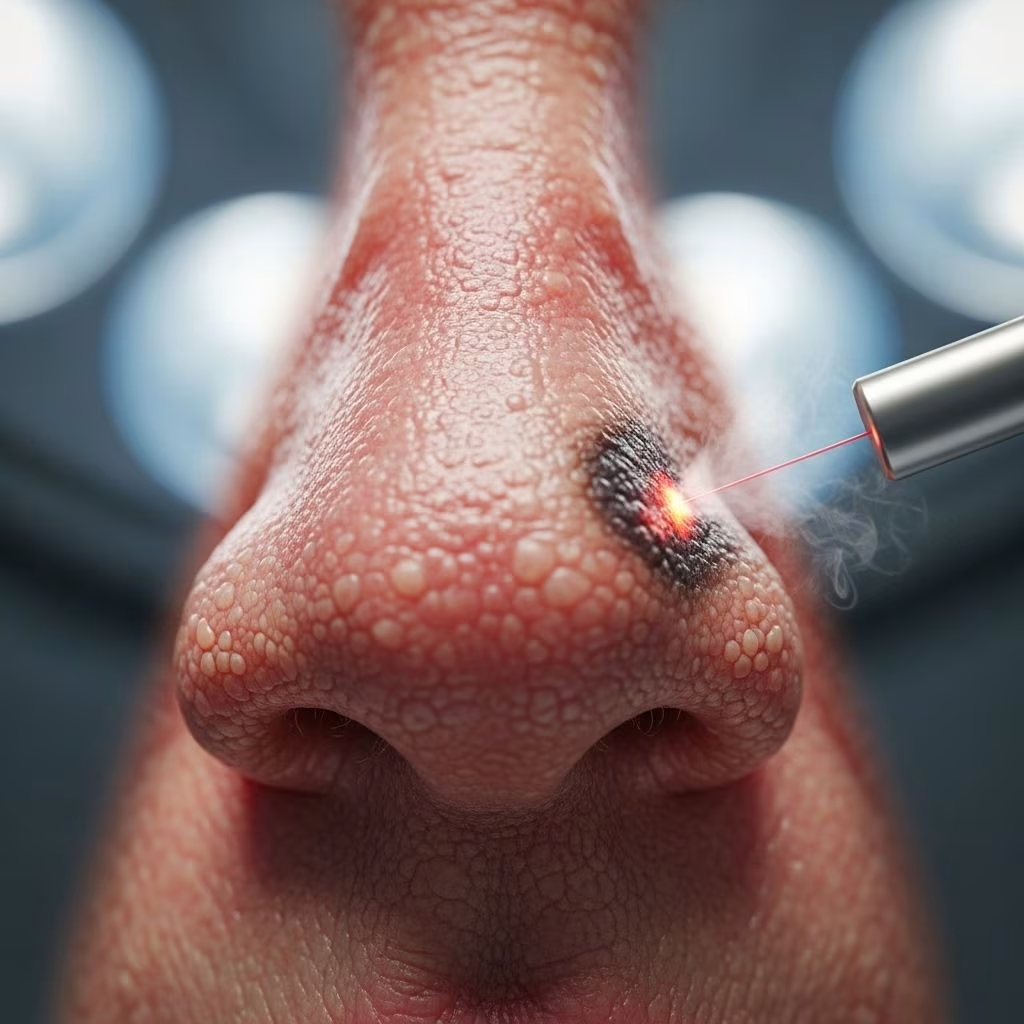
Rhinophyma—a severe form of rosacea primarily affecting the nose—can cause cosmetic disfigurement and psychosocial distress. Among the various approaches to treatment, CO2 laser therapy stands out for its precision, effectiveness, and refined outcomes. This comprehensive guide explores the science behind CO2 laser application for rhinophyma, procedural advances, clinical outcomes, patient experiences, and frequently asked questions.
What is Rhinophyma?
Rhinophyma is a benign yet progressive skin disorder, characterized by excessive tissue growth, thickened skin, and an enlarged, nodular, or bulbous appearance of the nose. Although rhinophyma is most commonly seen in men over the age of 50, its exact cause remains unclear. It is understood as a severe phenotype of phymatous rosacea, likely aggravated by chronic inflammation, enlarged sebaceous glands, and fibrosis.
- Symptoms include: thickening of nasal skin, visible pores, lobulated surface, redness, and sometimes pustules.
- Can lead to substantial psychosocial and cosmetic concerns for patients.
- Associated complications: airway blockage, secondary infections, and rarely, underlying skin malignancy.
Treatment Options for Rhinophyma
Rhinophyma management ranges from medications to surgical interventions. Medical therapy, such as oral isotretinoin or antibiotics, may help early-stage rosacea but often does not reverse existing bulk tissue changes seen in rhinophyma.
- Traditional surgical methods: scalpel excision, dermabrasion, cryosurgery, and electrosurgery.
- Minimally invasive techniques: radiofrequency, Erbium:YAG laser, and CO2 laser ablation.
CO2 laser therapy has emerged as a leading technique due to its superior tissue ablation precision and cosmetic outcomes compared to other methods.
Why CO2 Laser is Preferred
CO2 lasers produce a concentrated beam of infrared light that vaporizes water-containing cells, making them highly effective at removing excess fibro-sebaceous tissue. The main reasons for their preference in rhinophyma treatment include:
- High precision: Layer-by-layer removal allows controlled debulking and accurate contouring of the nose shape.
- Minimal bleeding: Immediate coagulation of blood vessels provides a bloodless surgical field.
- Better cosmetic results: Reduced risk of scarring, pigmentary changes, and textural irregularities.
- Rapid tissue healing and reepithelialization.
How CO2 Laser Works for Rhinophyma
The CO2 laser targets water in skin tissue, causing immediate vaporization and precise ablation of excess tissue. The operator can modify settings—such as power, pulse duration, and frequency—to adjust the ablation depth and minimize collateral thermal damage.
| Mode | Typical Use |
|---|---|
| Continuous Wave | Gross tissue debulking |
| Superpulse/Ultrapulse | Precise, targeted ablation with lower heat diffusion |
| Fractionated Ablative | Finer resurfacing, optimizing skin texture and reducing downtime |
The CO2 laser beam can be used in either fully ablative or fractionated (micro-columns of ablation interspersed with healthy tissue) modes, depending on the severity and target depth.
Types of CO2 Lasers Used
- Lumenis Ultrapulse Alpha CO2 Laser: Noted for power and precision, suitable for complex or severe rhinophyma.
- SmartXide CO2 Laser: Utilized in superpulse mode for precise tissue leveling.
- Ultra Plus CO2 Laser: Effective in multiple treatment sessions.
- Custom dual-mode approaches: Some clinics combine CO2 with Erbium:YAG lasers for staged refinement.
CO2 Laser Procedure Overview
The procedure typically follows these steps:
- Consultation and Assessment: The dermatologist evaluates severity, skin type, medical history, and expectations.
- Anesthesia: Local nerve blocks or infiltration anesthetics are administered to ensure patient comfort.
- Debulking: The clinician uses the CO2 laser in continuous or superpulse mode to gradually ablate excess nasal tissue, paying close attention to contours and depth.
- Tissue Leveling: The treatment continues in a layer-by-layer manner, visual control aided by a bloodless field and visible release of sebum (indicating proper sebaceous gland targeting).
- Final Resurfacing: Laser micro-resurfacing may be employed to improve overall skin texture.
- Wound Care: An occlusive dressing and post-procedure ointments support healing.
Some cases may require a staged approach: the first session addresses the bulk of tissue, followed by a refinements session weeks later to optimize cosmetic outcome and minimize risk. Healing between stages typically takes 6–8 weeks.
Clinical Outcomes and Patient Satisfaction
Clinical studies highlight consistently high rates of patient satisfaction with CO2 laser therapy:
- In one large study of 124 patients, 96% rated satisfaction ≥7/10, and 77% gave 10/10. 92% reported willingness to recommend the treatment.
- Benefits included significant improvement in nasal size, shape, and skin texture after a single treatment.
- Rapid epithelization: Most patients achieved wound closure within 1–3 weeks; full healing by 3–6 weeks was typical.
- Minimal complications: Studies report low rates of significant scarring, dyspigmentation, or infection.
Patients with mild-to-moderate rhinophyma can sometimes achieve dramatic improvements after one treatment, while severe or complex cases may benefit from two-stage laser intervention combining CO2 and Erbium:YAG lasers.
Advantages and Benefits of CO2 Laser
- Superior control over ablation depth, allowing tailored removal without excessive heat damage.
- Bloodless surgical field, reducing procedure time and enhancing safety.
- Lower risk of scarring compared to scalpel or dermabrasion.
- Rapid recovery with early reepithelialization and less pain.
- Minimized downtime—fractionated lasers further shorten recovery and discomfort.
- Improved cosmetic results, restoring natural nose contour and skin texture.
Risks and Potential Side Effects
While CO2 laser treatments are generally safe, some risks remain:
- Short-term: localized pain, swelling, redness, oozing, and crusting at treated sites.
- Medium-term: Risk of pigment changes (hyper- or hypopigmentation), especially in darker skin types.
- Long-term: Rare risk of persistent scarring or textural irregularities if over-treatment or improper technique is used.
Complex rhinophyma, aggressive ablation, and improper aftercare are key factors increasing complication risk. Staged refinement and proper technique are vital in minimizing adverse events.
Aftercare and Recovery
Post-procedure recovery instructions are critical to optimize results and prevent complications:
- Keep the treated area clean and moist with antibiotic ointment or petroleum jelly until epithelization is complete (usually 1–2 weeks).
- Avoid picking, scratching, or disrupting healing tissue.
- Protect the healing skin from sun exposure with broad-spectrum sunscreen or physical barriers.
- Mild redness and sensitivity may persist for several weeks. Makeup can be applied once healing is complete.
- Follow all wound care and medication instructions provided by the treating physician.
Most patients return to normal social activities within 2–3 weeks post-procedure for mild cases, and 4–6 weeks for more extensive cases.
Expert Insights and New Advances
Leading experts recommend customized, two-stage laser protocols for severe rhinophyma to achieve ideal nasal contour while minimizing tissue trauma and risks. Recent innovations include:
- Custom-designed dual-head Erbium YAG/CO2 lasers enable unparalleled precision and safety—particularly in complex or dark-skin cases.
- Fractionated CO2 lasers further enhance textural outcomes and recovery speed, with impressive improvements in tissue quality and minimal downtime.
- Advanced anesthesia techniques: Nerve blocks make the procedure more comfortable and reduce the need for systemic sedation.
- Integration with dermoscopy and imaging to guide ablation depth and monitor treatment response.
Frequently Asked Questions (FAQs)
Q: How many CO2 laser sessions are required for rhinophyma?
A: Mild-to-moderate cases typically respond to a single session, while severe or complex cases may require staged treatments involving two or more sessions for refinements.
Q: Is the procedure painful?
A: Local anesthetic injections or nerve blocks are used to numb the area, so patients usually experience minimal discomfort during the procedure. Post-procedure, mild pain, redness, and swelling are common but manageable.
Q: How soon will I see results after CO2 laser treatment?
A: Improvement in nasal shape and skin texture is noticeable as soon as reepithelialization occurs (typically within 1–3 weeks), with final results visible after full healing at 3–6 weeks.
Q: What are the risks or complications I should know about?
A: Complications are rare but may include scarring, infection, pigment changes, or delayed healing. Selecting an experienced laser surgeon and adhering to aftercare instructions greatly reduces these risks.
Q: Does insurance cover CO2 laser treatment for rhinophyma?
A: Coverage varies. If rhinophyma causes functional impairment (airway obstruction, recurrent infections), insurance may cover treatment. Purely cosmetic cases are less likely to be covered; patients should check with their insurance provider.
Q: Can rhinophyma recur after CO2 laser treatment?
A: Relapse is possible but uncommon if the underlying phymatous tissue is completely removed. Patients should monitor for new symptoms and maintain dermatologic follow-up to detect early changes.
References
- Fractionated Carbon Dioxide Laser Resurfacing as an Ideal Treatment Option for Rhinophyma (NCBI)
- Rhinophyma (Bulbous Nose) – CO2 and Erbium:YAG Advanced Laser Protocols (Dr. H Consult)
- Rhinophyma Treated with Carbon Dioxide Laser – Clinical Video, UK Dermatologist
- Rhinophyma Successfully Treated with Ultra Plus CO2 Laser (Case Study and Literature Review, NCBI)
- CO2 Laser Skin Resurfacing for Rhinophyma Treatment – Video Demonstration
- Rhinophyma Treatment with Fractional CO2 Laser (bderm.com)
References
- https://pmc.ncbi.nlm.nih.gov/articles/PMC6405248/
- https://www.drhconsult.co.uk/treatments/rhinophyma-bulbous-nose/
- https://www.youtube.com/watch?v=-_Ne7nAlhKU
- https://pmc.ncbi.nlm.nih.gov/articles/PMC7413468/
- https://www.youtube.com/watch?v=dltE9_YOQKQ
- https://www.bderm.com/services/cosmetic-procedures/rhinophyma/


