


Introduction
Unwanted body hair has been a beauty concern for centuries, and modern dermatology offers a range of solutions. Among these, laser hair removal stands out for its precision and long-lasting results. However, the effectiveness of laser hair removal is closely tied to the natural hair growth cycle. Understanding this cycle—how hair grows, rests, and sheds—is crucial for anyone considering laser treatments and for professionals administering them.
This article explores the science behind the hair growth cycle, explains how laser hair removal targets hair follicles, and details why timing your treatments according to your hair’s growth phases can make a significant difference in results. We’ll also address common misconceptions, side effects, aftercare, and frequently asked questions.
Understanding the Hair Growth Cycle
Human hair growth occurs in a continuous, cyclical process, not a steady linear progression. Each hair follicle on your body goes through four distinct phases: anagen (growth), catagen (transition), telogen (resting), and exogen (shedding). The timing and characteristics of these phases determine how and when laser hair removal should be performed for optimal effectiveness.
Anagen Phase: The Growth Phase
The anagen phase is the active growth period of the hair follicle. During this stage, cells at the base of the follicle rapidly divide, pushing the hair shaft upward and outward.
- Duration: 2–7 years for scalp hair; much shorter for body hair (weeks to months).
- Percentage of hairs: 85–90% of scalp hairs are in this phase at any given time.
- Growth rate: Approximately 1 cm per month for scalp hair.
- Key features: The hair is anchored deeply, connected to a rich blood supply, and contains abundant pigment (melanin), making it most responsive to laser energy.
Genetics, age, and health can influence the length of the anagen phase, with phases shortening as we age, which can limit maximum hair length and affect treatment outcomes.
Catagen Phase: The Transitional Phase
The catagen phase is a short, transitional period that marks the end of active hair growth and the beginning of follicle regression.
- Duration: About 2–3 weeks.
- Percentage of hairs: 1–3% of hairs are in this phase at any time.
- Key features: The hair follicle shrinks and detaches from the dermal papilla (the structure supplying nutrients), and hair growth stops. The hair becomes a club hair, but it does not shed immediately.
Telogen Phase: The Resting Phase
During the telogen phase, the hair follicle is dormant, and the club hair remains in place without growing.
- Duration: Approximately 2–4 months.
- Percentage of hairs: 9–15% of hairs are in this phase at any time.
- Key features: The old hair is shed during this phase, and a new hair begins to form beneath it, preparing to enter the anagen phase again.
Exogen Phase: The Shedding Phase
The exogen phase is an extension of the telogen phase, focusing on the active shedding of hair from the follicle.
- Duration: Overlaps with telogen, as hairs are shed and new growth begins.
- Key features: The old hair falls out, making room for new hair to emerge in the next anagen phase. It’s normal to lose 50–100 hairs per day from the scalp.
Factors Affecting Hair Growth
Several internal and external factors influence the hair growth cycle, including:
- Genetics: Determines the length of each phase and hair density.
- Age: The anagen phase shortens with age, leading to slower growth and thinner hair.
- Hormones: Androgens (male hormones) can affect hair growth patterns, especially on the face and body.
- Nutrition: Deficiencies in vitamins and minerals can slow hair growth and increase shedding.
- Health conditions: Illness, stress, and certain medications can disrupt the cycle, causing excessive shedding (telogen effluvium).
- Seasonal changes: Hair growth may be slightly faster in summer months.
How Laser Hair Removal Works
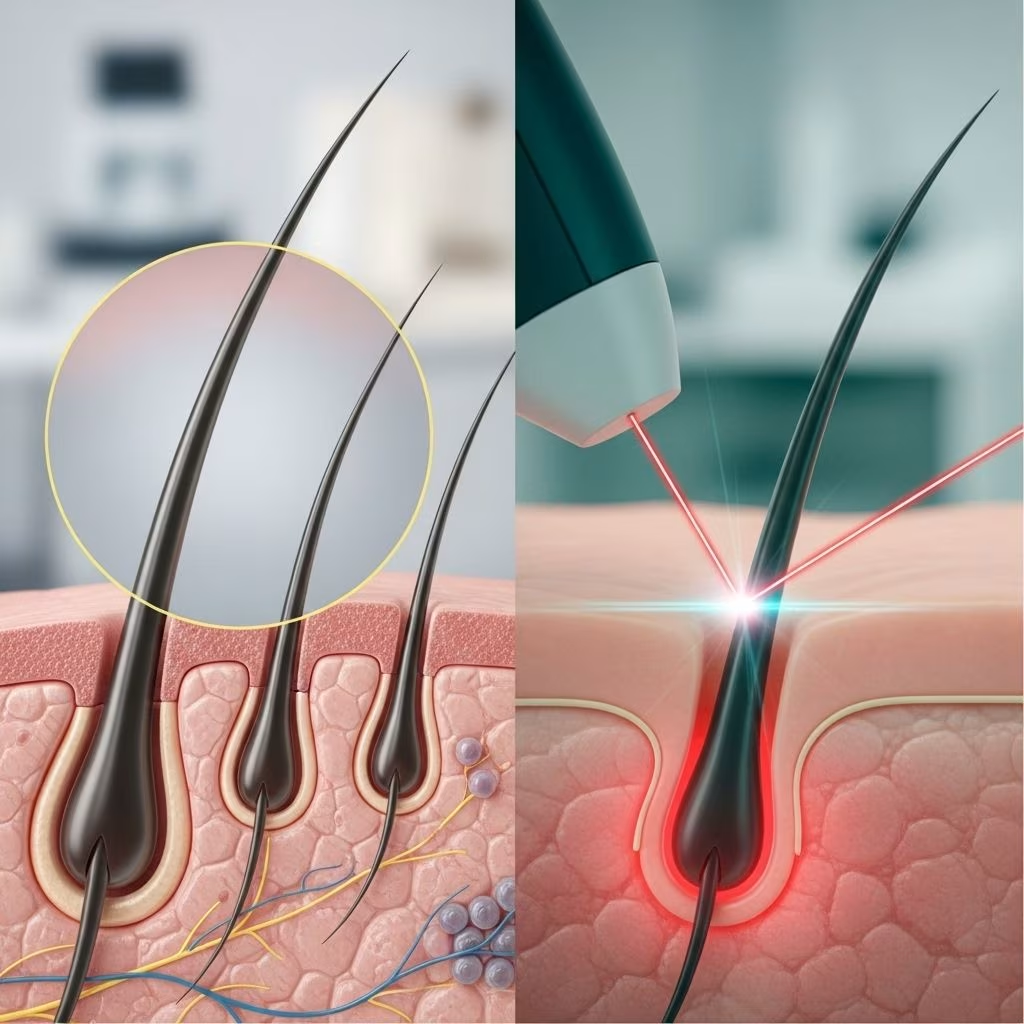
Laser hair removal uses concentrated beams of light (laser) to target and destroy hair follicles. The laser’s energy is absorbed by the pigment (melanin) in the hair, converting light into heat. This heat damages the follicle, inhibiting or delaying future hair growth.
- Target: The laser specifically targets pigments in the hair shaft and follicle. Dark, coarse hair absorbs more energy and responds best to treatment.
- Effectiveness: The treatment is most effective when hair is in the anagen phase, as this is when the follicle is most active and abundant in melanin, making it most susceptible to laser energy.
- Technological advancements: Modern devices can adjust wavelengths and pulse durations to accommodate different skin tones and hair colors, though very light (blonde, gray, or red) and fine hair remain challenging to treat effectively.
Why Timing Matters for Laser Hair Removal
Since not all hairs are in the same phase at any given time, only a fraction of hairs will be in the anagen phase during a single treatment session. Hair in the catagen, telogen, or exogen phases will not be effectively targeted by the laser, as these hairs are either detached from the blood supply, not actively growing, or starting to shed.
To achieve optimal results, multiple sessions are required to catch as many hairs as possible in the anagen phase. The timing and spacing of these sessions should ideally coincide with the natural growth cycle of the hair being treated.
| Hair Type | Typical Anagen Duration | Recommended Session Interval |
|---|---|---|
| Scalp | 2–7 years | N/A (not commonly treated) |
| Face (beard, upper lip) | 4–14 weeks | 4–6 weeks |
| Underarms | 4–6 weeks | 4–6 weeks |
| Legs | Over 6 weeks | 6–8 weeks |
| Bikini line | Up to 4 weeks | 4–6 weeks |
Ideal Treatment Schedule for Laser Hair Removal
The number and interval between sessions depend on the hair type, area of the body, and individual response. Here’s a general guideline:
- Initial sessions: Most practitioners recommend 6–8 sessions, spaced 4–8 weeks apart, depending on the treatment area.
- Maintenance: After the initial course, occasional maintenance sessions may be needed to target any new hairs that enter the growth phase.
- Personalization: A dermatologist or licensed technician can personalize the schedule based on your hair growth cycle, color, thickness, and skin type.
Common Misconceptions About Laser Hair Removal
- One and done: Laser hair removal is not a “one-time” treatment. Multiple sessions are required to catch all hairs in the growth phase.
- Instant results: Results are gradual. Hair reduction becomes noticeable after several sessions as the follicle is progressively disabled.
- Permanent removal: While laser treatment can significantly reduce hair growth, some hairs may regrow over time due to hormonal changes or follicular regeneration.
- For all skin and hair types: Traditional lasers work best on dark hair and lighter skin. Advances in technology have improved results for darker skin tones, but blonde, gray, or red hair remains less responsive.
Side Effects and Aftercare
- Mild side effects: Redness, swelling, and slight discomfort are common immediately after treatment but usually subside within hours.
- Skin changes: Temporary pigment changes (darkening or lightening) may occur, especially in darker skin tones.
- Sun protection: Avoid sun exposure before and after treatments to reduce the risk of complications.
- Avoid plucking/waxing: Do not pluck, wax, or use depilatory creams between sessions, as this removes the hair follicle targeted by the laser.
- Shaving is acceptable: Shaving between sessions is safe, as it does not affect the hair follicle.
Frequently Asked Questions (FAQs)
Q: What happens if you undergo laser hair removal in the wrong phase?
A: If the hair is not in the anagen phase, the follicle will not absorb enough laser energy, resulting in ineffective treatment. These hairs may continue to grow normally until the next growth cycle.
Q: Can laser hair removal stop hair growth permanently?
A: Laser hair removal can lead to long-term, often permanent, hair reduction. However, some regrowth may occur due to hormonal changes or new follicles entering the growth cycle.
Q: Why do multiple sessions of laser hair removal take so long?
A: Hair grows in cycles, and not all hairs are in the active growth phase at the same time. Multiple sessions are needed to target each hair during its optimal phase.
Q: Is laser hair removal painful?
A: Most people experience mild discomfort, often described as a rubber band snapping against the skin. Modern lasers often have cooling mechanisms to minimize discomfort.
Q: Are there any hair colors or skin types not suitable for laser hair removal?
A: Traditional lasers are less effective for blonde, gray, or red hair, as these lack sufficient pigment. Very dark skin may require specialized lasers to avoid pigmentation issues.
Summary
Understanding the hair growth cycle is essential for maximizing the effectiveness of laser hair removal. The four phases—anagen, catagen, telogen, and exogen—dictate when and how hair can be targeted by laser energy. Since the laser is most effective during the anagen phase, multiple sessions spaced according to your specific growth cycle are necessary for optimal results. Factors such as genetics, age, hormones, and health can influence your hair’s growth patterns and, consequently, your treatment plan. While laser hair removal offers impressive, long-term reduction, it is not a one-time solution and works best when carefully timed and personalized by a qualified professional.
References
- https://www.philipkingsley.com/hair-guide/hair-science/hair-growth-cycle.html
- https://www.advancedhair.com/learn/understanding-the-hair-growth-cycle
- https://www.harleystreethairtransplant.co.uk/hair-growth-cycle/
- https://www.healthline.com/health/stages-of-hair-growth
- https://en.wikipedia.org/wiki/Human_hair_growth
- https://www.hairdoctors.com.au/blog/3-stages-of-hair-growth/
- https://pmc.ncbi.nlm.nih.gov/articles/PMC9917549/
- https://ishrs.org/hair-loss-and-the-hair-growth-cycle/
- https://www.hims.com/blog/everything-you-need-to-know-about-the-hair-growth-process-regrowing-hair


