


Table of Content
- Alexandrite Laser for Tattoo Removal
- Ruby Laser for Tattoo Removal
- Nd:YAG Laser for Tattoo Removal
- Comparison of Alexandrite, Ruby, and Nd:YAG Lasers
- Frequently Asked Questions (FAQs)
Introduction to Laser Tattoo Removal
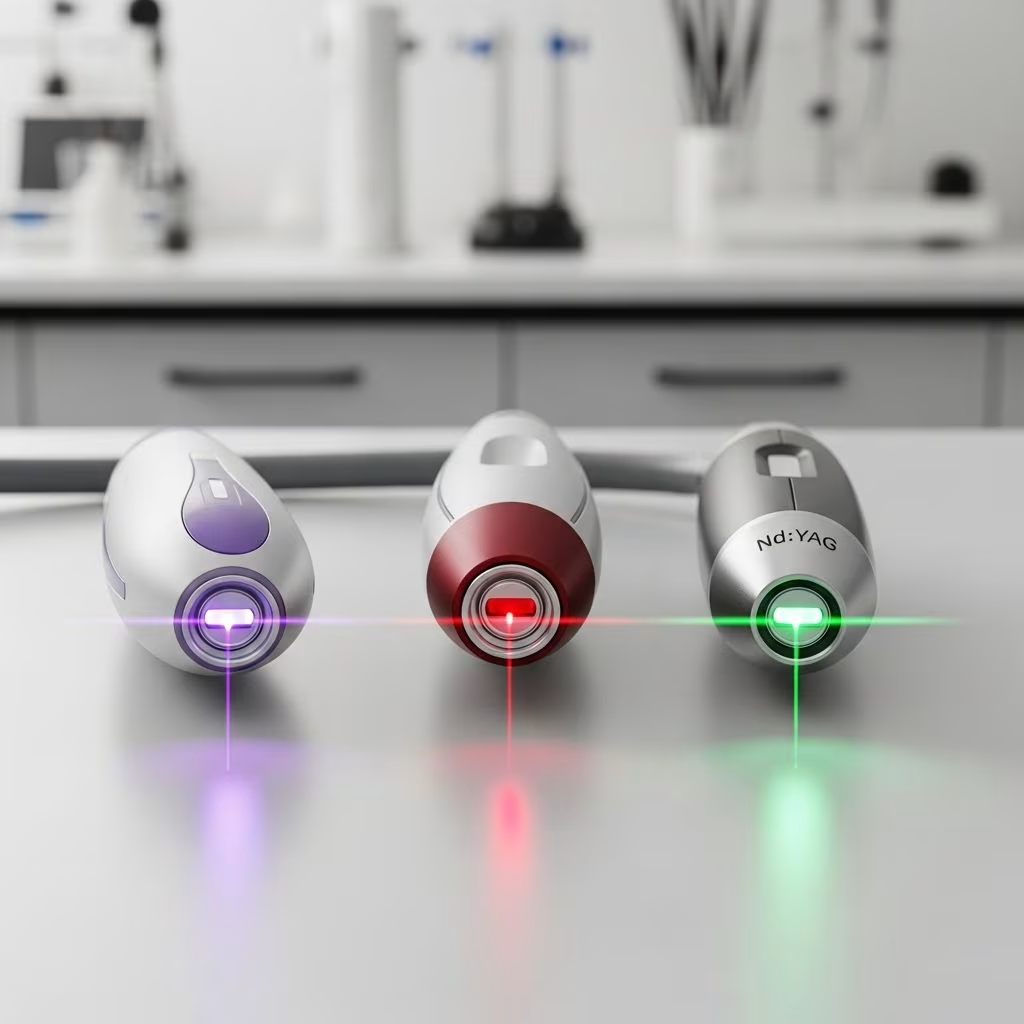
Laser tattoo removal has become a popular method for individuals seeking to remove unwanted tattoos. The development of Q-switched lasers has significantly improved the safety and effectiveness of this procedure. Among the most commonly used lasers for tattoo removal are the Alexandrite, Ruby, and Nd:YAG lasers. Each of these laser types has its own set of characteristics, making them more or less suitable for different skin types and tattoo colors.
Alexandrite Laser for Tattoo Removal
The Alexandrite laser operates at a wavelength of 755 nm and is particularly effective for removing green and blue-black pigments. It has a pulse width of about 100 nanoseconds, which is typical for Q-switched lasers. Studies have shown that the Alexandrite laser can achieve greater than 95% removal of tattoo pigment in an average of 8.9 treatment sessions. However, it can cause transient hypopigmentation in approximately 50% of patients and transient textural surface changes in about 12%.
More recent advancements have introduced the Alexandrite picosecond laser, which has shown even greater efficacy in removing tattoos, with some patients achieving over 75% clearance in just two to four sessions. The picosecond technology allows for more precise and efficient removal, reducing the number of required sessions.
Ruby Laser for Tattoo Removal
The Ruby laser, with a wavelength of 694 nm, is highly effective for removing blue and black pigments. It is known for achieving significant tattoo clearing, often better than both Alexandrite and Nd:YAG lasers in certain cases. However, it has a higher risk of causing hypopigmentation, particularly in darker skin types, due to its shorter wavelength and increased absorption by epidermal melanin.
A study comparing the Ruby laser with other Q-switched lasers found that it achieved better than 95% clearing in a higher percentage of tattoos compared to the Alexandrite laser. However, the increased risk of hypopigmentation limits its use in darker skin types.
Nd:YAG Laser for Tattoo Removal
The Nd:YAG laser operates at two primary wavelengths: 1064 nm and 532 nm. The 1064 nm wavelength is particularly useful for removing deeper blue and black pigments, while the 532 nm wavelength is more effective for red and orange pigments. It is considered safer for darker skin types due to its longer wavelength, which minimizes absorption by epidermal melanin, reducing the risk of post-inflammatory hyperpigmentation.
Studies have shown that the 1064 nm Nd:YAG laser can achieve significant tattoo clearance with minimal risk of pigmentary changes, making it a preferred choice for patients with darker skin.
Comparison of Alexandrite, Ruby, and Nd:YAG Lasers
| Laser Type | Wavelength | Pulse Width | Effectiveness for Tattoo Colors | Common Side Effects |
|---|---|---|---|---|
| Alexandrite | 755 nm | 100 nanoseconds | Blue-Black Pigment | Hypopigmentation, Textural Changes |
| Ruby | 694 nm | 20-30 nanoseconds | Blue & Black Pigment | Hypopigmentation |
| Nd:YAG (1064 nm) | 1064 nm | 5-10 nanoseconds | Blue & Black Pigment | Mild Hyperpigmentation |
Advantages and Limitations of Each Laser
Advantages of Alexandrite Laser: Effective for blue-black pigments, safer for lighter skin types, and recent advancements in picosecond technology have improved efficacy.
Limitations of Alexandrite Laser: Transient hypopigmentation and textural changes are common side effects.
Advantages of Ruby Laser: Highly effective for blue-black pigments, achieves significant tattoo clearing.
Limitations of Ruby Laser: Higher risk of hypopigmentation, particularly in darker skin types.
Advantages of Nd:YAG Laser: Safer for darker skin types, effective for blue-black pigments, and minimal risk of pigmentary changes.
Limitations of Nd:YAG Laser: May require more sessions for complete removal compared to other lasers.
Frequently Asked Questions (FAQs)
Q: Which laser is best for tattoo removal in darker skin types?
A: The Nd:YAG laser is generally considered the safest option for darker skin types due to its longer wavelength, which reduces the risk of hyperpigmentation.
Q: What is the most effective laser for removing blue-black tattoos?
A: The Ruby laser is highly effective for blue-black pigments, but it carries a higher risk of hypopigmentation, especially in darker skin.
Q: How many sessions are typically required for tattoo removal?
A: The number of sessions varies depending on the laser used, tattoo size, and color. On average, Alexandrite lasers require about 8-12 sessions, while Nd:YAG lasers may require a few more. The Ruby laser can achieve significant clearance in fewer sessions.
References
- https://jamanetwork.com/data/journals/DERM/14979/archderm_130_12_006.pdf
- https://pubmed.ncbi.nlm.nih.gov/7986123/
- https://cosmeticlaserskinsurgery.com/blog/the-new-laser-for-tattoo-removal-picoseconds-alexandrite/
- https://pmc.ncbi.nlm.nih.gov/articles/PMC4411606/
- https://clderm.com/when-temporary-tattoos-stick-around-understanding-fading-ink-regret-and-effective-removal/
- https://www.dermatoljournal.com/articles/commentary-laser-tattoo-removal-laser-principles-and-an-updated-guide-for-clinicians.html
- https://www.jwatch.org/jd199903010000008/1999/03/01/how-effective-are-lasers-treating-tattoos


