


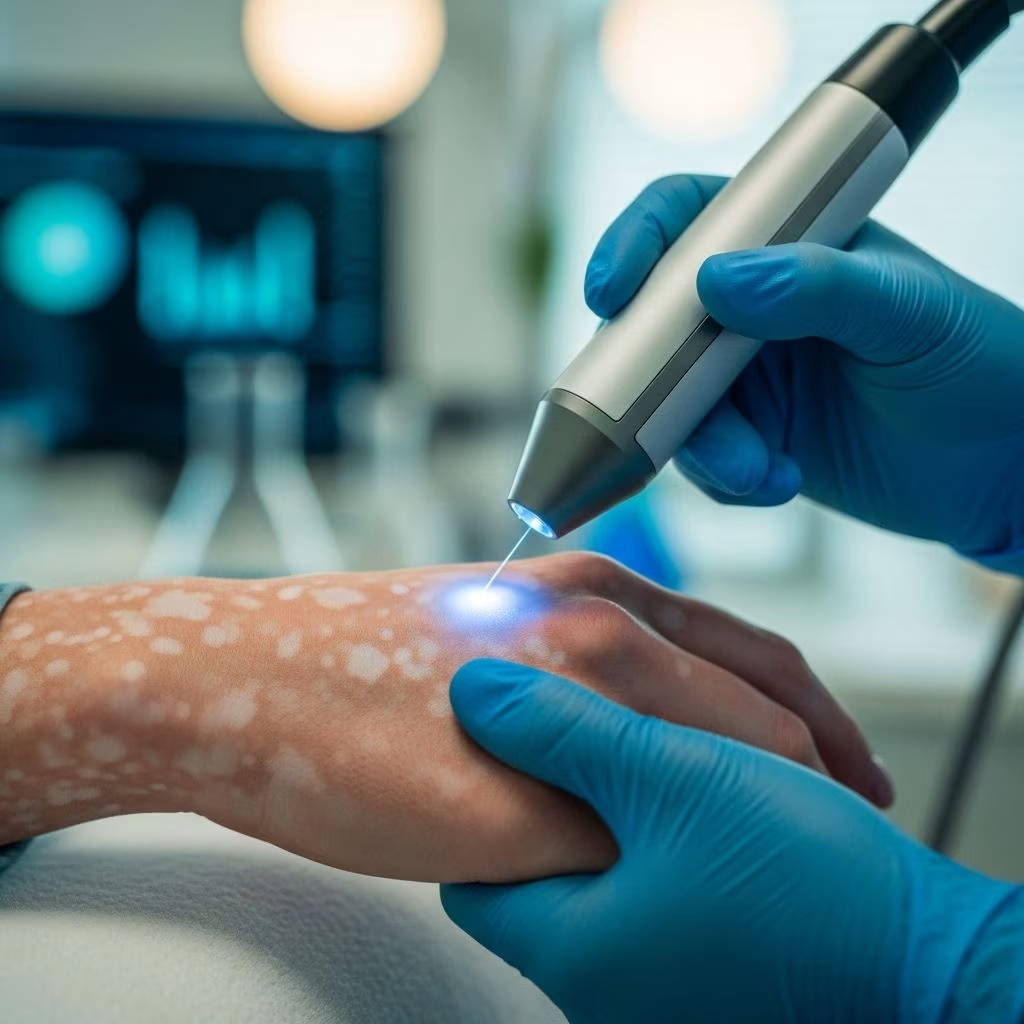
Laser Treatment for Vitiligo: Research Landscape, Techniques, and Cost Rates
Vitiligo is a chronic, often progressive skin disorder characterized by the loss of pigmentation due to the destruction or dysfunction of melanocytes. Affecting up to 2% of the global population, it can have a profound psychological and social impact. Among the modern therapeutic modalities, laser treatment—especially devices targeting ultraviolet and ablative spectra—has emerged as a promising option. This article comprehensively explores the state of research, efficacy, combination regimens, safety, and the typical rates associated with laser treatments for vitiligo.
- Table of Contents
- Overview of Vitiligo
- Mechanism of Action: How Lasers Treat Vitiligo
- Types of Lasers Used for Vitiligo
- Review of Clinical Research on Laser Therapy
- Combination Laser-Based Therapies
- Effectiveness & Repigmentation Rates
- Safety and Tolerability Profile
- Rates & Typical Costs for Laser Vitiligo Treatment
- Patient Selection & Considerations
- Frequently Asked Questions (FAQs)
1. Overview of Vitiligo
Vitiligo manifests as depigmented patches on the skin and mucous membranes. Though not physically harmful, its visual aspect can lead to psychological distress and reduced quality of life. Treatment options have historically included topical corticosteroids, calcineurin inhibitors, phototherapy, and, more recently, laser-based approaches designed to induce or accelerate repigmentation.
2. Mechanism of Action: How Lasers Treat Vitiligo
Laser therapies for vitiligo center around targeted phototherapy. These methods use focused beams of electromagnetic radiation to:
- Stimulate remaining melanocytes and promote their migration and proliferation.
- Induce the release of signaling molecules such as α-MSH (alpha-melanocyte-stimulating hormone) and endothelin-1, which enhance melanocyte function and repigmentation.
- Reduce local inflammation and modulate immune responses that damage pigment cells, especially when combined with systemic treatments.
Diverse laser wavelengths offer varied mechanisms—most notably, the 308 nm Excimer laser mimics the ultraviolet B spectrum, while fractional and ablative lasers promote epidermal remodeling and facilitate topical drug penetration.
3. Types of Lasers Used for Vitiligo
- Excimer Lasers (308 nm): Employ a narrowband UVB wavelength; highly targeted and effective for localized lesions; widely studied and FDA-approved for certain indications.
- Fractional Lasers: Create microthermal injury zones in skin, induce repair and melanocyte proliferation, often used in combination with other agents like platelet-rich plasma (PRP).
- Ablative Lasers (Er:YAG, CO₂): Remove thin skin layers, enhancing drug absorption; used infrequently because of greater side effects and downtime.
4. Review of Clinical Research on Laser Therapy
- Monotherapy Trials: Numerous randomized controlled trials have demonstrated that Excimer laser monotherapy yields significant repigmentation rates, typically comparable to narrowband UVB (NB-UVB). Response rates in localized non-segmental vitiligo are especially promising, with durability exceeding that of traditional therapies.
- Combination Therapy Trials: Combining laser therapy with topical, systemic, or biologic treatments such as tacrolimus ointment, platelet-rich plasma (PRP), or JAK inhibitors further enhances outcomes. A pivotal multicenter RCT involving 251 patients demonstrated that Excimer laser combined with oral JAK inhibitors produced superior repigmentation and disease stability compared to either modality alone, with a 14.2% higher repigmentation rate and durable long-term effects.
- Comparative Efficacy: Systematic reviews suggest Excimer laser and NB-UVB produce comparable repigmentation rates on localized lesions, but lasers offer enhanced targeting and convenience for patients with smaller or stubborn patches.
5. Combination Laser-Based Therapies
Current research has focused on the synergistic benefits of combining lasers with other modalities:
- Laser + Topical Tacrolimus: Studies confirm enhanced repigmentation (≥75%) when 308 nm Excimer laser is combined with tacrolimus ointment, particularly for UV-resistant areas where monotherapy falls short.
- Fractional Laser + Platelet-Rich Plasma (PRP): A meta-analysis found that combining PRP with fractional laser therapy produced higher mean repigmentation grades and patient satisfaction scores than routine treatments or monotherapy. The combination was also associated with reduced rates of non-response and a similar side effect profile.
- Excimer Laser + JAK Inhibitors: The addition of JAK inhibitors (targeting the interferon-gamma pathway) to Excimer laser therapy achieved a 100% significant efficacy rate in one large trial, with robust stability and low relapse rates at one-year follow-up.
- Excimer Light + Er:YAG Erbium Laser: Innovative protocols using 308 nm Excimer light combined with the 2940 nm Er:YAG laser showed improved treatment responses for localized vitiligo compared to monotherapy.
- Laser + Tofacitinib Citrate (Oral JAK inhibitor): Rapid, effective results have been achieved using this approach, with no serious adverse reactions reported in studies focused on localized disease.
6. Effectiveness & Repigmentation Rates
Repigmentation—the restoration of normal skin color—is the primary outcome by which vitiligo treatment success is judged. Research findings regarding laser therapy’s effectiveness include:
- 308 nm Excimer laser monotherapy produces clinically meaningful repigmentation, with up to 75% response in many trials.
- Combination regimens (laser + topical or systemic agents) consistently outperform monotherapy, achieving up to 100% significant efficacy in certain patient groups and superior pigment stability.
- Fractional lasers, especially when combined with PRP, demonstrate statistically superior mean grades of repigmentation (mean difference of 1.58 over controls) and higher patient satisfaction.
- Durable results: Combination therapy groups maintain pigmentation stability rates as high as 96.5%, with relapse rates as low as 8.8% after one year of follow-up.
- Comparison Table:
| Treatment Modality | Mean Repigmentation (%) | Stability/Relapse | Safety Profile |
|---|---|---|---|
| 308 nm Excimer Laser (Monotherapy) | 60–75% | High stability | Low adverse events |
| Excimer + JAK Inhibitors | Up to 100% | 96.5% stable, 8.8% relapse | Excellent safety |
| Fractional Laser + PRP | Higher than monotherapy | Good durability | Comparable to controls |
| Laser + Tacrolimus | ≥75% | Superior in UV-resistant areas | No significant increase in side effects |
7. Safety and Tolerability Profile
- Lasers used in vitiligo demonstrate strong safety profiles: serious or persistent adverse events are rare.
- Common side effects include mild erythema (redness), transient itching, or burning, which typically resolve quickly.
- Combination therapies (with PRP, JAK inhibitors, or topical agents) do not usually cause increased adverse events compared to monotherapy or controls.
- Fractional and ablative lasers may carry higher risks of post-treatment inflammation but remain well-tolerated under guidance.
8. Rates & Typical Costs for Laser Vitiligo Treatment
The cost of laser therapy for vitiligo varies widely by geographic region, technology used, provider expertise, and the number of sessions required. Typical rates include:
- Excimer Laser Sessions: Generally range from $150 to $400 per session, with most treatment protocols requiring 8–20 sessions for optimal results. This may amount to total costs of $1,200–$6,000 for a full course.
- Fractional/Ablative Laser Treatments: These often cost more due to advanced equipment and fewer providers; rates may be $250–$600 per session.
- Combination Therapies: Adding topical drugs, PRP, or oral JAK inhibitors increases costs; PRP injection fees may add $500–$1,000 per treatment round, while prescription costs for JAK inhibitors vary based on insurance coverage.
Additional costs may include consultation fees, follow-up appointments, and any adjunctive topical therapies. Insurance coverage for laser treatment in vitiligo varies, with many providers categorizing it as cosmetic treatment not covered under basic plans. Patients should seek a transparent breakdown from their dermatologist.
9. Patient Selection & Considerations
- Localized vs. Generalized Disease: Laser therapy excels for localized, stable patches, especially on face, neck, and areas less responsive to conventional phototherapy.
- UV Sensitivity: Excimer laser yields enhanced results in UV-sensitive regions. UV-resistant areas benefit from combination approaches.
- Age, Sex, Skin Type: Clinical data reveal no statistically significant impact of age, sex, or skin type on overall response; however, lesion localization matters.
- Pregnancy, Immunocompromised States: Safety in these groups is less defined; caution is recommended.
- Contraindications: Active skin infection, open wounds, or recent skin cancer history may preclude laser use.
10. Frequently Asked Questions (FAQs)
Q1: How long does it take to see results with laser therapy for vitiligo?
Most patients observe initial signs of repigmentation within 4–8 sessions (4–8 weeks), with maximal improvement typically reached after 12–20 sessions. Combination therapy may accelerate results.
Q2: Are the results of laser treatment permanent?
Repigmentation can be durable, notably with combination therapies showing stability rates up to 96.5% at one year. There remains a small risk of relapse or new depigmented patches over time.
Q3: Is laser therapy suitable for all types of vitiligo?
Laser treatment is best for localized, non-segmental, and stable vitiligo. Extensive or rapidly progressive cases may require a broader approach.
Q4: Are there significant side effects or risks?
Minor redness, itching, or swelling are the most common, and serious effects are rare. Combination therapies do not substantially increase side effect risks.
Q5: How does the cost of laser treatment compare with other therapies?
Laser therapy is typically more expensive than topical therapy but may be comparable to, or less than, long-term whole-body phototherapy. Combination regimens, PRP, or new drugs add costs.
Conclusion
Laser-based therapies, particularly the 308 nm Excimer laser and newer fractional devices, represent a validated and effective approach in managing localized vitiligo. Research indicates that combination regimens—incorporating topical agents, PRP, or JAK inhibitors—demonstrate superior efficacy, greater pigment stability, and remain safe for most patients. Cost considerations are important, with laser treatments falling on the higher end, especially when combined with novel adjuncts. For suited patients, lasers offer a targeted, durable, and increasingly evidence-backed mechanism to restore pigmentation and quality of life in vitiligo management.
References
- https://jamanetwork.com/journals/jamadermatology/fullarticle/480783
- https://pmc.ncbi.nlm.nih.gov/articles/PMC12086957/
- https://www.dermatologytimes.com/view/strata-excimer-laser-and-jak-inhibitors-delivers-superior-vitiligo-repigmentation
- https://pmc.ncbi.nlm.nih.gov/articles/PMC9314124/
- https://onlinelibrary.wiley.com/doi/10.1111/jocd.16715
- https://scholarlycommons.henryford.com/cgi/viewcontent.cgi?article=1660&context=dermatology_articles
- https://academic.oup.com/ced/article/50/5/940/7919228


