


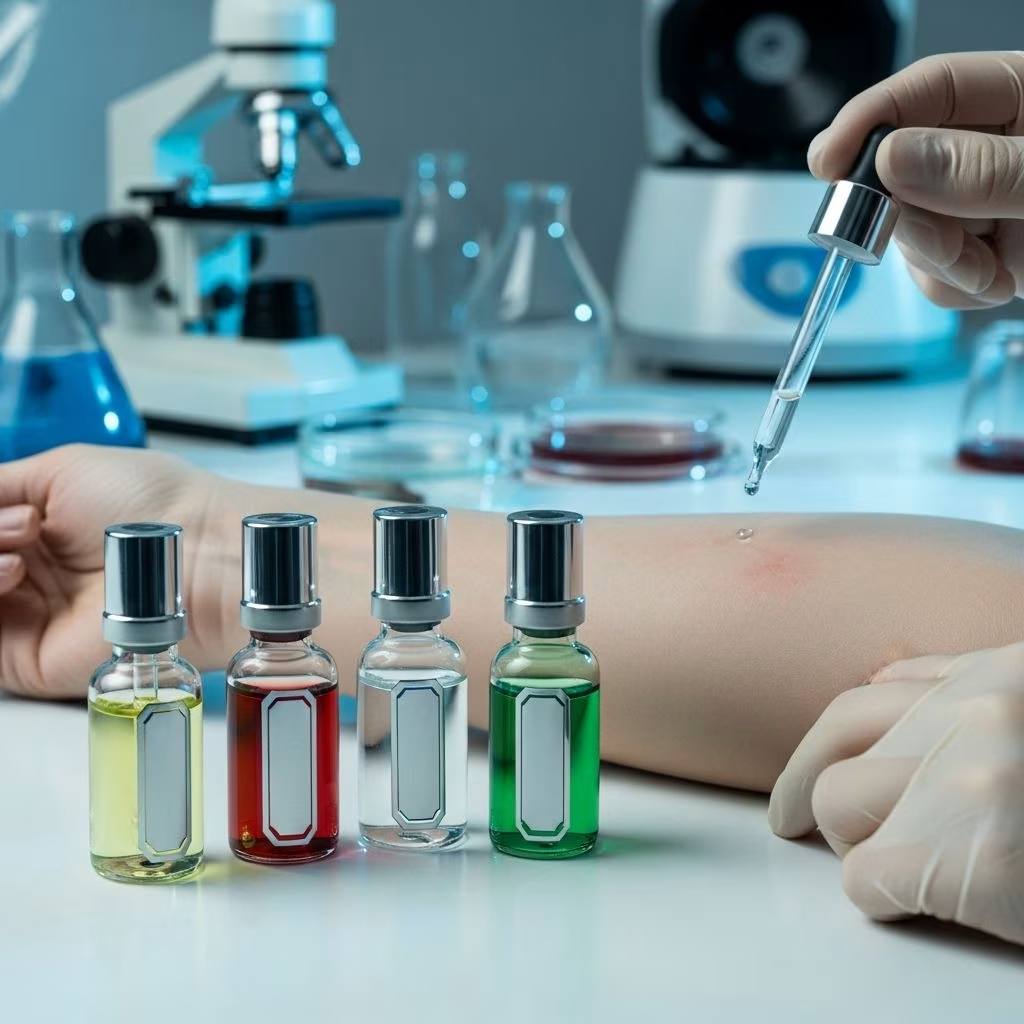
As cosmetic and medical laser procedures for skin rejuvenation and repair become increasingly commonplace, the demand for advanced post-procedural care continues to rise. Among innovative solutions, stem cell serums have captured the attention of dermatologists and researchers for their remarkable ability to speed up wound healing, minimize discomfort, and optimize aesthetic outcomes. This comprehensive article explores the science, mechanisms, products, and clinical results behind the use of stem cell serums for post-laser wound healing.
Introduction: Why Laser Wounds Need Special Care
Laser therapy—whether fractional CO2, Er:YAG, or non-ablative resurfacing—is integral to dermatology and aesthetic medicine, offering rejuvenation, scar revision, pigmentation improvement, and overall skin renewal. Yet, laser treatments intentionally create controlled skin injury to trigger regeneration. These wounds require sophisticated healing support to:
- Minimize pain, erythema (redness), and edema (swelling)
- Reduce the risk of infection and scarring
- Accelerate re-epithelialization (new skin growth)
- Personalize recovery—essential for patient satisfaction and clinical success
Traditional approaches (bland emollients, antibiotics, growth factors) have limitations, prompting exploration of regenerative therapies—most notably, stem cell serums—for post-laser wound management.
Understanding Stem Cells and Stem Cell Serums
Stem cells are undifferentiated cells with remarkable self-renewal properties and the ability to transform into multiple cell types vital for skin structure and function. In wound healing, stem cells orchestrate tissue repair by:
- Releasing growth factors and cytokines that guide healing
- Promoting new cell formation (fibroblasts, keratinocytes, endothelial cells)
- Stimulating collagen and elastin synthesis for tissue remodeling
Stem cell serums are topical products formulated with:
- Stem cell-derived conditioned media (rich in cytokines, peptides, and growth factors)
- Exosomes—nano vesicles containing regulatory molecules from stem cells
- Occasionally, plant stem cell extracts as adjuncts
Unlike cell-based therapies requiring direct transplantation, serums offer a non-invasive, practical way to harness key regenerative factors for post-laser wound care.
Mechanisms of Stem Cells in Skin Repair
The use of stem cell serums after laser-induced injury is grounded in their ability to influence all stages of the wound healing cascade:
- Inflammation: Stem cell cytokines (such as IL-10, TGF-β) suppress excessive inflammation, preventing prolonged redness and pain.
- Angiogenesis: Growth factors like VEGF encourage the formation of new blood vessels, increasing oxygen and nutrient delivery.
- Proliferation: Stem cell secretions trigger skin cell migration and proliferation, expediting re-epithelialization and dermal repair.
- Remodeling: Exosomes and proteins regulate collagen formation, leading to organized, flexible, and cosmetically optimal tissue healing.
Notably, different stem cell sources (e.g., adipose tissue, bone marrow, umbilical cord) impart slightly different healing profiles, but all share the regenerative capacity fundamental to wound resolution.
Key Biologically Active Ingredients in Stem Cell Serums
| Ingredient | Action in Wound Healing |
|---|---|
| Growth Factors (e.g., EGF, bFGF, TGF-β) | Stimulate cell division, angiogenesis, and tissue repair |
| Exosomes | Deliver microRNAs and proteins that regulate inflammation and cellular communication |
| Cytokines | Modulate inflammatory responses, initiate and sustain regenerative signals |
| Proteins and Peptides | Support extracellular matrix formation and skin barrier restoration |
Types of Stem Cell Serums Used Post-Laser
Several stem cell sources and corresponding serums are leveraged in post-laser wound care:
- Adipose-derived mesenchymal stem cell (AD-MSC) serums: Popular for their ease of extraction, abundance, and strong pro-angiogenic and antifibrotic properties. AD-MSC serums offer rapid wound closure and optimal cosmetic results.
- Bone marrow-derived mesenchymal stem cell (BM-MSC) serums: Known for broad differentiation potential—studies show improvement in chronic, non-healing wounds and enhanced vascularity and dermal repair.
- Umbilical cord (Wharton’s jelly) stem cell serums: Noted for rich exosome and growth factor profiles; often applied for rapid post-procedural recovery and tissue regeneration.
- Commercial formulations: Brands such as CALECIM® and others provide professional-grade serums developed from lab-cultured stem cell conditioned media, readily integrated into clinical practice.
Clinical Evidence and Outcomes
A growing body of evidence confirms the efficacy of stem cell serums in improving post-laser healing. Key findings from systematic reviews and clinical trials include:
- Significantly reduced pain, erythema, and edema when stem cell serums are applied immediately after fractional ablative CO2 laser or chemical peel procedures.
- Accelerated wound closure and re-epithelialization, often shortening the typical healing timeline by several days.
- Decreased risk of post-inflammatory hyperpigmentation and improved texture outcomes, supporting both medical and cosmetic goals.
- Higher levels of repair biomarkers, such as basic fibroblast growth factor (bFGF) following serum use, as observed in molecular studies.
For example, a split-face clinical trial involving CALECIM® Professional Serum demonstrated:
- Greater patient comfort
- Lower post-procedural burning and stinging
- Desire for continued use in home regimens
Systematic reviews further suggest that stem cell application, whether by direct transplantation or topical serum, yields consistently superior wound healing versus conventional care—including in the challenging context of chronic and large wounds.
Clinical Benefits Observed
- Faster re-epithelialization (new skin formation)
- Reduced erythema/swelling (less downtime)
- Improved texture and skin quality
- Lower incidence of complications (e.g., hypertrophic scarring)
- Greater patient satisfaction and shorter recovery periods
Stem Cell Serums Versus Other Topical Agents
Other topical agents recommended post-laser include:
- Vitamin C serums (antioxidant and collagen-synthesis roles)
- Basic emollients and barrier repair creams
- Antibiotic ointments for infection prevention in high-risk wounds
Comparative pilot studies reveal that while antioxidants or standard wound care may help some, stem cell serums uniquely address the entire spectrum of wound healing—from inflammation modulation to accelerated tissue growth and remodeling. This comprehensive effect offers unmatched advantages for post-laser applications.
Safety, Side Effects, and Best Practices
Clinical use of topical stem cell serums is generally considered safe:
- Most products are cell-free (conditioned media/exosomes only), minimizing risk of allergic reaction or infection.
- Reports of irritation or dermatitis are extremely rare or absent in well-designed trials.
- Always source from reputable suppliers adhering to rigorous manufacturing and safety standards.
Still, patients with open wounds or compromised skin barriers should use products under medical supervision. Patch testing is advisable in those with highly sensitive skin.
Patient Experience and Recovery Optimization
Patient-centered benefits are a cornerstone of stem cell serum application post-laser:
- Marked relief from pain, burning, and stinging—improving the overall treatment experience.
- Faster return to daily activities due to reduced downtime and visibly milder redness/swelling.
- Higher likelihood of treatment adherence and patient retention owing to perceived efficacy and comfort.
Dermatologist recommendations commonly include:
- Immediate application of serum post-laser, followed by daily use for several days
- Combination with barrier creams or antioxidants for synergistic support
- Avoidance of harsh chemicals and sun exposure during recovery
Frequently Asked Questions (FAQs)
Q: Are stem cell serums safe to use on all skin types after laser treatment?
A: Yes, most high-quality stem cell serums are designed for universal tolerance and free from live cells, making them suitable for most skin types. Medical supervision is recommended for sensitive or allergy-prone skin.
Q: How soon will I see results from using a stem cell serum after a laser procedure?
A: Clinical evidence shows visible reduction in pain, redness, and swelling within days; full effects on texture and speed of healing are typically apparent within 1–2 weeks.
Q: Are there risks of infection or side effects with stem cell serums?
A: No significant risk of infection is associated with topical, cell-free stem cell serums. Side effects such as mild irritation are exceedingly rare, especially when used as directed by a dermatologist.
Q: Can stem cell serums be combined with other topical agents post-laser?
A: Yes, they can be safely layered with barrier creams and antioxidant serums for enhanced healing, as long as products are compatible and used according to clinical guidelines.
Q: Are plant-derived stem cell serums as effective as those from human stem cells?
A: Plant stem cell serums may offer antioxidant or anti-inflammatory benefits, but human-derived stem cell serums (or their exosomes) provide broader and more potent regenerative effects critical for wound healing after laser treatments.
Conclusion
Stem cell serums represent a paradigm shift in managing post-laser wound healing. By delivering powerful growth factors, exosomes, and cytokines directly to injured skin, these specialized serums significantly reduce pain and swelling, speed up tissue repair, and maximize cosmetic outcomes. Backed by clinical evidence and patient satisfaction, stem cell serums are increasingly integrated into standard dermatological post-laser protocols. As research expands and products evolve, their role in regenerative skin care and procedural recovery is set to increase, promising even faster, safer, and more comfortable healing for all.
References
- https://pmc.ncbi.nlm.nih.gov/articles/PMC10931571/
- https://calecimprofessional.com/blogs/blog/reduce-skin-discomfort-from-laser-treatment-with-stem-cell-serum
- https://pmc.ncbi.nlm.nih.gov/articles/PMC8570656/
- https://factorfiveskin.com/blogs/post/stem-cells-and-you-post-resurfacing-rejuvenation
- https://www.startstemcells.com/stem-cell-facial-treatment-benefits.html
- https://www.pontevedravein.com/stem-cell-therapy-for-skin-question-and-answers
- https://calecimprofessional.com/blogs/blog/enhancing-results-from-co2-laser-treatments-with-best-stem-cell-serum
- https://www.frontiersin.org/journals/bioengineering-and-biotechnology/articles/10.3389/fbioe.2025.1527854/full


