


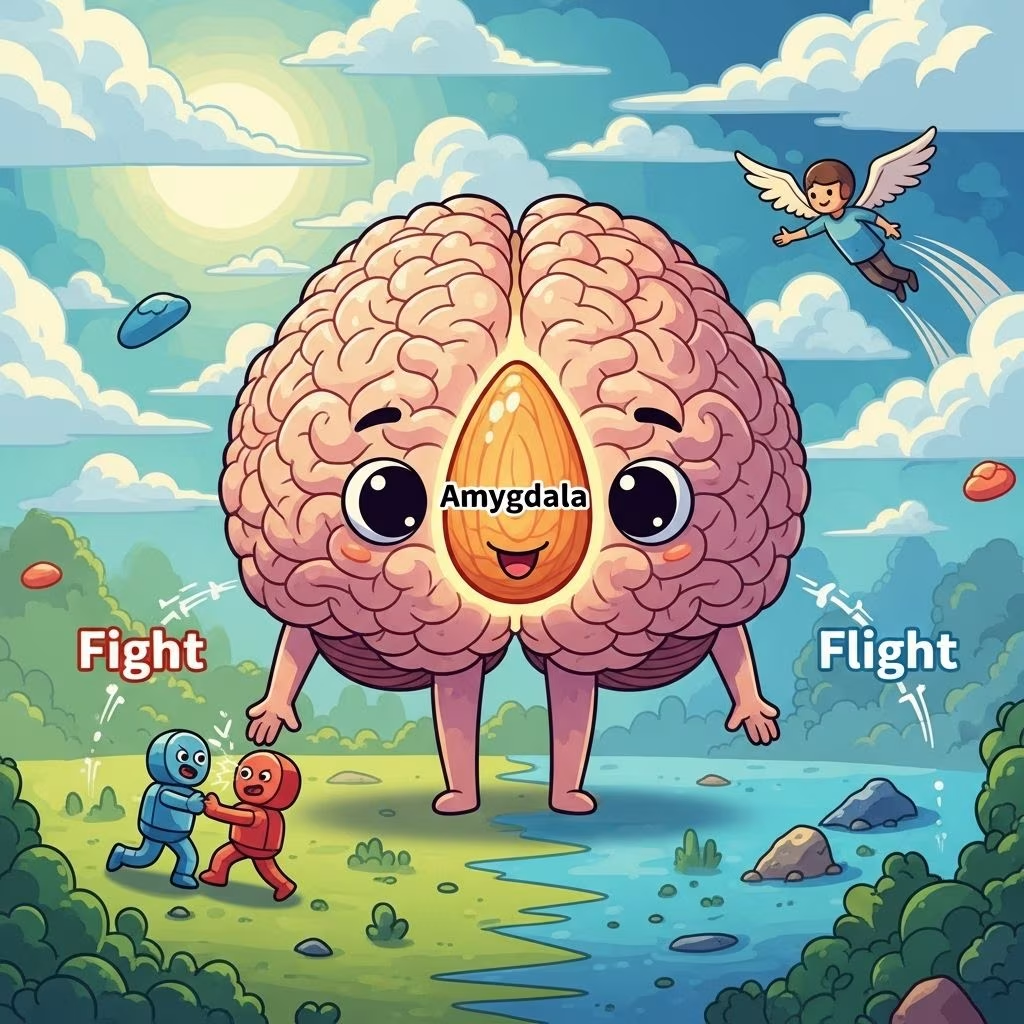
Have you ever wondered why you suddenly feel scared before a big test or why your heart beats fast when you hear a loud noise? Behind these feelings is a tiny but powerful part of your brain called the amygdala. Let’s take a fun and curious journey into your brain to discover more!
What is the Amygdala?
The amygdala is a small part of your brain, shaped like an almond. Don’t let its size fool you! It’s like a superhero that watches out for danger and helps you react quickly .
- Kind of like: Your inner bodyguard that keeps watch for anything scary or surprising.
- Superpower: Decides if something is safe, fun, or a threat — and helps you act fast!
Where is My Amygdala?
Your amygdala lives deep inside your brain, in the middle, way behind your eyes . Each brain has two amygdalae (that’s the fancy word for more than one amygdala) — one on each side.
Here’s a fun way to picture it:
- Size: About as big as an almond.
- Location: Hiding in the middle part of your brain, almost like treasure in a cave.
How Does the Amygdala Work?
Imagine your amygdala as a jumpy superhero or a fire alarm. When your senses (eyes, ears, nose, skin, tongue) notice something new, exciting, or scary, that information is sent to your amygdala for super-fast checking .
- Danger? If the amygdala thinks there’s danger (like a barking dog), it immediately makes your body react — sometimes before you even think.
- Safe? If the amygdala decides all is safe, you might feel calm or even happy.
This is why, if a ball is flying at your head, you’ll duck before you even know what’s happening. That’s your amygdala in action!
Emotions and the Amygdala
The amygdala is in charge of a lot of your emotions :
- Fear: Makes you feel scared so you can protect yourself
- Sadness: Sometimes helps you get support
- Happiness: Tells you when something is fun or rewarding
- Anger: Gives you courage when you need to stand up for yourself
The right side of your amygdala usually handles scary or negative feelings, while the left side can help with positive ones, too .
Memory and the Amygdala
When something makes you feel strong emotions, your amygdala helps your brain remember it longer. If you’ve ever had a super fun birthday party or got really scared by a thunderstorm, you probably remember it well — that’s thanks to your amygdala pairing emotion with memory .
What is Fight-or-Flight?
Sometimes, when your amygdala thinks there’s danger, it sets off your fight-or-flight response. Let’s break down what that means.
- Fight: Getting ready to stand your ground, shouting, or acting brave
- Flight: Running away or leaving the scary situation
- Freeze: Sometimes, your body just stops moving, hoping the threat goes away
Imagine you see a giant dog barking at you. Your amygdala quickly chooses: should you run, stand still, or try to look brave? Your heart beats faster, your muscles feel tense, and your stomach might feel funny. That’s your body’s alarm system kicking in — all thanks to your amygdala!
| Response | What Happens | When Does it Happen? |
|---|---|---|
| Fight | You stand up, yell, defend yourself | When you feel you can win or must act |
| Flight | You run away, escape quickly | When running away might keep you safe |
| Freeze | You get still, quiet, and hope not to be noticed | When hiding or staying put seems safer |
This super-fast reaction can be helpful if you really are in danger. But sometimes, it happens even when we’re just worried, like before giving a speech or trying something new.
Good and Not-So-Good Sides of the Amygdala
- Good Side: Helps keep you safe by warning you about danger and helping you react quickly. It helps you feel your feelings and remember things that matter.
- Not-So-Good Side: Sometimes the amygdala makes mistakes! It can’t always tell the difference between a real threat (like a barking dog) and something stressful but safe (like a test or a new experience). That means you might overreact or get nervous, even when there’s no real danger .
Meet the Brain Team: Amygdala, Prefrontal Cortex, and Hippocampus
Just like a superhero team, different parts of your brain work together:
- Amygdala: The jumpy superhero. Detects quick danger and strong feelings.
- Prefrontal Cortex: The smart planner. Helps you think clearly, make decisions, solve problems, and calm down after getting upset .
- Hippocampus: The master memory keeper. Helps you store and remember all the details of life, school, and experiences .
When the amygdala is too active, it can shut off your smart thinking part, making it hard to remember facts, focus, or control your behavior. This is why you might forget things or can’t explain your feelings if you’re really upset.
Why Do I Get Big Feelings Sometimes?
Sometimes, the amygdala turns on the alarm even when there isn’t real danger. Here are a few examples of “tricky” times when your amygdala might get things wrong:
- Taking a big test
- Speaking in front of the class
- Trying something brand new for the first time
- Seeing someone argue
- Feeling left out in a game
Even though these aren’t dangerous, your amygdala still wants to protect you, and you might feel nervous, freeze, or get upset .
How Can I Calm My Amygdala?
The awesome news is you can teach your amygdala to relax! Here are some ways to help your brain feel safer and calmer:
- Take Deep Breaths: Breathe in slowly through your nose and out through your mouth. This tells your body it’s time to relax.
- Count to Ten: Give your brain time to catch up to your feelings.
- Use Positive Self-Talk: Say things like “I am safe,” “I can do this!” or “It’s okay to feel nervous.”
- Talk to Someone: Tell a parent, teacher, or friend how you feel. Sharing big feelings helps!
- Try Mindfulness: Focus on your breath or notice five things you see, hear, or feel. Mindfulness helps you bring your brain back to the present, which calms the amygdala .
Fun Facts About the Amygdala
- “Amygdala” is a Greek word that means “almond” because of its shape!
- You have two amygdalae — one on each side of your brain.
- The amygdala works with other parts of your brain to help you learn from experience.
- Even grown-ups need to calm their amygdala sometimes!
Frequently Asked Questions
What happens if I don’t calm down after my amygdala goes off?
If you don’t calm down, your brain’s “thinking” part (the prefrontal cortex) stays shut off. This can make it hard to remember things, solve problems, or explain your feelings. With practice, you can learn to calm down faster .
Can my amygdala make mistakes?
Yes! Sometimes your amygdala gets “triggered” by things that aren’t truly dangerous, like a test or a new challenge. It just wants to keep you safe, even if you don’t need it .
Why can’t I always control my feelings?
Your amygdala reacts super quickly, sometimes before you even realize you’re feeling something. But with practice — like using calming strategies and talking about your feelings — you can get better at controlling how you react .
Is the amygdala only for fear?
Nope! The amygdala helps with all strong emotions — happiness, excitement, sadness, anger, and more. It’s especially important for anything that feels big or surprising .
Can I strengthen my prefrontal cortex?
Absolutely! Doing puzzles, reading, playing memory games, focusing on schoolwork, and practicing calming strategies all help your “smart part” get stronger .
Conclusion: You and Your Amazing Brain
Your brain is a fantastic team. Now that you know all about your amygdala, you can understand why you sometimes feel scared, nervous, or excited — and what to do about it. Remember, feelings are normal, and your brain is always learning and growing. So next time you feel the “alarm” going off inside, take a big breath and remind your superhero brain: I’ve got this!
References
- https://blissfulkids.com/mindfulness-and-the-brain-how-to-explain-it-to-children/
- https://kids.kiddle.co/Amygdala
- https://www.ochealthpsych.com/hey-mom-whats-my-amygdala/
- https://momentousinstitute.org/resources/brain-basics
- https://blissfulkids.com/the-stress-response-and-the-brain-how-to-explain-it-to-kids/
- https://my.clevelandclinic.org/health/body/24894-amygdala
- https://kidshealth.org/en/kids/brain.html
- https://www.simplypsychology.org/amygdala.html


