


Introduction
Academic achievement is a cornerstone of personal and professional development. Yet, for many students, test anxiety can be a significant barrier to success, leading to decreased performance and long-term educational setbacks. In recent years, mindfulness meditation and pre-test meditation interventions have emerged as promising tools to combat test anxiety and improve exam scores. This article explores the evidence, mechanisms, and practical applications of using meditation before tests as a strategy for academic enhancement.
Understanding Test Anxiety and Its Impact
Test anxiety is a specific form of performance anxiety characterized by excessive worry, nervousness, or fear before or during examinations. Its symptoms can include physical discomfort (e.g., headaches, nausea), emotional distress, and cognitive impairments such as difficulty concentrating and memory blocks. Studies indicate that test anxiety affects up to one-fifth of college students, significantly reducing exam performance and academic retention. Test anxiety is not limited to higher education; it is prevalent among high school and even elementary students, particularly before important assessments.
The Science Behind Mindfulness and Meditation
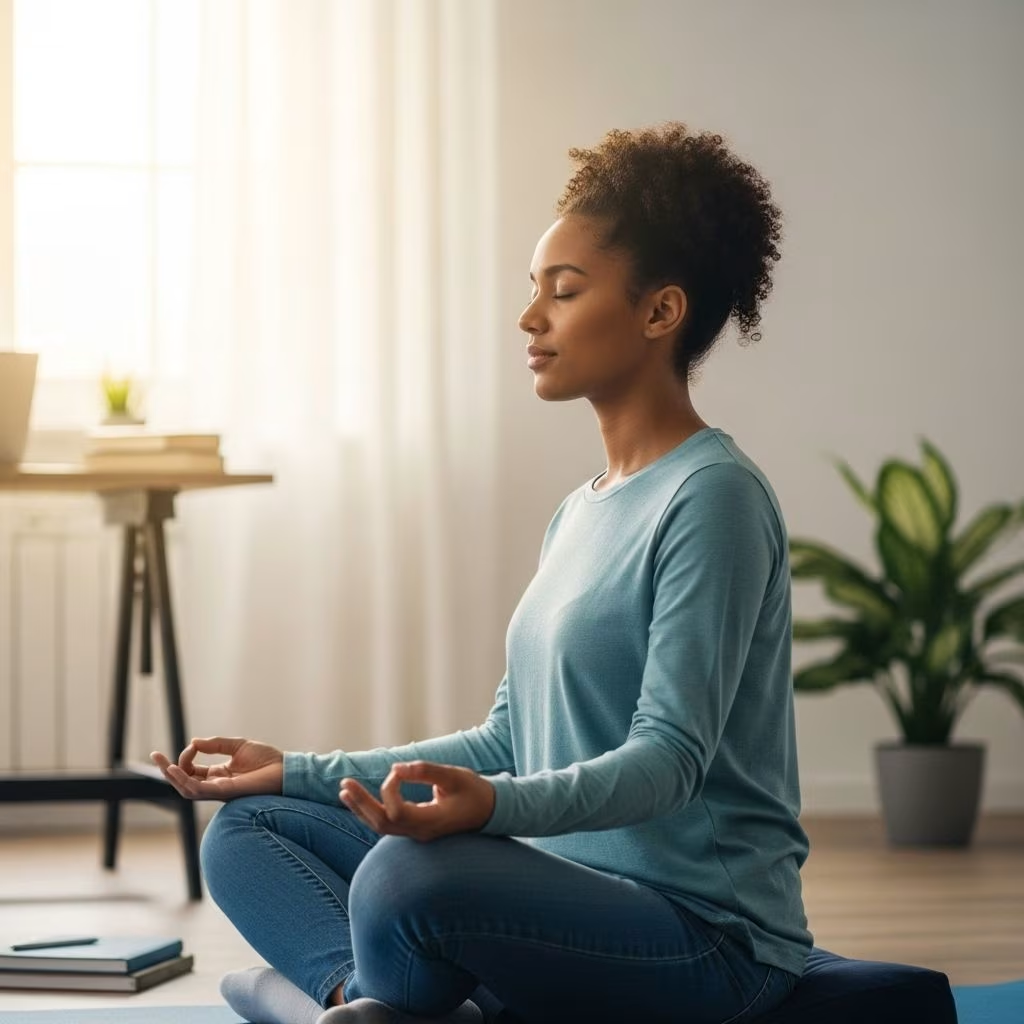
Mindfulness is the practice of intentionally focusing attention on the present moment, while calmly acknowledging and accepting one’s thoughts, feelings, and bodily sensations without judgment. Meditation, especially mindfulness-based interventions (MBIs), trains individuals to cultivate this state of awareness, leading to improved emotional regulation and cognitive functioning. Mindfulness meditation has been linked to reductions in general anxiety, stress, and depression, but its effects on test anxiety are particularly relevant for students.
Case Studies: Meditation Interventions in Schools
High School Honors Students
A notable case study involved two honors (accelerated) Algebra 2 classes (n=60) who participated in a guided meditation program during the two weeks leading up to their final exam. Students were required to practice five minutes of meditation during every class period and each night before bed. Pre- and post-test measures, using validated scales for mindfulness and test anxiety, revealed significant improvements in mindfulness and a marked reduction in test anxiety. Seventy-five percent of comparisons between pre- and post-meditation surveys showed statistically significant results (p ≤ 0.05). Students who meditated both in-class and before bed saw even greater benefits than those who only meditated during class, highlighting the importance of frequency and integration into daily routines.
College Students and Online Mindfulness Programs
College students are uniquely vulnerable to test anxiety, especially during high-stakes examinations. A randomized study conducted with undergraduate students assessed the impact of online mindfulness-based interventions. Participants were assigned to six-week, three-week, or sham mindfulness control conditions. All groups reported increased mindfulness and decreased test anxiety, though there was no additional benefit for the longer intervention. This suggests that even brief mindfulness practices can help students manage test-related stress.
Standardized Testing and Meditation
Research extends beyond classroom tests to standardized exams such as the GRE, LSAT, and GMAT. A study found that students who practiced mindfulness meditation for just two weeks before the GRE improved their scores by an amount comparable to 16 percentile points. Mindfulness helped students overcome distracting thoughts and maintain focus during the exam, suggesting its benefits are not limited to traditional academic settings but extend to a variety of high-stakes assessments.
How Pre-Test Meditation Improves Test Scores
Evidence consistently supports the connection between pre-test meditation and improved academic performance. For example, a randomized experiment found that students who completed brief guided meditations immediately before exams performed better than those in a control group. Detailed analysis suggested that these students relied less on mental shortcuts (heuristics) and demonstrated more careful, analytical thinking during exams. This shift away from heuristic-based reasoning may reduce errors and enhance problem-solving skills under pressure.
| Study Setting | Intervention | Key Results |
|---|---|---|
| High School Honors Classes | Daily class meditation + nightly meditation | Significant reduction in test anxiety; improved mindfulness |
| Undergraduate College Students | Online mindfulness programs (3-6 weeks) | Mindfulness increased, test anxiety decreased in all groups |
| Standardized Testing (GRE) | Two-week mindfulness meditation | GRE scores improved by ~16 percentile points |
Meta-analyses further confirm these findings, demonstrating a moderate to large effect of mindfulness-based interventions on test anxiety, regardless of the educational level or setting. The consistency of these results across diverse populations and assessment types underscores the broad applicability of pre-test meditation as a tool for academic success.
Practical Guide: Implementing Pre-Test Meditation Programs
For students, educators, and institutions interested in adopting meditation as a pre-test strategy, several practical steps can optimize outcomes:
- Introduce Short, Guided Sessions: Begin with concise, 5–10 minute guided mindfulness meditations, ideally led by a trained instructor or using reputable mindfulness apps.
- Consistency Is Key: Incorporate meditation into daily classroom routines and encourage students to practice at home, especially before sleep or exams.
- Create a Supportive Environment: Ensure a quiet, comfortable space free from distractions during meditation sessions.
- Monitor and Adapt: Use validated scales to assess mindfulness and test anxiety before and after intervention, and adjust the program based on feedback.
- Teacher Training: Educators should receive basic training in mindfulness techniques to facilitate sessions effectively and model mindfulness behaviors.
Psychological Mechanisms: How Meditation Reduces Anxiety
Mindfulness meditation works through several psychological mechanisms to alleviate test anxiety and enhance performance:
- Attention Regulation: Meditation trains the mind to focus on the present, reducing mind-wandering and improving concentration during exams.
- Emotional Regulation: By fostering non-judgmental awareness of thoughts and feelings, mindfulness helps students manage negative emotions and stress.
- Cognitive Flexibility: Mindfulness enhances cognitive flexibility, allowing students to approach exam questions more thoughtfully and avoid reliance on mental shortcuts.
Empirical evidence shows that these mechanisms collectively lead to lower test anxiety, a greater sense of control, and improved academic outcomes.
Limitations and Considerations
While research overwhelmingly supports the benefits of pre-test meditation, several caveats and questions remain:
- Comparable Benefits Across Interventions: Studies have found that even sham (placebo) mindfulness groups report reduced anxiety, raising questions about specific versus nonspecific effects of mindfulness training.
- Optimal Dosage and Duration: There is no clear consensus on the ideal length or frequency of meditation sessions for maximum impact on test anxiety and performance.
- Individual Differences: Students vary in their responsiveness to mindfulness interventions, and some may benefit more from alternative anxiety-reduction strategies.
- Implementation Challenges: Schools and colleges may face logistical challenges in integrating meditation programs, including scheduling, resource allocation, and staff readiness.
Future research should address these gaps by investigating the mechanisms, optimizing intervention protocols, and exploring long-term effects.
Frequently Asked Questions (FAQs)
Q: How long should students meditate before a test to see benefits?
A: Research suggests that even short, consistent practices—such as five minutes daily for two weeks—can yield measurable improvements in mindfulness, test anxiety, and academic performance.
Q: Is group meditation more effective than individual practice?
A: Both group and individual meditation can be effective, but consistent daily practice—whether in class or at home—seems to enhance results.
Q: Can meditation replace other test preparation strategies?
A: Meditation is a complementary tool, not a replacement for effective study habits and academic preparation. It helps manage stress and optimize cognitive function during exams.
Q: Are there any side effects of mindfulness meditation for students?
A: Mindfulness meditation is generally safe, but some individuals may experience discomfort when first confronting negative thoughts or emotions. Supervision and guidance can help mitigate such effects.
Q: Do students need training to practice mindfulness meditation effectively?
A: While self-guided apps and resources are available, initial training from a qualified instructor can improve adherence and benefits, especially in classroom settings.
Conclusion
Pre-test meditation, particularly mindfulness-based interventions, is a powerful, accessible, and evidence-based strategy for reducing test anxiety and improving academic performance. Case studies across high school, college, and standardized test settings consistently demonstrate significant benefits, with students reporting increased mindfulness, reduced anxiety, and higher exam scores. While questions remain about optimal implementation and individual variability, the current body of research supports integrating pre-test meditation into educational practices. By cultivating mindfulness, students can approach exams with greater calm, clarity, and confidence—unlocking their full academic potential.
References
- https://www.jsr.org/hs/index.php/path/article/view/5839
- https://gmatninja.com/articles/test-anxiety/mindfulness-and-mental-performance/how-mindfulness-meditation-can-improve-your-score/
- https://www.tandfonline.com/doi/full/10.1080/09645292.2025.2484579?af=R
- https://pmc.ncbi.nlm.nih.gov/articles/PMC9589788/
- https://www.frontiersin.org/journals/psychology/articles/10.3389/fpsyg.2024.1401467/full
- https://onlinelibrary.wiley.com/doi/full/10.1111/mbe.12344
- https://www.ethannichtern.com/feed/study-says-mindfulness-improves-standardized-test-scores
- https://journals.healio.com/eprint/QTIJFE4NJZTNMHG3RCJB/full


