


- Introduction
- Why Focus on Posture in Kids?
- Mindful Breathing and Child Development
- How Breathing Affects Posture
- The Science Behind Mindful Breathing
- Evidence-Based Benefits of Mindful Breathing
- Core Mindful Breathing Techniques for Kids
- Fun and Playful Posture-Enhancing Exercises
- Incorporating Mindful Breathing Into Daily Routines
- Practical Tips for Parents and Teachers
- Frequently Asked Questions
- Conclusion
Introduction
Good posture in childhood has far-reaching effects on physical health, emotional well-being, and academic performance. As children spend increasing amounts of time sitting—often with screens or books—supporting strong posture becomes a modern priority. Mindful breathing is an accessible method to foster healthy postural habits, self-awareness, resilience, and overall wellness for children. This article explores research, practical exercises, and strategies that integrate mindful breathing with posture improvement, offering a scientific and playful pathway to lifelong well-being.
Why Focus on Posture in Kids?
Poor posture can contribute to back and shoulder pain, fatigue, decreased lung capacity, and reduced ability to concentrate. Correct alignment doesn’t just impact appearance—it also influences breathing quality, mood regulation, and the way the body responds to stress. Building postural awareness early lays the foundation for health and confidence throughout adulthood.
Key factors affecting child posture:
- Increased sedentary lifestyles
- Prolonged screen use
- Habitual slouching
- Insufficient physical activity
- Delayed awareness of body sensations
Addressing posture concerns at a young age is essential, yet lasting change is most effective when children feel empowered through engaging, positive experiences.
Mindful Breathing and Child Development
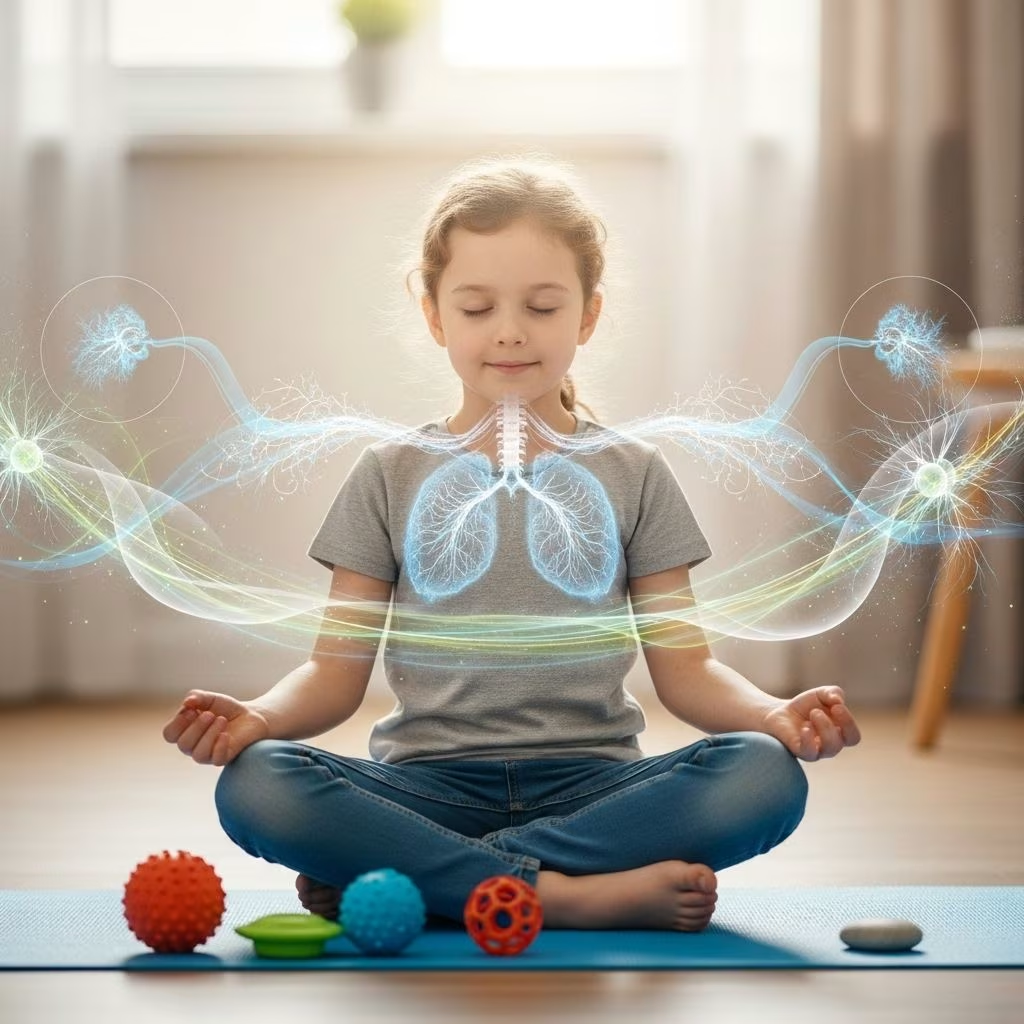
Mindful breathing involves cultivating awareness of the breath and learning to regulate it deliberately with slow, controlled movements. For children, mindful breathwork provides a simple tool for self-regulation, emotional management, and better body awareness.
Mindful breathing nurtures important developmental skills:
- Emotional regulation: Helps kids calm themselves during anxiety, frustration, or stress
- Concentration and focus: Enhances attentional control and academic performance
- Stress reduction: Triggers physiological relaxation, lowering heart rate and stress hormones
- Self-awareness: Encourages kids to notice posture, body signals, and early stress cues
- Resilience: Builds confidence to handle adversity with healthy coping strategies
Mindful breathing acts as a foundation for many other movement and wellness practices, including yoga, sports, and meditation.
How Breathing Affects Posture
The diaphragm, the primary muscle involved in breathing, also plays a key role in stabilizing the spine and core. Shallow, rapid chest breathing—especially in a slouched position—reduces oxygen intake and strains neck and back muscles. Deep belly breathing naturally encourages upright sitting and optimal spine alignment .
- When children breathe deeply into their belly (diaphragmatic breathing), their abdomen and trunk expand, prompting an upright sitting posture
- Proper posture allows lung capacity to increase, fostering better oxygenation and energy
- Slouching compresses chest and belly, limiting effective breath and making children more likely to fatigue or lose focus
In practical terms, mindful breathing helps kids feel what optimal posture is like and instills habits that protect their backs and shoulders long-term.
| Breathing Type | Posture Effect | Physical Benefit |
|---|---|---|
| Chest breathing (shallow) | Rounded shoulders, head forward | Low oxygen, tension, poor focus |
| Belly (diaphragmatic) breathing | Upright posture, relaxed shoulders | Increased energy, relaxation, better alignment |
The Science Behind Mindful Breathing
Recent studies and neurological research confirm the benefits of mindful breathwork in regulating physiological and emotional responses in children. When practiced regularly, mindful breathing:
- Slows the body’s breathing rate, stabilizing the nervous system
- Stimulates the vagus nerve, which calms stress responses and fosters relaxation
- Supports heart rate variability, which correlates with resilience and emotional control
- Reduces negative emotions and physical tension
Imaging studies show that posture and breathing are closely intertwined: changes in breath modify the activity of core muscles and spinal positioning. Mindful breathing exercises are now recommended by pediatricians, child psychologists, and physical therapists for holistic wellness.
Evidence-Based Benefits of Mindful Breathing
- Physical: Strengthens postural muscles, improves lung capacity, reduces back/neck pain, enhances core stability
- Cognitive: Boosts concentration, attention span, and executive function
- Emotional: Reduces stress and anxiety, improves self-regulation and resilience
- Social: Builds confidence, fosters self-awareness, and facilitates peer relationships through shared activities
The synergy between breath, muscle engagement, and self-control means that posture-focused breathwork gives children an accessible method for whole-body and whole-mind care.
Core Mindful Breathing Techniques for Kids
Children engage best with breathwork when it’s imaginative, hands-on, and gently guided. Here are the top evidence-based techniques to promote posture and well-being:
- Balloon Breaths: Children visualize filling their belly with air like a balloon, promoting upright sitting and deep diaphragm engagement .
- Counting Breaths: Inhaling and exhaling to a slow count encourages focus and slow, controlled breathing .
- Feather Breathing: Blowing gently on a feather or visualizing it, helps children practice slow outs, which assists relaxation and promotes posture .
- Stuffed Animal Belly Breaths: Lying down with a stuffed animal on the child’s belly makes belly expansion visible and fun, prompting natural spinal alignment .
- Bubbles and Pinwheel Breaths: Blowing bubbles or pinwheels encourages slow, steady exhalation while keeping the trunk upright .
- Hand Tracing (Breathe Upon a Star): Tracing fingers up and down as kids inhale and exhale adds a kinesthetic, mindful element to breath control and stillness .
Each activity motivates children to become curious about how breathing and posture feel as they move, sit, or play.
Fun and Playful Posture-Enhancing Exercises
- Imaginative Visualization: Combining stories with deep belly breathing—such as pretending to be a balloon, mountain, or gentle breeze—makes posture practice playful .
- Yoga-Based Movements: Yoga poses paired with mindful breathing help strengthen postural muscles and create body awareness (e.g., mountain pose, child’s pose) .
- Animal Breaths: Practice breathing like different animals (lion, snake, bunny) to vary posture and breath type while having fun .
- Bubble Blowing: Use bubble wands for slow, controlled exhalations sitting upright and focusing on gentle blows .
These activities make it easier for children—including those with difficulty sitting still—to practice core posture skills without pressure.
Incorporating Mindful Breathing Into Daily Routines
Mindful breathing for posture works best when woven into everyday moments. Habits are formed by consistency and context.
- Encourage short breathwork breaks between classes or homework sessions
- Practice deep breathing before bed or during transitions (after school, before sports)
- Pair breathing with movement—stretching, yoga, or dance routines
- Use props like stuffed animals, feathers, or bubbles to make practice playful
- Model healthy posture and breathing for children to observe and copy
For children with posture concerns, daily practice of just 2-5 minutes of mindful breathing can yield measurable improvements in body alignment and self-regulation.
Practical Tips for Parents and Teachers
- Use simple language and visuals for young children (e.g., “Fill your belly like a balloon!”)
- Set a relaxed, fun environment for practice—don’t rush or force participation
- Encourage kids to tune in to how their bodies feel before and after breathing sessions
- In group settings, incorporate breathing with gentle stretches or movement games
- Praise effort and self-awareness rather than “perfection”
- If a child is anxious or disengaged, use favorite toys or stories to introduce breath and posture activities
- Work with occupational therapists or clinicians if a child has medical or developmental concerns affecting posture or breathing
Frequently Asked Questions (FAQs)
Q: How does mindful breathing help posture in kids?
A: Mindful, deep belly breathing encourages children to sit upright and engage their core muscles, reducing slouching and supporting spinal alignment .
Q: At what age can children practice mindful breathing for posture?
A: Children as young as two or three can begin simple mindful breathing, using games or visualization. School-age children can benefit from more structured, self-guided techniques .
Q: Are mindful breathing exercises effective for children with developmental challenges?
A: Yes. Breathwork can be adapted for children of all abilities and is often recommended for physical, emotional, and cognitive support .
Q: How long should a mindful breathing session last?
A: Sessions can be short (2–5 minutes) or longer depending on a child’s age and attention span. Frequent, brief practice is more effective than occasional long sessions .
Q: Can mindful breathing improve focus or behavior in school?
A: Studies show that regular mindful breathing practice improves concentration, reduces anxiety, and helps regulate classroom behavior .
Conclusion
Incorporating mindful breathing into daily routines offers children an effective, evidence-based way to improve posture, fuel healthy development, and build emotional resilience. With imaginative play, supportive guidance, and a focus on body awareness, kids gain lifelong tools for health in body and mind. Teaching these habits early, both at home and in school, prepares children to meet everyday challenges with confidence, comfort, and poise.
References
- https://www.motherduck.com.au/breathing-exercises-to-support-children-self-regulation/
- https://health.choc.org/handout/mindfulness-and-meditation-practices-for-kids/
- https://www.actionforhealthykids.org/activity/mindful-breathing-exercises/
- https://copingskillsforkids.com/deep-breathing-exercises-for-kids
- https://www.youtube.com/watch?v=ujLkszl0xT4
- https://pmc.ncbi.nlm.nih.gov/articles/PMC9163650/
- https://www.youtube.com/watch?v=yarxCrHWyXQ
- https://cosmickids.com/fun-breathing-exercises-for-kids/
- https://biglifejournal.com/blogs/blog/5-fun-mindfulness-activities-children-breathing-exercises


