


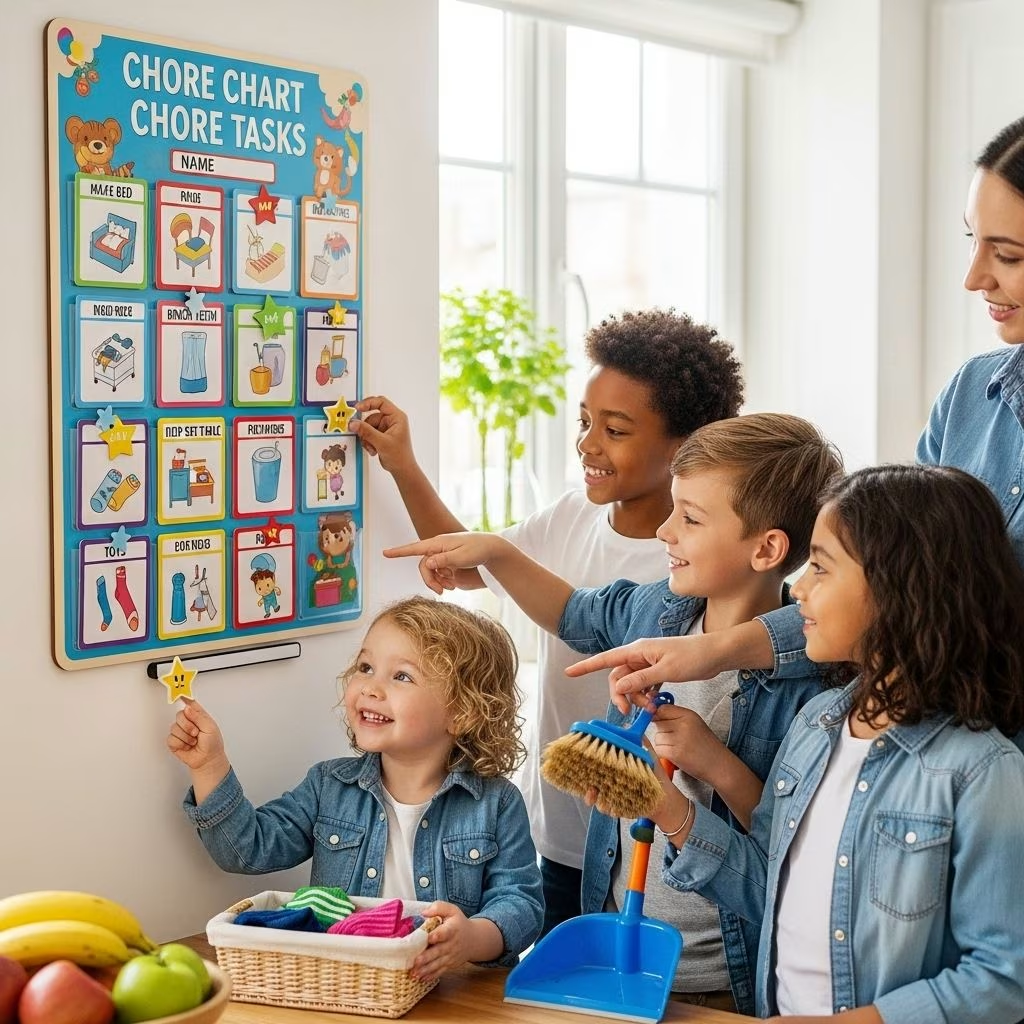
Teaching children to contribute to household chores is one of the most practical ways to help them build responsibility, independence, and work ethic. By introducing chore charts and using well-chosen incentives, parents can transform daily tasks into meaningful lessons while maintaining household harmony. This guide covers everything you need to know about chore charts for kids—from age-appropriate task lists to strategies for motivating and rewarding children for their contributions.
Why Chores Matter for Children
Chores aren’t just about getting help around the house. Research and parenting experts agree that involving children in daily household tasks produces benefits that go well beyond a tidy home:
- Builds Responsibility: Regular chores teach children that they are an important part of the family and responsible for contributing.
- Boosts Confidence: Completing a task independently, whether it’s making a bed or feeding a pet, gives children a sense of accomplishment.
- Fosters Independence: Learning practical life skills, such as laundry or dishwashing, prepares kids for self-sufficiency in adulthood.
- Encourages Teamwork: Working together helps children value cooperation and collaboration.
- Develops Work Ethic and Time Management: Chores introduce routines and expectations that form the basis for school and work success later in life.
Starting Young: Introducing Chores in Early Childhood
It’s never too early to start teaching children the value of pitching in. Preschoolers as young as age two can begin with simple, supervised tasks. The key is choosing chores that match their skill level and attention span. Early exposure sets expectations and helps chores become part of the family routine rather than cause for negotiation.
Guidelines for Introducing Chores to Young Children
- Keep instructions brief and clear.
- Choose chores that can be completed in one or two steps.
- Offer lots of praise and encouragement.
- Be patient—young children will need reminders and help.
Chore Charts by Age: What Kids Can Do
Every child develops at a different pace. Below is a guide to appropriate chores by age group, based on recommendations from child development experts and comprehensive parenting resources.
Chores for Toddlers (Ages 2–3)
- Pick up and put away toys and books
- Put dirty clothes in the hamper
- Wipe up small spills
- Dust reachable surfaces
- Fill a pet’s food dish (with supervision)
- Pile books and magazines
Chores for Preschoolers (Ages 4–5)
- Make their own bed (does not have to be perfect)
- Empty small wastebaskets
- Bring in newspaper or mail
- Clear their own place at the table
- Pull weeds with supervision
- Use a handheld vacuum to pick up crumbs
- Water flowers/plants
- Unload plastic utensils from the dishwasher
- Wash plastic dishes at the sink (with help)
- Fix a simple bowl of cereal
Chores for Early Elementary (Ages 6–7)
- Sort laundry (by color or owner)
- Sweep floors
- Set and clear table
- Help make and pack lunch
- Rake leaves or weed with supervision
- Keep bedroom tidy independently
Chores for Middle Elementary (Ages 8–9)
- Load/unload the dishwasher
- Put away groceries
- Vacuum carpet or rugs
- Help cook simple foods (toast, scrambled eggs)
- Peel vegetables
- Wash table after meals
- Fold and put away their own laundry
- Take pet for a walk (in safe environments)
- Mop floors
Chores for Preteens (Ages 10–12)
- Unload and reload all items from the dishwasher
- Fold and sort household laundry
- Clean bathrooms (sink, counters, mirrors, toilet)
- Wash car with supervision/independently
- Start a load of laundry (with reminders)
- Help make simple meals on their own with guidance
- Take out household trash and recycling
- Change their bed linens
- Babysit younger siblings (with adults at home nearby)
Chores for Teens (Ages 13+)
- Do all laundry, including own and family
- Manage personal and family schedule tasks (reminders, calendar updates)
- Shop for groceries with a list
- Prepare meals for the family
- Wash windows
- Deep clean bathrooms and kitchen appliances
- Run household errands (with supervision, as appropriate)
- Care for younger siblings independently or babysit for others
- Help with basic home maintenance (changing light bulbs, unclogging drains, organizing tools)
- Track allowance, budget, and manage part-time earnings
Age-Appropriate Chore Chart Example
| Age | Chore Examples |
|---|---|
| 2–3 | Put away toys, wipe spills, dust, help feed pets |
| 4–5 | Make bed, clear table, empty wastebaskets, water plants |
| 6–7 | Sweep, set table, sort laundry, help with snacks |
| 8–9 | Vacuum, load dishwasher, cook simple meals, walk dog |
| 10–12 | Do laundry, clean bathroom, take out trash, cook meals |
| 13+ | Shop for groceries, deep clean house, babysit, home maintenance |
Designing an Effective Chore Chart
Chore charts are visible reminders that help structure routines and clarify expectations. An effective chart should be easy to read, visually appealing, and adapted to the child’s age. Here’s how to design one that encourages participation and growth:
- Clear Task Assignment: List specific chores by name, not just general duties.
- Frequency Columns: Include days of the week or checkboxes for daily/weekly tasks.
- Personalization: Let kids help decorate or select their chart to increase buy-in.
- Visual Progress: Use stickers, magnets, or stars as indicators of completion.
- Age Alignment: Only include tasks suitable for your child’s cognitive and physical abilities.
- Family Review: Discuss the chart regularly as a family and adjust as children grow or seasons change.
Sample Chore Chart Structure
| Task | Monday | Tuesday | Wednesday | Thursday | Friday | Saturday | Sunday |
|---|---|---|---|---|---|---|---|
| Make Bed | ☐ | ☐ | ☐ | ☐ | ☐ | ☐ | ☐ |
| Clear Table | ☐ | ☐ | ☐ | ☐ | ☐ | ☐ | ☐ |
| Feed Pet | ☐ | ☐ | ☐ | ☐ | ☐ | ☐ | ☐ |
| Vacuum Room | ☐ | ☐ |
Incentives and Rewards: Motivating Kids the Healthy Way
Not all chores should be tied to rewards, but incentives can boost motivation—especially in the beginning or during transitions. The most effective incentives are those that are age-appropriate, encourage intrinsic motivation, and support positive behaviors.
Types of Incentives
- Verbal Praise: Recognizing effort and improvement builds confidence.
- Stickers/Stars: Visual markers (often for younger kids) that track completed tasks and progress toward a reward.
- Allowance: For older children, small monetary rewards can teach money management; connect this to more complex or optional chores rather than basic expectations.
- Special Privileges: Examples include earning extra screen time, a family outing, or choosing a movie.
- Certificates or Achievements: Marking milestones (such as a week of completed chores) with a printed certificate or small prize.
Best Practices for Using Incentives
- Keep rewards developmentally appropriate (e.g., simple praise for young children, more tangible rewards for older kids).
- Do not let incentives replace healthy expectations—children should also learn the value of teamwork and contribution without always expecting something extra.
- Consider a points system for older children, where certain chores earn more points toward larger rewards.
- Give rewards promptly and consistently; delay reduces the positive association with the chore.
- Gradually shift from extrinsic to intrinsic motivation as children mature.
Common Mistakes Parents Make
Creating effective chore systems takes patience and flexibility. Some frequent missteps include:
- Assigning tasks that are too difficult or too easy, which can cause frustration or boredom.
- Being inconsistent, either by letting charts lapse or failing to follow through with monitoring and rewards.
- Using chores as punishment, which can foster resentment rather than cooperation.
- Not adapting the system over time, failing to update tasks as children grow.
- Over-rewarding, which may diminish intrinsic motivation in the long term.
Practical Tips for Long-Term Success
- Start with simple, achievable tasks and build complexity as your child matures.
- Involve children in choosing their chores and setting up the chart—it increases their sense of ownership.
- Model the behavior you wish to see; parents who do chores cheerfully set the strongest example.
- Keep expectations realistic; progress is more important than perfection.
- Review and adjust charts together as kids gain new skills or show readiness for bigger responsibilities.
- Celebrate successes together, whether big or small.
Frequently Asked Questions (FAQs)
Q: What is the best age to start using chore charts?
A: Chore charts can be introduced as early as ages 2 or 3, starting with simple tasks. The key is to adjust the chart to the child’s developmental stage and to provide lots of support in the beginning.
Q: Should I pay my child for every chore?
A: Experts recommend mixing non-paid chores (basic family contributions) with optional chores that may earn rewards. This teaches both responsibility and the basics of money management without linking every task to payment.
Q: My child refuses to do chores. What should I do?
A: Stay consistent, keep expectations age-appropriate, use positive reinforcement, and involve your child in choosing tasks. Sometimes adjusting rewards or rotating chores can help re-engage reluctant kids.
Q: What should I do if my child completes chores incorrectly or with little effort?
A: Focus on teaching and encouraging improvement rather than criticizing. Offer to demonstrate the task again, praise effort, and give constructive feedback. Over time, quality will improve.
Q: Should teens still have a chore chart?
A: Yes. Teens benefit from chore charts that include more complex or adult-like responsibilities and help them build skills for adulthood. Adjust the chart to their age and allow more independence in managing it.
Conclusion
Chore charts, when tailored to children’s developmental stages and combined with appropriate incentives, are powerful tools for nurturing responsibility and independence. Through clear expectations, patient guidance, and a flexible approach to rewards, parents can create positive family routines and set their children up for lifelong success both at home and beyond.
References
- https://treehouseschoolhouse.com/blog/chore-lists-for-kids-by-age-printable-checklist
- https://www.webmd.com/parenting/features/chores-for-children
- https://childdevelopmentinfo.com/chores/the-ultimate-list-of-age-appropriate-chores/
- https://www.focusonthefamily.com/parenting/age-appropriate-chores-for-kids/
- https://www.healthychildren.org/English/family-life/family-dynamics/communication-discipline/Pages/Chores-and-Responsibility.aspx


