


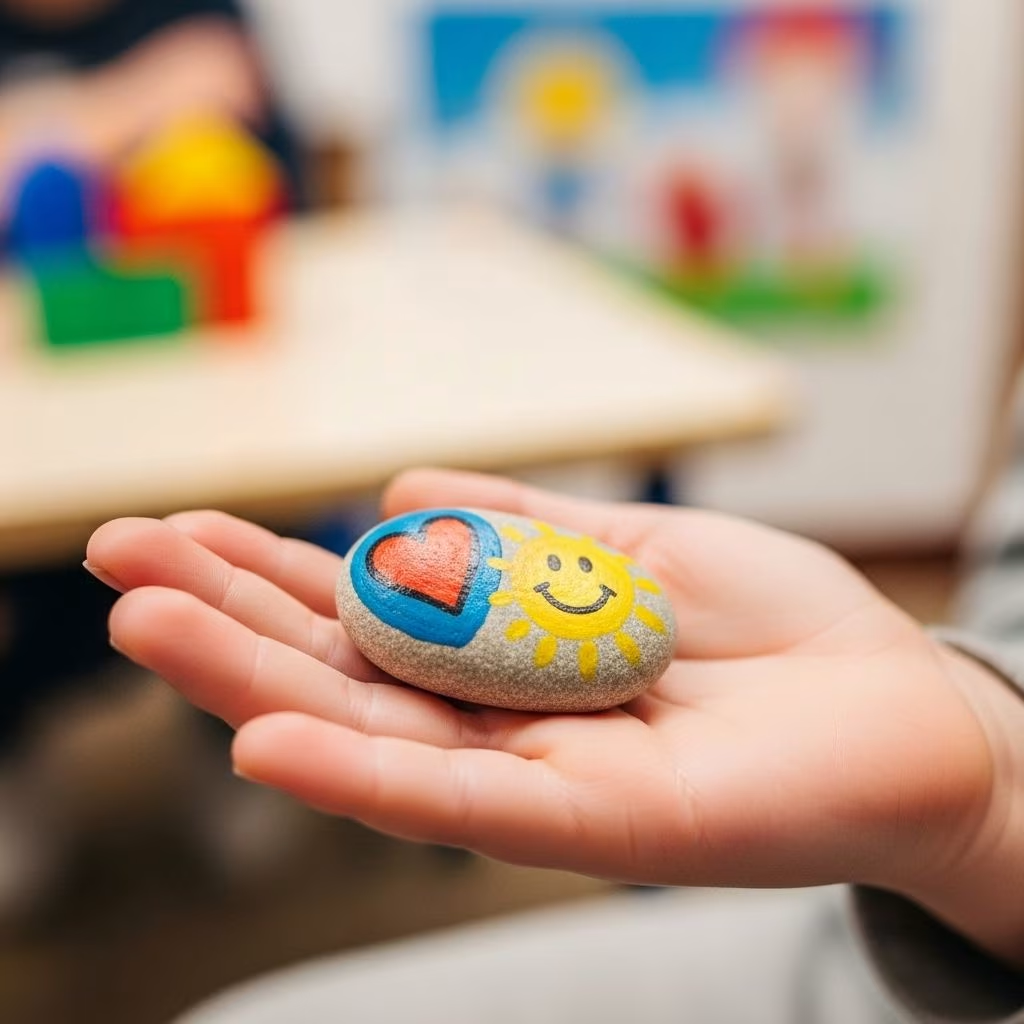
Teaching gratitude to kindergarten students is one of the most valuable gifts educators can provide. A gratitude stone activity offers a tangible, engaging way to help young children understand and express appreciation for the good things in their lives. This simple yet powerful craft combines art, mindfulness, and social-emotional learning to create lasting impressions on developing minds.
Gratitude stones are smooth rocks decorated with hearts, words, or designs that serve as physical reminders of things children appreciate. When kindergarteners create and use these stones, they develop a deeper understanding of thankfulness that extends far beyond simply saying “thank you.” The tactile nature of holding a stone makes the abstract concept of gratitude concrete and accessible for young learners.
Understanding the Power of Gratitude in Early Childhood
Before diving into the activity itself, it’s important to understand why gratitude matters so much for kindergarten-aged children. Developing a sense of gratitude during these formative years establishes a foundation for emotional intelligence and resilience that benefits children throughout their lives.
When young children learn to recognize and appreciate the positive aspects of their lives, they develop stronger neural pathways associated with happiness and contentment. This practice helps them build emotional regulation skills, allowing them to calm down strong feelings like anger or sadness by redirecting their attention toward positive thoughts. Research shows that grateful children tend to be happier, develop better social intelligence, and demonstrate more generous and compassionate behaviors toward others.
Gratitude also enhances a child’s ability to focus on the present moment rather than dwelling on past disappointments or worrying about future concerns. For kindergarteners who are just beginning to navigate complex emotions and social situations, this skill proves invaluable. When a child says something like “this day was horrible” because of one negative event, gratitude practices help them understand that a single moment doesn’t define an entire experience.
Materials Needed for Gratitude Stones
One of the best aspects of the gratitude stone activity is its simplicity. The materials required are minimal, affordable, and often readily available in classrooms or at home. Gathering these supplies beforehand ensures a smooth crafting experience:
Essential Materials:
Smooth, flat stones form the foundation of this activity. River rocks work exceptionally well because their smooth surfaces provide an ideal canvas for decoration. Choose stones small enough to fit comfortably in a child’s hand, as this size makes them perfect pocket companions. Before beginning the activity, wash and dry all stones thoroughly with soap and water to remove dirt and create a clean working surface.
Mod Podge serves as both an adhesive and sealant, creating a glossy, protective finish that makes the decorations permanent. Glossy Mod Podge works best for this project because it creates a seamless, smooth coating that conforms to every contour of the rock. Foam paintbrushes allow children to apply the Mod Podge easily without making a mess.
Decoration Options:
Tissue paper hearts cut into small shapes provide a simple yet meaningful decoration. The heart symbol naturally represents the warm feelings associated with gratitude. Small stickers, particularly hearts about half an inch in size, offer an alternative that doesn’t wrinkle on rounded surfaces. For older kindergarteners with developing writing skills, markers or paint pens allow them to write words or draw pictures representing things they’re grateful for.
Construction paper in various colors gives children creative freedom to express themselves. Scissors should be child-safe but effective for cutting tissue paper. Consider creating small supply packets for each child containing a stone, paper shapes, markers, and a reusable plastic container with Mod Podge to streamline the process and minimize cleanup time.
Step-by-Step Instructions for Creating Gratitude Stones
The process of making gratitude stones is straightforward enough for kindergarten students to follow with guidance, yet meaningful enough to create a memorable learning experience. Breaking the activity into clear steps helps children understand the process while building their confidence and fine motor skills.
Preparation Phase:
Begin by gathering all students in a comfortable workspace where they can spread out their materials. Explain the concept of gratitude in age-appropriate terms, perhaps by asking children to think about people, things, or experiences that make their hearts feel happy. This conversation sets the stage for meaningful reflection during the crafting process.
Distribute pre-washed stones to each child, allowing them to feel the smooth texture and examine the natural patterns and colors. This sensory exploration helps children become mindful and present, focusing their attention on the task ahead. Encourage them to notice how the stone feels cool in their hands and observe any unique characteristics that make their stone special.
Decoration Process:
Have children cut out small tissue paper hearts using child-safe scissors, or provide pre-cut hearts for younger students who are still developing scissor skills. The cutting activity itself offers fine motor practice while keeping children engaged. If using stickers instead, allow each child to select the designs that appeal to them most, fostering a sense of ownership over their creation.
Once children have chosen their decorations, guide them in placing the heart or design on the surface of their clean stone. Using a foam paintbrush, demonstrate how to lightly spread a thin layer of Mod Podge over the tissue paper and top half of the rock. Emphasize the importance of being gentle to avoid tearing the delicate tissue paper. The Mod Podge should be applied in smooth, even strokes to create a professional-looking finish.
Allow the top layer to dry completely undisturbed. This waiting period provides an excellent opportunity for discussion about what children plan to be grateful for when using their stones. After the top dries, flip the rock over and spread Mod Podge over the bottom half, again allowing it to dry completely.
Finishing Touches:
Once the rocks are fully dry, invite children to touch them and notice how seamlessly the tissue paper has become part of the stone. The thin tissue conforms to every nook and cranny, making it appear as a natural element of the rock. This transformation often delights kindergarteners and reinforces the magic of creating something beautiful and meaningful.
Integrating Gratitude Conversations During the Activity
The true educational value of gratitude stones emerges through the conversations that occur while creating them. As children work on their stones, teachers have a golden opportunity to introduce and reinforce gratitude concepts in a natural, engaging way.
Ask open-ended questions that encourage reflection: “What makes you feel happy inside?” “Who are the people that help you every day?” “What is something you have that makes you feel lucky?” These questions prompt children to think beyond material possessions and consider relationships, experiences, and simple pleasures.
Share examples from your own life to model gratitude expression. When a teacher says, “I’m grateful for sunny days because they make me feel energetic and happy,” children learn that gratitude can apply to everyday experiences. Encourage children to explain why they feel grateful, not just what they’re grateful for. When a six-year-old says, “I am thankful for the book because you didn’t have to buy it for me, but you did. I am thankful for the book and for you! My heart feels happy,” they demonstrate a deeper understanding of appreciation.
As students naturally fall into conversation about things they appreciate, facilitate peer-to-peer sharing. When one child mentions being grateful for a pet, encourage others who have pets to share their feelings. This creates a positive, supportive classroom atmosphere where gratitude becomes contagious.
Creative Ways to Use Gratitude Stones in the Classroom
Once children have created their gratitude stones, the learning continues through various activities that reinforce the practice of appreciation. These diverse applications keep the concept fresh and engaging throughout the school year.
Daily Gratitude Circle:
Gather students in a circle and give a gratitude stone to one child. That child shares something they’re grateful for, then passes the stone to the classmate beside them. Continue around the circle until each child has had a turn. This ritual creates a positive atmosphere and helps children start or end the day on a thankful note. The physical act of passing the stone gives each child a moment to prepare their thoughts and ensures everyone receives equal attention.
Calm-Down Tool:
Place gratitude stones in a designated calm-down corner or peace area of the classroom. When students feel overwhelmed, angry, or sad, they can hold a gratitude stone and think about positive things in their lives. This simple act helps regulate emotions by redirecting attention from distressing thoughts to appreciative ones. The smooth texture of the stone provides a grounding sensory experience that helps children center themselves.
Pocket Reminders:
Allow children to keep their gratitude stones in their pockets throughout the day. Every time they touch the stone, encourage them to pause and think of something they appreciate. This practice, popularized by Lee Brower in the documentary “The Secret,” transforms an ordinary moment into an opportunity for mindfulness and positive thinking. For kindergarteners, this tangible reminder proves more effective than abstract instructions to “be grateful.”
Hide and Seek Gratitude Game:
Hide gratitude stones around the classroom or outdoor play area. Challenge children to find the stones, and each time a child discovers one, they must share something they’re grateful for before continuing the search. This active game combines physical movement with gratitude practice, making it especially effective for kinesthetic learners who process information through movement and touch.
Gratitude Stone Hunt:
Take students on a nature walk and help them find their own special stones to decorate. During the walk, encourage children to notice and express appreciation for natural elements like sunshine, trees, birds, and flowers. This outdoor experience connects gratitude to the natural world and provides sensory-rich learning opportunities.
Spreading Gratitude Beyond the Classroom
Gratitude stones offer unique opportunities to extend appreciation beyond the classroom walls, teaching children that kindness can be shared with the broader community. These outreach activities help kindergarteners understand that their actions can positively impact others.
Neighborhood Gratitude Project:
After creating gratitude stones, take students on a supervised walk around the school neighborhood or arrange for parents to do this at home. Leave decorated stones on neighbors’ doorsteps as anonymous gifts. This activity teaches children that they can spread happiness without expecting recognition or reward, instilling values of selfless kindness. The knowledge that someone will discover the stone and feel joy creates excitement and teaches cause-and-effect relationships in social-emotional contexts.
School Community Stones:
Have children create extra gratitude stones to give to school staff members like cafeteria workers, custodians, office personnel, and other teachers. Encourage students to personally hand the stones to recipients and express specific appreciation, such as “Thank you for making delicious lunches” or “I’m grateful you keep our school clean.” These interactions build community connections and help children recognize the many people who contribute to their daily experiences.
Family Connection Activity:
Send instructions home so families can create gratitude stones together. This extension reinforces classroom learning and opens conversations about appreciation in the home environment. When families participate in the same activity, children see gratitude as a universal value that matters in all contexts, not just at school.
Incorporating Mindfulness Elements
The gratitude stone activity naturally lends itself to mindfulness practices that help kindergarten students develop present-moment awareness. Adding mindfulness components deepens the experience and teaches valuable self-regulation skills.
Begin the activity with a brief sensory exploration. Have children close their eyes and feel their stones, noticing the temperature, texture, weight, and shape. Guide them through questions: “Does your stone feel cool or warm?” “Is it perfectly smooth or does it have bumps?” “What happens when you squeeze it gently?” This sensory focus brings children into the present moment and away from distractions or worries.
During the crafting process, encourage children to notice the colors of their materials, the smell of the Mod Podge, the sound of scissors cutting paper, and the feeling of the paintbrush moving across the stone. These observations transform a simple craft into a full sensory experience that engages multiple areas of the brain.
Use a bell or chime to create mindful transitions between steps. When children hear the bell, they pause, take a deep breath, and prepare for the next instruction. This practice builds listening skills and helps students develop the ability to pause and reset their attention.
Addressing Different Learning Styles and Abilities
Gratitude stone activities can be modified to accommodate diverse learners and ensure every kindergarten student can participate meaningfully. Thoughtful adaptations make the activity accessible while maintaining its core benefits.
For children with limited fine motor skills, provide pre-cut shapes and larger stickers that are easier to manipulate. Allow these students to use paintbrushes with thicker handles or offer hand-over-hand assistance when applying Mod Podge. The goal is participation and learning, not perfect execution.
Students who are non-verbal or have communication challenges can point to picture cards representing things they’re grateful for or use assistive technology to express their thoughts. They might select images of family members, favorite foods, toys, or activities to attach to their stones.
Advanced learners who are already reading and writing can add words or short phrases to their stones using paint pens. Challenge them to think of more abstract concepts they appreciate, such as kindness, laughter, or learning, rather than only concrete objects.
Visual learners benefit from seeing completed examples before starting their own stones. Kinesthetic learners need opportunities to handle materials and experiment with techniques. Auditory learners thrive during discussion portions when they can hear and share gratitude stories. By incorporating elements that appeal to all learning styles, teachers ensure comprehensive engagement.
Connecting to Literature and Curriculum Standards
Pairing the gratitude stone activity with appropriate children’s literature reinforces concepts through multiple modalities and aligns the project with educational standards. Picture books provide narrative context that helps kindergarteners understand abstract emotional concepts.
Recommended Books:
“Gratitude is My Superpower” serves as an excellent introduction to the gratitude stone activity. This book presents appreciation as a powerful ability that children can develop and use to improve their lives and the lives of others. Reading this story before beginning the craft creates a conceptual framework that makes the hands-on activity more meaningful.
Other suitable titles include “The Thankful Book” by Todd Parr, “What Are You Grateful For?” by Jill Davis, and “Bear Says Thanks” by Karma Wilson. These books use age-appropriate language and engaging illustrations to explore gratitude from different perspectives.
Standards Alignment:
The gratitude stone activity naturally addresses multiple kindergarten standards across subject areas. In social-emotional learning, it develops self-awareness, self-management, and social awareness competencies. Students identify and express emotions, demonstrate impulse control while waiting for materials, and recognize the perspectives of others.
Fine motor development occurs through cutting, painting, and manipulating small objects. Language arts standards are met through vocabulary development (grateful, appreciate, thankful), oral communication during sharing time, and listening comprehension. The activity even touches on science when discussing natural materials and observation skills.
Long-term Gratitude Practices for Sustained Impact
Creating gratitude stones is just the beginning. The real transformation occurs when teachers establish ongoing practices that keep appreciation at the forefront of classroom culture throughout the year.
Establish a daily gratitude routine where students share appreciations during morning meeting or before dismissal. Keep a class gratitude journal where each day a different student dictates something they’re grateful for while the teacher records it. Over time, this journal becomes a treasured record of the class’s collective appreciation.
Create a gratitude tree display where students add paper leaves with drawings or words representing things they appreciate. As the tree fills throughout the year, it provides a visual representation of all the good things in their lives. Revisit the tree regularly to read previous entries and reflect on growth.
Implement gratitude partners where students pair up weekly to share appreciations with each other. This practice builds relationship skills and helps children recognize positive qualities in their classmates. Rotate partners regularly so students form connections with different peers.
During challenging moments, reference the gratitude stones and ask students to remember their appreciations. When conflicts arise, encourage children to think about something they’re grateful for about the other person. This redirection can defuse tension and promote empathy.
Frequently Asked Questions
Q: At what age can children start making gratitude stones?
A: While kindergarten is ideal, children as young as preschool age can participate with modifications like pre-cut shapes and extra assistance. The activity scales up well for older elementary students who can add more complex designs and written reflections.
Q: How long does it take to complete gratitude stones in a classroom setting?
A: Plan for approximately 45-60 minutes for the complete activity, including introduction, crafting, and initial sharing. The drying time happens between sessions, so consider doing this over two separate periods or having students work on other activities while stones dry.
Q: What if a child says they can’t think of anything they’re grateful for?
A: Gently guide them with specific prompts: “What makes you smile?” “Who gives you hugs?” “What’s your favorite food?” Start with simple, concrete examples before moving to abstract concepts. Some children need more scaffolding to access grateful feelings.
Q: Can gratitude stones be used with children who have experienced trauma?
A: Yes, but approach sensitively. For children dealing with difficult circumstances, gratitude practices can build resilience and identify sources of support. However, avoid pressuring children to feel grateful for situations that genuinely hurt them. Focus on simple, genuine appreciations they can authentically access.
Q: How do I store gratitude stones in the classroom?
A: Keep them in a designated basket or container in an accessible location. Some teachers assign each child a small cloth bag for their stone. Others create a special display area where stones live when not in use, making them part of the classroom environment.
Q: What’s the best way to introduce gratitude to kindergarteners who don’t understand the concept?
A: Start by modeling gratitude yourself with specific examples from your life. Use the word “grateful” alongside familiar terms like “happy about” or “thankful for.” Connect gratitude to the warm feeling in your heart when something good happens. Give concrete examples like being grateful for sunshine, favorite foods, or people who help us.
Q: Can this activity be done virtually for remote learning?
A: Absolutely. Send supply lists to families beforehand or suggest household alternatives like using construction paper cutouts instead of stones. Conduct the activity via video call, allowing children to show their creations and share what they’re grateful for. The sharing component works especially well in virtual settings.
Q: How often should we revisit gratitude stone activities?
A: Create new gratitude stones seasonally or quarterly to mark different periods of the year. However, use existing stones daily or weekly as part of regular classroom routines. The repetition reinforces the practice without requiring constant crafting.
Measuring the Impact of Gratitude Practices
While the benefits of gratitude activities often manifest in subtle ways, teachers can observe and document changes in student behavior and classroom culture. Notice whether students spontaneously thank each other more frequently or demonstrate increased empathy during conflicts. Pay attention to how children handle disappointments and whether they’re more resilient when things don’t go their way.
Collect anecdotal notes about gratitude expressions you observe throughout the day. Take photos of students using their gratitude stones during calm-down moments or sharing circles. These documentation pieces can be shared with families to illustrate social-emotional growth and included in portfolios as evidence of development.
Survey families about whether children discuss gratitude at home or share their stones with family members. Parent feedback often reveals how classroom learning transfers to home environments, indicating the depth of internalization.
Most importantly, observe the overall emotional tone of your classroom. Spaces where gratitude is practiced regularly tend to feel warmer, more supportive, and more positive. Students in these environments often show increased happiness, stronger peer relationships, and greater willingness to help others.
Conclusion: Building Thankful Hearts One Stone at a Time
The gratitude stone activity represents far more than a simple craft project. It’s a gateway to developing emotional intelligence, mindfulness, and appreciation in young children during critical developmental years. By making the abstract concept of gratitude tangible through decorated stones, kindergarten teachers give students a tool they can hold, see, and use to cultivate thankfulness throughout their lives.
The beauty of this activity lies in its simplicity and versatility. With minimal materials and preparation, teachers can create powerful learning experiences that address social-emotional competencies while integrating art, language development, and mindfulness practices. The stones themselves become cherished objects that children carry with them, serving as constant reminders to notice and appreciate the good things surrounding them.
As students hold their gratitude stones and feel their hearts grow happy with appreciation, they’re developing neural pathways that will serve them throughout their lives. They’re learning that gratitude is a choice they can make, a practice they can cultivate, and a gift they can share with others. In a world that often emphasizes what we lack, teaching children to recognize abundance creates a foundation for lifelong well-being and resilience.
Whether used in daily circle times, calm-down corners, or community outreach projects, gratitude stones offer endless opportunities for meaningful learning. They transform ordinary rocks into extraordinary tools for building thankful hearts, one kindergarten student at a time. The ripples of this simple activity extend far beyond the classroom, creating more grateful children who grow into more compassionate, resilient, and appreciative adults.
References
- https://www.firefliesandmudpies.com/gratitude-stones/
- https://malpaper.com/blogs/news/fun-gratitude-activities-for-children
- https://shiningkidsyoga.com/blog/2018/3/9/gratitude-stones
- https://veryspecialtales.com/gratitude-rocks/
- https://specialedresource.com/gratitude-activities-for-kids
- https://mscottonscorner.com/2022/11/21/teaching-gratitude-with-gratitude-stones/
- https://huckleberrycare.com/blog/teaching-gratitude
- https://www.virtuallabschool.org/focused-topics/social-emotional-learning-for-teachers/lesson-5/act/21371
- https://littlesunshine.com/blog/10-activities-to-develop-gratitude-in-preschoolers/


