


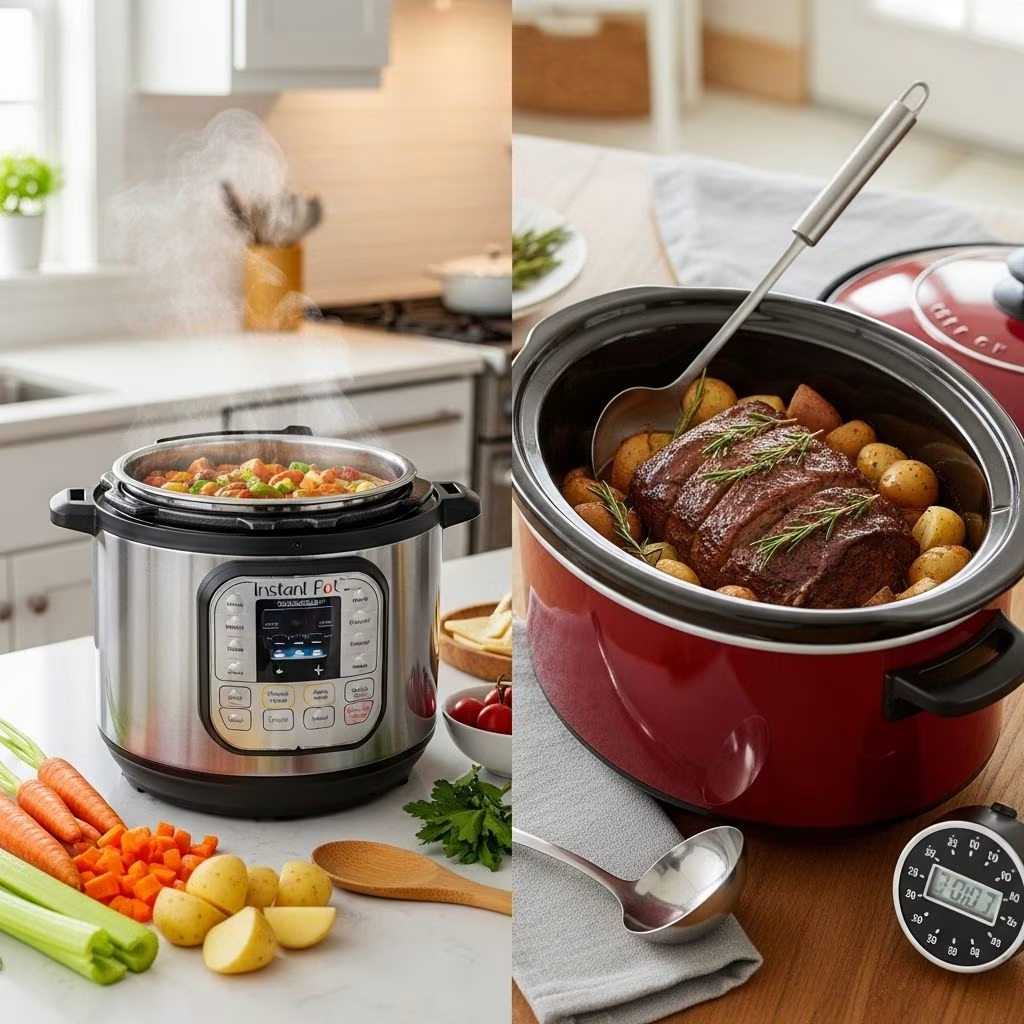
When it comes to feeding a family with nutritious, delicious meals while juggling busy schedules, the right kitchen appliance can be transformative. Two popular countertop options dominate the conversation: the Instapot (a modern pressure cooker) and the classic slow cooker. Each offers unique advantages for family meal prep, but key differences in speed, energy use, food quality, and versatility raise the question: which is truly better for your family’s meal planning?
Introduction: Instapot and Slow Cooker Basics
Instapot—now synonymous with the category of electric pressure cookers and multi-cookers—offers a range of cooking settings, including pressure cook, slow cook, steam, sauté, and more. Its design allows for fast cooking under pressure, making meals possible in a fraction of the time required by traditional methods.
Slow Cooker—often referred to by the brand-name “Crock-Pot”—is designed for low-and-slow cooking at set temperatures over several hours. Meals are typically started in the morning and left unattended until dinnertime.
| Appliance | Key Functions | Typical Cooking Duration | Signature Dishes |
|---|---|---|---|
| Instapot | Pressure cook, slow cook, sauté, steam, rice, yogurt | 20–60 minutes (pressure cook mode) | Chili, risotto, stew, rice, yogurt, hard-boiled eggs |
| Slow Cooker | Slow cook (low, medium, high) | 4–10 hours | Pulled pork, pot roast, soups, casseroles, chili |
Speed & Convenience: How Fast Can Dinner Be Ready?
The sharpest contrast between Instapot and slow cooker is cooking speed. The Instapot leverages pressure cooking to complete dishes in a fraction of the time, making it a popular choice for families who often need dinner on the table now rather than hours from now. For example, a beef stew that would take 8 hours in a slow cooker can be ready in under an hour with an Instapot .
- Instapot: Dinner can go from raw ingredients to ready-to-eat in 20–60 minutes, offering last-minute flexibility for busy households.
- Slow Cooker: Provides a true set-it-and-forget-it experience—prep in the morning, forget about it until dinner. Great for people who have adequate start-up time and a stable routine.
Pro Tip: Instapots offer more hands-on options for quick meals, while slow cookers excel when you can prep ahead without supervision during cooking.
Energy Efficiency and Costs
Energy efficiency is a growing concern—especially for families concerned with long-term cost savings and a reduced environmental footprint. Both Instapots and slow cookers outperform traditional ovens/stovetops in energy use, but there are important nuances:
- Instapot: Uses approximately 1,000 watts per hour, but because it cooks so quickly, the total energy consumed is often lower than a slow cooker or oven for the same dish .
- Slow Cooker: May use as little as 70–250 watts per hour, but cooks 6–10 hours for many recipes, meaning cumulative usage can be equal to—or higher than—an Instapot.
- Both release little heat into the kitchen compared to ovens—beneficial in summer and for energy-conscious households.
On average, the Instapot is more energy-efficient for quick, everyday meals, while slow cookers are effective when you can maximize batch sizes and cooking time.
Taste, Texture, and Food Quality
The flavor profile and texture of meals can differ depending on the appliance:
- Instapot (Pressure Cook): Rapid, high-pressure cooking retains more moisture and can deepen flavors surprisingly well—excellent for stews, beans, and meats. Some users report subtle differences in texture (e.g., very soft vegetables, slightly different starch texture).
- Slow Cooker: Offers a gentle approach, allowing flavors to meld over hours and creating tender, succulent results. Perfect for tough meat cuts and classic comfort dishes. Some more delicate veggies or pasta may become mushy or lose texture if overcooked .
Ultimately, both can deliver tasty results, but certain recipes (like braised meats or creamy soups) can show subtle improvements with one method or the other, depending on preferences.
Versatility & Features
When considering which appliance offers more value for family cooks, versatility is a key factor:
- Instapot: Multicooker functions—pressure cook, slow cook, rice/yogurt maker, sauté, steam, and more. There’s a learning curve, but one pot can replace several kitchen gadgets .
- Slow Cooker: Specializes in slow, even cooking. Some premium models also allow browning or sautéing, but most are designed for simple, hands-off operation.
Families seeking all-in-one capability—for everything from weeknight risotto to weekend bone broth—may prefer the Instapot’s multifaceted design.
Ease of Use, Cleaning, and Maintenance
Slow cookers are famous for simplicity: add ingredients, set temperature, walk away. For basics like soups and stews, it’s nearly foolproof.
Instapot users enjoy the power of programmable settings but must master lid-sealing, steam-release, and multiple cooking modes. Many find the digital interface intuitive after a short learning curve, but beginners occasionally find it intimidating.
- Slow cookers often include removable ceramic inserts that are dishwasher safe, making cleaning straightforward.
- Instapots include more parts (lid, silicone ring, stainless steel or nonstick pot), all removable and often dishwasher-safe. Extra care is required to clean the sealing ring and steam release mechanisms, especially after pungent dishes.
In summary, slow cookers win for absolute ease but Instapots reward users with more options at the cost of some startup effort.
Safety & Family-Friendliness
- Instapot: Includes modern safety mechanisms such as automatic pressure release valves, lid locks, and overheating protection. Despite a past reputation for pressure cooker dangers, present-day Instapots are generally very safe if used as directed.
- Slow Cooker: Extremely low risk. The low temperatures and simple operation make them safe to leave unattended for hours, a reassuring option for those with kids or busy schedules.
For very young families or those nervous about kitchen technology, the slow cooker’s simplicity is reassuring. For older kids helping in the kitchen, the Instapot’s safeties make supervised use appropriate as well.
Meal Prep Strategies: Family-Friendly Examples
Both appliances shine for different meal prep strategies, helping families batch cook, save time, and reduce food waste. Here are practical approaches and ideas:
Instapot Meal Prep Ideas
- Batch Cooking Proteins: Quickly prepare shredded chicken, pork, or beef for tacos, pasta, or sandwiches in under an hour.
- Soups, Stews, and Chili: Hands-off, fast, and easy to double for leftovers or freezing.
- Rice and Whole Grains: Foolproof, perfect for weekly meal planning.
- Beans Without Soaking: Dried beans ready in under an hour—no need for pre-soaking.
Slow Cooker Meal Prep Ideas
- Set-and-Forget Dinners: Toss in a roast or chicken with vegetables before work, and return home to a ready meal.
- Casseroles and Breakfasts: Overnight oatmeal, strata, or even dessert puddings can be made while you sleep.
- Bulk Sauces and Stocks: Perfect for low, extended simmering.
Which Should You Choose?
| Factor | Instapot | Slow Cooker |
|---|---|---|
| Speed | Much faster cooking (20–60 min typical) | Extended cook time (4–10 hours) |
| Versatility | Multi-cooker: pressure, slow, sauté, steam, rice, yogurt, more | Primarily slow cook, with some sauté/browning in premium models |
| Ease of Use | Learning curve for programs and pressure functions | Very simple, set-and-forget operation |
| Energy Efficiency | Most efficient for quick or frequent cooking | Efficient for long, low-power cooking |
| Meal Prep Style | Rapid batch cooking, flexibility, last-minute meals | All-day unattended cooking, comfort foods, big batch meals |
Summary: The Instapot excels in speed, versatility, and energy efficiency for busy families with tight schedules and diverse meal tastes. The slow cooker remains the champ for those who value true hands-off meals, prefer traditional comfort foods, or need a foolproof device.
Pro Tip: Some homes keep both appliances on hand, using the Instapot for last-minute solutions and the slow cooker for planned meals, holidays, or social gatherings.
Frequently Asked Questions (FAQs)
Q: Can an Instapot replace a slow cooker for all recipes?
A: The Instapot has a “slow cook” setting, but the heat distribution may be different than a traditional slow cooker. While it can mimic many slow cooker recipes, some users still prefer the flavor and texture of certain dishes in a classic slow cooker .
Q: Is the Instapot safe to leave unattended?
A: Modern Instapots include multiple safety features and are considered safe to leave during “slow cook” cycles, though the pressure function should not be left completely unsupervised until you’re comfortable with its operation.
Q: Which is more cost-effective for batch cooking?
A: Both can save money by maximizing leftovers and bulk prep, but the Instapot’s rapid speed and sealed design may use less energy overall for frequent, smaller batch cooking .
Q: Which is better for cooking for kids?
A: The slow cooker offers maximum safety and simplicity, but the Instapot allows you to prepare more varied meals quickly, which is helpful when catering to different tastes and schedules.
Q: Do these appliances change the nutritional value of food?
A: Both methods retain more nutrients compared to boiling or frying, since much of the cooking happens in a sealed or low-temperature environment. The Instapot may preserve slightly more nutrients due to the speed and steam-sealed environment, but the differences are minor.
Final Thoughts
The choice between an Instapot and a slow cooker comes down to your cooking habits, time management, and meal prep style. Each offers valuable strengths for the modern family kitchen, and adopting either (or both) can dramatically simplify getting hearty, healthy meals to your table.
References
- https://dinneratthemcgills.com/2024/08/20/slow-cooker-vs-instant-pot-which-is-best-for-your-kitchen/
- https://www.youtube.com/watch?v=ZXAupbKi-58
- https://blog.constellation.com/2017/04/21/instant-pot-vs-crock-pot/
- https://www.techgearlab.com/topics/kitchen/best-pressure-cooker
- https://www.businessinsider.com/guides/kitchen/best-slow-cooker


