


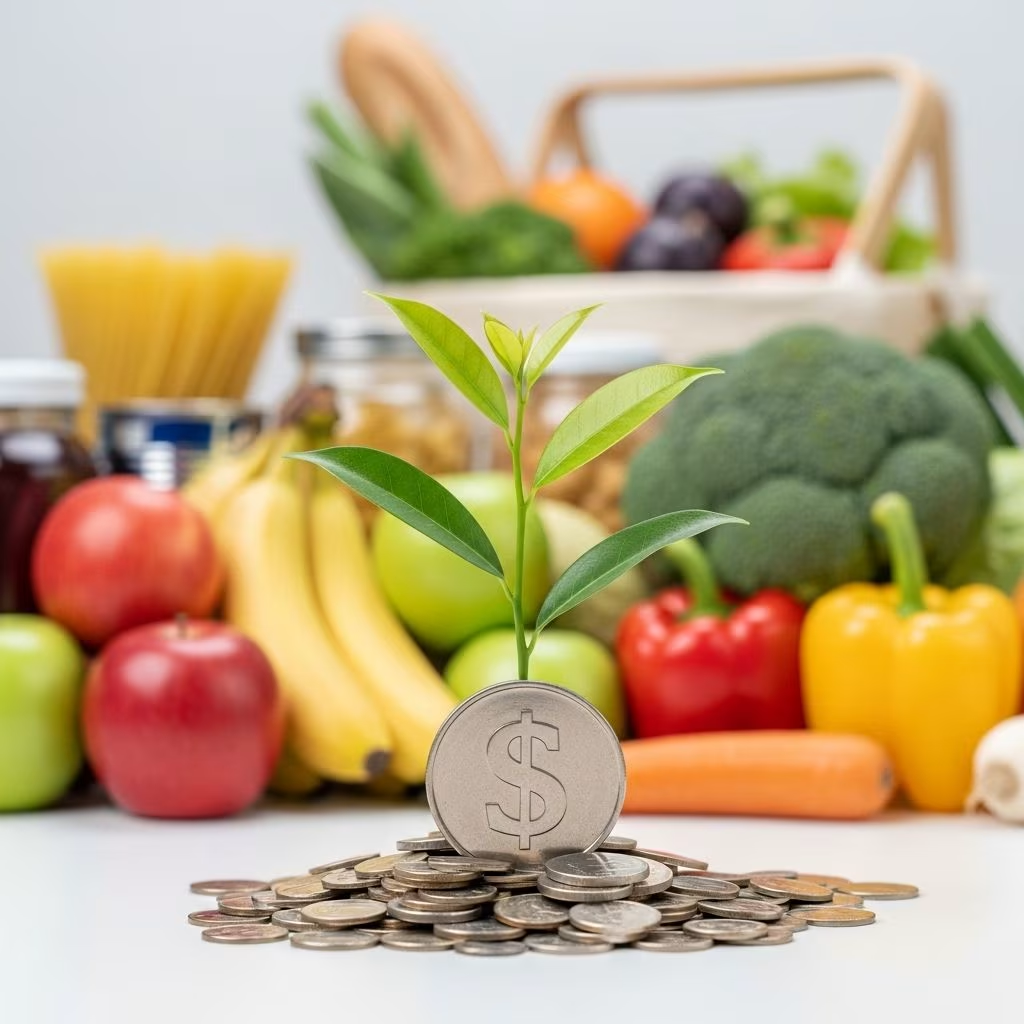
Rising food costs have become a significant concern for households everywhere, with grocery bills consuming an increasingly larger portion of family budgets. The good news is that with strategic planning and smarter shopping habits, you can dramatically reduce your food expenses without sacrificing quality or nutrition. Cutting your grocery bill by 50% isn’t just a dream—it’s an achievable goal when you implement the right strategies consistently.
The key to substantial grocery savings lies not in extreme couponing or deprivation, but in transforming how you approach food shopping altogether. By shifting from reactive, last-minute shopping trips to a proactive, planned approach, you can take control of your food budget and see dramatic results within just a few weeks.
Understanding Your Current Spending Patterns
Before you can effectively cut your grocery bill, you need to understand exactly where your money is going. Many families are shocked when they actually calculate their monthly food expenses. When you spend varying amounts each week—perhaps $60 one week and $100 the next—it’s easy to lose track of the bigger picture.
Start by collecting all your grocery receipts for at least one month. Add them up to see your true monthly food spending. This baseline number is crucial because it allows you to set realistic goals and measure your progress. You’ll likely discover patterns in your spending, such as frequent small shopping trips that add up quickly, or impulse purchases that inflate your bill.
Creating a food budget based on this analysis gives you a target to work toward. Most experts recommend that groceries should account for about 10-15% of your household income, though this can vary based on family size and location. Once you know your current spending and your target budget, you can begin implementing strategies to close that gap.
The Foundation of Grocery Savings: Strategic Meal Planning
Meal planning is arguably the most powerful tool for reducing grocery expenses. Planning meals in advance and making detailed shopping lists can cut your grocery spending by 20 percent or more right from the start. This single habit eliminates the expensive pattern of last-minute store runs and impulse purchases that drain your budget.
However, traditional meal planning—where you decide what you want to eat and then shop for those specific ingredients—isn’t the most cost-effective approach. Instead, flip the script: plan your meals around what’s already on sale and what you have in your stockpile. This requires a shift in mindset from “I want to make chicken parmesan, so I need to buy chicken, cheese, and pasta” to “chicken is on sale this week, so what can I make with it?”
Check store flyers before planning your weekly meals. Build your menu around the best deals and seasonal produce, which is typically less expensive and fresher. Many grocery stores release their weekly ads online several days in advance, giving you time to plan strategically. This approach ensures you’re always buying ingredients at their lowest prices rather than paying premium rates for out-of-season or regularly-priced items.
For those who find this planning process overwhelming, meal planning services can help. Some services provide customized weekly meal plans based on your local store’s sale advertisements, taking the guesswork out of planning while still maximizing savings. While these services typically charge a small monthly fee, the time saved and additional savings generated often make them worthwhile investments.
Building and Maintaining a Smart Stockpile
One of the most effective strategies for cutting your grocery bill in half is building a well-organized stockpile. The goal is to create your own mini-grocery store at home, stocked with items you purchased at their lowest prices. When you shop the sales each week and buy larger quantities of fewer items, your overall grocery bill decreases even though you might be purchasing more volume than usual.
A well-maintained stockpile should contain about 6-8 weeks worth of varied food items. This timeframe aligns with typical sale cycles at most grocery stores, meaning items tend to go on sale approximately every six to eight weeks. Once you’ve built up your stockpile over this initial period, you’ll start seeing the most dramatic savings because you’ll rarely need to buy items at full price.
It’s important to understand that stockpiling doesn’t require an entire room dedicated to food storage, nor does it mean you’ll only eat processed foods. Healthy stockpile staples include dried beans, rice, whole grain pasta, whole grain cereals, frozen vegetables, cheese and dairy products, canned tomatoes, and other nutritious shelf-stable or frozen items. Focus on versatile ingredients that can be used in multiple recipes.
The stockpiling strategy works because when an item you regularly use goes on sale, you buy enough to last until it goes on sale again, typically 6-8 weeks later. Over time, as you continue this pattern with different products, you build a varied inventory where you’re always using items purchased at sale prices. This transforms your shopping trips from buying everything you need that week to simply restocking items that happen to be on sale.
Mastering the Art of Sales Shopping
Shopping the sales is the cornerstone of cutting your grocery bill in half. Most grocery stores operate on predictable sale cycles, with different categories of items going on sale at different times. Understanding these patterns allows you to plan your purchases strategically.
Keep track of sale cycles for items your family uses regularly. Many products follow seasonal patterns—for example, baking supplies typically go on sale before major holidays, while grilling items are cheapest in summer. By paying attention to these cycles over a few months, you can predict when to stock up on specific items.
When shopping sales, focus on items that offer the deepest discounts—typically 30% off or more. These are the purchases that will make the biggest impact on your overall savings. Items with smaller discounts of 10-15% might not be worth stockpiling unless they’re staples you use constantly.
It’s also worth noting which day of the week your local stores mark down perishable items. Shopping late in the day can yield significant discounts on meat, produce, and bread that stores need to move before expiration. Some shoppers report finding markdowns of 50-80% on perfectly good products that simply need to be used within a day or two. If you can use these items immediately or freeze them for later, these deals represent exceptional value.
Strategic Protein Purchasing: Reducing Meat Costs
Meat typically represents one of the largest portions of grocery bills, so even small reductions in meat consumption can yield significant savings. Going vegetarian just a couple times a week could save you as much as $1,000 annually. This doesn’t mean you have to give up meat entirely—just being more intentional about when and how you use it can dramatically impact your budget.
Consider these strategies for reducing meat costs without feeling deprived. First, treat meat as a flavoring ingredient rather than the main component of every meal. A little bit of bacon can add tremendous flavor to a vegetable-based soup or pasta dish. Second, explore plant-based protein sources like beans, lentils, and eggs, which provide excellent nutrition at a fraction of the cost of meat.
When you do buy meat, purchase it only when it’s on sale and buy in bulk. Many stores offer family packs at lower per-pound prices. Divide these larger packages into meal-sized portions when you get home and freeze what you won’t use immediately. Ground beef, chicken breasts, and pork chops all freeze well and can be thawed as needed.
Also develop relationships with the butchers at your local store. Shopping near closing time and asking about available discounts on meat that needs to be sold that day can yield impressive savings. These marked-down items are perfectly safe and nutritious—they simply need to be cooked or frozen promptly.
Maximizing Coupon Strategy
While coupons can generate substantial savings, they work best when combined with the other strategies outlined here. Using coupons without following sale cycles or meal planning often leads to buying things you don’t need simply because you have a coupon. However, when you match coupons to items already on sale, the savings become dramatic—often 50-60% or more off your grocery bill.
The modern coupon landscape extends far beyond newspaper inserts. Digital coupons available through store apps and websites often provide better deals than traditional paper coupons. Apps like Ibotta offer cash-back rewards on purchases, effectively functioning as coupons. Many stores also issue their own coupons through loyalty programs, sending customized offers based on your purchase history.
Coupon stacking is a powerful technique where you use both a manufacturer’s coupon and a store coupon on the same item. Stores like Target, Walgreens, and Whole Foods allow this practice, effectively doubling your savings on individual products. For example, using a $1 manufacturer’s coupon and a $1 store coupon on the same product gives you $2 off that item.
Show loyalty to your regular stores by signing up for their loyalty programs. Shoppers who use loyalty cards and coupons save an average of more than 10% on groceries annually. Frequent shoppers often receive customized mailings with additional coupons four to six times per year, further increasing potential savings.
Smart Shopping Habits That Compound Savings
Beyond the major strategies of meal planning, stockpiling, and coupon use, several smaller habits can significantly impact your grocery bill when practiced consistently.
Buy Store Brands: Store-brand products typically cost 20-30% less than name brands, and in many cases, the quality is comparable or identical. The products are often manufactured by the same companies that produce name-brand items. Experiment with store brands for staples like flour, sugar, canned goods, and dairy products. You might be pleasantly surprised by the quality while enjoying substantial savings.
Avoid Convenience Items: Pre-cut vegetables, pre-marinated meats, and single-serve packages cost significantly more than their whole or bulk counterparts. While these items save time, they dramatically increase your grocery costs. Invest a little extra time in food prep at home—wash and chop your own vegetables, portion your own snacks, and prepare your own marinades. The savings add up quickly.
Shop with a List and Stick to It: Impulse purchases can inflate your grocery bill by 20% or more. Creating a detailed shopping list based on your meal plan and stockpiling needs, then disciplining yourself to buy only what’s on that list, prevents costly spontaneous decisions. Leave room for opportunistic purchases only when you find unexpected clearance deals on items you regularly use.
Never Shop Hungry: This advice might sound cliché, but it’s backed by research. Shopping on an empty stomach increases impulse purchases, particularly of expensive snacks and convenience foods. Eat before you shop to maintain focus on your list and budget.
Time Your Shopping Strategically: Beyond shopping sales, consider when during the week and day you shop. Many stores markdown perishables in the evening or on specific days. Sunday evenings or Monday mornings often feature the best selection of sale items as new weekly ads begin. Experiment with different times to find when your local stores offer the best deals.
Implementing Your New Shopping Strategy
Transitioning to this new approach to grocery shopping requires an initial investment of time and possibly money, but the payoff comes quickly. During your first 6-8 weeks, you’ll be building your stockpile, which means your shopping cart might look fuller than usual even as you focus on sales. Don’t be discouraged if your immediate savings aren’t as dramatic as you expected—you’re making an investment in future savings.
Start by choosing one or two strategies to implement first rather than trying to overhaul everything at once. Perhaps begin with meal planning based on sales and gradually add stockpiling as you get comfortable with the new routine. Once those habits are established, layer in coupon matching and other advanced techniques.
Track your progress by continuing to save receipts and calculate your monthly spending. Watching those numbers drop provides motivation to continue with your new habits. Many people find that after the initial adjustment period, this strategic approach to grocery shopping actually saves time compared to multiple unplanned store visits each week.
Remember that cutting your grocery bill by 50% is a realistic goal, but it might take a few months to achieve as you refine your system and build your stockpile. Be patient with yourself and celebrate incremental progress. Even a 20-30% reduction in grocery spending represents hundreds or thousands of dollars saved annually.
Common Challenges and Solutions
As you implement these strategies, you’ll likely encounter some challenges. Understanding these common obstacles and their solutions can help you stay on track.
Challenge: Family members resist eating meals based on what’s on sale rather than what they’re craving. Solution: Involve family members in meal planning by showing them the sales ads and letting them choose meals from sale items. This gives them a sense of control while still keeping costs down. Gradually introduce new recipes and approaches rather than making dramatic changes all at once.
Challenge: Initial stockpiling costs feel overwhelming. Solution: Build your stockpile gradually over several months rather than trying to do it all at once. Each week, buy extra of just one or two sale items. This spreads out the cost while still building your inventory steadily.
Challenge: Worrying about food waste when buying in bulk or on markdown. Solution: Learn proper food storage techniques and make friends with your freezer. Most foods can be frozen if properly packaged, extending their life significantly. Label items with dates and use a first-in, first-out rotation system.
Challenge: Finding time for meal planning and coupon organization. Solution: Dedicate a specific time each week—perhaps Sunday afternoon—to review sales, clip coupons, and plan meals. Once this becomes routine, it typically takes less than an hour. Use apps and digital tools to streamline the process.
Comparing Shopping Approaches
| Shopping Method | Average Savings | Time Investment | Best For |
|---|---|---|---|
| Traditional shopping (no planning) | 0% | Low (but frequent trips) | Those with unlimited budgets |
| Basic meal planning with lists | 20-30% | Medium | Beginners to budget shopping |
| Sales-based shopping with stockpiling | 40-50% | Medium-High | Committed savers with storage space |
| Full strategy (sales, stockpiling, coupons) | 50-60%+ | High initially, Medium ongoing | Maximum savings seekers |
Beyond Grocery Savings: Additional Benefits
While the primary goal is reducing grocery costs, this strategic approach to food shopping provides numerous additional benefits. You’ll likely experience less stress around meal times because you’ve already planned what to cook and have ingredients on hand. The reduction in last-minute store trips saves both time and gas money.
Many people find that their nutrition improves because meal planning encourages more home cooking and less reliance on expensive convenience foods or takeout. When you have a plan and a well-stocked pantry, you’re less tempted to order pizza or pick up fast food on busy nights.
The skills you develop through strategic grocery shopping—planning ahead, delaying gratification, and finding creative solutions—transfer to other areas of personal finance. Many people report that successfully cutting their grocery bill motivates them to tackle other budget categories with the same strategic approach.
Frequently Asked Questions
Q: How long does it take to see significant savings with these strategies?
A: Most people begin seeing noticeable savings within 2-3 weeks of implementing meal planning and sales shopping. However, the most dramatic savings—typically 40-50% reductions—usually appear after 6-8 weeks once you’ve built up a working stockpile and refined your system.
Q: Do I need a lot of storage space to maintain a stockpile?
A: No, a practical stockpile doesn’t require excessive space. A typical family can maintain a 6-8 week stockpile using a few kitchen cabinets, a pantry closet, or even an organized area in a basement or garage. Focus on items you actually use rather than accumulating products you don’t need.
Q: Can I still eat healthy while following these strategies?
A: Absolutely. Healthy eating and budget shopping are not mutually exclusive. Focus your stockpile on nutritious staples like whole grains, beans, frozen vegetables, and lean proteins purchased on sale. Many of the healthiest foods—like dried beans and seasonal produce—are also among the most affordable.
Q: What if my family is picky and won’t eat meals based on what’s on sale?
A: Start by identifying a core group of meals your family already enjoys, then watch for sales on those ingredients. Most staple ingredients like chicken, pasta, and common vegetables go on sale regularly. You can accommodate preferences while still shopping strategically by being patient and planning around sales for preferred items.
Q: Is extreme couponing necessary to cut my grocery bill in half?
A: No, extreme couponing is not necessary. While coupons can enhance savings, the foundation of cutting your grocery bill comes from shopping sales, stockpiling, and meal planning. Many people achieve 40-50% savings using just these strategies without ever clipping a single coupon. Coupons are an optional additional layer that can increase savings further.
Q: How do I handle fresh produce if I’m buying based on sales?
A: Focus on seasonal produce, which naturally goes on sale when abundant. Buy only what you can use within a few days, or learn preservation techniques like freezing, canning, or pickling. Shopping later in the day can also yield markdowns on fresh produce that needs to be sold quickly.
References
- https://www.livingwellspendingless.com/how-to-save-on-food/
- https://livingonthecheap.com/10-ways-to-save-big-at-the-supermarket/
- https://njaes.rutgers.edu/sshw/message/message.php?p=Finance&m=110
- https://www.businessinsider.com/save-up-to-80-percent-on-groceries-breaking-one-rule-2025-5
- https://www.aboutprogress.com/blog/how-to-dramatically-cut-your-grocery-bill-without-extreme-couponing-with-rachel-coons
- https://www.youtube.com/watch?v=IYBRk-nAGmI
- https://www.youtube.com/watch?v=91QoXKNTVUE


