


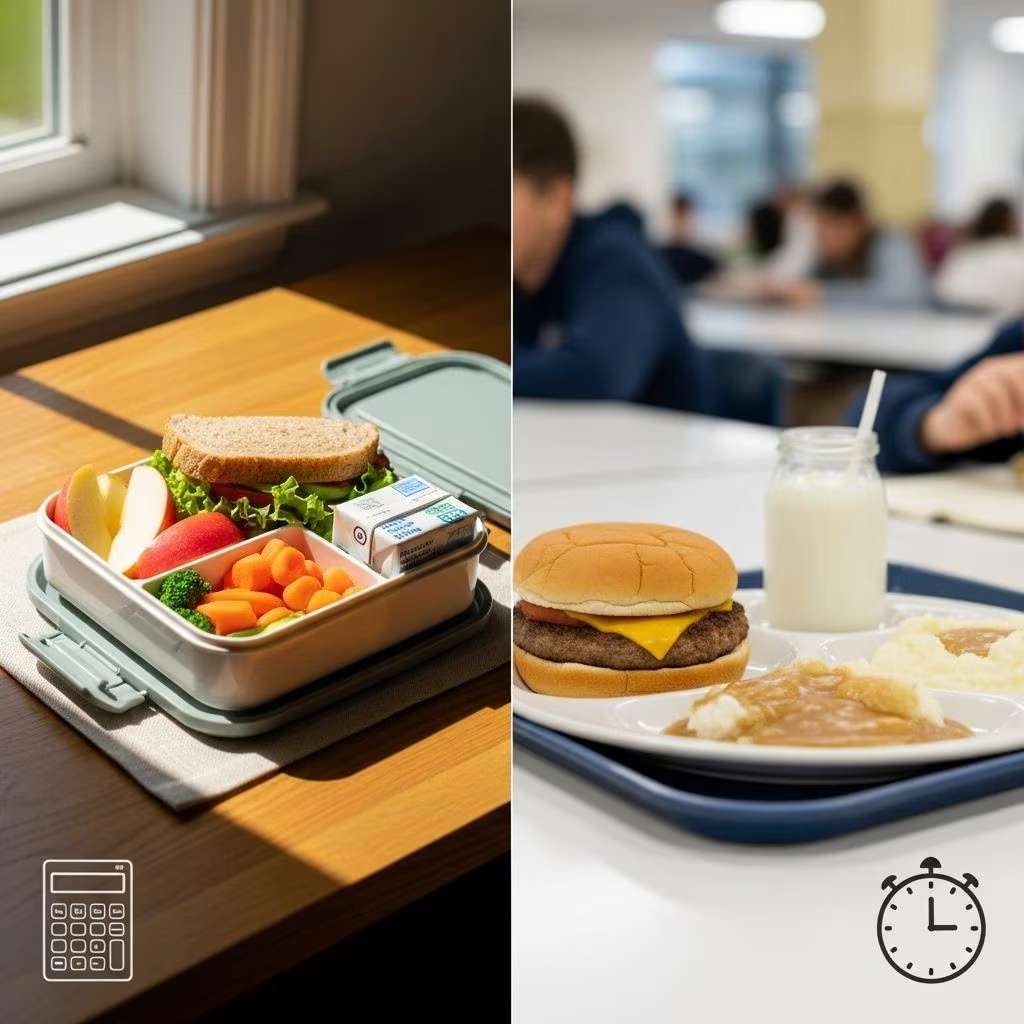
Understanding how lunch choices impact both family budgets and children’s wellbeing is key. This analysis breaks down home-cooked and school cafeteria lunch costs, nutritional value, convenience, and family decision factors—helping you make the most informed choice.
Introduction
For families with school-aged children, lunchtime decisions involve more than just what goes on the plate. The choice between sending a home-cooked (packed) lunch or opting for the school cafeteria lunch has direct financial, nutritional, and practical implications. As school meal prices edge upward and parents debate nutrition, convenience, and budget, understanding actual costs and benefits is more important than ever.
True Cost Comparison: Home-Cooked vs School Cafeteria Lunch
How much does each option really cost? Recent research and real-world family budgets reveal meaningful insights.
1. Average National Costs (United States)
- School cafeteria lunch (NSLP): Median cost per meal: $2.11–$2.34 (2012–2016 data)
- Home-cooked (packed) lunch: Median cost per meal: $1.55–$1.61
- Convenience packed lunch (e.g., Lunchables): Median cost: <$2.12–$3.19
A pivotal study observed 1,289 student lunches and found homemade packed lunches cost about 27.9% less than school cafeteria lunches based on food alone. For example, an at-home recreation of a typical school meal (chicken sandwich, fruit, milk, veg) cost about $1.61, versus $2.34 at school. Practical family cost tracking suggests similar margins, with home-packed and school lunches costing $4 and $4.16 per day (for two children), respectively.
2. Price Breakdown Example
| School Cafeteria Lunch | Home-Cooked Packed Lunch | Convenience Lunch | |
|---|---|---|---|
| Average Cost per Meal | $2.11 – $2.99 | $1.55 – $1.61 | $2.12 – $3.19 |
| Estimated Monthly Cost (20 School Days) | $42 – $60 | $31 – $35 | $44 – $64 |
Annual Savings Potential:
- Switching from cafeteria to homemade could save $8–$20 per child per month, or up to $180–$220 per year for a family with two children.
- Actual savings depend on food selections, use of pre-packaged snacks, and local lunch pricing.
Variables That Impact Lunch Costs:
- Location and school district (cafeteria meal prices vary widely)
- Food inflation and grocery costs
- Child’s grade (elementary vs high school), as older children typically get larger or pricier meals
- Use of convenience foods in home-packed lunches can quickly raise costs
Hidden Costs: Time, Labor, and Convenience
Pure food cost doesn’t tell the full story. Factor in time, energy, and indirect expenses:
- Preparation time: Home-packed lunches take 3–5 times longer to prepare than cafeteria meals.
- Shopping time: Grocery trips for packing lunches add to the weekly family to-do list.
- Packaging and supplies: Cost of baggies, containers, napkins, and ice packs, which are negligible per meal, but add up annually.
- Energy and appliance use: The cost of refrigeration, cooking, or reheating is not typically included in direct food price estimates.
School cafeteria lunches offer a “hot meal with almost zero prep time for parents,” which many cite as a key motivator for participation. When including the labor cost, cafeteria lunches become even more competitive financially—especially for dual-income or time-strapped families.
Interestingly, “replicated school lunches” (parents trying to match the nutritional balance of a school lunch at home) take on average 30 minutes to prepare and, when including the value of an hour of parental time, can end up costing five times more than a National School Lunch Program (NSLP) meal.
Nutritional Comparison and Health Implications
Cost savings alone don’t reflect the full value of a lunch. Nutritional content is vital for student health, focus, and achievement.
A. Nutritional Quality: School vs Home
- School lunches (NSLP): Must meet strict USDA nutrition standards—portion sizes, limits on fat and sodium, mandatory servings of fruit, vegetables, whole grains, and milk.
- No sweetened beverages or desserts allowed
- Must provide balanced macronutrients and a set calorie range
- Home-packed lunches: Highly variable. Research shows these often contain more sodium, fewer fruits, vegetables, and whole grains, and almost always include chips, sweetened drinks, desserts, or processed snacks.
- “Convenience packed lunches” (Lunchables, snack packs) have even less nutritional value—higher in processed foods and added sugars
B. Portion and Empowerment
- Some parents value home-packing to control allergies, dietary restrictions, or cultural foods not served at school.
- Students may eat only their favorite items from packed lunches, skipping fruits or proteins more than with cafeteria-supervised meals.
C. Key Nutritional Trade-Offs
- School lunches: Offer reliably balanced nutrients for the cost, especially for students eligible for free or reduced-price meals.
- Home-packed lunches: Permit customization, but have wider swings in nutritional quality depending on parental knowledge, child preferences, and budget.
Other Factors Influencing Lunch Choices
- Food allergies and dietary restrictions: Home packing allows strict allergen avoidance or vegetarian/vegan options not typically available via NSLP.
- Cultural and religious foods: Some families prefer to pack lunches to ensure alignment with their customs or beliefs.
- Social aspects: Cafeteria meals provide “sameness” with peers and may reduce food stigma for those on subsidized programs.
- Convenience and family routine: Working parents often cite time as a leading reason to use school meals. The NSLP eliminates shopping and cooking time, especially valuable for larger families or in single-parent households.
- Food waste: Packed lunches—especially involving perishable foods—may be more prone to uneaten food and consequent food waste if children do not eat all items.
- Availability of menu choice: Some schools allow students to select from several meal options; home-packed lunches can be precisely tailored to taste but carry risk of monotony.
Pros and Cons Summarized
| Aspect | School Cafeteria Lunch | Home-Cooked (Packed) Lunch |
|---|---|---|
| Food Cost (per meal) | Moderate ($2.11–$2.99) | Low to Moderate ($1.55–$1.61, up if using many convenience items) |
| Nutrition Standards | Federal USDA guidelines; often balanced and portioned | Variable; strongly depends on food choice and parental effort |
| Preparation Time | Virtually none for parents | 3–5 times more than cafeteria (packing, shopping, prepping) |
| Customization | Limited; based on what the school offers daily | High; can address allergies, preferences, and cultural needs |
| Convenience | High for parents; ready for the child | Low to moderate; packing required daily |
| Potential for Food Waste | Lower (school oversight, hot meals) | Variable (children may skip or discard items) |
| Social Integration | High (shared experience) | Lower (potential stigma if lunch is different) |
Summary Comparison Table
| School Cafeteria Lunch | Home-Cooked Packed Lunch | |
|---|---|---|
| Average Cost per Meal | $2.11–$2.99 | $1.55–$1.61 |
| Preparation Time | 0 minutes (for parents) | 10–30 minutes daily (depending on complexity) |
| Nutritional Consistency | High, per federal guidelines | Varies; can be high with planning, but often falls short |
| Flexibility & Customization | Low to moderate | High |
| Annual Savings Potential | – | Up to $180–$220 per child |
Frequently Asked Questions (FAQs)
Q: Are school cafeteria lunches always more expensive than packed lunches?
A: Not always. On average, packed lunches cost less in food alone. However, when preparation time, convenience, and supply costs are included, school meals are highly competitive and may even be the better deal depending on your family’s circumstances.
Q: Do home-packed lunches provide better nutrition?
A: Not by default. While home-packed lunches can be more personalized, studies consistently show they are often less balanced than cafeteria offerings due to higher sodium, fewer fruits and vegetables, and more processed snacks.
Q: How much can a family save annually by switching to packed lunches?
A: For a two-child family, potential savings range from $180–$220 per year, though this shrinks with inclusion of labor and convenience costs.
Q: What is the main reason parents choose school cafeteria meals?
A: Convenience is the leading factor. The NSLP removes cooking and packing barriers, vital for busy or working parents.
Q: Can allergy and dietary restrictions be managed through school lunches?
A: Allergies can sometimes be accommodated with school lunches, but home-packing offers greater certainty for families with strict requirements.
Q: Do children waste more food with packed or cafeteria lunches?
A: Food waste is more variable with home-packed lunches, as children may be more likely to discard less popular items when not eaten under adult supervision.
Making the Right Choice for Your Family
The most economical solution may not always be the best when factoring in preparation time, nutrition, and household routines. Home-cooked packed lunches offer the lowest food cost but demand more effort and careful planning for balanced nutrition. School cafeteria lunches, especially through the National School Lunch Program, provide buffet-style convenience, generally reliable nutrition, and time savings for busy households—sometimes at only marginally higher cost.
The best choice will depend on your family’s finances, available time, nutritional priorities, and student preferences. By understanding these components, every family can optimize school lunch for both budget and wellbeing.
References
- https://schoolnutrition.org/journal/spring-2020-comparison-of-costs-between-school-and-packed-lunches/
- https://theemptykitchen.wordpress.com/budgeting-basics/the-lunch-project/bring-vs-buy-a-cost-analysis/
- https://healthy-food-choices-in-schools.extension.org/why-buy-comparing-the-cost-of-packing-versus-buying-school-lunch/
- https://www.deloitte.com/us/en/insights/industry/consumer-products/school-lunch-costs-healthy-eating.html
- https://tfss.ca/wp-content/uploads/2018/05/poi140060.pdf
- https://www.aol.com/parents-furious-over-insane-cost-130018776.html


