


Table of Contents
- Introduction
- Importance of Outdoor Play
- Benefits of Risky Play
- Creating Safe Environments
- Promoting Risk Assessment
- Frequently Asked Questions
Introduction
Encouraging healthy risk-taking in outdoor play is a crucial aspect of child development. It not only fosters physical strength and coordination but also enhances emotional resilience and cognitive abilities. Outdoor environments provide children with the space to engage in various forms of play, from climbing trees to playing sports, which are essential for their holistic development.
As society becomes increasingly cautious about the safety of children, it’s important to strike a balance between providing a safe environment and allowing them to take calculated risks. This balance can help children develop vital skills that will benefit them throughout their lives.
Importance of Outdoor Play
Outdoor play is vital for children’s development, offering numerous physical, emotional, and cognitive benefits. It helps children develop advanced motor skills such as agility, balance, and coordination by engaging in activities like cycling, playing catch, and climbing trees. Additionally, outdoor play reduces the risk of childhood obesity by encouraging physical activity and burning calories.
Encouraging outdoor play also promotes a healthy lifestyle, as children who engage in regular physical activity are more likely to continue exercising as adults.
Benefits of Risky Play
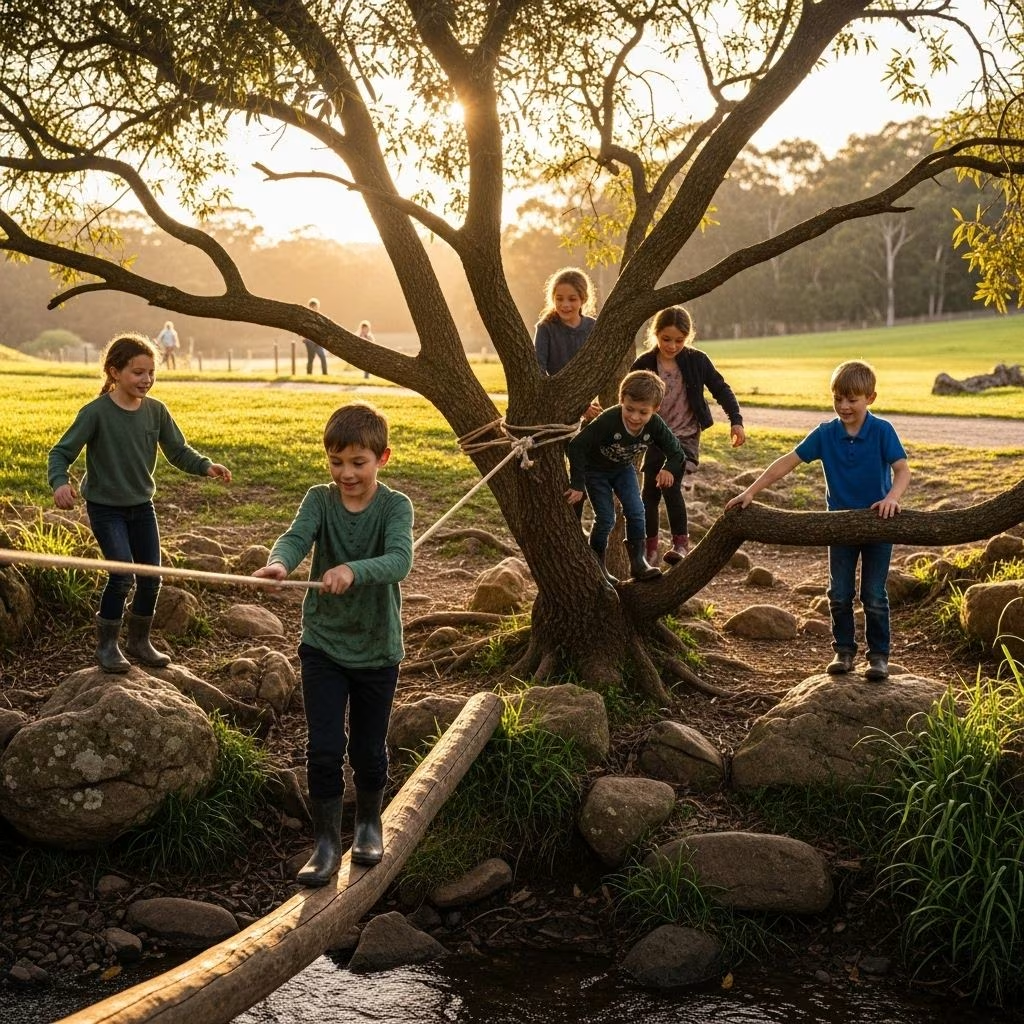
Risky play, which includes activities like climbing, running, and balancing, supports physical development by building strength, coordination, and physical literacy. It is not just about physical benefits; risky play also deepens emotional resilience by teaching children to manage emotions like fear and frustration.
Moreover, risky play encourages children to develop essential risk management strategies, which are crucial for navigating real-world challenges. This type of play helps promote social-emotional development, enhancing resilience, problem-solving, and conflict resolution skills.
Key Benefits of Risky Play
- Physical Development: Enhances physical strength, coordination, and literacy through activities like climbing and running.
- Emotional Resilience: Teaches children to manage emotions like excitement, fear, and frustration, promoting emotional well-being.
- Risk Management Skills: Develops essential risk assessment and management abilities, preparing children for life’s challenges.
- Social and Emotional Development: Fosters cooperation, communication, and a sense of belonging among children.
Creating Safe Environments
While encouraging risk-taking, it’s crucial to create environments that are safe yet challenging. Adults should mitigate hazards while allowing children to take appropriate risks. Hazards are situations where the potential for injury is beyond a child’s capacity to recognize or manage, such as improperly anchored playground equipment.
By ensuring that environments are free from hazards, parents and caregivers can support children’s autonomous decision-making and risk assessment during play.
Promoting Risk Assessment
Promoting risk assessment in children is vital as it helps them understand their abilities and make informed decisions about their actions. Risk assessment is about recognizing potential dangers and choosing how to proceed, which is a critical life skill.
Encouraging children to assess risks during play teaches them how to evaluate situations and make safe choices, which helps build confidence and self-reliance.
Frequently Asked Questions
Q: What is the difference between a risk and a hazard?
A: A risk involves a situation where a child can assess a challenge and decide their course of action based on personal preference and skills. A hazard, however, is a situation where the potential for injury is beyond a child’s capacity to recognize or manage.
Q: How does outdoor play impact children’s mental health?
A: Outdoor play, especially when involving elements of risk, can lower stress and anxiety levels in children. It promotes emotional resilience and well-being by allowing them to experience and manage a range of emotions.
Q: What are some ways to encourage healthy risk-taking in outdoor play?
A: Encourage children to engage in activities that challenge them, such as climbing or exploring natural environments. Ensure that the environment is free from hazards but allows for calculated risk-taking.
Q: Can risky play benefit children’s social skills?
A: Yes, risky play can foster social skills by promoting cooperation and communication among children. It encourages them to work together, share experiences, and develop a sense of belonging.
References
- https://www.miracle-recreation.com/blog/why-should-my-child-play-outside-benefits-of-outdoor-play-for-kids/
- https://www.rasmussen.edu/degrees/education/blog/benefits-of-risky-play/
- https://www.sickkids.ca/en/news/archive/2024/the-importance-of-risky-play-for-childhood-development/
- https://www.childrenandnature.org/resources/research-digest-risk-taking-in-natural-environments/
- https://www.naeyc.org/resources/pubs/tyc/spring2023/risk-taking-outdoor-play
- https://www.rchsd.org/documents/2025/02/alexas-playc-benefits-of-wild-free-play.pdf/
- https://www.bu.edu/childrens-center/files/2020/07/Risky-Play.pdf
- https://pmc.ncbi.nlm.nih.gov/articles/PMC7880968/


