


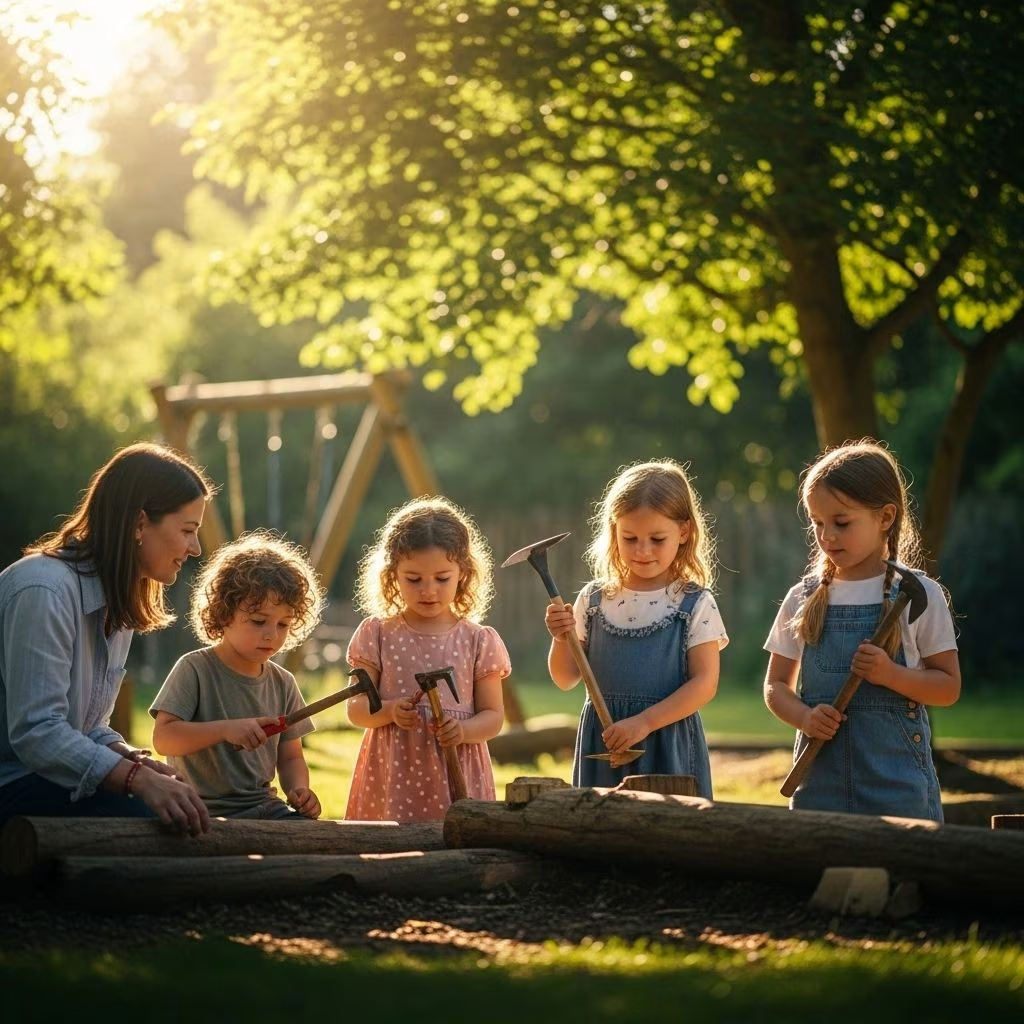
Outdoor play is essential for physical, social, and emotional development, but the introduction of tools—whether gardening implements, building materials, or exploratory instruments—offers a unique opportunity to foster children’s confidence, creativity, and lifelong skills. However, balancing these developmental benefits with best safety practices is paramount. This article explores methodologies, guidelines, and practical strategies for safely integrating tool use into outdoor play, ensuring children gain the rewards while minimizing risk.
Introduction
Integrating tools into outdoor play environments enables children to expand their skills, sense of autonomy, and engagement with the world. When thoughtfully managed, tool use can be safe, purposeful, and transformative, making outdoor spaces vibrant arenas for hands-on learning.
Benefits of Safe Tool Use in Outdoor Play
- Life Skills Development: Handling tools fosters practical skills, fine motor control, and hand-eye coordination, preparing children for real-world tasks.
- Risk Assessment: Exposure to supervised risk helps children learn to judge danger and adopt responsible behaviors[10].
- Confidence and Independence: When given the chance to use tools safely, children build self-esteem and trust in their abilities.
- Creativity: Outdoor tool use encourages creative thinking through building, gardening, or problem-solving projects.
- Social Development: Collaborative projects promote teamwork and communication skills.
Understanding Risks and Challenges
While the developmental gains are considerable, tool use carries risks that must be responsibly mitigated. Common risks include:
- Cuts or Punctures: Improper use can lead to injuries.
- Strangulation: Ropes and similar materials can pose dangers if improperly anchored or separated.
- Falls: Tools such as ladders introduce fall hazards, especially on uneven or poorly maintained surfaces.
- Eye Injuries: Flying debris or tool slips may threaten eyesight.
These risks underscore the importance of planning, supervision, equipment maintenance, and clear rules.
Planning for Safe Tool Use
Effective integration of tool use in outdoor play begins with holistic planning—balancing activity goals with safety. Essential steps:
- Review local guidelines or regulations for outdoor tool use in child settings.
- Assess the age and developmental readiness of children.
- Identify appropriate outdoor activities and select tools that best support learning objectives.
- Organize the physical environment so that tools and activities are easily supervised and controlled.
The Role of Supervision
Active supervision is the single most important factor in safe outdoor tool use. Effective supervision involves:
- Correct Ratios: Maintain recommended adult-to-child ratios for adequate oversight.
- Strategic Positioning: Place adults throughout the outdoor space so every area is covered, paying special attention to hot spots or zones with limited visibility.
- Constant Attention: Supervisors should watch, listen, interact, scan, count, and circulate the play area.
- Positive Instruction: Focus supervision not only on preventing dangers but on teaching safe behaviors.
- Immediate Intervention: Adults must intervene immediately when unsafe actions are observed.
Selecting Safe Tools for Children
Choosing the right tools is vital. The selection depends on children’s ages, experience, and the intended activity.
- Size and Design: Use child-sized tools with safety features—rounded edges, non-slip handles, lightweight materials, and blunt tips where appropriate.
- Material Quality: Tools should be robust, well-maintained, and free of protrusions or sharp defects.
- Personal Protective Equipment (PPE):
- Work gloves for hand protection.
- Safety glasses or face shields for eye safety.
- Hard hats or helmets where indicated.
- Sturdy, closed-toe shoes.
- Ear protection when using noisy equipment.
Regular checks must confirm no damage, loose parts, or deteriorated materials.
Developing Rules and Safety Procedures
Formal instruction and clear rules are essential. Consider these guidelines:
- Establish age-appropriate safety rules for tool use and review them with children before each session.
- Require demonstration and practice before unsupervised use (where appropriate).
- Clearly explain consequences for breaking safety rules.
- Encourage children to ask questions if they are unsure about an activity or tool.
- Ensure children know what to do in an emergency or if an injury occurs.
Sample outdoor tool safety rules include:
- Always carry tools with blades pointed down and away from the body.
- Never run with tools.
- Keep a safe distance from others while using tools.
- Return tools to a safe location immediately after use.
- Inspect tools before and after use; notify an adult of any damage.
Preparing the Outdoor Environment
Environment design strongly influences safety. Key considerations:
- Protective Surfacing: Utilize materials such as wood chips, sand, pea gravel, or rubber mats, with a recommended minimum depth based on equipment height—typically 12 inches for up to 8 feet high equipment.
- Spacing and Layout: Ensure adequate space between play areas and obstacles, with at least 6 feet of clearance in all directions.
- Anchoring Equipment: Secure larger items (e.g., ladders, workbenches) to prevent tipping.
- Fall Protection: Install guardrails on elevated surfaces and avoid sharp drop-offs.
- Inspection: Daily checks for damage, loose hardware, rust, exposed edges, and temperature hazards.
| Tool/Equipment | Recommended Surfacing Depth | Spacing |
|---|---|---|
| Hand Tools | 6-12 inches | 6 feet between stations |
| Raised workbenches | 12 inches (rubber/wood chips) | 6-9 feet clearance |
| Climbing Equipment | 12 inches (rubber/wood chips) | 6-9 feet clearance |
Teaching Tool Use: Training and Demonstration
Hands-on teaching and demonstration are crucial for safe tool use:
- Begin with an overview of the planned activity, tool names, and uses.
- Show proper grip and posture for each tool.
- Give explicit step-by-step instructions, allowing children to observe and ask questions.
- Use role-play or simulation before actual tool use.
- Provide individual assistance until competence is demonstrated.
- Incorporate feedback and review, especially following mistakes.
Documentation (such as checklists or safety contracts) can help reinforce learning.
Managing and Assessing Risk
Safe risk-taking is an important developmental opportunity. Thorough risk assessment and ongoing management strategies include:
- Conduct formal risk assessments before new activities, noting hazards and preventive measures[10].
- Balance challenge with safety—allow meaningful risk under supervision, such as using real (age-appropriate) tools for planting, hammering, or building.
- Maintain incident logs and analyze patterns to improve practices.
- Empower children to self-assess risk—include them in discussions about safe actions.
Maintaining Equipment Safety
Tool and equipment maintenance is essential for reducing injury risks:
- Check hardware (nuts, bolts) twice monthly and tighten as needed.
- Replace or repair damaged parts promptly.
- Eliminate hanging ropes, cords, or untwisted material that can pose strangulation hazards.
- Store all tools in a secure, organized location, away from unauthorized users.
- Regularly review manufacturer instructions for parts and replacement procedures.
Inclusive Practices for All Children
Safe tool use must accommodate diverse abilities, ages, and needs. Inclusive strategies:
- Provide adaptive tools and modified activities for children with disabilities.
- Vary tool sizes and tasks so younger or less experienced users are not excluded.
- Offer verbal and visual instructions, plus hands-on assistance as needed.
- Create zones for different skill levels, ensuring everyone can participate safely.
Frequently Asked Questions (FAQs)
- Q: At what age can children safely use real tools outdoors?
Children as young as preschool can use simple tools under close supervision. Progress to advanced tools as maturity and skill develop, always reviewing tool-specific guidelines.
- Q: What personal protective equipment is most important for tool-based outdoor play?
Work gloves, safety glasses, sturdy shoes, and—when necessary—helmets or ear protection are essential. All PPE should be child-sized and properly fitted.
- Q: How do you handle risk while keeping play challenging and educational?
Allow calculated risk by supervising, teaching safe technique, and providing developmentally appropriate challenges. Remove hazards, not challenge; empower children to self-assess risk as part of learning[10].
- Q: What types of surfacing are recommended for tool-based projects and play?
Wood mulch, rubber matting, sand, and pea gravel are recommended for absorbing impact from falls. Depth and extension zones must comply with safety guidelines for the specific activity.
- Q: Should parents and caregivers receive training in outdoor tool-based play supervision?
Yes. Adult supervisors must have knowledge of tool use, risk assessment, child development, and emergency procedures. Training should be updated with changing practices and equipment.
Conclusion
Safe tool use in outdoor play empowers children to gain invaluable life skills, confidence, and meaningful experiences, weaving risk management seamlessly into healthy development. Through planning, ongoing supervision, appropriate tools, safety-focused rules, and maintenance, caregivers and educators can transform outdoor spaces into rich learning environments where children thrive.
References
- https://www.cpsc.gov/s3fs-public/324.pdf
- https://www.robertsonsurfaces.com/blog/10-safety-guidelines-to-make-the-playground-a-safer-place
- https://www.inclusivechildcare.org/sites/default/files/courses/swf/Active%20Supervision-Outside.pdf
- https://filestore.scouting.org/filestore/healthsafety/pdf/680-028.pdf
- https://scoutingwire.org/safe-project-tool-use/
- https://www.cdc.gov/early-care/communication-resources/outdoor-play-and-safety-for-children-in-ece.html
- https://headstart.gov/facilities/article/resources-safe-playgrounds
- https://www.virtuallabschool.org/infant-toddler/safe-environments/lesson-2/act/13846
- https://meganzeni.com/risky-play-with-tools/
- https://www.naeyc.org/resources/pubs/tyc/spring2023/risk-taking-outdoor-play


