


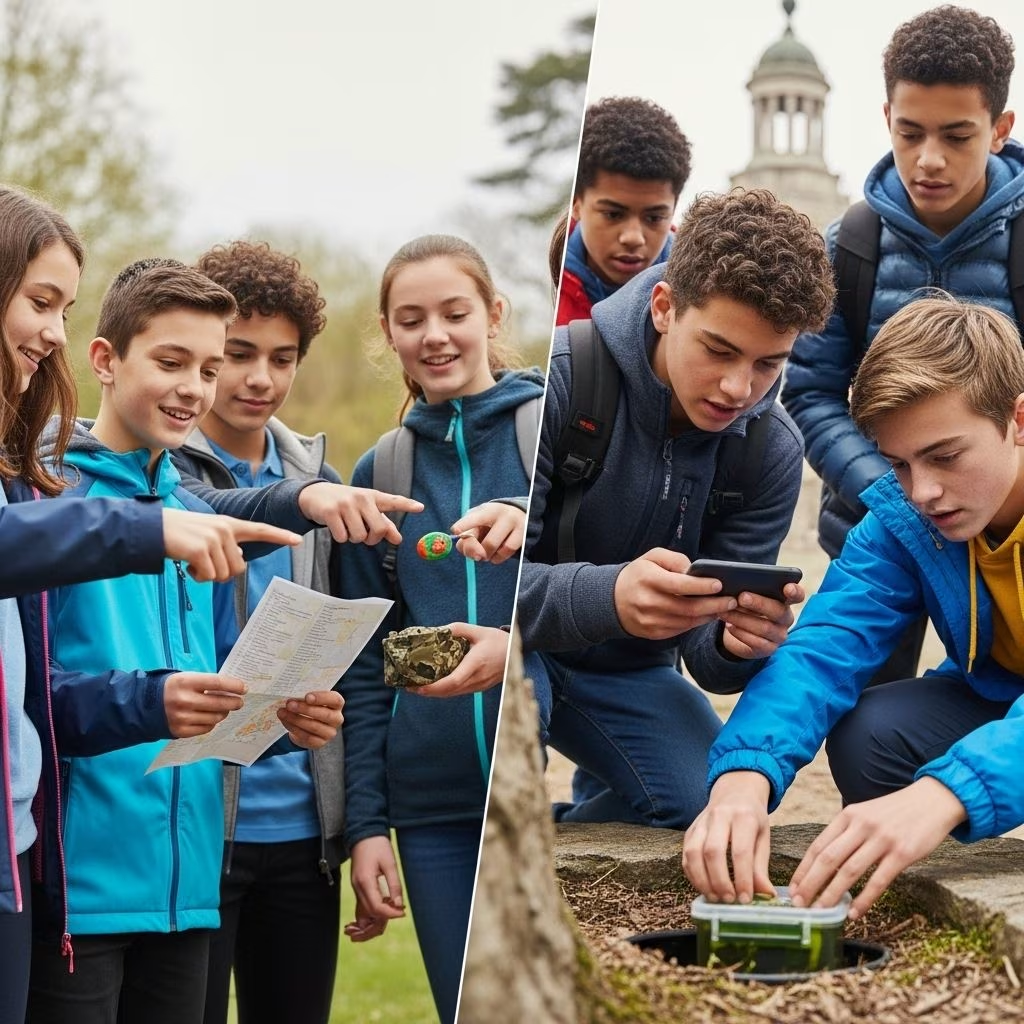
When it comes to engaging older kids and teenagers in outdoor activities, both scavenger hunts and geocaching offer exciting opportunities for adventure, problem-solving, and exploration. While these activities share similarities as treasure-hunting experiences, they differ significantly in execution, technology requirements, and the overall experience they provide. Understanding these differences can help parents, educators, and youth leaders choose the most appropriate activity for their older children.
Both activities have proven track records of getting kids away from screens and into nature, though ironically, one of them relies heavily on technology. The question isn’t necessarily which is better, but rather which activity aligns best with your teenager’s interests, your available resources, and your goals for the experience.
Understanding Traditional Scavenger Hunts
Traditional scavenger hunts have been a beloved activity for generations, requiring participants to find specific items or complete particular tasks within a designated area and timeframe. For older kids, these hunts can be significantly more complex and challenging than those designed for younger children, incorporating riddles, puzzles, and tasks that require critical thinking and teamwork.
Scavenger hunts for teenagers typically involve a prepared list of items to find or challenges to complete. These can range from photographing specific landmarks to solving clues that lead to the next location. The beauty of traditional scavenger hunts lies in their flexibility and customization potential. Organizers can tailor the hunt to specific locations, themes, or educational objectives, making them ideal for birthday parties, school events, team-building exercises, or family gatherings.
The controlled nature of traditional scavenger hunts means parents and organizers maintain complete oversight of where participants go and what they do. This aspect provides peace of mind while still offering older kids a sense of independence and adventure. Modern scavenger hunts often incorporate smartphones for photo documentation or research, bridging the gap between traditional gameplay and contemporary technology.
Exploring the World of Geocaching
Geocaching represents a modern evolution of treasure hunting, combining outdoor exploration with GPS technology. Starting in May 2000 when Dave Ulmer placed the first geocache in Oregon, this activity has exploded into a global phenomenon with millions of active caches hidden across hundreds of countries. The game transforms the entire world into a potential playing field, with over 3 million active geocaches waiting to be discovered.
The premise is straightforward yet captivating: cache owners hide waterproof containers in interesting locations and post the GPS coordinates online. Geocachers use these coordinates, accessed through apps or the Geocaching.com website, to navigate to the hidden treasures. These containers range from tiny pill bottles to large military ammunition boxes, each containing at minimum a logbook where finders record their discovery.
What makes geocaching particularly appealing for older kids is the integration of technology they already use daily. The activity requires critical thinking, navigation skills, problem-solving abilities, and physical activity. Many geocaches are hidden in locations off the beaten path, exposing teenagers to parks, historical sites, and natural areas they might never otherwise visit. This aspect transforms geocaching from a simple game into an educational adventure that broadens geographic and cultural awareness.
Key Differences in Structure and Organization
The organizational requirements for scavenger hunts and geocaching differ dramatically. Traditional scavenger hunts demand significant upfront planning from organizers who must create clues, select locations, establish boundaries, determine rules, and often physically place items or markers. This preparation requires intimate knowledge of the hunt area and considerable time investment, but it also allows for complete customization to the participant group’s needs and abilities.
Geocaching, conversely, leverages an existing global network of hidden caches. Once you create a free account on Geocaching.com or download the app, you can immediately begin searching for nearby caches. Premium accounts, which require a yearly fee, unlock access to additional caches and advanced features. The infrastructure already exists, requiring minimal preparation beyond understanding how to use the app and basic geocaching etiquette.
This fundamental difference means scavenger hunts work best for organized groups with specific objectives and timeframes, while geocaching suits independent exploration that can happen anytime, anywhere. Teenagers can engage in geocaching spontaneously during family trips, while walking to school, or as a weekend activity with friends.
Technology Integration and Digital Literacy
The role of technology distinguishes these activities significantly. Traditional scavenger hunts can be completely analog, using only paper lists and pencils, though modern versions increasingly incorporate smartphones for photo challenges, QR code scanning, or online research tasks. This flexibility allows organizers to adjust technology requirements based on participant access and comfort levels.
Geocaching is inherently technology-dependent, requiring smartphones or GPS devices to access coordinates and navigate to cache locations. This requirement teaches valuable digital literacy skills, including GPS navigation, map reading, and responsible technology use in outdoor settings. For older kids who are already comfortable with smartphones, geocaching channels screen time into productive outdoor activity.
The geocaching community has developed various cache types that challenge different skill sets. Traditional caches involve straightforward navigation to posted coordinates. Mystery caches require solving puzzles or ciphers before revealing coordinates. Multi-caches send participants to multiple waypoints where they gather information to calculate the final location. Night caches utilize reflectors that guide seekers after dark. This variety ensures the activity remains engaging even for experienced geocachers.
Social and Community Aspects
Both activities offer social benefits but in different contexts. Traditional scavenger hunts are inherently group activities designed to foster teamwork, communication, and collaborative problem-solving. Participants typically work in teams, developing social skills while pursuing common goals. This structure makes scavenger hunts excellent for organized youth groups, classroom activities, or party entertainment where the social interaction is as important as the activity itself.
Geocaching can be enjoyed solo or with others, offering flexibility for different social preferences. While teenagers can geocache with friends or family, they can also pursue the activity independently, appealing to adolescents developing autonomy. However, geocaching connects participants to a broader global community. The geocaching network spans millions of users worldwide who hide caches, share experiences online, and maintain the integrity of the game. This virtual community aspect introduces teenagers to positive online collaboration and shared stewardship of public spaces.
The geocaching community operates on unwritten rules and etiquette that teach responsibility and respect. Participants learn to be discreet when retrieving and replacing caches to prevent non-players from disturbing them, to trade items fairly when swapping treasures, and never to trespass or damage property. These social norms help teenagers develop consideration for others and environmental stewardship.
Educational Value and Skill Development
Both activities provide substantial educational benefits while disguising learning as entertainment. Traditional scavenger hunts can be explicitly designed around educational objectives, whether teaching local history, practicing foreign language skills, exploring scientific concepts, or developing research abilities. Educators and parents can craft hunts that align with specific curriculum goals or learning outcomes.
Geocaching offers different but equally valuable educational opportunities. The activity inherently teaches geographic literacy, spatial reasoning, and navigation skills. Many caches are placed near historical markers, geological features, or cultural sites, encouraging participants to learn about their surroundings. Earth Caches, organized by the Geological Society of America, require geocachers to complete tasks that teach earth science concepts. This stealth education approach often resonates with teenagers who resist overtly academic activities.
Both activities develop critical thinking and problem-solving skills. Scavenger hunts challenge participants to interpret clues, make logical deductions, and develop search strategies. Geocaching requires analyzing GPS coordinates, reading terrain, solving puzzles, and sometimes interpreting cryptic hints to pinpoint cache locations. These cognitive challenges engage older kids in ways that build transferable skills applicable to academic and real-world contexts.
Physical Activity and Outdoor Engagement
Getting teenagers outdoors and active presents ongoing challenges in our screen-dominated culture. Both scavenger hunts and geocaching address this need but with different approaches and intensity levels. Traditional scavenger hunts typically occur within defined boundaries—a neighborhood, park, or campus—with activity levels depending on the hunt’s design. Organizers can create hunts requiring minimal physical exertion or design physically demanding challenges involving running, climbing, or extended walking.
Geocaching naturally encourages more extensive outdoor exploration. Caches are often hidden in locations requiring hikes, off-trail navigation, or exploration of unfamiliar territories. The difficulty ratings assigned to caches help participants select adventures matching their fitness levels and experience. This flexibility allows teenagers to progressively challenge themselves, starting with easily accessible urban caches before advancing to remote wilderness locations requiring serious hiking.
The ongoing nature of geocaching promotes sustained physical activity. Unlike one-time scavenger hunts, geocaching becomes a hobby that motivates regular outdoor excursions. The gamification elements—tracking finds, collecting statistics, pursuing badges—provide extrinsic motivation that helps establish outdoor activity patterns that may continue into adulthood.
Cost Considerations and Accessibility
Budget constraints often influence activity choices, and these two options present different financial considerations. Traditional scavenger hunts can be organized with minimal cost, requiring only paper, writing materials, and creativity. However, costs increase if prizes are offered, locations charge admission fees, or if elaborate props and materials are needed for themed hunts. The primary investment is time rather than money, making scavenger hunts accessible for budget-conscious families and organizations.
Geocaching’s basic participation is free after creating an account on Geocaching.com. The main requirement is a smartphone with GPS capability and internet access for downloading cache information. Premium memberships, costing approximately 30 dollars annually, provide access to premium caches and advanced features but aren’t necessary for enjoyable participation. Families already owning smartphones face no additional costs, while those without suitable devices would need to factor in this expense.
Geographic accessibility also differs. Scavenger hunts require designated areas and organizational effort, limiting spontaneous participation. Geocaching, with caches distributed globally, offers accessibility wherever you travel. Urban, suburban, and rural areas all host geocaches, though density varies. This ubiquity means families can geocache while traveling, turning routine trips into adventures.
Safety and Supervision Considerations
Safety remains paramount when older kids venture outdoors, and these activities present different supervisory challenges. Traditional scavenger hunts occur within controlled environments with clear boundaries, predetermined locations, and often direct adult supervision. Organizers can vet all locations beforehand, ensuring appropriate safety levels. This containment provides peace of mind for parents while giving teenagers structured independence.
Geocaching requires more nuanced safety discussions. While the activity never asks participants to trespass, break rules, or engage in dangerous behavior, teenagers exploring independently need solid judgment about location appropriateness, weather conditions, and personal safety. Parents should establish clear guidelines about acceptable cache difficulty levels, allowable locations, and whether teens can geocache alone or must go with partners. Many families start with supervised geocaching expeditions before allowing independent participation.
The geocaching community maintains safety through cache placement guidelines. Caches should not be placed on private property without permission, in locations requiring dangerous access, or where retrieval would appear suspicious. Despite these safeguards, parents should review cache descriptions and difficulty ratings before allowing teenagers to pursue them independently.
Long-term Engagement and Sustainability
Activity sustainability matters for developing lasting interests and habits. Traditional scavenger hunts are typically one-time events or occasional activities. While memorable and enjoyable, they don’t inherently promote ongoing engagement. However, teens who enjoy the format might organize hunts for others, developing planning and leadership skills.
Geocaching’s structure promotes sustained participation. With millions of caches worldwide and new ones added regularly, the activity offers virtually unlimited exploration opportunities. The progression system, various cache types, and geographic diversity maintain interest over extended periods. Many geocachers pursue the hobby for years, with some logging thousands of finds. This longevity makes geocaching an activity that can grow with teenagers into adulthood.
The ability to contribute by hiding caches adds another engagement dimension. Experienced geocachers can create their own caches, selecting meaningful locations and designing creative containers. This progression from finder to hider deepens investment in the activity and community.
Comparison Table: Scavenger Hunts vs Geocaching
| Feature | Scavenger Hunts | Geocaching |
|---|---|---|
| Technology Requirements | Optional, can be completely analog | Requires smartphone or GPS device |
| Preparation Time | Significant planning required | Minimal, uses existing infrastructure |
| Cost | Low to moderate | Free basic access, optional premium upgrade |
| Social Structure | Group-focused team activity | Flexible, solo or group participation |
| Customization | Highly customizable to specific goals | Limited to available cache types and locations |
| Geographic Scope | Limited to planned area | Global, available almost anywhere |
| Supervision | Structured with clear boundaries | Requires teenager judgment and independence |
| Long-term Engagement | Typically one-time or occasional events | Ongoing hobby with unlimited opportunities |
| Educational Focus | Can be explicitly educational | Incidental learning through exploration |
| Spontaneity | Requires advance planning | Can be done anytime, anywhere |
Making the Right Choice for Your Teenager
Selecting between scavenger hunts and geocaching depends on multiple factors including your teenager’s personality, available resources, and activity goals. Scavenger hunts excel for organized events with specific timeframes and educational objectives. They work beautifully for birthday celebrations, classroom activities, youth group outings, or family reunions where the structured group experience matters as much as the activity itself.
Geocaching suits teenagers seeking ongoing adventure, those comfortable with technology, and families wanting flexible outdoor activities that work around busy schedules. It particularly appeals to teens who prefer some independence, enjoy exploration, and respond to gamification elements. The activity’s global scope makes it ideal for families who travel or teens interested in geography and different cultures.
Many families and youth organizations find value in incorporating both activities. Scavenger hunts provide excellent special event entertainment and team-building experiences, while geocaching offers sustainable outdoor engagement between organized activities. This combination approach exposes teenagers to different adventure styles while building varied skill sets.
Getting Started with Either Activity
Starting with traditional scavenger hunts requires creativity and planning but needs no special accounts or apps. Begin by selecting an appropriate location, determining your participant group’s interests and abilities, creating clues or item lists that provide appropriate challenge levels, establishing clear boundaries and rules, and preparing any necessary materials. Numerous online resources provide templates and ideas for different themes and difficulty levels.
Geocaching initiation is straightforward. Create a free account at Geocaching.com or download the official app, review the beginner’s guide provided on the platform, search for nearby caches rated for beginners, read the cache descriptions and difficulty ratings carefully, and head out on your first adventure. Start with traditional caches in public parks during daylight hours to build confidence before attempting more challenging cache types or locations.
For both activities, emphasize outdoor ethics, respect for property, and environmental stewardship. Teach teenagers to leave no trace, respect posted rules and boundaries, and consider others sharing public spaces.
Frequently Asked Questions
Q: Can younger siblings participate in these activities designed for older kids?
A: Both activities can accommodate mixed age groups with appropriate modifications. For scavenger hunts, create different challenge levels for different ages. For geocaching, select caches with low difficulty ratings and involve younger children in the search process once you’re near the cache location.
Q: Is geocaching safe for teenagers to do without adult supervision?
A: Safety depends on the teenager’s maturity, judgment, and experience level, as well as local conditions. Start with supervised geocaching to teach proper safety practices, establish clear guidelines about acceptable cache locations and difficulty levels, and consider requiring teens to geocache with partners rather than alone. Many families use geocaching to gradually build independence skills.
Q: How do you prevent cheating in scavenger hunts with older kids?
A: Older kids generally respond well to honor systems when activities are engaging. Require photo documentation of finds, design challenges that produce unique results difficult to fake, emphasize that the experience matters more than winning, and consider making the activity non-competitive or rewarding creative solutions rather than just speed.
Q: What happens if we can’t find a geocache?
A: Not finding caches is a normal part of geocaching. Caches sometimes go missing, coordinates may be slightly off, or they might be better hidden than expected. Check recent logs online to confirm the cache is still active, read hints provided by the cache owner, and don’t be discouraged—every geocacher has DNF experiences.
Q: Can we create educational scavenger hunts that incorporate geocaching elements?
A: Absolutely. Hybrid activities can combine the best of both formats. Create a scavenger hunt where clues are hidden at specific GPS coordinates, or design educational challenges that must be completed at geocache locations. This approach provides structure while teaching navigation skills and leveraging existing geocaching infrastructure.
Q: Do we need special equipment beyond a smartphone for geocaching?
A: A smartphone with GPS and the geocaching app covers basic needs. However, some geocachers invest in additional gear like dedicated GPS devices for better accuracy in remote areas, flashlights for night caches or searching in dark spaces, and writing implements since cache pencils sometimes go missing. Start basic and add equipment as interest grows.
Q: How can we make traditional scavenger hunts more challenging for older teens?
A: Increase complexity by incorporating multi-step puzzles where solving one clue reveals the next, requiring research or knowledge application, creating physical challenges alongside mental ones, limiting time or resources, introducing red herrings or false leads, or requiring creative documentation like videos or performances rather than simple photo evidence.
Final Thoughts
Both scavenger hunts and geocaching offer tremendous value for engaging older kids in outdoor adventure, problem-solving, and exploration. Rather than viewing them as competing activities, consider them complementary approaches to getting teenagers active and engaged with their surroundings. Scavenger hunts provide structured group experiences perfect for special occasions and explicit learning objectives. Geocaching offers sustainable, flexible adventure that teenagers can pursue independently while connecting to a global community.
The best choice ultimately depends on your specific circumstances, goals, and your teenager’s preferences. Some teens thrive with the social dynamics and contained excitement of scavenger hunts, while others prefer the independence and ongoing discovery geocaching provides. Many families find that experiencing both activities helps teenagers develop diverse skills while discovering which adventure style resonates most strongly with their interests and personality.
Whichever option you choose, the real victory lies in fostering outdoor engagement, building problem-solving skills, and creating positive memories during the crucial teenage years. Both activities accomplish these goals while offering fun, challenge, and the thrill of discovery that appeals to adolescents seeking independence and adventure.
References
- https://ecbpublishing.com/geocaching-scavenger-hunts-for-kids-and-adults/
- https://thewriterswalk.com/p/walking-to-find-treasure
- https://www.terrahunt.com/blog/geocaching-another-kind-of-treasure-hunt-activity
- https://americanlifestylemag.com/life-culture/editorial/geocaching-a-global-scavenger-hunt/
- https://www.youtube.com/watch?v=I1YNcvbytxw


