


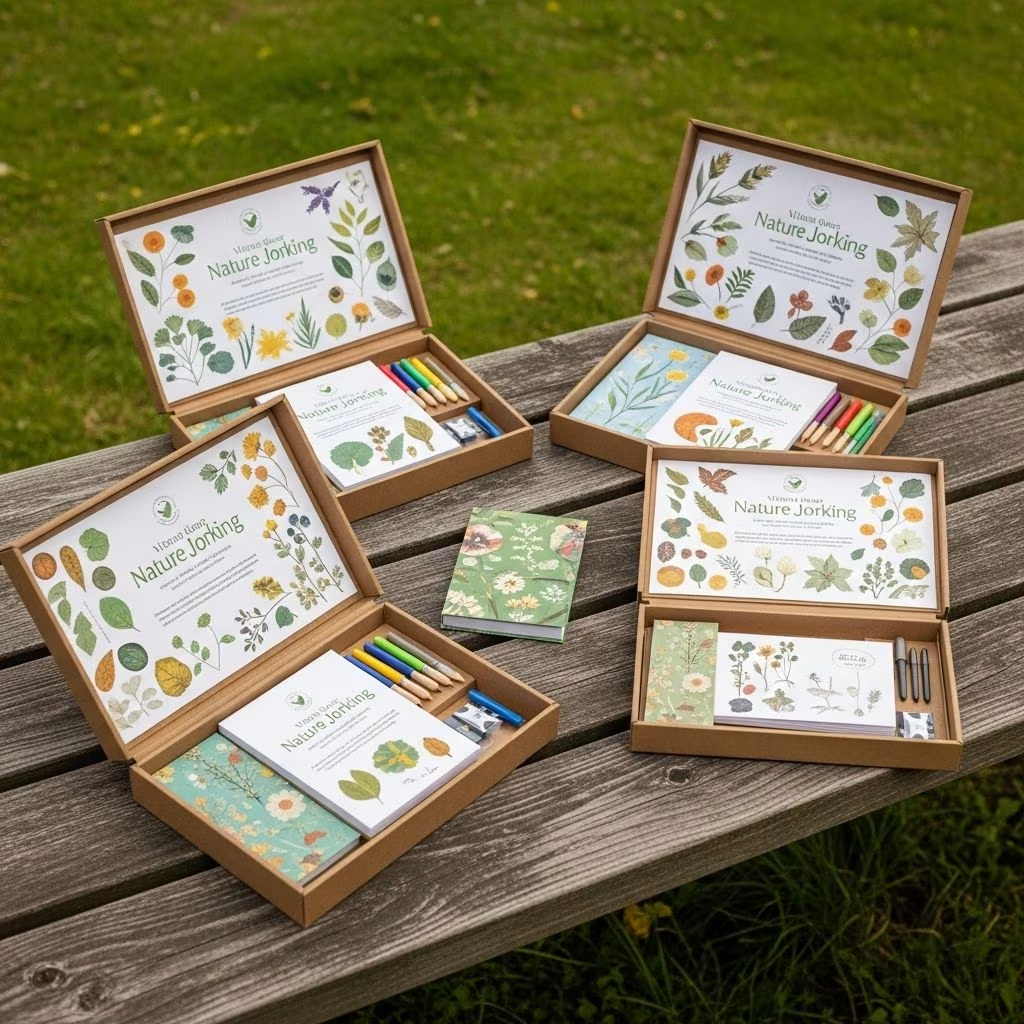
Nature journaling opens a world of discovery and creativity for children, fostering a lifelong connection to the outdoors. The right nature journaling kit for kids can transform exploring parks, backyards, or hiking trails into memorable educational adventures. This article provides expert reviews of leading nature journaling kits, essential supply lists, and actionable tips for parents and educators to inspire young naturalists.
Why Nature Journaling for Kids?
Nature journaling is an engaging, open-ended way for children to observe the world, think critically, and express themselves creatively. Journaling supports:
- Science and inquiry skills: Children learn to document, draw, and ask questions about the natural world.
- Artistic development: Drawing, sketching, and painting nature subjects promote creativity and fine motor skills.
- Mindfulness and well-being: Spending time outdoors and recording observations helps reduce stress and strengthen emotional health.
- Memory and keepsakes: Nature journals become treasured records of childhood adventures and discoveries.
Moreover, nature journaling creates lasting memories for both children and families, encouraging time in parks, gardens, and wild spaces without the pressure of screens or digital distractions.
Must-Have Elements in a Nature Journaling Kit
An effective nature journaling kit for kids should be portable, durable, and inspiring. Based on expert and educator recommendations, here are the core elements to include:
- Quality Journal: Thick, acid-free paper avoids bleed-through and supports varied art media (pencil, watercolor, markers). A hardbound cover is best for field use.
- Writing Tools: A reliable pencil (mechanical or graphite), pens for details, and colored pencils for vibrancy.
- Color Media: Watercolor sets or travel-sized palettes add life to journal pages, especially for kids who like to paint.
- Storage: Pencil pouch, drawstring bag, or backpack to keep supplies organized and accessible.
- Field Tools (optional): Magnifying glass for close-up observation, small ruler for measurements, and compact field guides or identification cards.
What to Look for in Journals and Supplies
- Durability: Journals with reinforced spines and thick covers last through many adventures.
- Portability: Notebooks in the 5”x8” or 8”x5” range easily fit in daypacks and small hands.
- Paper Weight: Look for at least 100 lb. (preferably 140 lb. or more) for mixed media compatibility.
- Child-Friendly Accessories: Ergonomic tools, non-toxic colors, and easy-open storage for safe, independent use.
Top Recommended Nature Journaling Kits for Kids: Reviews
1. Book of Life Heirloom Nature Journal (Jeannie Fulbright Press)
Overview: This hardbound artist-quality journal was designed with families in mind and emphasizes heirloom durability and creative inspiration. Made with acid-free, cold-pressed 140 lb mixed media pages, it’s ideal for pencils, paints, and watercolors. Sized perfectly (8”x5”) for little explorers, with thoughtful extras like a ribbon bookmark and coordinating elastic strap.
Pros:
- Extremely thick, bleed-proof pages for all art mediums
- Hardbound, durable PU leather cover – built to last generations
- Portable & beautiful keepsake design; not overwhelming for children
- Perfect page size and number for a year of adventures
- Positive family and critic reviews for quality and usability
Cons:
- Higher price point than basic notebooks
- Too nice for rough or careless use (parents may hesitate letting kids use it freely)
2. Stillman & Birn Softcover Alpha and Zeta Series
Overview: Popular among nature journaling educators for children, the Stillman & Birn Alpha (100 lb paper) and Zeta (180 lb paper) softcover notebooks feature excellent paper quality and binding. Zeta, with its heavier paper, is especially loved by kids using watercolor, while Alpha allows more pages in a slimmer book.
Pros:
- Sewn binding for laying flat in the field
- Wide range of sizes (5.5”x8.5” ideal for kids)
- Thicker papers for mixed media (Zeta series), but more pages in Alpha
Cons:
- Zeta version holds fewer total pages, which may require two for a full year
- Soft cover offers less protection than hardbound models
3. Bear Books and Sketch For Schools (Classroom Value Picks)
Overview: Designed for classrooms, these journals are budget-friendly, sturdy, and customizable. Bear Books offer simple, hardbound durability with 28-60 pages, while Sketch For Schools provides spiral-bound models with optional custom covers and intermediate-weight paper.
Pros:
- Affordable in bulk for schools or large groups
- Customizable covers for personalization and group projects
- Durable enough for extended use outdoors
Cons:
- Paper quality may not suit heavy watercolor or mixed media use
- Limited extra features (no bookmark or closure strap)
4. Strathmore Mixed Media Art Journal
Overview: This smaller-format, hardbound journal features mixed media paper tough enough for paint, markers, and more. Hard cover provides strong support for fieldwork. Favored by families who need a rugged, simple option that holds up to the elements.
- Heavy mixed media paper works for watercolor, markers, and pencil
- Sturdy, practical cover protects against travel wear and tear
- Not intimidating in size (good for younger kids)
Comparison Table: Leading Nature Journaling Kits for Kids
| Product Name | Best For | Paper Weight | Size (inches) | Binding | Pros | Cons |
|---|---|---|---|---|---|---|
| Book of Life Heirloom Nature Journal | Heirloom keepsakes, mixed media art | 140 lb | 8 x 5 | Hardbound | Very durable, bleed-proof; ideal size; elegant appearance | Higher price; may feel too precious to use |
| Stillman & Birn Zeta Series | Watercolor-heavy use, advanced young artists | 180 lb | 5.5 x 8.5 | Softcover (sewn) | Excellent paper, lays flat, portable | Few total pages; soft cover offers less field protection |
| Bear Books | Classroom activities, group projects | Varies (approx. 90-100 lb) | 8.3 x 5.5 | Hardbound | Inexpensive, customizable, sturdy | Lower paper weight; not for water-heavy art |
| Strathmore Mixed Media Art Journal | General field use, rugged conditions | Heavier mixed media | Slightly smaller format | Hardbound | Tough paper, portable, weather-resistant | Can be tight for bigger drawings |
How to Build Your Own Nature Journaling Kit
While pre-assembled kits are convenient, many families prefer to assemble their own kits, tailoring them to the ages and interests of the children involved. Here’s how to do it:
- Select a durable journal: Choose from the reviewed options above, or consider a refillable sketchbook for long-term use.
- Add writing and coloring tools:
- Graphite pencil (mechanical for portability)
- Colored pencils (red, orange, yellow, green, blue, purple starter set)
- Fine-tipped ink pen (waterproof ink for outlining or notes)
- Compact watercolor set with brush for painting
- Pack observation aids (optional):
- Magnifying glass (for close-up looks)
- Mini ruler or tape measure
- Small laminated field guide or identification cards
- Organize and store: Use a zip pouch, pencil roll, or lightweight bag to keep everything together.
Additional Tips for Successful Nature Journaling with Kids
- Keep it lightweight: Only pack essentials to encourage spontaneous journaling anywhere – from gardens to woods to parks.
- Lead by example: Family journaling time can be inspiring for children seeing adults participate too.
- Respect the mess: Creativity can be messy! Use a kit with washable supplies and expect smudges as part of the learning process.
- Incorporate prompts: Help kids get started with simple journal prompts (“Draw something you found on the ground,” “What do you hear?”).
- Encourage observation, not perfection: Focus on recording details and impressions, not making the ‘perfect’ drawing. Every entry is valuable.
- Capture all senses: Let kids include sounds, textures, and even scents in their notes and sketches.
Recommended Supplies and Tools for Young Journalers
- Basic starter kit:
- Sturdy, child-friendly nature journal
- Graphite and colored pencils (triangular for easy grip)
- Compact travel watercolor palette
- Small glue stick and tape for adding leaves, feathers, etc.
- Mini ruler or nature ID chart
- Magnifying glass (on a lanyard is ideal for young kids)
- For older or more advanced kids:
- Smooth-writing pens (waterproof ink)
- Finer-quality brushes and paint sets
- Field guides and bird/plant identification apps
- Hard case or zippered organizer for art supplies
- Collapsible seat or blanket (for comfortable fieldwork)
Frequently Asked Questions (FAQs)
What is the best age to start nature journaling with kids?
Children as young as age four can begin with simple drawing and observation, while older kids can add notes, measurements, and more detailed sketches. The key is adapting the tools and expectations to the child’s developmental stage.
What if my child is “not artistic” or prefers writing over drawing?
Nature journaling isn’t about making perfect artwork; it’s about noticing, recording, and reflecting. Encourage journal entries through lists, poetry, questions, and sensory descriptions as much as through sketching.
How can I keep kids interested in journaling over time?
Mix things up by visiting different locations (gardens, streams, backyards). Use prompts or scavenger hunts for fresh ideas, and showcase completed journals as keepsakes or family albums to celebrate their efforts.
Are there digital alternatives to physical nature journals?
While paper journals are more tactile and encourage sensory engagement, some families supplement with nature photography or apps for classification and sharing. However, actual writing and drawing boost close observation and memory retention.
Can I set up a kit for an entire classroom or youth group affordably?
Yes. Bulk journals like Bear Books and Sketch For Schools, combined with shared supplies, help keep costs down for group activities. Grant programs and crowdfunding can also support nature journaling initiatives in schools and community groups.
How should finished nature journals be stored?
Keep journals in a cool, dry place, away from direct sunlight. Hardbound options double as keepsakes, while softcover journals can be archived in portfolios or boxes for long-term preservation. Encourage kids to revisit their past observations for ongoing learning and reflection.
Conclusion: Start Your Child’s Nature Journaling Adventure Today
With the right kit, nature journaling becomes a gateway to curiosity, wonder, and lifelong learning. Whether you opt for a top-tier heirloom journal, an affordable classroom notebook, or a custom-assembled kit, the most important thing is to start journaling with your kids—wherever and however you can. Every observation recorded today becomes a memory cherished tomorrow.
References
- https://shop.jeanniefulbright.com/products/nature-journal
- https://tripscholars.com/nature-journaling-supplies-build-your-nature-journal-kit/
- https://charlottemasonpoetry.org/supplies-for-nature-notebooking/
- https://johnmuirlaws.com/low-cost-nature-journaling-supplies-for-teachers/
- https://www.goldenstatenaturalist.com/blog/best-nature-journaling-supplies-for-people-with-too-many-hobbies/
- https://backwoodsmama.com/2025/09/nature-journaling-for-kids.html
- https://charlottemasonmotherhood.com/2021/09/nature-study-supplies-on-the-go.html
- https://familystyleschooling.com/2016/05/04/nature-journals/
- https://www.youtube.com/watch?v=PVEHgjcG8I4


