


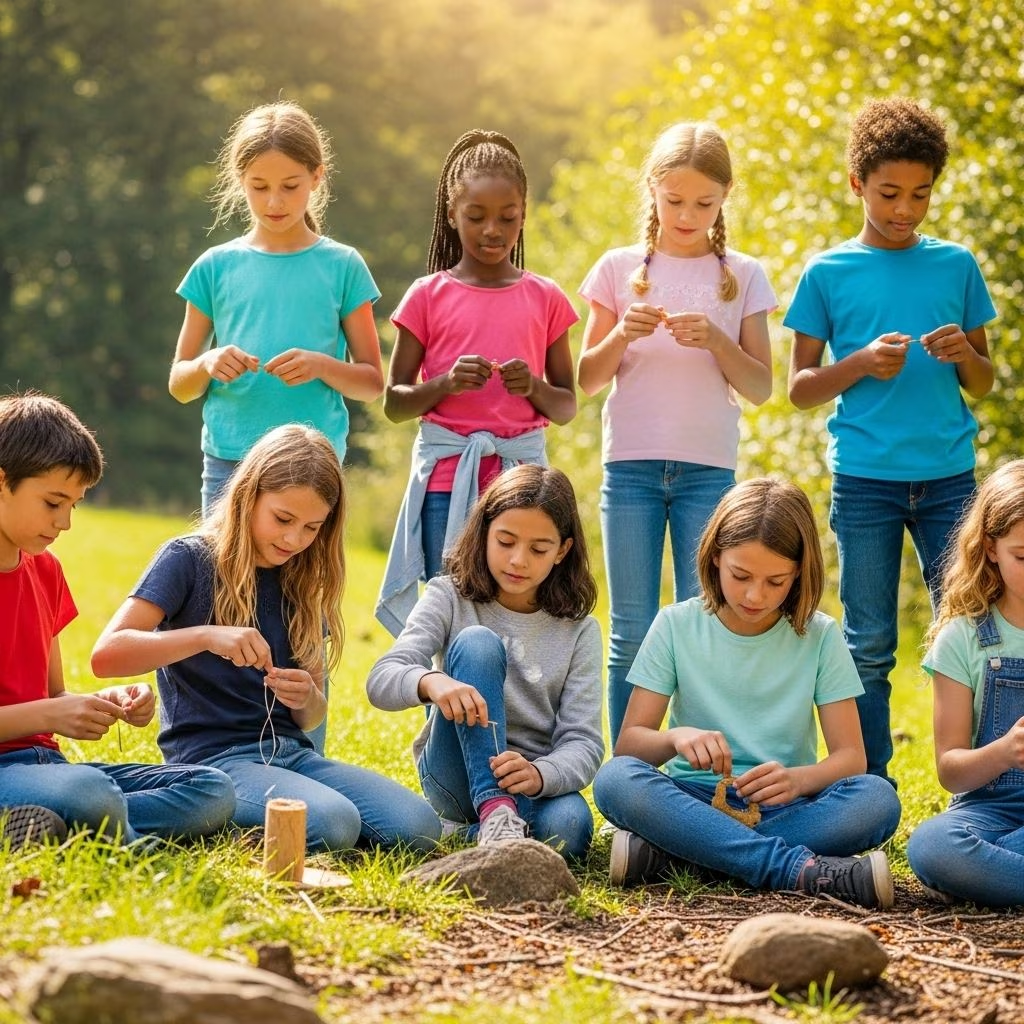
Outdoor Activities for Fine Motor Skills in Older Children
Fine motor skills are essential for daily living, academic success, and independent functioning in older children. Developing these skills involves strengthening the small muscles in the hands, fingers, and wrists, fostering coordination, dexterity, and hand-eye integration. Outdoor activities offer dynamic, engaging opportunities to support fine motor development, while also promoting gross motor, cognitive, and social-emotional growth. This article provides an actionable guide to selecting, organizing, and maximizing outdoor activities for fine motor skills in older children.
- Table of Contents
- Introduction
- Why Outdoor Activities Matter for Fine Motor Development
- Core Benefits of Outdoor Fine Motor Activities
- Recommended Outdoor Activities
- Creative and Artistic Outdoor Play
- Manipulative Play and Tool Use
- Gardening and Nature-Based Tasks
- Structured Playful Learning
- Tips for Parents & Educators
- Frequently Asked Questions
Introduction
Fine motor skills involve precise movements of the hands and fingers, underpinning tasks such as writing, buttoning, tying shoelaces, and manipulating small objects. For older children, these skills are central to self-care, academic achievement, and participation in hobbies. While classroom tasks target these movements, outdoor settings provide unique advantages: stimulating environments, greater freedom of movement, and opportunities for creative problem-solving and social interaction.
Why Outdoor Activities Matter for Fine Motor Development
Outdoor play naturally incorporates the following elements vital to skill building:
- Variety of Materials: Nature supplies diverse textures (sand, soil, leaves, rocks) and unconventional tools that stimulate manipulation and coordination.
- Whole-Body Engagement: Many outdoor activities integrate gross motor elements, ensuring that fine motor work is supported by core strength and body awareness.
- Intrinsic Motivation: Engaging, open-ended play outdoors encourages persistence, experimentation, and risk-taking, supporting emotional and cognitive development alongside physical growth.
Core Benefits of Outdoor Fine Motor Activities
| Category | Benefit | Example |
|---|---|---|
| Physical | Strengthens hand, wrist, and finger muscles | Hammering golf tees, digging, drawing with chalk |
| Neurological | Improves hand-eye coordination and finger isolation | Popping bubbles, threading sticks |
| Cognitive | Enhances problem-solving and planning skills | Scavenger hunts, nature patterns |
| Social-Emotional | Fosters teamwork, persistence, and resilience | Group gardening, collaborative water play |
Recommended Outdoor Activities
- Hammer Fun (Egg Carton & Golf Tees): Give children a small hammer or mallet and let them pound golf tees into an upside-down egg carton, cardboard, or even dirt. This activity boosts hand strength, grasp, endurance, proprioception (body awareness), and hand-eye coordination while also providing sensory feedback through force gradation and vibration.
- Rock Excavation: Challenge children to dig out rocks from soil using hand tools, sticks, or mallets. In addition to grasp and bilateral hand coordination, this builds persistence and problem-solving skills. Emotional regulation is also practiced as children encounter obstacles and learn to cope with frustration.
- Scavenger Hunt with Manipulation Tasks: During a nature walk, set up scavenger hunts involving collection and sorting of leaves, pebbles, or pinecones. Sorting and pattern-making foster dexterity, spatial awareness, and sequencing abilities.
- Water Play with Squeeze Tools: Provide squirt bottles or water blasters for children to aim at targets, draw lines on pavement, or participate in games. Squeezing the bottle is a powerful hand-strengthener and can be structured for teamwork and accuracy.
- Sand and Soil Play: Encouraging digging, pouring, and sculpting sand or soil helps children manipulate small tools and containers, strengthening both fine and gross motor muscles.
- Bubbles and Popping: Challenge children to pop bubbles with their index fingers, thumbs, or other fingers. This develops finger isolation, reaction time, and motor planning.
- Monkey Bars and Climbing Apparatus: While primarily a gross motor activity, gripping, hanging, and shifting weight on monkey bars strengthens the hand and forearm muscles crucial for fine motor tasks.
Creative and Artistic Outdoor Play
- Sidewalk Chalk Drawing: Drawing or tracing lines, shapes, or letters on the ground with large pieces of chalk exercises grasp, wrist extension, and arm stability. Encourage children to create mazes, hopscotch boards, or collaborative murals.
- Spray the Flower Letters: Draw flowers or symbols on pavement and write letters inside each. Children use spray bottles to ‘water’ flowers with the called-out letter or sound, combining letter recognition with finger squeezing and targeting skills.
- Nature Collage Making: Ask children to collect natural objects (twigs, leaves, pebbles) to arrange and glue onto cardboard panels. Arranging and pressing items facilitates pinching, manipulation, and creative planning.
- Outdoor Weaving: Use sticks and yarn or long grass strands to weave shapes or simple mats. Weaving demands bilateral coordination and finger dexterity.
Manipulative Play and Tool Use
- Using Real Tools: Supervised use of child-sized tools like mallets, screwdrivers, or trowels allows children to experience the real-life skills of grasping, squeezing, rotating, and precision placement. Hammering golf tees into soft ground or constructing simple wood projects builds strength and confidence.
- Stringing Natural Objects: Challenge children to thread leaves, flower petals, pasta, or beads onto string or wire, creating necklaces or garlands. The slow, careful motions involved in threading demand attention and steadiness.
- Bottle Cap and Pebble Games: Arrange bottle caps or smooth stones for stacking, lining up, and arrangement games.
Gardening and Nature-Based Tasks
- Planting Seeds: Encourage children to dig, place small seeds or bulbs, and cover them with soil. Pinching seeds and using small tools (gardening trowels, dibbers) improves grip and finger strength.
- Weed Pulling: Removing weeds requires finger strength, precision, and persistence.
- Harvesting and Sorting: Picking herbs, fruits, or vegetables, then sorting them by size or color integrates tactile exploration with classification skills.
- Filling and Pouring Water: Watering plants using cans, bottles, or cups helps control pouring speed, grip, and wrist rotation.
Structured Playful Learning
- Sight Word Soccer: Practice literacy and coordination by taping sight words or numbers to cones and having children kick a ball to the corresponding cone when called. This blends reading, decision-making, and physical skill.
- Obstacle Courses: Incorporate multiple hand-use stations along a course: carrying objects, opening containers, stacking blocks, or transferring pebbles between bowls. These stations ensure repeated practice with a variety of grips and movements.
- Nature Patterns: On a walk, have children collect leaves, rocks, twigs and then use them to make patterns, structures, or simple maps. This targets sequencing, visual-motor coordination, and creativity.
Tips for Parents & Educators
- Follow the Child’s Interests: Allow children to choose activities or adapt them to their favorite themes.
- Use Everyday Objects: No need for expensive supplies; sticks, stones, containers, and common household items work beautifully.
- Support Perseverance: Encourage children to try, experiment, and safely fail before intervening. Emotional regulation and resilience are critical parts of the learning process.
- Vary Task Difficulty: For older children ready for more challenge, introduce finer manipulative tasks, smaller objects, or multi-step sequences.
- Be Present: Engaged adult support enhances connection, motivation, and safety.
- Integrate Sensory Input: Incorporate tactile, auditory, and visual elements for holistic development.
Frequently Asked Questions
Q: Which outdoor activities are best for fine motor skill development in older children?
A: Activities such as hammering golf tees, gardening, using spray bottles, drawing with sidewalk chalk, scavenger hunts, and manipulative play with natural objects are especially effective.
Q: How often should older children engage in fine motor activities outdoors?
A: Frequent, regular engagement—several times per week—ensures cumulative benefits. Integrating fine motor challenges into daily play routines outdoors is ideal.
Q: Are outdoor activities enough to address fine motor delays?
A: Outdoor activities are beneficial, but persistent motor difficulties may require targeted intervention from an occupational therapist or educator, combining both indoor and outdoor approaches.
Q: How can outdoor activities be adapted for different skill levels?
A: Adapt object size, task complexity, and instructions. For more advanced children, introduce finer manipulation, increased speed, or multi-step challenges; for those needing support, focus on simple grasping and large objects.
Q: What are the risks, and how can safety be ensured?
A: Provide appropriate supervision with tool use, ensure safe outdoor spaces, and match activities to children’s ability levels. Emotional safety—coping with frustration and failure—is as important as physical safety.
Conclusion
Outdoor activities offer a rich landscape for older children to develop fine motor skills in fun, natural, and motivating ways. By combining creativity, exploration, and active play, these experiences build not only dexterity and coordination but also emotional resilience and social connection. Integrate a variety of tasks, tailor them to individual interests, and make skill-building a joyful part of every outdoor adventure.
References
- https://www.bearfootoccupationaltherapy.com/post/finemotoractivites
- https://mybrightwheel.com/blog/engaging-outdoor-activities-for-preschoolers
- https://www.todaysparent.com/family/activities/8-outdoor-activities-that-develop-fine-motor-skills/
- https://otperspective.com/outdoor-activities-kids-strengthen-hands/
- https://www.onehundredtoys.com/developing-fine-motor-skills-through-outdoor-play/
- https://napacenter.org/fine-motor-activities/
- https://extension.psu.edu/programs/betterkidcare/news/supporting-fine-and-gross-motor-skills-in-and-out-of-the-classroom


