


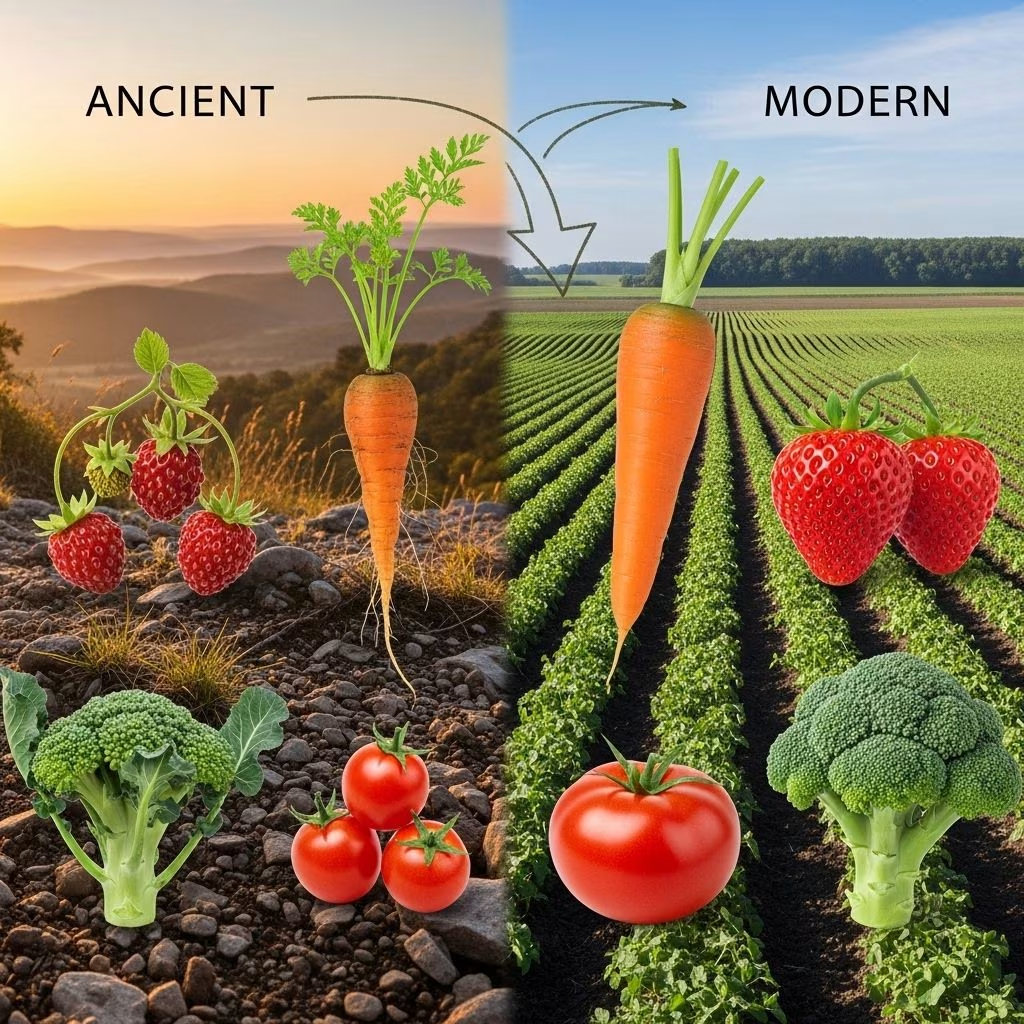
The produce aisle at your local supermarket is filled with colorful, plump fruits and vegetables that would be nearly unrecognizable to our ancient ancestors. The journey from wild plants to the cultivated crops we enjoy today spans thousands of years and represents one of humanity’s most significant achievements. Through selective breeding, domestication, and careful cultivation, early farmers transformed bitter, small, and often inedible plants into the nutritious and delicious foods that sustain billions of people worldwide.
The transformation of fruits and vegetables tells a remarkable story of coevolution between humans and plants. Beginning approximately 10,000 years ago, as human societies transitioned from nomadic hunter-gatherers to settled agricultural communities, people began the deliberate process of selecting and cultivating plants with desirable characteristics. This agricultural revolution fundamentally changed both human civilization and the plants themselves, creating a mutually beneficial relationship that continues to shape our world today.
The Dawn of Agricultural Domestication
When humans first began cultivating crops, they faced a landscape of wild plants that bore little resemblance to modern produce. Early farmers selected plants based primarily on practical considerations such as ease of harvest, seed size, and the plant’s ability to thrive near human settlements. These initial selections set in motion a process that would gradually transform wild species into the domesticated crops we recognize today.
The domestication process involved multiple stages of development. Wild plants initially grew in their native forest habitats, competing with other vegetation and facing numerous environmental stresses. As humans began cultivating these plants in the vicinity of settlements and home gardens, the plants experienced partial relief from these natural pressures. Eventually, in highly managed agricultural environments, farmers could control nutritional inputs, water availability, and protection from pests, allowing crops to express their full productive potential.
Early farmers discovered that by saving seeds from plants with the most desirable traits and replanting them season after season, they could gradually enhance specific characteristics. This process, known as selective breeding, became the foundation of agricultural improvement. Over generations, farmers selected for larger fruits, sweeter flavors, reduced bitterness, more vibrant colors, and higher yields. Each generation of plants inherited slightly improved traits, leading to dramatic transformations over centuries.
Carrots: From Purple Roots to Orange Icons
Perhaps no vegetable better illustrates the dramatic transformation of produce than the humble carrot. Modern carrots, with their distinctive bright orange color, are actually a relatively recent development in the vegetable’s long history. The original domesticated carrots, which emerged in Afghanistan over 1,000 years ago, came in an array of colors including purple, white, and yellow—but notably, not orange.
These ancient carrots looked and tasted quite different from their modern counterparts. Wild carrots were thin, tough, and often carried a bitter flavor that made them less appealing for consumption. The purple varieties, in particular, contained different pigment compounds that gave them their distinctive coloration. Early farmers in Central Asia recognized the potential of these wild roots and began the long process of domestication.
Historical evidence suggests that these early farmers specifically bred carrots to enhance their carotenoids, the natural pigments responsible for the vegetable’s color. While the exact motivation behind this selective breeding remains debated among historians, several theories have emerged. Some researchers believe farmers sought to increase the nutritional value of carrots, as carotenoids are precursors to vitamin A. Others suggest the breeding aimed to reduce the vegetable’s inherent bitterness, making it more palatable. Regardless of the original intent, these early modifications gradually shifted the carrot’s color from purple and white toward yellow.
The transformation to the familiar orange carrot occurred much later, during the 17th century in the Netherlands. According to popular legend, Dutch growers deliberately cultivated orange carrots as a tribute to William of Orange, a pivotal figure in Dutch independence. These Dutch farmers took the yellow varieties and through careful selection and crossbreeding, deepened their hue to the vibrant orange we recognize today. This orange variety proved so successful and appealing that it eventually became the dominant type worldwide, nearly replacing the ancient purple, white, and yellow varieties that had existed for centuries.
Watermelon: From Wild Gourd to Summer Sweetness
The watermelon’s transformation from its wild ancestors represents one of the most visually striking examples of crop domestication. Genetic studies have traced the fruit’s origins to various regions of Africa, where wild watermelons grew as small, pale gourds that bore little resemblance to the juicy, bright-pink fruits we enjoy during summer months.
One of the most revealing glimpses into the watermelon’s evolutionary journey comes from 17th-century artwork. Italian painter Giovanni Stanchi created a still-life painting depicting a watermelon that, while recognizable on the outside with its characteristic green rind, revealed a dramatically different interior. The painting shows pale, almost white flesh marked by peculiar swirling patterns and recessed pockets filled with seeds. The flesh appears firm and rind-like, with distinct circular patterns radiating from the center—a far cry from the uniform, bright-red, juicy interior of modern watermelons.
Researchers studying this historical artwork and archaeological evidence believe that even these early domesticated watermelons would have possessed some sweetness, making them appealing to ancient farmers and consumers. However, the level of sweetness would have been significantly lower than modern varieties. The pale color of the flesh indicates lower concentrations of lycopene, the compound responsible for both the red color and many nutritional benefits of contemporary watermelons.
Over centuries of selective breeding, farmers gradually transformed the watermelon by selecting plants that produced fruits with sweeter, more uniformly colored flesh, fewer seeds, and greater juice content. Each generation of cultivation pushed the fruit further from its wild origins, increasing sugar content, deepening the flesh color to vibrant pink or red, and creating the crisp, refreshing texture that makes watermelon a beloved summer treat. Modern watermelons can weigh 20 pounds or more and contain flesh that is uniformly sweet and brightly colored throughout, representing the culmination of thousands of years of agricultural selection.
The Science Behind Fruit and Vegetable Evolution
Modern research has revealed fascinating insights into how fruits and vegetables evolved their diverse characteristics. Studies of plant families like Solanum, which includes tomatoes, potatoes, and eggplants, demonstrate that fruit evolution follows complex patterns influenced by multiple factors. This genus alone contains approximately 1,300 species, making it one of the most diverse plant groups in the world.
Scientific investigations have discovered that fruit size and color evolution are intimately connected. Changes in one trait often correspond to changes in the other, suggesting that physiological and molecular mechanisms link these characteristics together. This correlation means that fruits of certain colors tend to be larger than fruits of other colors, and attempts to modify one trait through breeding often affect the other as well.
For many years, researchers believed that fruit-eating animals, known as frugivores, were the primary drivers of fruit evolution. The logic seemed straightforward: animals that dispersed seeds would favor fruits with certain characteristics, and plants producing those fruits would have greater reproductive success. However, recent phylogenetic studies—detailed family trees showing evolutionary relationships between species—have revealed a more nuanced picture.
While frugivores and seed dispersers certainly influence fruit characteristics, the evolutionary history and internal biology of plants play equally important roles. Research shows that fruit traits are fairly conserved over evolutionary time, meaning closely related species tend to have similar fruits regardless of which animals might eat them. This conservation suggests that genetic and developmental constraints within plants themselves significantly shape how fruits can evolve.
The timeline of fruit evolution also reveals interesting patterns. Studies using fossil evidence and genetic analysis have pushed back the origin of many plant groups millions of years earlier than previously thought. For example, the Solanum genus has been dated to approximately 53.1 million years ago—a full 30 million years earlier than previous estimates. This extended timeline means these plants diversified during periods of dramatic environmental change, including significant shifts in temperature, atmospheric carbon dioxide levels, geography, and animal diversity.
The earliest members of groups like Solanum typically produced medium-sized berries that remained green when ripe. The diversification of green and yellow fruits accelerated around 14 million years ago, possibly coinciding with the evolution and spread of bat species that serve as primary dispersers for these colored fruits. As new bat species emerged and expanded their ranges, they likely carried Solanum fruits and seeds to new environments, facilitating the plants’ spread and diversification.
From Wild Trees to Productive Orchards
Fruit trees underwent their own remarkable transformation through domestication. In wild, natural habitats, tree flowering and fruiting is dominated by environmental factors including competition from surrounding vegetation, variable availability of sunlight, water, and minerals, and exposure to numerous biotic and abiotic stresses. Under these wild conditions, sexual reproduction in tree species is highly irregular, often expressed as masting—the synchronized production of large seed crops at irregular intervals followed by years of little or no reproduction.
Wild fruit trees typically exhibit several characteristics that limit their productivity. Many species are dioecious, meaning individual trees are either male or female, requiring both sexes in proximity for reproduction. Wild trees also experience extended juvenility, taking many years before they can produce their first fruits. These trees face environmental constraints and competition that prevent them from reaching their full productive potential.
The domestication of fruit trees involved several key innovations that dramatically increased productivity. Perhaps most importantly, humans developed vegetative propagation techniques and grafting, which enabled the maintenance of select clones with desirable characteristics. Grafting allowed farmers to bypass the juvenile phase entirely, as branches from mature, productive trees could be grafted onto rootstocks to create new trees that would fruit much sooner.
Through domestication, humans selected for trees with mixed-type flowering or hermaphroditic flowers that could self-pollinate, eliminating the need for separate male and female plants. In some cases, selection even led to parthenocarpic fruiting—the development of fruit without fertilization—which produces seedless varieties highly prized by consumers. These fundamental changes in reproductive biology represent significant departures from wild progenitors, achieved through human selection over relatively short evolutionary timescales.
Domesticated fruit trees grown in highly managed orchards benefit from controlled nutrition, irrigation, pest management, and pruning, all of which allow trees to express their full genetic potential for fruit production. Instead of the irregular masting pattern of wild trees, managed orchards often exhibit alternate bearing—heavy crops one year followed by light crops the next—or in the best cases, regular annual fruiting. This transformation from erratic wild reproduction to consistent, abundant production represents one of agriculture’s greatest achievements.
Vegetables Beyond Recognition
While carrots and watermelons provide dramatic examples of crop transformation, numerous other vegetables have undergone equally impressive changes. Eggplants, for instance, evolved from small, bitter fruits to the large, mild varieties available today. Wild eggplants were often spiny, contained numerous seeds, and carried compounds that made them unpleasantly bitter. Through generations of selection, farmers created the smooth-skinned, meaty, and relatively mild eggplants now common in cuisines worldwide.
Corn, or maize, represents perhaps the most dramatic transformation of any crop. The wild ancestor of corn, a grass called teosinte, produces tiny ears with just 5-12 kernels, each encased in a hard shell. These kernels were barely edible and required significant processing. Through thousands of years of selection by indigenous peoples in Mesoamerica, teosinte was transformed into modern corn with large ears containing hundreds of soft, starchy kernels. This transformation was so complete that scientists struggled for decades to identify teosinte as corn’s ancestor.
Bananas provide another striking example. Wild bananas are filled with large, hard seeds that make the small amount of flesh nearly inedible. The seedless, sweet bananas we eat today resulted from mutations that produced parthenocarpic fruits, combined with human propagation of these mutant plants through vegetative means. Every commercial banana plant is essentially a clone, propagated from cuttings rather than seeds.
Modern Implications and Future Directions
Understanding the evolutionary history of crops has important implications for modern agriculture and food security. As researchers develop more complete phylogenetic trees and better understand the genetic basis of desirable traits, they can more effectively improve existing crops or even domesticate entirely new species.
Wild relatives of cultivated crops represent valuable genetic resources. These wild species often possess traits such as disease resistance, drought tolerance, or pest resistance that have been lost in domesticated varieties through the selection process. Modern breeding programs increasingly look to wild relatives to reintroduce these valuable traits into cultivated crops, either through traditional crossbreeding or modern biotechnological approaches.
The knowledge gained from studying how fruits and vegetables evolved can support crop improvement programs aimed at developing varieties better suited to changing environmental conditions. As climate change alters growing conditions worldwide, understanding the genetic basis of traits like heat tolerance, water efficiency, and adaptability to different soil types becomes increasingly valuable.
Northern fruit crops and other underutilized species represent opportunities for future domestication efforts. Many wild fruits and vegetables possess desirable nutritional profiles or unique flavors but remain uncultivated because they lack the characteristics needed for commercial production. By applying lessons learned from past domestication events and utilizing modern tools like genome editing, researchers may be able to accelerate the domestication process, potentially developing new crops in years or decades rather than centuries.
The Ongoing Partnership Between Humans and Plants
The transformation of fruits and vegetables from their wild ancestors represents an ongoing partnership between humans and plants. This relationship has shaped both parties—humans gained reliable food sources that enabled civilization to flourish, while cultivated plants achieved widespread distribution and protection from many natural threats.
Despite thousands of years of selection and breeding, the evolutionary distance between modern crops and their wild progenitors remains relatively small in biological terms. Most domesticated species can still interbreed with wild relatives, and many crops can revert to more wild-like forms if allowed to grow without human management. This close relationship means that the genetic diversity present in wild populations continues to be accessible to plant breeders seeking to improve cultivated varieties.
The dramatic visual differences between ancient and modern produce remind us that evolution is not only a process that occurred in the distant past but continues in the present. Every time farmers or plant breeders select which seeds to save or which varieties to propagate, they participate in the evolutionary process. Modern agriculture, with its emphasis on consistency, yield, appearance, and shelf life, continues to drive the evolution of cultivated plants, just as ancient farmers did when they first began selecting the largest seeds or sweetest fruits.
As we look to the future, the story of how fruits and vegetables evolved offers both inspiration and caution. The remarkable improvements achieved through patient selection over generations demonstrate what is possible when humans work with natural processes. However, the focus on a limited number of high-yielding varieties has also led to reduced genetic diversity in many crops, potentially leaving them vulnerable to pests, diseases, or changing environmental conditions. Balancing productivity with diversity, and modern efficiency with the preservation of traditional varieties and wild relatives, remains an ongoing challenge for agriculture.
Frequently Asked Questions
Q: How long did it take for carrots to change from purple to orange?
A: The transformation took over 1,000 years. Carrots were first domesticated in Afghanistan, gradually shifting from purple to yellow over centuries, before Dutch growers in the 17th century created the orange variety we know today through selective breeding.
Q: Were ancient fruits and vegetables less nutritious than modern ones?
A: Not necessarily. While modern varieties are often larger and sweeter, some ancient varieties contained higher concentrations of certain nutrients. Selective breeding has focused on size, taste, and shelf life, sometimes at the expense of nutritional density. However, many modern varieties have enhanced vitamins and beneficial compounds like carotenoids.
Q: Can we still find original wild versions of domesticated crops?
A: Yes, many wild ancestors and relatives of domesticated crops still exist in nature. These wild populations serve as important genetic resources for crop improvement programs, though some are threatened by habitat loss and require conservation efforts to preserve their genetic diversity.
Q: Did animals play a role in how fruits evolved?
A: Animals did influence fruit evolution, but recent research shows their role was more limited than previously thought. While fruit-eating animals and seed dispersers affected some traits, the evolutionary history and internal biology of plants themselves played equally important roles in determining fruit characteristics.
Q: Are seedless fruits natural or artificially created?
A: Seedless fruits result from natural mutations that cause parthenocarpic development—fruit formation without fertilization. Humans discovered and propagated these mutants through vegetative means like grafting or cuttings. While the mutation is natural, human intervention maintains and spreads these varieties since they cannot reproduce through seeds.
References
- https://historyfacts.com/arts-culture/article/5-ways-fruits-and-vegetables-evolved-over-time/
- https://science.psu.edu/news/Messeder6-2024
- https://pmc.ncbi.nlm.nih.gov/articles/PMC3606516/
- https://academic.oup.com/aobpla/article/17/1/plae074/7942640
- https://www.businessinsider.com/what-foods-looked-like-before-genetic-modification-2016-1
- https://fesummaries.wordpress.com/2020/03/31/review-how-fruits-have-evolved-to-talk-to-animals/


