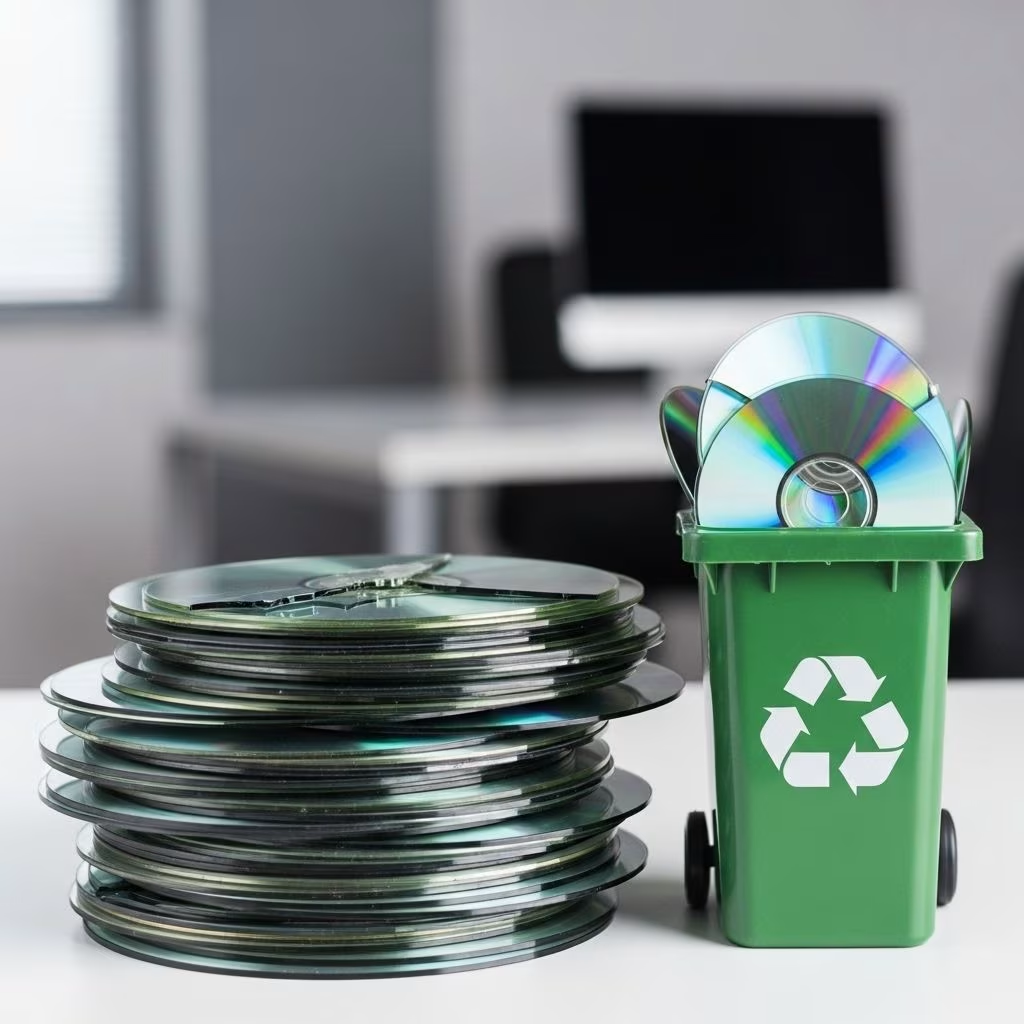
If you’ve recently cleaned out your home office or entertainment center, chances are you’ve stumbled upon a stack of old CDs and DVDs gathering dust. These shiny discs once held our favorite music, movies, and precious data, but now they’re relics of a bygone era. The question that naturally arises is: what should you do with them? Can they be tossed into your regular recycling bin, or do they require special handling?
The answer is more nuanced than you might expect. While CDs and DVDs are technically recyclable, they absolutely cannot go into your curbside recycling bin. Understanding why these discs require specialized recycling and knowing your disposal options can help you make environmentally responsible decisions about those obsolete optical media collections.
Understanding CD Composition and Why It Matters
Before diving into recycling solutions, it’s essential to understand what makes CDs so problematic for standard recycling systems. These seemingly simple discs are actually complex, multi-layered products engineered for data storage and durability.
The foundation of every CD is polycarbonate plastic, a petroleum-based material prized for its strength, clarity, and resistance to impact. This thermoplastic polymer makes up the bulk of the disc’s structure. On top of this base layer sits a microscopically thin reflective aluminum coating that allows lasers to read the data encoded on the disc. Some specialty discs even use gold instead of aluminum for enhanced longevity.
To protect these delicate layers, manufacturers apply a lacquer coating that seals everything together and prevents oxidation. Most commercially produced discs also feature printed labels made from ink, dyes, or even thin paper adhered to the surface. Finally, CDs typically come packaged in plastic jewel cases or cardboard sleeves, adding another layer of material complexity to the disposal equation.
This intricate construction is precisely why CDs cannot be processed through conventional recycling streams. The combination of different materials bonded together requires specialized separation techniques that standard municipal recycling facilities simply don’t possess. When CDs accidentally enter regular recycling bins, they contaminate entire batches of recyclable plastic, potentially rendering tons of material unrecyclable.
The Environmental Impact of Improper CD Disposal
The stakes for proper CD disposal extend far beyond mere inconvenience. When optical media ends up in landfills, the environmental consequences can persist for centuries. Polycarbonate plastic doesn’t biodegrade in any meaningful timeframe—estimates suggest these discs could remain intact for up to 1,000 years under typical landfill conditions.
During this extended decomposition period, CDs contribute to the growing electronic waste crisis. E-waste represents one of the fastest-growing waste streams globally, and while a single CD might seem insignificant, the cumulative impact of millions of discarded discs is substantial. The manufacturing process for CDs is also resource-intensive, requiring petroleum for the polycarbonate, energy for molding and coating, and metals for the reflective layer.
When you consider that billions of CDs have been produced since their introduction in the early 1980s, and that streaming services have rendered most of them obsolete, the scale of the problem becomes clear. Every improperly disposed disc represents wasted resources and unnecessary environmental burden.
Why Curbside Recycling Programs Reject CDs
Municipal recycling programs are designed to handle common household materials like paper, cardboard, glass, and specific types of plastic. These materials can be sorted relatively easily using automated equipment and then processed in bulk. CDs don’t fit this model for several critical reasons.
First, the multi-material composition of CDs makes them incompatible with single-stream recycling systems. Recycling facilities use optical sorters, magnets, and density separators to categorize materials, but CDs confuse these systems. They’re not purely plastic, not purely metal, and their lacquer coating adds another complication.
Second, CDs are made from polycarbonate plastic, which falls under recycling code #7—a catchall category for plastics that don’t fit into the standard #1 through #6 classifications. Most curbside programs only accept #1 (PET) and #2 (HDPE) plastics because these have established recycling markets and processing infrastructure.
Third, the physical format of CDs poses mechanical problems. Their circular shape and rigidity can jam sorting equipment designed for bottles, containers, and flat materials. When CDs slip through sorting systems, they contaminate bales of recyclable plastic, reducing the quality and value of recovered materials.
Specialized E-Waste Recycling: The Proper Solution
The correct way to recycle CDs and DVDs involves taking them to certified e-waste recycling centers that have the equipment and expertise to handle optical media properly. These specialized facilities employ mechanical and chemical processes specifically designed to separate the various layers and recover valuable materials.
At professional e-waste recyclers, CDs undergo a multi-step process. First, any paper labels or inserts are removed mechanically or through controlled treatments. Research has demonstrated that ultrasonic cleaning in aqueous ammonia solutions can effectively remove both labels and protective coatings from CDs at relatively low temperatures. This green approach uses minimal water and chemicals while achieving complete cleaning in short timeframes.
Once cleaned, the discs are shredded into small pieces—typically just a few centimeters in size. This shredding breaks down the bonded layers and creates a mixture of materials that can be further processed. Mechanical separation techniques then sort the shredded material by density, magnetism, and other physical properties, isolating the polycarbonate plastic from metal fragments and other components.
The recovered polycarbonate plastic can be melted and extruded to create pellets suitable for manufacturing new products. Studies show that properly dried and processed CD polycarbonate maintains properties similar to virgin material, making it valuable for automotive parts, office equipment, and construction materials. The thin aluminum layer is extracted and sent to metal refineries where it’s melted down for industrial applications.
Step-by-Step Guide to Recycling Your CDs
If you’re ready to responsibly dispose of your old CD collection, follow this practical process to ensure they’re handled correctly:
Preparation Phase: Begin by gathering all your unwanted CDs, DVDs, and related media in one place. Remove the discs from their jewel cases and sleeves—these components are often recycled separately. Paper inserts can typically go into your regular paper recycling bin, while plastic cases may be accepted by e-waste recyclers or potentially by curbside programs that accept hard plastics.
Cleaning and Sorting: Wipe each disc with a soft, dry cloth to remove dust and residue. Sort your discs by type if possible—separating music CDs from data discs, DVDs, and recordable media. This sorting helps recycling facilities process materials more efficiently.
Finding a Recycling Center: Search online for certified e-waste recycling centers in your area that specifically accept optical media. Many electronics retailers, office supply stores, and municipal hazardous waste facilities offer e-waste drop-off services. Verify that the facility is certified and follows proper environmental standards.
Mail-In Programs: If local recycling options are limited, several companies offer mail-in recycling programs. These services provide prepaid shipping labels, allowing you to send your CDs for proper recycling regardless of your location. While this option involves shipping costs and environmental impact from transportation, it’s preferable to landfill disposal.
Data Security Consideration: For CDs containing sensitive personal or business information, look for recycling services that offer secure destruction. Certified recyclers will shred or pulverize discs before processing, ensuring complete data destruction.
What Happens After You Recycle CDs
Understanding the fate of your recycled CDs can provide reassurance that you’re making a positive environmental choice. When processed by certified recyclers, virtually nothing from a CD goes to waste.
The polycarbonate plastic that makes up the disc body is the most valuable recovered material. After separation and cleaning, this plastic is melted and reformed into pellets. These recycled pellets find new life in numerous applications: automotive components like interior trim panels, office equipment casings, protective gear, and even building materials such as roofing panels. The quality of recycled CD polycarbonate is remarkably high—when properly processed without moisture contamination, it performs nearly identically to virgin polycarbonate.
The reflective metal layer, whether aluminum or gold, is extracted during the shredding and separation process. These metals are sent to smelters where they’re purified and reintroduced into industrial supply chains. Recovering these metals through recycling is far more energy-efficient than mining and refining new material from ore.
The lacquer and dye layers present more of a challenge. While not recyclable in the traditional sense, responsible facilities manage these materials according to strict environmental regulations, ensuring they don’t contaminate water supplies or ecosystems. Some advanced recycling processes can even recover certain dyes for industrial use.
Importantly, certified recyclers handle all these processes domestically under regulatory oversight, rather than shipping materials overseas where environmental standards may be lax. This ensures your recycled CDs genuinely contribute to a circular economy rather than becoming someone else’s pollution problem.
Creative Reuse Ideas for Old CDs
Before heading to a recycling center, consider whether your CDs might have a second life through creative reuse. While recycling is environmentally preferable to disposal, reusing items is even better from a sustainability perspective because it requires no additional processing.
CDs make excellent reflective garden deterrents. String them together and hang them in fruit trees or vegetable gardens—their spinning, light-catching movement frightens birds and other pests away from your crops. The reflective surface also works well as makeshift scarecrows or wind chimes for outdoor spaces.
Artists and crafters have discovered countless uses for old discs. The shiny surface serves as an ideal base for mosaic art projects—broken CD pieces create stunning light-reflecting mosaics on plant pots, picture frames, or garden stepping stones. Intact discs can be painted or decoupaged to create decorative coasters or ornaments.
For practical household applications, CDs function as scratch-free coasters for glasses and mugs, protecting furniture surfaces. They can also be used as templates for drawing perfect circles in various craft and home improvement projects. Some people have even used old CDs as reflective driveway markers or pathway guides that catch headlight beams at night.
Educational institutions often welcome donations of old CDs for classroom art projects and STEM demonstrations. Science teachers can use them to explain data storage technology, light reflection, and material science concepts. Before donating, ensure any sensitive data has been destroyed if the discs contain personal information.
The Future of CD Recycling Technology
As the volume of obsolete CDs continues to grow, researchers are developing more efficient and environmentally friendly recycling methods. Recent scientific advances point toward increasingly sustainable solutions for optical media disposal.
Green chemistry approaches are at the forefront of innovation. Research published in scientific journals has demonstrated that thermo-mechanical treatment with minimal ammonia in ultrasonic baths can completely clean CDs at temperatures as low as 50°C (122°F). This process uses only 0.25-0.75% ammonia by weight in water solutions, with the cleaning solution being recyclable and reusable after simple filtration and pH adjustment.
What makes this approach particularly promising is its efficiency. Higher temperatures reduce the importance of solution pH, meaning pure water at elevated temperatures can achieve similar cleaning results with even less chemical input. The entire process requires minimal energy, small amounts of water, and produces no hazardous waste streams.
After cleaning, advanced extrusion techniques allow the recovered polycarbonate to be reprocessed multiple times without significant property degradation—provided the material is properly dried before processing. Research shows that hydrolytic degradation from moisture causes more damage than the mechanical stress of reprocessing, emphasizing the importance of thorough drying in the recycling workflow.
These technological improvements are making CD recycling more economically viable, which should increase the number of facilities offering optical media recycling services. As processing becomes more efficient and cost-effective, the infrastructure for CD recycling will likely expand, making proper disposal accessible to more people.
Frequently Asked Questions
Q: Can I put CDs in my curbside recycling bin?
A: No, CDs should never go in curbside recycling bins. Their multi-layered composition of polycarbonate plastic, aluminum, and lacquer cannot be processed by standard municipal recycling facilities and will contaminate other recyclables.
Q: Where can I take CDs for proper recycling?
A: Look for certified e-waste recycling centers in your area that accept optical media. Many electronics retailers, office supply stores, and municipal hazardous waste facilities offer CD recycling services. Mail-in programs are also available if local options are limited.
Q: What materials are recovered from recycled CDs?
A: The primary recovered materials are polycarbonate plastic, which can be used for automotive parts and office equipment, and aluminum or gold from the reflective layer, which is refined for industrial applications.
Q: Are CD jewel cases recyclable?
A: CD jewel cases are typically made from polystyrene plastic (#6) and may be accepted by some curbside programs that take hard plastics. However, they’re often better suited for e-waste recycling along with the discs themselves. Check with your local facility for specific guidance.
Q: How should I handle CDs with sensitive personal data?
A: Seek out certified recyclers that offer secure destruction services. These facilities will shred or pulverize discs before processing, ensuring complete data destruction. Never simply discard data-containing CDs in regular trash.
Q: How long do CDs last in landfills?
A: Polycarbonate plastic CDs can persist in landfills for centuries—potentially up to 1,000 years—without meaningful biodegradation, making proper recycling crucial for environmental protection.
Q: Can scratched or damaged CDs still be recycled?
A: Yes, the condition of the disc doesn’t affect its recyclability. Even broken, scratched, or non-functional CDs can be processed by e-waste recyclers since they’re melted down and reprocessed regardless of surface condition.
Q: Is there any difference between recycling CDs and DVDs?
A: From a recycling perspective, CDs and DVDs are essentially identical. Both use the same polycarbonate plastic base with similar coating layers, so they’re processed using the same methods at e-waste facilities.
Making the Sustainable Choice
The transition from physical media to digital streaming represents a significant cultural shift, but it also presents an environmental challenge. Millions of CDs and DVDs have become obsolete, and how we handle their disposal will have lasting consequences for our planet.
While the recycling process for CDs requires more effort than tossing them in a curbside bin, taking that extra step makes a meaningful difference. Every disc properly recycled represents recovered resources, reduced landfill burden, and a small but important contribution to a more circular economy.
As recycling technology continues to advance and infrastructure expands, proper CD disposal should become increasingly accessible. In the meantime, seeking out e-waste recycling centers, exploring mail-in programs, and considering creative reuse options are all valid approaches to handling your obsolete optical media responsibly.
The key takeaway is simple: CDs are recyclable, but they require specialized handling. By understanding the composition of these discs, recognizing why they can’t enter standard recycling streams, and taking the time to find appropriate disposal channels, you can ensure your old CD collection doesn’t contribute to the growing e-waste problem. Whether through certified recycling or creative repurposing, there are environmentally sound alternatives to letting these shiny relics of the digital revolution languish in landfills for the next millennium.
References
- https://pmc.ncbi.nlm.nih.gov/articles/PMC9921742/
- https://greencitizen.com/blog/cd-recycling/
- https://www.rts.com/blog/the-complete-e-waste-recycling-process/
- https://www.4thbin.com/blogs/can-cds-be-recycled
- https://www.evergreenenvironmental.com/cd-and-vinyl-recycling-how-to-dispose-of-records
- https://www.novaksanitary.com/news/article/reduce-e-waste-by-following-this-cddvd-recycling-guide/
- https://www.epa.gov/smm/best-practices-reducing-reusing-and-recycling-construction-and-demolition-materials
- https://www.gonimble.com/pages/compact-disc-details