


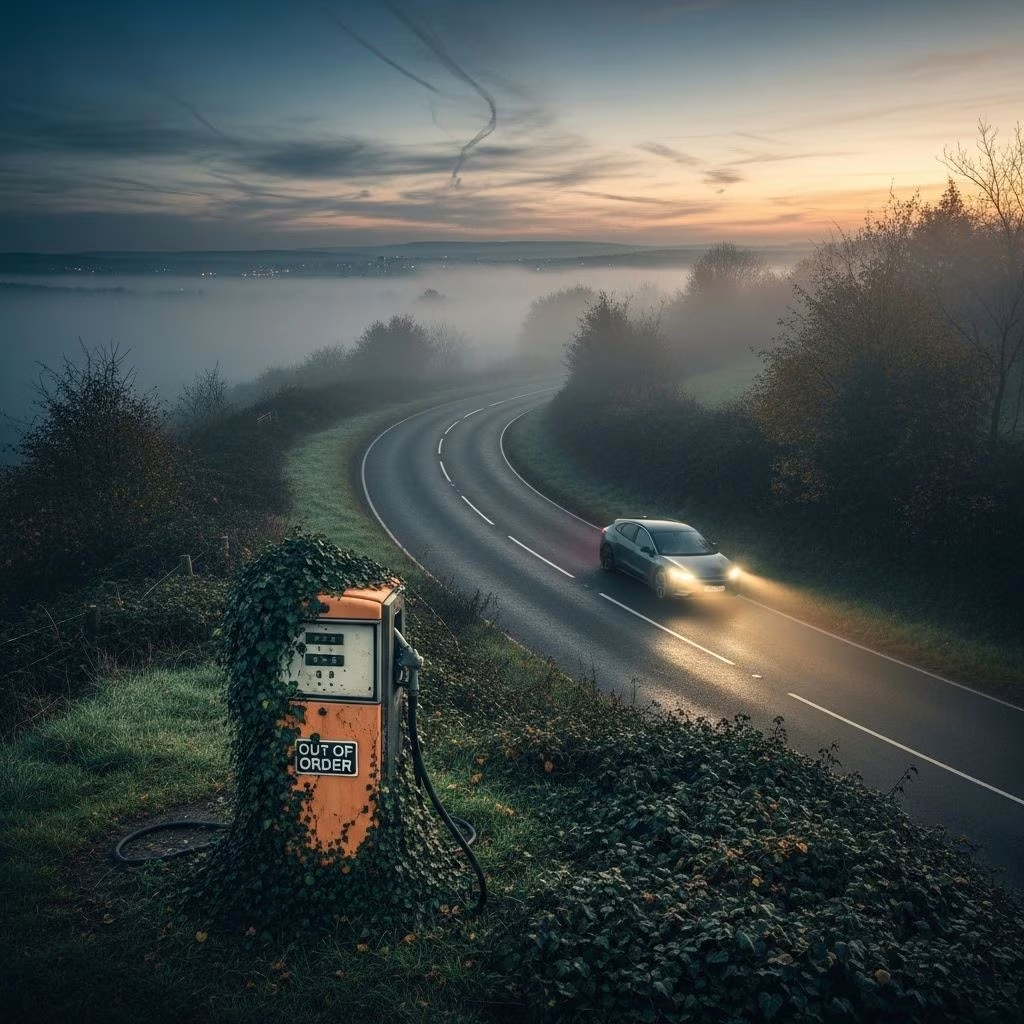
Fuel Shortages and the UK’s Path to Vehicle Electrification
Recent years have exposed the UK’s vulnerability to disruptions in fuel supply, driving widespread concern about energy security, economic stability, and the future of mobility. As fuel shortages and price surges roil the country, the electrification of vehicles emerges not just as an environmental endeavor, but as a vital strategy for national resilience and economic transition.
Understanding the UK Fuel Shortage Crisis
Fuel shortages in the UK have occurred more frequently in the last decade, creating significant challenges for businesses, consumers, and essential services. These shortages are not merely logistical headaches—they’re symptomatic of deeper vulnerabilities within the UK’s energy and transportation systems.
- Causes of Fuel Shortages:
- Industrial Action: Strikes and protests can quickly disrupt the country’s fuel supply chain, as seen in blockades and driver walkouts in past years.
- Panic Buying: Public anxiety prompts bulk purchases, emptying filling stations even when supply disruptions are minor.
- Supply Chain Delays: A shortage of Heavy Goods Vehicle (HGV) drivers has led to tankers being unable to restock fuel stations efficiently.
- Technical and Infrastructural Issues: Aging infrastructure and technical glitches exacerbate temporary shortages.
- Volatility in Global Markets: Reliance on imported fuel drivers up susceptibility to international disruptions and price swings.
- Impacts of Fuel Shortages:
- Financial Losses: Disrupted deliveries, closed stations, and logistical delays hit businesses hard.
- Service Interruptions: Essential public and emergency services face operational risks when fuel is unavailable.
- Panic, Long Queues, and Social Tension: Images of motorists queuing for hours and fighting over pump space reflect the depth of public anxiety.
- Delayed Economic Recovery: The combined impacts threaten the UK’s post-pandemic rebuilding efforts.
UK Energy Crisis: Timeline and Core Drivers
The UK’s energy crisis, closely interlinked with fuel system vulnerabilities, has been fueled by global and domestic factors. A timeline of the crisis reveals its multifaceted causes:
- Gas Price Surges: Starting in 2021, wholesale gas prices soared due to global supply-demand imbalances, post-pandemic economic rebounds, and intensified geopolitical tensions, especially after the invasion of Ukraine.
- Ofgem Price Cap Increases: Regulators raised the price cap several times between 2021 and 2022, pushing millions more into so-called ‘fuel poverty’.
- LNG Imports and Global Dependency: As Europe and the UK increased imports of Liquefied Natural Gas from the US and Qatar, national security became tied to global shipping routes and international events.
- Inefficiency and Infrastructure Lag: The UK’s heavy reliance on gas for home heating (85%) and electricity (40%) amplifies the impact of any price rises or supply disruptions. Policy delays in insulation and efficiency mean slow progress on reducing demand.
Fuel Poverty: Social and Economic Dimensions
Fuel shortages and surging energy prices have translated directly into a stark rise in fuel poverty. Defined as when a household’s fuel costs push it below the poverty line, fuel poverty affects:
- Over 5.5 million UK households as of 2025, impacting 13–15 million people.
- Worst-hit regions: Deprived communities experience the highest levels, with urban and rural areas both suffering.
- Health Impacts: Exposure to cold, damp homes causes discomfort, worsens chronic conditions, and is sometimes deadly.
Fuel poverty is driven by three interlocking factors:
- Low Incomes
- High and Volatile Energy Prices
- Poorly Insulated Housing
The HGV Driver Shortage and Supply Chain Vulnerability
One of the most acute disruptions in recent years resulted from an unprecedented shortage of HGV drivers, which delayed deliveries and stoked public panic. This shortage stemmed from a combination of:
- Brexit regulatory changes, leading to a loss of EU drivers
- Aging workforce and unattractive working conditions in logistics
- Pandemic-era backlogs in training and certification
The driver shortfall not only made fuel shortages visible, with empty pumps and long queues, but also rippled across other sectors, affecting supermarkets, pharmacies, and online retailers. Short-term solutions like wage increases have not tackled the underlying labor market challenges, suggesting the need for longer-term innovation and system adaptation.
Impacts of Fuel Scarcity: Daily Disruption and Economic Cost
- Business Disruption: Logistics delays cost businesses both money and customer trust.
- Consumer Confidence: Public anxiety about unstable fuel supplies undermines both spending and investment.
- Essential Services at Risk: Hospitals, care homes, and emergency services struggle to guarantee mobility when fuel is unavailable.
- Slow Restoration: After severe shortages, the return to normal supply can take weeks, compounding losses.
Responses to the Crisis: What Has Been Tried?
Faced with immediate shortages and long-term risk, authorities have encouraged or implemented various measures, including:
- Car sharing and alternative transport: Biking, walking, public transport, and shared vehicle schemes help reduce dependency.
- Fuel efficiency improvements: Upkeep and smarter driving lower demand during crises.
- Fuel storage limits: The law allows private storage of up to 30 liters of petrol in a suitable container in garages or sheds—never inside homes or near ignition sources, to minimize hazards.
- Short-term government support: Rebates and bill support have been extended during price surges, but these are limited in scope.
A New Opportunity: Electrification of Vehicles
The repeated fuel and energy shocks have advanced the argument for accelerating the electrification of road transport. Transitioning from internal combustion engines (ICEs) to electric vehicles (EVs) offers multiple benefits:
- Reduced Oil Reliance: EVs break the link with volatile petroleum supplies and shipping risks.
- Lower Operating Costs: Electric vehicles are cheaper to run and maintain over their lifetime than petrol and diesel models.
- Cleaner Urban Air: Electric drivetrains produce zero tailpipe emissions, helping to reduce urban air pollution.
- Energy Security: Homegrown electricity generation, especially from renewables, insulates the economy from global fuel market disruptions.
Progress and Challenges in UK Vehicle Electrification
The UK government has set ambitious targets for EV adoption, banning the sale of new petrol and diesel cars and vans by 2035 (originally planned for 2030, but extended in 2023). Key milestones and challenges include:
- Growth in EV Sales: The EV market continues to expand, with new models offering longer ranges and competitive prices.
- Charging Infrastructure Gaps: Ensuring convenient, affordable charging—especially in rural or densely populated urban areas—remains a top hurdle. Fast-charging networks are growing but must accelerate further.
- Domestic Battery Production: Investment in UK-based gigafactories is critical to securing supply chains and keeping costs down.
- Skill Transition: Garages, mechanics, and logistics teams require retraining as vehicles and supply chains go electric.
Policy and Market Signals
Policymakers face the dual challenge of restoring immediate trust in the transport energy system and driving systemic change. Actions include:
- Direct investment in clean transport infrastructure – government grants for EV chargers, on-street charging solutions, and smart grid upgrades.
- Tax incentives for EV purchase and zero-emission vehicle fleets.
- Incentives for home insulation and heat pumps to reduce overall energy demand and decouple transport from fossil fuels.
- Support for re-skilling the workforce toward maintenance and operation of electric fleets.
Public Attitudes and the Path Forward
The fuel crisis has fundamentally shifted public attitudes toward transport and energy, building support for alternative transport options and clean technology. However, fears of repeat shortages, range anxiety in EVs, and upfront costs remain barriers. Effective communication, incentives, and infrastructure expansion are needed to ensure a just and inclusive transition—one that neither leaves vulnerable communities behind nor undermines broad public buy-in.
- Wide adoption depends on addressing socioeconomic barriers, particularly in fuel-poor regions.
- Ensuring transport remains accessible and affordable is central to maintaining public support.
Outlook: Resilience Through Electrification
The UK’s experience underscores a lesson now clear to policymakers and citizens alike: decoupling mobility and energy security from volatile global fuel markets is not only an environmental imperative, but also a strategic national interest. Vehicle electrification, combined with renewable energy deployment and a smarter logistics network, form the pillars of a future-proof transport system.
| Issue | Traditional Transport | Electrified Transport |
|---|---|---|
| Fuel Dependence | High (oil, diesel) | Lower (electricity, renewables) |
| Energy Price Risk | Susceptible to global market shocks | Diversified, partially insulated by local sources |
| Pollution | High (CO2, NOx, particulates) | None at tailpipe, depends on grid mix |
| Operational Cost | High (fuel, maintenance) | Lower (charging, fewer moving parts) |
| Infrastructure Needs | Filling stations, fuel depots | EV charging, smart grids |
Frequently Asked Questions (FAQs)
Q: What triggered the recent fuel shortages in the UK?
A: Shortages were caused by a mix of supply chain bottlenecks (notably a shortage of HGV drivers), panic buying, industrial actions, and global market volatility.
Q: How has the energy crisis impacted daily life in the UK?
A: Millions of households face fuel poverty and higher living costs, while businesses, emergency services, and supply chains experience disruptions.
Q: Why is vehicle electrification considered a solution?
A: Electrification reduces the UK’s reliance on imported oil, insulates consumers from volatile fuel prices, lowers transport emissions, and aligns with energy security and climate goals.
Q: What are the main barriers to EV adoption?
A: Key barriers are charging infrastructure gaps, upfront costs, range anxiety, and the need to retrain the automotive workforce.
Q: How can individuals help reduce reliance on fuel?
A: Share rides, use public transport, walk or cycle, maintain fuel-efficient driving habits, and consider transitioning to an electric vehicle when feasible.
References
- https://www.dudley.gov.uk/council-community/emergencies/specific-risks/fuel-shortages/
- https://www.cbakerdt.co.uk/blog-post/industrynews/hgv-driver-shortage-in-2025.html
- https://www.nea.org.uk/energy-crisis/energy-crisis-timeline/
- https://energycrisiscommission.uk/the-report-2/
- https://heatable.co.uk/boiler-advice/fuel-poverty-in-uk
- https://www.tariff.com/news-and-insights/the-uk-energy-crisis-2025-update/
- https://www.fastmarkets.com/insights/uk-fuel-prices-to-start-2025-lower-year-on-year-but-volatility-to-remain-2025-preview/


