


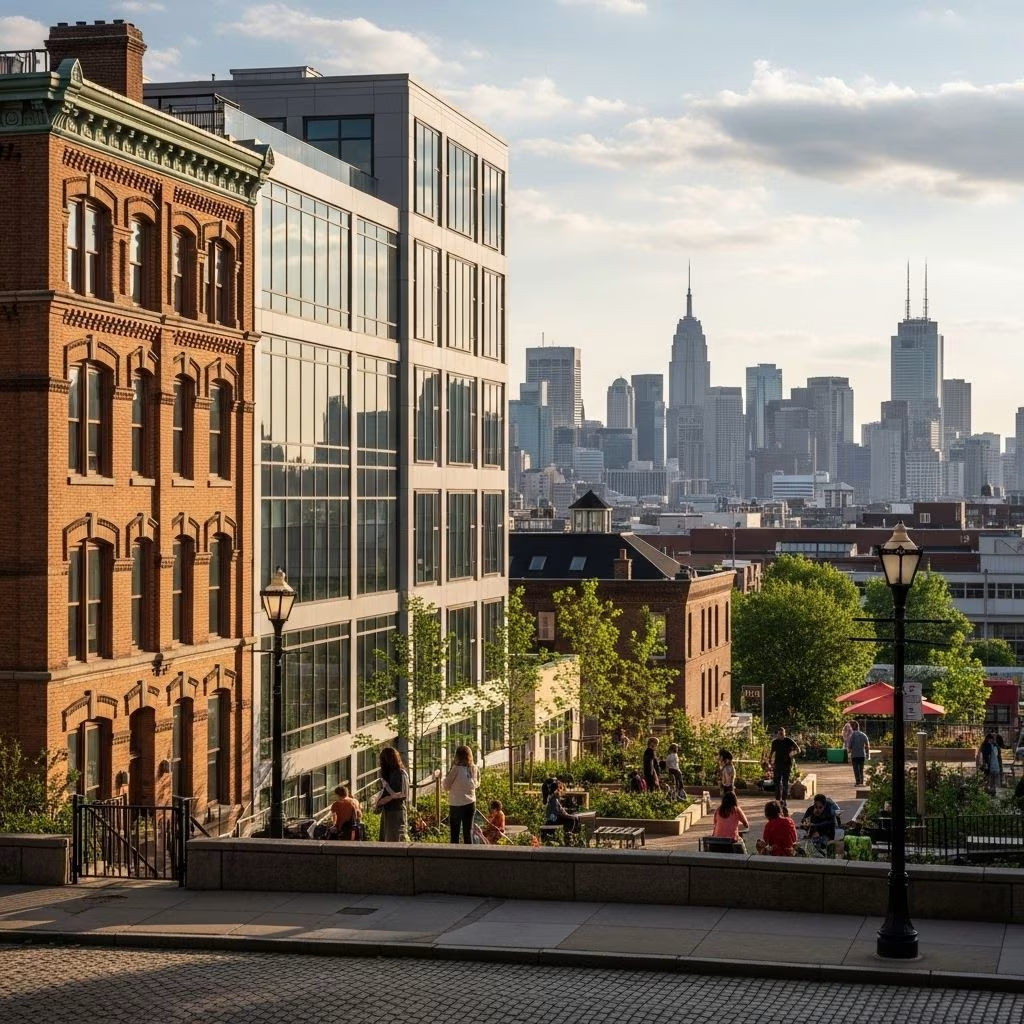
Sustaining a City’s Culture and Character: Why Urban Uniqueness Matters
As cities around the globe confront increased development, population growth, and the pressures of globalization, there is a growing realization of the importance of preserving urban culture and distinctiveness. Rather than succumbing to “generic uniformity,” the new wave of urbanism prioritizes approaches that enhance local livability and nurture the unique signature of each city.
Understanding the DNA of Urban Identity
Every city possesses an innate identity, evolving over time through its people, architecture, open spaces, cultural practices, and cherished traditions. As outlined in Sustaining a City’s Culture and Character by Chuck Wolfe and Tigran Haas, understanding what makes a city distinctive requires a careful, inclusive process that goes beyond the superficial. The book emphasizes:
- Historical context: Recognizing layered histories, from indigenous roots to contemporary developments.
- Physical form: Analyzing building types, street networks, public spaces, and natural features.
- Cultural assets: Incorporating festivals, art, and community rituals into city narratives.
- Community memory: Honoring personal and collective stories, photography, and oral histories.
Why Does Culture & Character Matter?
Retaining a strong sense of local character not only enhances pride and belonging for residents, but also supports economic resilience and a more inclusive experience for visitors. Distinctiveness attracts talent, enhances urban branding, and creates emotional ties that outlast trends or market cycles.
Bottom-Up Urbanism: Harnessing Resident Voices
Instead of dictating change from above, bottom-up, resident-driven input leads the way for authentic and adaptive cities. The catalog of techniques described in the book includes:
- Participatory workshops and charrettes
- Neighborhood storytelling and community mapping
- Photo documentation by locals to capture daily lived experience
- Surveys, interviews, and digital engagement platforms
Such approaches allow local perspectives to guide planning, policy, and preservation efforts—ensuring development does not erase, but rather celebrates, what already exists.
Catalog of Techniques: Practical Tools for Preservation
Through vivid photography, real-world examples, and case studies, Wolfe and Haas offer an actionable toolkit for city-makers:
- Observation techniques: Systematic walks, “urban safaris,” and photographic surveys that record the overlooked details of everyday life.
- Urban forensics: Research into “why things are the way they are,” tracing patterns, social customs, and environmental influences across time.
- Design charrettes: Bringing divergent stakeholders together to co-create visions for the future—anchored by a shared respect for inherited assets.
The book’s methodology relies on blending objective analysis with subjective experience, bridging academic rigor and grassroots intuition.
Case Study Highlights
Examples highlighted in the book include:
- Preservation of indigenous districts and minority-owned businesses
- Theming public spaces to reflect local storytelling traditions
- Retaining neighborhood housing forms and historic sites, even amid redevelopment
Challenges to Urban Distinctiveness in a Global Age
Despite best intentions, cities still face formidable barriers to maintaining their character:
- Global market forces driving generic, “cookie-cutter” development
- Loss of affordable spaces for artists, craftspeople, and local businesses
- Homogenizing infrastructure (e.g., international chain stores overtaking unique shops)
- Short-term decision-making prioritizing immediate gains over long-term vibrancy
The authors argue that real sustainability requires vigilant stewardship—with both policy and grassroots action—so that urban change strengthens, not weakens, a city’s sense of place.
Visual Storytelling: The Power of Photography in Urban Analysis
Rich visual documentation is a hallmark of the book’s approach. Photographs do more than record physical form—they evoke atmosphere, mood, patterns of use, and the subtle cues of culture:
- Images as evidence to help residents and planners “see” the story behind facades
- Photo essays capturing change, memory, and persistence over decades
- Value of collecting images from diverse residents, revealing multiple perspectives on a single place
These methods enable communities to move beyond abstract planning to a more human-centered urbanism.
Policy, Planning, and Regulatory Examples
A central message of Sustaining a City’s Culture and Character is that protected character must be underwritten by robust frameworks. The book offers a range of policy and planning examples, including:
- Zoning codes that incentivize small-scale development over monolithic projects
- Design guidelines that mandate compatibility with historic neighborhoods
- Formal mechanisms for recognizing cultural landmarks, public art, and vernacular architecture
- Policies ensuring minority and community input is weighted in planning decisions
These tools function best when they are context-specific and adaptable—never a one-size-fits-all formula.
Balancing Modernization and Heritage
| Goal | Key Approaches |
|---|---|
| Encourage innovation | Adopt flexible zoning, support creative sectors |
| Protect cultural assets | Historic designation, adaptive reuse, funding cultural institutions |
| Support community ownership | Land trusts, cooperatives, affordable workspace programs |
Global Perspectives and Launch Activities
The release of Sustaining a City’s Culture and Character was marked by international engagement:
- Book events and festivals across the US, UK, Europe, and Australia
- Online launches via Zoom, Crowdcast, and YouTube livestreams with urban leaders
- Panel discussions and keynote lectures on place identity and urban sustainability
Reviewers praised the book for blending observational skills, community research, and evocative imagery into a readable, insightful primer for urbanists.
Critical Acclaim and Academic Relevance
Urban scholars and professionals recognized the book as an essential resource, describing it as “sensitive to the global forces precipitating urban change,” with “substantive, illuminating” content. The depth and variety of case studies, along with practical prescriptions for city design, make it valuable for upper-level urban design programs and practitioners alike.
Principles for Sustaining Urban Culture and Character
The book distills several guiding principles for cities seeking to protect—and build upon—their unique identities:
- Contextual awareness: Every intervention should begin with deep observation and documentation of the existing setting.
- Celebration of difference: Embrace the city’s “warts and all” rather than aiming for sanitized perfection.
- Inclusive engagement: Ensure participation cuts across generations, ethnic backgrounds, and economic groups.
- Balance change and preservation: Encourage adaptive reuse and interpret the past creatively for the future.
The Road Ahead: Recommendations for Urban Stakeholders
Based on the principles and tools detailed in the book, the following recommendations emerge for different stakeholders:
- Planners & Policymakers: Prioritize indigenous knowledge, historic research, and community-led design in official plans.
- Community Leaders: Create archives of stories, support cultural initiatives, and lobby for protective ordinances.
- Developers: Collaborate with local creatives, favor renovation over demolition, and build for context, not just economics.
- Residents: Document changes in their neighborhoods, participate in charrettes, and advocate for places with personal meaning.
Frequently Asked Questions (FAQs)
Q: What is meant by a city’s “character”?
A: A city’s character encompasses its unique atmosphere, culture, built environment, and social practices that distinguish it from other places.
Q: How can communities prevent gentrification from erasing urban culture?
A: By supporting affordable housing, protecting local businesses, and involving communities directly in planning decisions to ensure cultural continuity.
Q: What tools help identify a city’s core identity?
A: Deep observation, urban forensics, participatory mapping, oral histories, and photographic records are all critical tools highlighted for authentic place analysis.
Q: Is it possible to modernize without losing authenticity?
A: Yes, if modernization projects incorporate context-sensitive design, adaptive reuse, and ongoing community engagement as central tenets.
Q: Who benefits most from sustaining culture and character?
A: Both residents and newcomers. Residents retain connection to home, while visitors appreciate a richer, more distinctive experience.
References
- https://www.wshu.org/podcast/baum-on-books/2023-03-03/book-review-the-candy-house
- https://www.myurbanist.com/archives/14561
- https://sustainingplace.com/index.php/2022/02/14/recapping-the-launch-sustaining-a-citys-culture-and-character/
- https://www.clrsig.org/book-reviews
- https://seeingbettercities.com/sustaining-a-citys-culture-and-character-pre-order-available/
- https://www.goodreads.com/book/show/55107981-sustaining-a-city-s-culture-and-character
- https://www.myurbanist.com/archives/14503


