


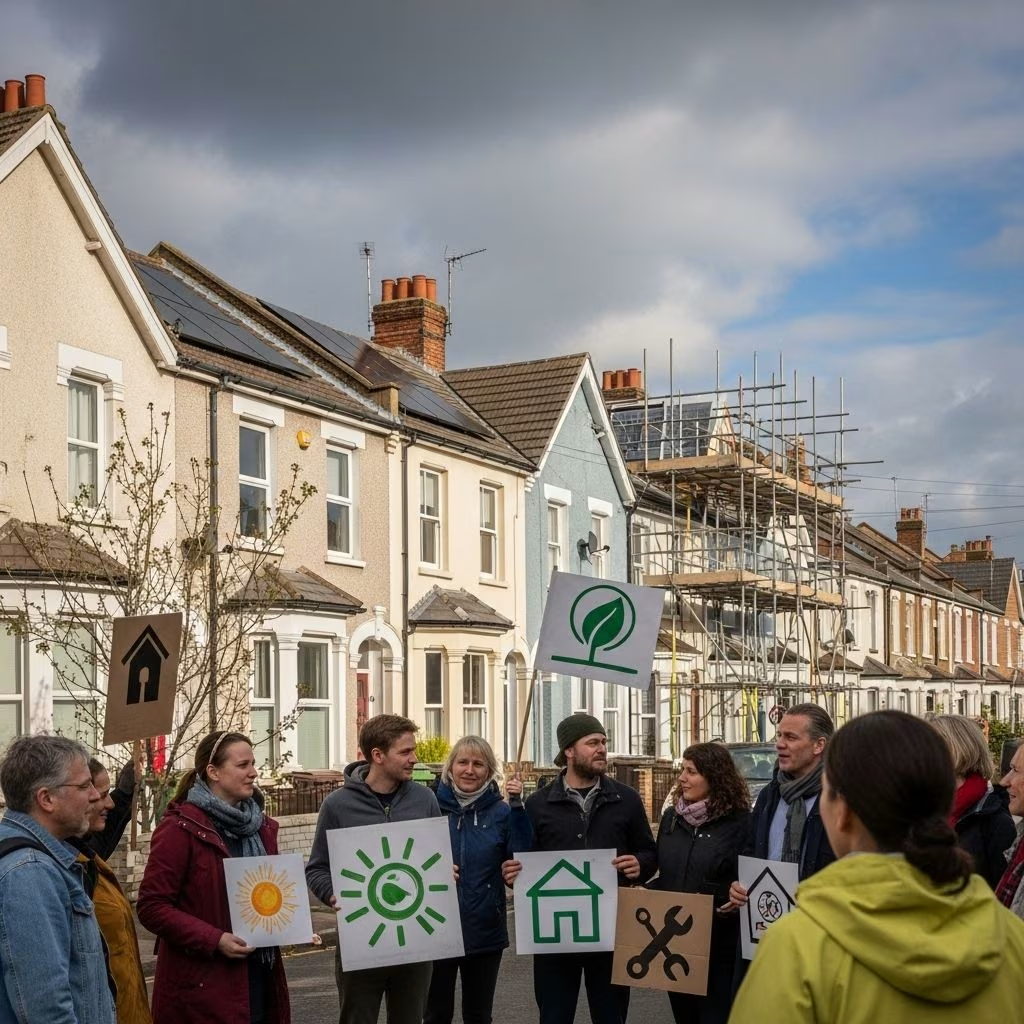
The climate crisis demands urgent action across all sectors of society, and one of the most significant yet often overlooked contributors to carbon emissions sits right under our noses: our homes. In the United Kingdom, residential properties account for nearly 20% of all carbon equivalent emissions, making them one of the largest single sources of greenhouse gases in the country. This sobering reality has sparked a grassroots movement that is gaining momentum across the nation, bringing together households from all walks of life to demand meaningful change.
The Birth of a Movement
During the summer of 2021, as the world prepared for the crucial COP26 climate summit in Glasgow, a small group of dedicated volunteers came together with a shared concern about the role of housing in the climate emergency. Their initial effort was straightforward: they penned an open letter to Alok Sharma, the UK government’s COP26 President, demanding greater responsibility and action for lowering nationwide household emissions. However, these passionate individuals quickly realized that a single letter would not be sufficient to catalyze the transformative change needed to address the scale of the problem.
What began as a simple correspondence evolved into something far more ambitious and impactful. The volunteers created a comprehensive campaign, complete with a dedicated website, social media presence, and a bold invitation to every household across the United Kingdom to join them in declaring a climate emergency. This initiative, known as Households Declare, represents a powerful convergence of individual concern and collective action, demonstrating that ordinary citizens are ready to take responsibility for their carbon footprint while simultaneously demanding the support and infrastructure needed to make meaningful changes possible.
Understanding the Housing Emissions Challenge
The magnitude of emissions generated by residential buildings in the UK is staggering and cannot be ignored in any serious climate strategy. Homes contribute approximately one-fifth of the nation’s total carbon emissions, a figure that places residential properties among the most significant sources of greenhouse gases nationwide. This substantial carbon footprint stems from various sources including heating systems, hot water production, cooking appliances, and electricity consumption for lighting and electronic devices.
The UK Committee on Climate Change has been unequivocal in its assessment, stating emphatically that the country will not meet its climate targets without achieving near complete decarbonization of the housing stock. This stark warning underscores the critical importance of addressing residential emissions as a central component of the nation’s climate strategy. Yet despite this recognized urgency, progress has been frustratingly slow, hampered by inadequate government support, confusing retrofit options, and a lack of accessible information for homeowners and tenants alike.
The challenge is compounded by the diversity of the UK’s housing stock, which includes everything from Victorian terraced houses to modern apartment complexes, from rural cottages to urban high-rises. Each property type presents unique retrofit challenges and opportunities, requiring tailored solutions rather than one-size-fits-all approaches. Many of these buildings were constructed long before energy efficiency was a consideration, resulting in poorly insulated structures that leak heat rapidly and require excessive energy to maintain comfortable temperatures.
The Urgency of Now
The timing of the Households Declare campaign was strategically aligned with the UK’s hosting of COP26 in November 2021, a moment when the nation’s climate commitments were under intense international scrutiny. This global gathering of world leaders provided a powerful backdrop for the campaign’s message: if the UK government expected to lead on climate action internationally, it must first address the substantial emissions problem within its own borders, starting with the places where people live.
Recent reports from the Intergovernmental Panel on Climate Change (IPCC) have made for sobering reading, demonstrating the immensity of the challenges humanity faces unless urgent collective action is taken. These scientific assessments paint a clear picture of the consequences of inaction, including more frequent extreme weather events, rising sea levels, ecosystem collapse, and threats to food security. The window for preventing the most catastrophic impacts of climate change is rapidly closing, making immediate action on all fronts essential.
For many households, the desire to make improvements exists, but the pathway forward remains unclear. Homeowners and tenants alike want to reduce their environmental impact and lower their energy bills, yet they frequently encounter barriers including high upfront costs, confusing technical information, unreliable contractors, and insufficient government support programs. These are precisely the problems that Households Declare aims to address by creating a platform for collective voice and shared knowledge.
Campaign Goals and Strategy
The Households Declare campaign operates on multiple levels, combining grassroots mobilization with policy advocacy to create pressure for systemic change. At its core, the initiative is asking households to sign a letter demanding that the government takes meaningful action to achieve its net-zero targets and sets out a comprehensive strategy for decarbonizing the residential sector. This collective declaration serves several important purposes simultaneously.
First, it demonstrates to policymakers that there is substantial public demand for climate action on housing, countering any notion that voters are uninterested or unwilling to support ambitious retrofit programs. By gathering thousands of signatures, the campaign creates political pressure that makes it harder for government officials to ignore or delay necessary measures. Second, the act of signing the declaration helps individuals feel connected to a larger movement, transforming isolated concern into collective power and reducing the sense of helplessness that often accompanies contemplating the scale of the climate crisis.
Third, the campaign provides a platform for education and resource-sharing, helping households navigate the complex landscape of retrofit options, funding mechanisms, and technical considerations. Through its website and social media channels, Households Declare offers information about insulation techniques, heating system upgrades, renewable energy installation, and other measures that can dramatically reduce home emissions. This knowledge-sharing function is particularly valuable given the fragmented nature of information currently available to homeowners considering retrofit improvements.
Who Can Declare?
One of the most inclusive aspects of the Households Declare campaign is its broad definition of participation. The initiative explicitly welcomes involvement from every type of residential situation, recognizing that the climate emergency affects everyone regardless of their housing status or property type. From freehold property owners to leaseholders, from private owners to tenants, from compact studios to sprawling tower blocks, the campaign emphasizes that meaningful change comes when we act with one voice.
This inclusive approach is strategically important because housing emissions are not limited to any single demographic or property type. Whether someone lives in a two-up-two-down terraced house, a flat, a maisonette, a semi-detached property, or a studio apartment, their home contributes to the national carbon footprint and can benefit from retrofit improvements. By welcoming all household types, the campaign builds a broader coalition that reflects the true diversity of UK residential life.
The campaign also recognizes that different housing situations present different challenges and opportunities. Tenants, for example, often face unique obstacles since they cannot make structural changes to properties they do not own, while leaseholders may need to coordinate with management companies or other residents before implementing improvements. By acknowledging these varied circumstances, Households Declare can advocate for policy solutions that address the specific needs of different groups within the residential sector.
Building Momentum Through Community
As of the campaign’s latest update, Households Declare had gathered 1,712 signatures from households across the UK willing to take individual and joint action on climate. While this number may seem modest compared to the millions of households in the country, it represents a committed core of climate-conscious residents who are actively engaged with the issue and prepared to advocate for change. These early adopters serve as ambassadors for the movement, spreading awareness through their social networks and local communities.
The campaign actively encourages participants to amplify its message by forwarding information, reposting content, and sharing updates on social media channels. The hashtag #householdsdeclare provides a rallying point for online conversation and helps the movement gain visibility beyond its immediate participant base. By leveraging social media platforms, the campaign can reach younger demographics who may be particularly concerned about climate change but unsure how to translate that concern into concrete action.
The campaign’s collaboration with established organizations lends additional credibility and reach to its efforts. Working alongside the Existing Buildings Action Group and the Architects Climate Action Network (ACAN), Households Declare benefits from professional expertise and established networks within the building and design industries. This partnership between grassroots activism and professional advocacy creates a powerful combination that can influence both public opinion and policy development.
The Retrofit Solution
Central to the Households Declare campaign is the promotion of retrofit as a practical, effective solution for reducing housing emissions. Retrofit refers to the process of upgrading existing buildings to improve their energy efficiency and environmental performance, and it encompasses a wide range of interventions from basic insulation improvements to comprehensive whole-house renovations. The beauty of retrofit is that it addresses emissions from the existing housing stock rather than relying solely on new construction to gradually replace inefficient buildings over many decades.
The campaign emphasizes that a wealth of retrofit solutions are readily available within the marketplace, capable of fixing the UK’s substandard, cold and drafty homes. These solutions include improved insulation for walls, roofs, and floors; replacement of inefficient windows and doors; installation of modern heating systems including heat pumps; integration of renewable energy generation through solar panels; and implementation of smart home technologies that optimize energy use. Many of these measures deliver multiple benefits beyond carbon reduction, including lower energy bills, improved comfort, better indoor air quality, and increased property values.
However, the campaign recognizes that many households lack the support or knowledge needed to navigate retrofit options effectively. The technical complexity of building science, combined with the significant financial investment required, creates barriers that prevent many willing homeowners from taking action. This is where government support becomes essential, whether through financial incentives, technical assistance programs, quality assurance schemes for contractors, or simplified regulatory frameworks that make retrofit projects easier to undertake.
The Connection to Embodied Carbon
The campaign’s focus on retrofitting existing homes rather than demolishing and rebuilding them also addresses an often-overlooked aspect of housing emissions: embodied carbon. When buildings are demolished and replaced with new construction, significant carbon emissions are generated through the manufacturing of materials, transportation, and construction processes. As energy supply systems decarbonize and operational efficiency improves, the proportion of a building’s lifetime emissions attributable to these upfront or embodied emissions increases dramatically.
Some analyses suggest that in the context of increasingly efficient buildings and cleaner energy grids, embodied emissions could approach 100% of a building’s total carbon impact. This reality makes the case for preserving and improving existing structures even more compelling from a climate perspective. By retrofitting rather than replacing the housing stock, the UK can avoid massive emissions from unnecessary demolition and reconstruction while still achieving the deep decarbonization needed to meet climate targets.
The Government’s Role
While individual household action is important, the Households Declare campaign recognizes that systemic change requires government leadership and support. The campaign’s core message to policymakers is clear: we need help. Despite genuine desire among many households to improve their homes’ environmental performance, the scale and complexity of the retrofit challenge demands coordinated national policy, substantial financial support, workforce development, and regulatory frameworks that facilitate rather than hinder progress.
Effective government action on housing emissions would include several key components. First, significant financial support through grants, low-interest loans, tax incentives, or other mechanisms that make retrofit affordable for households across income levels. Second, technical assistance programs that help homeowners understand their options, plan comprehensive improvements, and connect with qualified contractors. Third, quality assurance and consumer protection measures that build confidence in the retrofit industry and ensure that work meets high standards.
Fourth, building regulations and planning policies that prioritize retrofit and reuse over demolition and new construction. Fifth, workforce training programs that develop the skilled labor force needed to deliver retrofit at scale. And sixth, public education campaigns that raise awareness about the importance of housing emissions and the solutions available. The Households Declare campaign uses its collective voice to demand that government commit to this comprehensive support framework.
Learning From International Examples
The UK is not alone in confronting the challenge of housing emissions, and valuable lessons can be drawn from approaches taken in other countries. Some European nations have implemented ambitious retrofit programs supported by substantial public funding, creating models that demonstrate what is possible when political will aligns with technical expertise and financial resources. These international examples can inform policy development in the UK and provide evidence of successful strategies that have achieved measurable emissions reductions while delivering co-benefits for residents.
At the same time, the UK’s housing stock has unique characteristics that require tailored solutions rather than simple importation of approaches designed for different building types and climates. The prevalence of solid-wall construction in older UK homes, for example, presents specific insulation challenges not encountered in countries with different building traditions. Similarly, the UK’s mild, damp climate requires careful attention to moisture management when implementing retrofit measures, highlighting the need for locally appropriate technical guidance.
The Broader Housing Context
The Households Declare campaign exists within a broader context of housing challenges facing the UK, including acute shortages of affordable housing, deteriorating conditions in parts of the social housing sector, and debates about urban development patterns. These interconnected issues create both challenges and opportunities for the climate retrofit agenda. On one hand, competing priorities for limited public resources can make it difficult to secure funding for emissions reduction programs. On the other hand, the need to address multiple housing problems simultaneously creates potential for integrated solutions that deliver benefits across several dimensions.
For example, retrofit programs could prioritize social housing and low-income households, addressing fuel poverty and health issues while reducing emissions. New affordable housing construction could be designed to passive house or similar high-performance standards, ensuring that expansion of the housing stock does not lock in future emissions. Planning policies could encourage adaptive reuse of underutilized commercial buildings for residential purposes, addressing both housing shortages and climate concerns while revitalizing high streets and neighborhoods.
Frequently Asked Questions
Q: What is the Households Declare campaign?
A: Households Declare is a UK-based grassroots campaign launched in 2021 that invites households to declare a climate emergency and demands government action to support decarbonization of the residential housing sector through retrofit and other measures.
Q: Why do UK homes contribute so much to carbon emissions?
A: UK homes account for nearly 20% of national carbon emissions due to energy used for heating, hot water, cooking, and electricity. Many properties were built before energy efficiency standards existed, resulting in poorly insulated, inefficient buildings.
Q: What is retrofit and why is it important?
A: Retrofit involves upgrading existing buildings to improve energy efficiency through insulation, heating system replacement, renewable energy installation, and other measures. It’s important because it addresses emissions from current housing stock rather than waiting for gradual replacement through new construction.
Q: Can tenants participate in Households Declare?
A: Yes, the campaign welcomes participation from all household types including tenants, homeowners, leaseholders, and residents of various property types. The campaign advocates for policy solutions that address the specific challenges different groups face.
Q: How can I get involved with the campaign?
A: You can join by signing the declaration on the Households Declare website, subscribing to their mailing list for updates and resources, and sharing the campaign through social media using #householdsdeclare to help spread awareness.
Q: What support does the campaign want from government?
A: The campaign demands comprehensive government support including financial assistance for retrofit projects, technical guidance for households, quality assurance schemes, simplified regulations, workforce training programs, and a clear national strategy for achieving near-complete housing decarbonization.
Looking Forward
The Households Declare campaign represents an important development in UK climate activism, bringing attention to a critical but often neglected source of emissions while offering a constructive path forward through retrofit and system-wide support. By mobilizing households as both individual actors and collective advocates, the campaign creates pressure for policy change while building the community connections and knowledge-sharing networks that can facilitate practical action at the grassroots level.
As the climate crisis intensifies and the window for preventing catastrophic warming continues to narrow, the urgency of addressing housing emissions only grows. The UK’s commitment to achieving net-zero emissions by 2050 cannot be fulfilled without transforming the residential sector, making campaigns like Households Declare essential catalysts for the political will and public engagement needed to drive this transformation. Whether the movement achieves its immediate goals will depend on sustained participation, effective advocacy, and ultimately the willingness of government to provide the leadership and resources that households are demanding.
What is clear is that the old approach of relying on voluntary individual action without systematic support has proven inadequate to the scale of the challenge. The Households Declare campaign offers an alternative vision: one where concerned citizens organize collectively, where government provides enabling support rather than obstacles, and where the UK’s housing stock is transformed from a massive source of emissions into a showcase for sustainable living. Achieving this vision will require persistence, resources, and political courage, but the alternative—continuing on the current trajectory—is simply not acceptable given what science tells us about the consequences of inaction.
References
- https://www.cookcountyil.gov/sites/g/files/ywwepo161/files/documents/2025-05/Con%20Plan%20Draft%20updated%20050125.pdf
- https://www.dezeen.com/2021/08/12/households-declare-campaign-acan-housing-emissions/
- https://www.householdsdeclare.org
- https://rzhooker.com/Households-Declare
- https://lloydalter.substack.com/p/dont-waste-buildings-writes-the-hymn
- https://lloydalter.substack.com/p/how-canada-could-become-a-green-building/comments
- https://ecooptimism.com/?tag=treehugger


