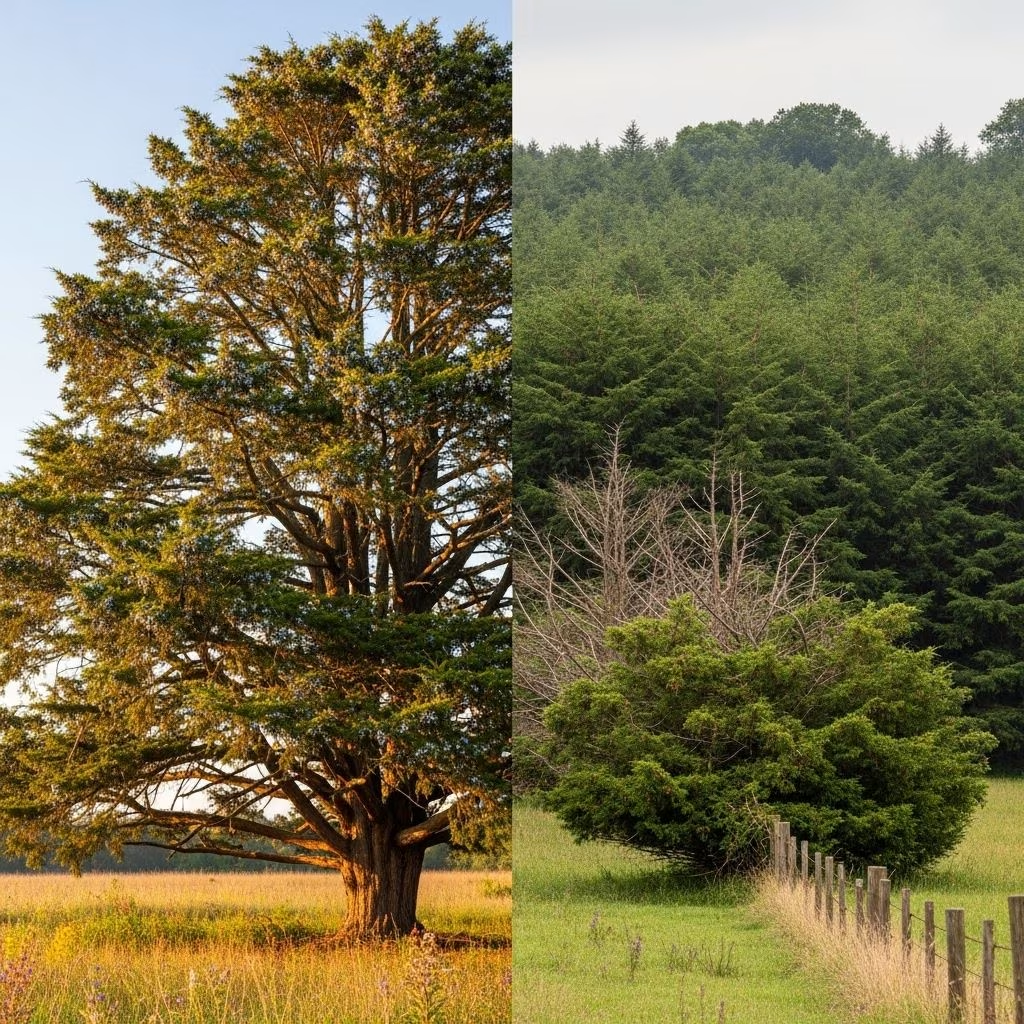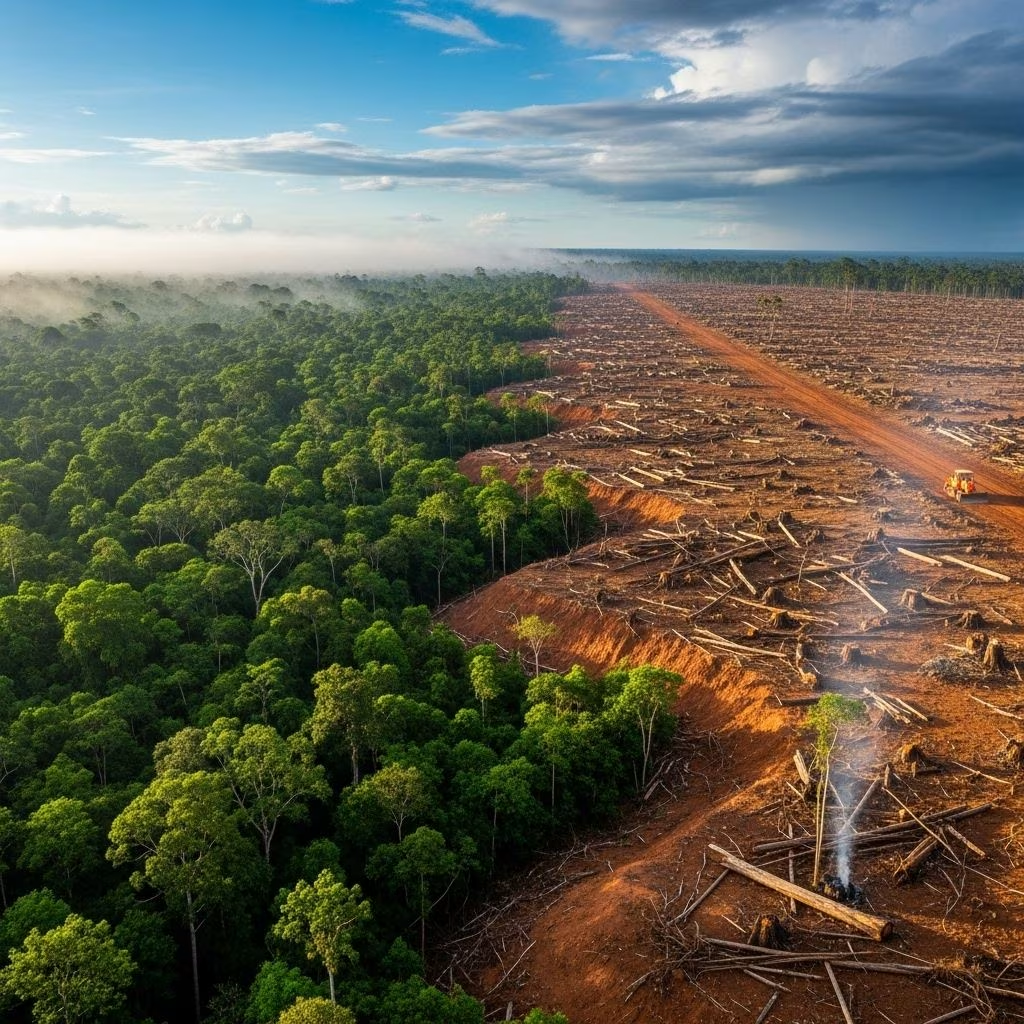
The Amazon rainforest, often called the lungs of the Earth, faces an unprecedented environmental crisis. Recent monitoring data reveals that Brazil’s portion of this vital ecosystem has shrunk dramatically over the past four decades, raising alarm bells among scientists, conservationists, and climate experts worldwide. The scale of destruction has reached a point where researchers warn of an irreversible ecological collapse that could transform the world’s largest tropical rainforest into arid savanna.
The implications of Amazon deforestation extend far beyond Brazil’s borders, affecting global climate patterns, biodiversity, water cycles, and the livelihoods of millions of people. Understanding the magnitude of this crisis, its root causes, and potential solutions has become critical for the future of our planet.
The Staggering Scale of Forest Loss
Between 1985 and 2024, the Brazilian Amazon lost an astonishing 49.1 million hectares of rainforest, an area equivalent to the entire country of Spain. This represents a 13% loss of native vegetation across the region, marking one of the most significant environmental transformations in modern history. The destruction has been relentless, with satellite imagery documenting the systematic conversion of dense forest into cleared land.
In 2024 alone, almost 3,800 square kilometers were deforested in the Brazilian Amazon. While this figure represented a decline of over seven percent compared to the previous year, the August 2024 monthly data painted a more concerning picture, with approximately 660 square kilometers destroyed in a single month, the highest monthly figure recorded that year. The deforestation patterns have been far from uniform, with most cleared areas occurring on private land, highlighting the role of individual landowners and agricultural enterprises in forest destruction.
The pace of destruction has varied significantly over the decades. The year 2003 witnessed the highest annual deforestation rate, with nearly 5 million hectares of forest cleared. Following this peak, conservation policies and enforcement efforts helped reduce rates in subsequent years. However, from 2019 onward, a new upward trend emerged, driven largely by policy changes that weakened environmental oversight agencies and reduced protection for forest areas.
Approaching the Point of No Return
Scientists have identified a critical threshold that could determine the Amazon’s future survival as a functioning rainforest ecosystem. Bruno Ferreira, a researcher at the MapBiomas monitoring platform, explains that the Amazon is approaching a dangerous tipping point between 20 to 25 percent vegetation loss. At this juncture, the forest would cease to sustain itself as a rainforest, triggering a cascade of ecological changes.
The mechanism behind this tipping point centers on the disruption of the rain cycle. When excessive vegetation is lost, the forest’s ability to generate its own rainfall diminishes dramatically. The Amazon creates much of its own weather through a process called evapotranspiration, where trees release water vapor into the atmosphere. This moisture then falls as rain, sustaining the forest ecosystem. Once too much forest is cleared, this self-sustaining cycle breaks down, leading to drier conditions that favor savanna vegetation over rainforest.
Current data indicates that the Amazon has already lost 13% of its native vegetation in Brazil alone, meaning the forest is more than halfway to the critical threshold. This proximity to the tipping point has intensified calls for immediate and decisive action to reverse deforestation trends before irreversible damage occurs. The transformation from rainforest to savanna would not only eliminate countless species but would also release massive amounts of stored carbon into the atmosphere, accelerating climate change on a global scale.
Primary Drivers of Deforestation
Understanding what drives Amazon deforestation requires examining the complex interplay of economic, political, and social factors that incentivize forest clearing. The dominant force behind deforestation has been livestock farming, which accounted for 84% of forest destruction in the first two decades of this century. MapBiomas data shows that livestock farming in the Amazon increased almost fivefold between 1985 and 2024, transforming vast stretches of rainforest into cattle pasture.
The economic logic behind this conversion appears straightforward to individual landowners: cleared land for cattle ranching generates immediate income, while standing forest provides limited short-term financial returns. This calculation ignores the invaluable ecosystem services forests provide, including climate regulation, water cycling, and biodiversity preservation, which benefit society as a whole but don’t appear on individual balance sheets.
Agricultural expansion beyond livestock has also contributed significantly to forest loss. Large-scale soy cultivation and other crops have consumed substantial forest areas, particularly in regions where infrastructure development has made previously remote areas accessible to agribusiness. The construction of roads into forested areas consistently precedes increased deforestation, as transportation networks enable the economic exploitation of forest resources.
Illegal mining operations represent another major threat, particularly artisanal gold mining that creates environmental devastation through mercury pollution and forest clearing. Recent surveys indicate that 91% of forest loss in the Brazilian Amazon is linked to illegal activity, including land-clearing for agriculture and mining operations often orchestrated by well-structured international criminal enterprises.
The Role of Governance and Policy
Political leadership and environmental policy have played crucial roles in determining deforestation rates. When President Luiz Inacio Lula da Silva returned to office in 2023, his administration implemented stricter enforcement measures and renewed support for environmental protection agencies. These policy shifts contributed to a measurable slowdown in deforestation rates, demonstrating that government action can effectively combat forest destruction.
However, the period from 2019 onward saw a dramatic reversal in environmental protection efforts. Policies that weakened oversight agencies and reduced penalties for illegal deforestation created an environment where forest clearing accelerated. The dismantling of environmental protections sent clear signals to those engaged in illegal deforestation that enforcement would be minimal, emboldening criminal enterprises and unscrupulous landowners.
The challenge of governing the Amazon is compounded by its enormous size and remote nature. Undesignated Public Forests, which account for almost 57 million hectares, have become particular hotspots for illegal activity. In 2020, approximately 32% of illegal deforestation occurred within these areas, which belong to state or federal governments but lack designated use or adequate monitoring. Over half of the deforestation in these public forests occurred on areas listed in the Rural Environmental Registry, revealing that registration systems intended to regulate land use have been compromised by irregular and unverified entries.
Climate Change and Fire Seasons
The relationship between deforestation and fire has created a devastating feedback loop. While fires in the Amazon are often portrayed as natural disasters, the reality is that the vast majority are deliberately set by humans to clear land for agriculture or are the result of criminal activity. A historic drought between August 2024 and July 2025 created conditions that fueled unprecedented forest fires, leading to a 4% increase in deforestation during that period.
Climate change has intensified drought conditions in the Amazon, making forests more vulnerable to fire. At the same time, deforestation itself contributes to regional climate changes that increase fire risk. The removal of trees reduces humidity and rainfall, creating drier conditions that make remaining forests more flammable. This vicious cycle means that each year of significant deforestation makes the following year’s fire season potentially more severe.
The 2024 fire season proved particularly catastrophic, with Brazil accounting for 42% of global primary rainforest loss that year. These fires burned not only in Brazil but also spread to neighboring Bolivia, Colombia, and Peru, demonstrating how environmental crises transcend national boundaries. The fires represented a perfect storm of climate change-induced drought, governance failures, and organized criminal activity, with 91% of fires linked to illegal land-clearing operations.
Regional Hotspots and Criminal Networks
Deforestation in the Amazon has historically concentrated in the arc of deforestation stretching from east to west along the biome’s southern flank. This region has experienced the most intensive conversion to agriculture and cattle ranching and contains the majority of the Amazon’s human population. The Abunã-Madeira Sustainable Development Zone lost 4.5 million hectares of forest between 2001 and 2020, at a rate equivalent to 26 soccer fields per hour.
However, deforestation threats have expanded beyond traditional hotspots into previously remote areas. The tri-border region where Brazil, Colombia, and Peru meet has become a center for organized crime syndicates that profit from illegal resource extraction. The twin cities of Leticia, Colombia and Tabatinga, Brazil serve as commercial hubs for criminal economies that have flourished over the past 25 years, initially focused on cocaine trafficking but expanding into illegal logging, mining, and land-grabbing operations.
These criminal networks operate with increasing sophistication, using the Amazon River system to move illegal products while exploiting weak governance in remote border areas. The proximity of these operations to resource-rich rainforest hinterlands, combined with limited law enforcement presence, has created conditions where nature crime thrives. The international scope of these operations requires coordinated responses across multiple countries, yet jurisdictional challenges and limited resources hamper effective intervention.
Economic and Social Consequences
The destruction of the Amazon generates consequences that extend far beyond environmental concerns, threatening economic stability and human welfare throughout the region and beyond. The forest plays a crucial role in regional water cycles, with deforestation reducing rainfall and affecting water availability for agriculture, industry, and human consumption. These effects manifest as operational losses for water-dependent industries and reduced access to clean water for local populations.
The Amazon functions as a massive carbon storage system, with its trees sequestering billions of tons of carbon dioxide. As deforestation progresses and fires rage, the forest transitions from a carbon sink to a carbon source, releasing greenhouse gases that accelerate global climate change. Portions of the Amazon now emit more carbon to the atmosphere than they absorb, marking a dangerous reversal with implications for climate stability worldwide.
Biodiversity loss represents an incalculable cost of deforestation. The Amazon harbors an estimated 10% of all species on Earth, many of which exist nowhere else. The accelerated destruction of the biome likely has already driven to extinction species that were never discovered or studied by science. Each hectare of forest lost represents the potential disappearance of unique genetic resources, medicinal compounds, and ecological relationships that took millions of years to evolve.
Future Projections and Scenarios
Projections for the Amazon’s future vary depending on policy choices and enforcement effectiveness. Research published by the Amazon Network of Georeferenced Socio-Environmental Information identified three possible scenarios for deforestation from 2021 to 2025. Under the pessimistic scenario, the forest could lose 23.7 million hectares in just five years, representing almost half of what was lost over the previous two decades. This trajectory would push the Amazon dangerously close to or beyond the critical tipping point.
If deforestation continues at high rates, models anticipate a 35% increase in forest loss by 2025 compared to baseline projections. Such acceleration would compound existing pressures, making recovery increasingly difficult and expensive. The moderate scenario suggests continued loss but at rates similar to recent years, while the optimistic scenario envisions successful policy interventions that significantly reduce deforestation.
The difference between these scenarios depends entirely on human choices regarding policy, enforcement, and investment in forest protection. Brazil’s role as host of the UN COP30 climate conference in Belem in November 2025 has focused international attention on the country’s environmental policies and created pressure for meaningful action. The conference represents an opportunity for Brazil to demonstrate leadership in forest conservation while securing international support for protection efforts.
Paths Forward and Conservation Strategies
Reversing Amazon deforestation requires comprehensive strategies that address economic incentives, governance capacity, and criminal activity. Strengthening environmental protection agencies and providing adequate resources for monitoring and enforcement represents a crucial first step. Satellite monitoring systems have proven effective at detecting deforestation in near real-time, enabling rapid response to illegal clearing activities when enforcement mechanisms function properly.
Creating economic alternatives to deforestation can reduce pressure on forests by providing sustainable income opportunities for local communities. Payment for ecosystem services programs that compensate landowners for maintaining forest cover have shown promise in several regions. Supporting sustainable forest products, ecotourism, and agroforestry systems that maintain tree cover while generating income can make forest conservation economically viable.
Combating organized crime requires international cooperation and significant investment in law enforcement capacity. The transnational nature of criminal networks exploiting Amazon resources demands coordinated action across borders. Strengthening legal frameworks, improving monitoring of supply chains for forest products, and prosecuting those responsible for environmental crimes can help dismantle the criminal enterprises profiting from deforestation.
Protecting and expanding designated conservation areas, indigenous territories, and sustainable use reserves has proven effective at limiting deforestation. Indigenous lands in particular have demonstrated significantly lower deforestation rates compared to surrounding areas, highlighting the importance of recognizing indigenous land rights and supporting indigenous-led conservation efforts.
Frequently Asked Questions
Q: What percentage of the Amazon rainforest has been lost?
A: The Brazilian Amazon has lost approximately 13% of its native vegetation over the past 40 years, representing 49.1 million hectares of rainforest, an area equivalent to Spain.
Q: What is the Amazon tipping point?
A: Scientists have identified a critical threshold at 20-25% vegetation loss where the Amazon would cease to function as a self-sustaining rainforest and begin transforming into drier savanna, as the disrupted rain cycle cannot support forest ecosystems.
Q: What are the main causes of Amazon deforestation?
A: Livestock farming accounts for 84% of Amazon deforestation, with agricultural expansion, illegal mining, and criminal land-grabbing operations driving most of the destruction. Studies show 91% of forest loss is linked to illegal activity.
Q: How do fires affect Amazon deforestation?
A: Most Amazon fires are deliberately set for land-clearing rather than natural occurrences. Climate change-induced droughts have intensified fire seasons, with 2024 seeing Brazil account for 42% of global primary rainforest loss due to widespread fires.
Q: Can Amazon deforestation be reversed?
A: While complete reversal is challenging, deforestation rates can be significantly reduced through strong environmental policies, effective enforcement, economic alternatives to forest clearing, and protection of indigenous territories and conservation areas.
References
- https://phys.org/news/2025-09-brazil-amazon-lost-area-size.html
- https://www.statista.com/statistics/1030359/brazil-amazon-deforested-area-month/
- https://infoamazonia.org/en/2023/03/21/deforestation-in-the-amazon-past-present-and-future/
- https://www.wri.org/insights/nature-crime-amazon-deforestation
- https://www.globalforestwatch.org/dashboards/country/BRA/
- https://e360.yale.edu/features/2025-film-contest-third-place-amazon-tipping-point
- https://www.climatepolicyinitiative.org/publication/when-the-river-runs-dry-how-amazon-deforestation-threatens-the-brazilian-economy/
- https://blogs.worldbank.org/en/latinamerica/Forest-at-Risk-deforestation-dashboard-Brazil-Amazon