


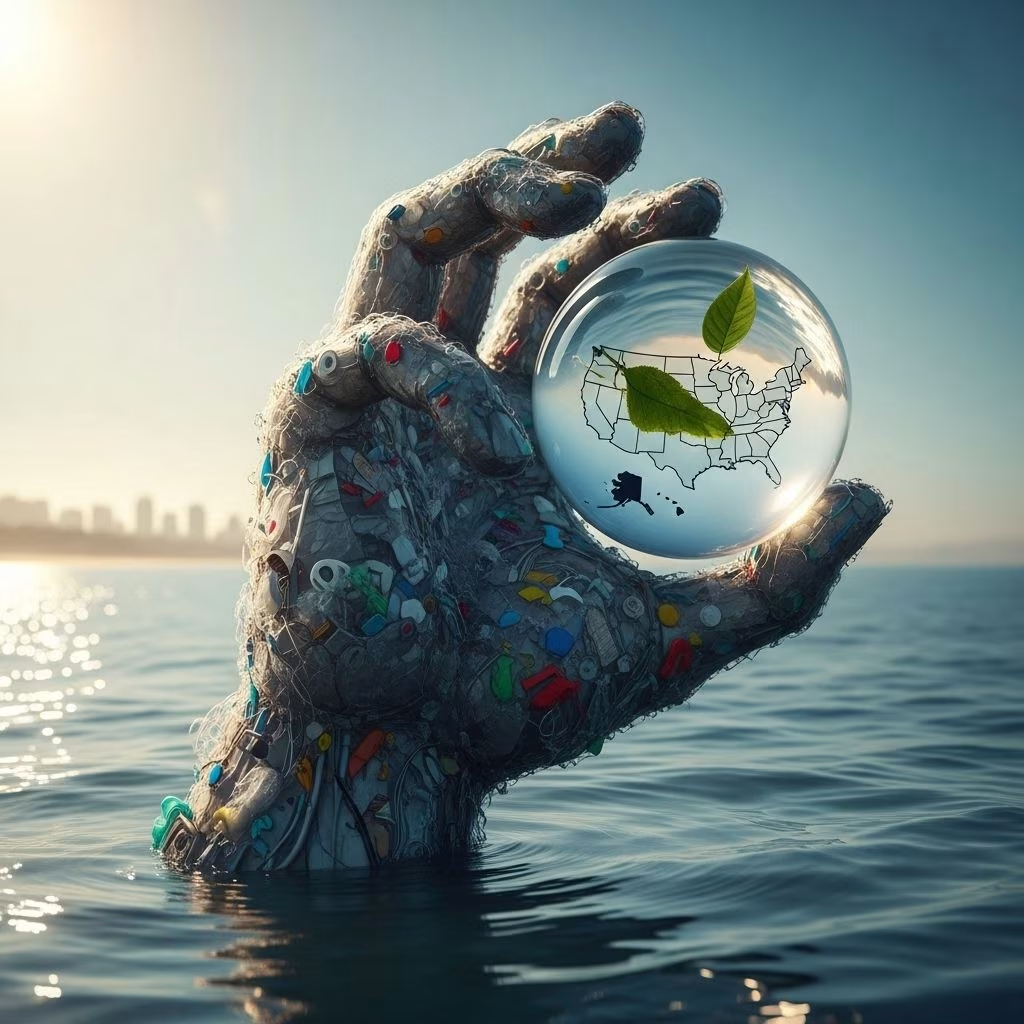
Proposed Legislation to Combat US Plastic Pollution
Plastic pollution has emerged as one of the most urgent environmental crises of our era. Across the United States, new legislation is being introduced at both federal and state levels to address the mounting tide of plastic waste, which pollutes our oceans, rivers, landscapes, food, and even our bodies. This article explores the scale of the problem, the types of bills under consideration, recent policy shifts, and the major proposals aiming to put the US on a path toward plastic waste reduction and circular systems.
The Scope of the Plastic Pollution Crisis
Every year, the world produces hundreds of millions of tons of plastic, much of which is designed for single use and quickly tossed aside. The United States leads globally in plastic waste generation, with the majority of plastic items entering landfills, natural habitats, or waterways, rather than being recovered or recycled. This waste threatens wildlife through entanglement and ingestion, releases toxic chemicals into ecosystems, and increasingly contaminates food and water sources for humans and animals alike.
- Approximately 40% of US plastic waste comes from packaging, including bags, containers, and wrap.
- Single-use items (such as straws, bottles, and bags) constitute a major source of persistent pollution.
- Polystyrene foam (Styrofoam), polyvinyl chloride (PVC), and certain colored or treated plastics are among the most harmful.
The public is increasingly alarmed: surveys show that at least 85% of Americans support stronger measures to reduce plastic pollution and protect health and ecosystems.
Current Federal Policy Landscape
Efforts to address plastic pollution face a politically charged environment. Recent years have seen both deregulatory actions and renewed calls for comprehensive reform:
- Some administrations have rolled back emission limits and clean water protections, narrowing the definition of protected waters and reversing bans or phase-outs of single-use plastics on federal lands.
- Pro-industry executive orders, such as reinstating plastic straws in federal operations, have drawn criticism for disregarding scientific evidence and public sentiment.
- Efforts to reduce regulation on chemical recycling have permitted new forms of plastic processing but without robust oversight, raising environmental justice and pollution concerns.
Despite these setbacks, there is a growing bipartisan realization that the US must show leadership on plastic waste—not only for domestic well-being, but to align with global movements for a circular economy.
Key Types of Federal Legislation
Lawmakers are advancing a suite of new bills designed to reduce plastics at the source, shift costs and responsibility upstream to producers, and invest in alternatives for packaging and consumer goods. The three main policy pillars are:
- Banning or restricting single-use plastics: Targeting the most harmful and ubiquitous products.
- Expanded Producer Responsibility (EPR): Making manufacturers financially and logistically responsible for the end-of-life management of their products.
- Promoting sustainable alternatives: Incentivizing or mandating the development of compostable, recyclable, or biodegradable products to replace conventional plastics.
1. Tackling Single-Use Plastics
Since nearly two-thirds of plastic waste comes from products with short lifespans, reducing these items is a major legislative focus. Proposed bills include:
- The Farewell to Foam Act: Would prohibit the sale and use of harmful polystyrene foam in federal facilities—targeting a non-recyclable and highly polluting material.
- Reducing Waste in National Parks Act: Phases out single-use plastic products in US national parks, reducing pollution in protected natural areas.
- Break Free From Plastic Pollution Act (BFFPPA): A sweeping bill aiming to reduce single-use plastics nationwide, establish waste reduction targets, and implement EPR requirements.
These bans and phase-outs would both remove problematic materials from circulation and set standards for public procurement and protected areas.
2. Extended Producer Responsibility (EPR)
Extended Producer Responsibility is a policy approach adopted globally and now gaining traction in the US. It shifts the burden of waste management away from local governments and taxpayers, and places it on the corporations that profit from plastic production.
- Producers would be required to pay for the collection, recycling, or disposal of the plastic products and packaging they put on the market.
- EPR policies encourage companies to redesign products for easier recycling or reuse, improving environmental outcomes.
- Funds generated through EPR can be invested in upgrading recycling infrastructure and supporting public education.
Multiple bills at federal and state levels now incorporate EPR—some specifically targeting packaging, others more broadly encompassing all plastic goods.
3. Driving Innovation & Alternatives
In addition to bans and cost-shifting, legislation seeks to spur innovation across the plastics value chain. Approaches include:
- Incentivizing the transition to compostable, reusable, or recyclable packaging.
- Supporting R&D into bio-based plastics and next-generation materials with lower environmental footprints.
- Setting minimum recycled content standards for packaging and consumer goods, driving demand for recycled materials.
These efforts are core to broader visions of a circular economy, where resources are kept in use for as long as possible and waste is minimized at every step.
Major Federal and State Policy Examples
While the US has yet to adopt a unified national plastics policy, a series of both federal proposals and state laws are building momentum:
Federal Actions
- Save Our Seas 2.0 Act (2020): Expands efforts to prevent and clean up marine plastic debris, supports research, and bolsters interagency coordination.
- The EPA’s National Strategy to Prevent Plastic Pollution: Sets out six core objectives to reduce production, improve design, minimize waste, improve management, bolster removal, and reduce environmental leakage of plastics across the entire lifecycle. Key approaches include:
- Evaluating and updating regulations for production, processing, and transportation.
- Creating certifications for sustainably manufactured products.
- Reducing direct community and health impacts from production facilities.
- US Plastics Pact Roadmap: A coalition effort aiming for 100% reusable, recyclable, or compostable plastic packaging by 2025, with at least 30% recycled or responsibly sourced content.
State Leadership
- Maryland: Launched an EPR scheme for packaging and paper products, with costs shared between producers and taxpayers.
- Minnesota: Banned products with intentionally added PFAS (toxic, persistent chemicals often used in packaging) and enacted registration requirements for packaging producers.
- New Jersey: Adopted a ban on polystyrene food containers, giving companies a phase-in period to comply.
- New Mexico: Passed a law phasing out added PFAS in food packaging and consumer products, with a full ban scheduled by 2032.
- Washington: Signed a major recycling reform act, making it the seventh West Coast state with comprehensive packaging policy.
States are proving to be laboratories for innovation—testing EPR, bans, and new recycling systems. These localized efforts are driving broader shifts and pushing federal policymakers for national action.
The Circular Economy Vision
At the heart of these legislative shifts is a move toward a circular economy for plastics. This means rejecting the outmoded, linear ‘make-use-dispose’ model in favor of a regenerative system where materials are designed for reuse, recovery, and minimal environmental harm.
- Eliminate problematic or unnecessary plastics from the marketplace.
- Ensure 100% of packaging is reusable, recyclable, or compostable.
- Double recycling and composting rates for plastic packaging by 2025.
- Commit to using at least 30% recycled or bio-based content in all plastic packaging.
Such a transformation will require alignment across sectors—industry, government, scientists, and the public—along with serious investments in technology, infrastructure, and education.
Challenges and Barriers
Despite strong public support and growing corporate buy-in, several obstacles remain:
- Political and industrial resistance: Powerful lobbying by plastics and petrochemical industries, which frame restrictions as harmful to jobs and economic growth.
- Fragmented waste management infrastructure: Many municipalities lack the resources or capacity to process plastics efficiently or safely,.
- Technological gaps: Need for scalable, affordable recycling and composting solutions for a broad range of plastic types.
- Regulatory rollbacks: Recent executive orders and agency actions have reversed or watered down key environmental protections, complicating national efforts.
The Path Forward: Key Opportunities
To drive lasting change, experts and advocates recommend the following strategies:
- Enact comprehensive, harmonized federal legislation targeting all stages of the plastics lifecycle.
- Hold producers responsible: Pass and enforce extended producer responsibility (EPR) laws nationally and locally.
- Invest in new infrastructure: Modernize recycling and composting systems, especially in underserved communities.
- Promote research and eco-design: Support the development of less toxic, more easily recycled plastics, coupled with clear labeling for consumers.
- Educate and engage the public: Foster consumer demand for sustainable alternatives and robust participation in waste reduction initiatives.
The future of the US plastic pollution fight will depend on sustained public pressure, bold legislation, and innovative partnerships that prioritize human and environmental health over short-term industry interests.
Frequently Asked Questions (FAQs)
Q: What kinds of plastics are most commonly targeted by new US legislation?
A: Most new bills target single-use plastics, particularly items like straws, bags, bottles, containers, and polystyrene foam products, which are rarely recycled and dominate the pollution stream.
Q: What is Extended Producer Responsibility (EPR), and why is it important?
A: EPR makes plastic producers responsible for the collection, recycling, and disposal costs of their products, shifting the financial and environmental burden from local governments and taxpayers to the companies that profit from them.
Q: How do state laws differ from proposed federal legislation?
A: States often experiment with stricter bans and EPR schemes tailored to local needs, while federal bills aim to establish baseline standards and reduce the patchwork of regulations. State success stories often pave the way for national laws.
Q: What major challenges hamper US progress on plastic pollution?
A: Major obstacles include political and industry pushback, inadequate recycling infrastructure, technological limitations, and in some cases, the rollback of protective regulations that hinder coordinated national approaches.
Q: How does the US approach compare to efforts in other countries?
A: Many countries have already adopted national bans on single-use plastics, aggressive recycled content targets, and producer responsibility laws. The US is catching up, but its legislative landscape remains fragmented and driven by both federal and state initiatives.
References
- https://www.eli.org/research-report/existing-us-federal-authorities-address-plastic-pollution-synopsis-decision-makers
- https://www.epa.gov/circulareconomy/executive-summary-national-strategy-prevent-plastic-pollution
- https://usplasticspact.org/roadmap/
- https://www.earthday.org/turning-the-tide-3-types-of-federal-bills-targeting-the-menace-of-plastic-pollution/
- https://foodpackagingforum.org/news/2025-regulatory-and-waste-management-updates-from-us-states
- https://www.congress.gov/crs-product/R48293
- https://sustainablepackaging.org/2025/09/23/packaging-policy-news/


