


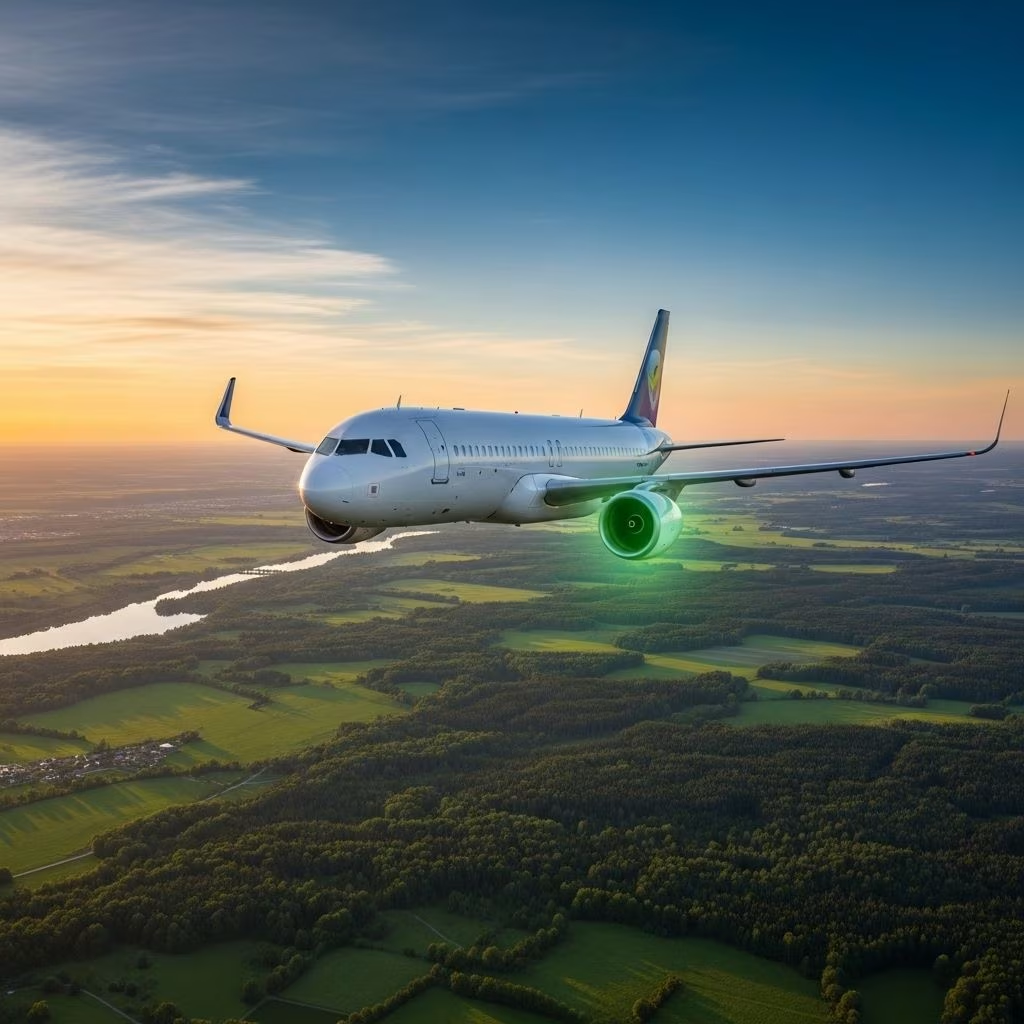
Can We Keep Flying? The Case for Sustainable Aviation Fuels
Growing concerns about climate change combined with the demand for air travel have prompted the aviation industry to seek greener alternatives. Among the solutions, sustainable aviation fuels (SAFs) have emerged as a leading candidate, promising to reduce emissions without sacrificing the mobility that business, tourism, and social life now demand. But how viable is this technology, and can it offset the substantial environmental cost of flying?
Why Do We Need Sustainable Aviation Fuels?
Conventional jet fuel, derived from petroleum, is a major contributor to global carbon emissions. Aviation accounts for roughly 2-3% of world CO2 emissions, a number expected to grow as demand rises. With commitments from airlines, governments, and the UN’s International Civil Aviation Organization (ICAO) to pursue net zero by 2050, SAFs present a crucial pathway to decarbonize flight without grounding the entire industry.
- Air travel is hard to electrify due to weight, energy density, and safety requirements.
- Short-haul flights may become electric or hydrogen-powered, but long-haul aircraft will require high-density liquid fuels for the foreseeable future.
- SAFs are drop-in replacements that can be used in existing aircraft and infrastructure.
What Is a Sustainable Aviation Fuel?
SAFs are advanced liquid fuels produced from renewable sources. To qualify as ‘sustainable,’ their lifecycle emissions must be substantially lower than fossil jet fuel, while remaining compatible with existing aviation engines and fueling systems.
- Made from biomass (e.g., agricultural waste), waste oils, algae, or advanced synthetic processes.
- Can also include “E-fuels” made from green hydrogen and captured CO2.
- Reduce lifecycle emissions up to 80% compared to conventional jet fuel.
How Are SAFs Made? Approved Production Pathways
The science and engineering behind SAF production is diverse, but only a handful of processes have reached commercial approval for use in aviation:
- HEFA (Hydroprocessed Esters and Fatty Acids): Derived from vegetable oils, animal fats, and waste cooking oil through hydroprocessing. Most commercially ready with high yields and minimal waste.
- Fischer-Tropsch (FT) Synthesis: Converts waste biomass or municipal waste into fuels using a series of chemical reactions. Can achieve higher emission reductions but is still maturing.
- Alcohol-to-Jet (AtJ): Converts alcohols like ethanol, usually made via fermentation of waste products, into jet fuel using specialized catalysts. Recent breakthroughs use industrial waste CO to feed microbes that make ethanol.
- Direct Sugar to Hydrocarbon (DSHC): Biological processes transform sugars from agricultural residues directly into fuels. Not yet scaled globally.
| SAF Pathway | Feedstock | Status | Max Blend in Jet Fuel | Emissions Benefit |
|---|---|---|---|---|
| HEFA | Waste oils, animal fats | Commercial | Up to 50% | 60–80% less CO2 |
| Fischer-Tropsch | Biomass, municipal waste | Pilot/Pre-commercial | Up to 50% | High reduction |
| Alcohol-to-Jet | Ethanol from waste | Approved, scaling | Up to 50% | Substantial |
| DSHC | Sugar, agricultural waste | Emerging | Limited trials | Potentially high |
The Chemistry of Jet Fuel — and Its Challenges
Jet fuel is a tightly regulated substance. Its chemistry must support safe engine operation from freezing temperatures at altitude to rapid combustion. The key components:
- Aliphatic hydrocarbons: Long carbon chains, similar to diesel fuel.
- Aromatic hydrocarbons: Complex ring structures, required for maintaining aircraft fuel system seals.
Unlike road fuels, aviation-grade kerosene cannot simply replace all aromatics with bio-derived aliphatics. The aromatics are necessary to keep the seals in fuel systems properly swollen and functional.
The “Blending Wall”
Most biofuels and SAFs excel at producing the aliphatic fraction but struggle to produce sufficient sustainable aromatics. This challenge, called the “blending wall,” limits how much SAF can be mixed into commercial jet fuel before technical standards are no longer met.
- Current certified blends allow up to 50% SAF, depending on type.
- Technical work ongoing to produce plant-derived aromatics. Success here could make 100% SAF possible.
Feedstocks — What Goes Into SAF?
- Lignin: Tough plant polymer providing much-biomass carbon. MIT researchers are pioneering methods to convert lignin into the aromatic fraction jet fuel requires.
- Algae: High oil yield, fast-growing, minimal land use; promising feedstock.
- Waste oils: Used cooking oil, animal fats, restaurant grease.
- Agricultural/forestry residue: Corn stover, switchgrass, poplar; non-food biomass.
- Municipal waste: Urban organic and solid wastes.
The imperative for sustainable feedstocks: SAF must avoid competition with food crops, prevent indirect land use changes, and truly reduce lifecycle emissions.
Scaling SAF: Infrastructure, Costs, and Market Barriers
- Few SAF facilities compared to conventional oil refineries; supply is low and prices are high.
- SAF often has to be transported long distances to blending sites, adding to cost and emissions.
- Some airports (e.g., Seattle’s SeaTac) are collaborating to bring SAF production closer to the aviation market.
Despite these hurdles, airlines and manufacturers are increasingly investing in expanding SAF supply chains and infrastructure, seen as a bridge to both emission reductions and future technologies.
SAF In Practice: Early Adopters and Test Flights
Several airlines and industry partners are piloting SAF on passenger and commercial flights:
- United Airlines: Largest SAF buyer since 2013, flew the first passenger flight with one engine powered by 100% SAF.
- Virgin Atlantic, Delta, KLM, and others: Running flight tests, aiming for net zero operations.
- Pacific Northwest National Laboratory & LanzaTech: Commercial-scale ethanol-to-jet SAF from recycled carbon monoxide; demonstrated dramatic reduction in contrails and soot.
With successful blends up to 50%, the long-term goal is to push to 100% SAF certification.
Environmental Impact: Promise and Limitations
- Lifecycle emissions reduced by up to 80% per flight when using high blends of SAF.
- Reduction in contrails and particulate soot, reducing non-CO2 climate impacts.
- Feedstock sourcing must be sustainable to avoid negative land use impacts.
- Production costs are currently much higher than fossil jet fuels; policy incentives and carbon pricing may be required to promote adoption.
Can SAFs Enable “Guilt-Free” Flying?
SAFs are not a panacea, but they offer significant advantages over current fuels:
- Drop-in compatibility: No need for new engines or aircraft.
- Utilizes waste streams: Converts urban garbage, restaurant waste, and agricultural residues into value.
- Scalable with investment: Technology is ready, more facilities can be built.
- Not zero emissions: Only a substantial reduction; total decarbonization likely needs other solutions for long-haul aviation.
The Road Ahead: What Needs to Happen?
For SAFs to fulfill their promise, the following challenges must be addressed:
- Develop methods for sustainable aromatic fraction production to break the blending wall.
- Increase investment in SAF facilities, feedstock cultivation, and sustainable waste collection.
- Certify 100% SAF blends for commercial flight.
- Standardize sustainability criteria and regulations worldwide to ensure robust environmental benefits.
- Maintain transparency on emissions reductions to avoid greenwashing.
Frequently Asked Questions (FAQ)
What are SAFs made from?
SAFs can be produced from a variety of renewable feedstocks, including waste oils, agricultural residues, algae, municipal solid waste, and plant lignin. Some synthetic fuels use captured CO2 and green hydrogen.
Can SAFs be used in any airplane?
Yes, certified SAFs are designed to be “drop-in” fuels, compatible with existing aircraft and airport fueling infrastructure. Current regulations allow blends up to 50% SAF, depending on the specific pathway.
Are SAFs really carbon neutral?
SAFs can substantially reduce the lifecycle carbon footprint (up to 80%), but they are not fully carbon neutral. Land use change, feedstock sourcing, and processing emissions all factor in. Absolute zero emissions would likely require future technologies such as hydrogen or electric flight.
Why can’t we use 100% SAF now?
The “blending wall” exists because current SAFs cannot fully match the functional chemistry of fossil jet fuel, especially the aromatic content needed for safe operation. Ongoing research aims to produce sustainable aromatics, which could enable full replacement in the future.
Is flying ever going to be truly guilt-free?
While SAFs can dramatically reduce emissions, the best outcome also requires demand management, greater fuel efficiency, and further innovation. SAFs offer an important toolkit for low-carbon aviation, but responsible travel and technological breakthroughs remain essential.
Conclusion: Can Sustainable Aviation Fuels Keep Us in the Air?
Sustainable aviation fuels represent a vital step forward in making air travel more climate-friendly. While technical, economic, and environmental hurdles must be addressed, SAFs provide a working model to decarbonize one of the world’s most complex industries. Their adoption will hinge on innovation, infrastructure investment, and honest progress on sustainability. As research advances and SAF production scales up, ethical flying moves closer to reality—but it is not yet truly “guilt-free.” It is, however, a bridge to a cleaner and more responsible future for global mobility.


