


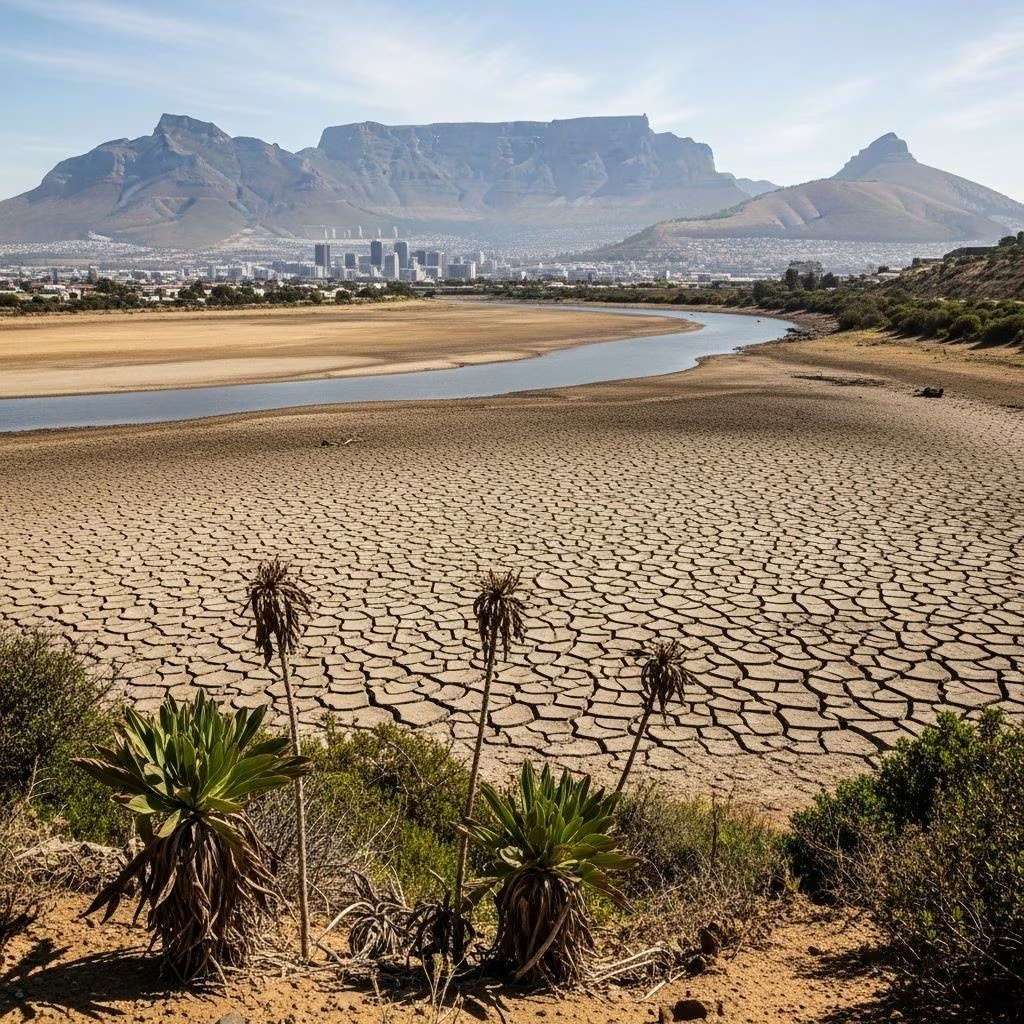
Cape Town’s Approach to the Brink: Facing the Water Crisis
In early 2018, Cape Town—South Africa’s second-largest city, renowned for its natural beauty and thriving cosmopolitan culture—stood on the verge of an unprecedented disaster: Day Zero. This was the projected date when the city’s taps would run dry for most residents, leaving over four million people reliant on a rationed supply from communal water points under the watch of armed guards. The situation represented a convergence of prolonged drought, population growth, and infrastructural shortcomings, making Cape Town the first major modern city to confront total urban water scarcity.
What Was ‘Day Zero’? Understanding the Threat
‘Day Zero’ quickly became a global symbol for water scarcity. It was the calculated date when dam levels would drop to a critical threshold (less than 13.5% capacity), at which point piped water supplies to homes and businesses would be shut off to preserve what remained for essential services and residents lined up for daily 25-liter allocations at collection points. The looming reality triggered panic, uncertainty, and urgent action throughout the city.
- Critical water restrictions mandated residents to use as little as 50 liters—or later, only 13 gallons—per person per day.
- Communal water points at armed-guarded locations were set for distribution should reservoirs run dry.
- Hospitals, vital institutions, and city centers were planned to retain limited pipe supply, sustaining basic services.
Life in a Water-Scarce Metropolis
The restriction limits—just 13 gallons per person per day—were less than the United Nations’ recommended minimum for domestic water needs. This transformed daily routines and made every drop precious:
- Showers limited to 90 seconds.
- Only one cooked meal prepared, with dishes and laundry hand-washed in minimal water.
- Teeth brushing and hand-washing minimized, and many residents adopted dry composting toilets to avoid flushing.
- The city’s globally recognized tourism industry and neighborhoods of multimillion-dollar properties became a stark contrast to the dire shortages experienced even in wealthier areas.
The burdens of conservation fell on citizens, yet not all residents complied equally. Less than half initially met voluntary water-saving targets, further straining dwindling supplies.
Causes of Cape Town’s Water Crisis
Cape Town’s ordeal was not simply bad luck—the crisis arose from a combination of multiple factors:
| Factor | Description |
|---|---|
| Prolonged Drought | Three consecutive years of below-average rainfall led to severely depleted reservoirs. |
| Population Growth | Rapid urban expansion outpaced water infrastructure capacity, increasing demand. |
| Outdated Infrastructure & Poor Planning | Insufficient investment and delayed action on upgrades meant the system could not cope with environmental stress. |
| Climate Change | Erratic rainfall and warming trends magnified drought severity; climate models indicate higher risks for similar cities worldwide. |
| Poor Crisis Management | Early city government messaging was vague, official action came late, and communication was slow to adjust as risks escalated. |
How Did Cape Town Respond? Conservation and Emergency Measures
When dam levels dropped dangerously low, Cape Town implemented an escalating series of responses:
- Strict water restrictions: From 87 liters in September 2017 to 50 liters—eventually reducing to 13 gallons (approx. 49 liters) per person per day.
- Tariff hikes: Water prices soared, especially for heavy users. The average price rose 230% between 2015 and 2018, making wasteful consumption financially prohibitive.
- Pressure management: System-wide engineering interventions reduced pipe pressure to curb leaks and water loss.
- Communication campaigns: Officials used dramatic public messaging, including the ‘Day Zero’ slogan, to spur collective action.
Despite initial slowdowns in public compliance, city-wide consumption decreased dramatically as day-to-day life adjusted to the reality of scarcity.
Delaying ‘Day Zero’ and Developing Long-Term Solutions
As emergency measures tightened, Cape Town managed to push ‘Day Zero’ back nearly four weeks from the first projections. This happened as agricultural water use dropped and city-wide conservation succeeded in reducing demand. For future resilience, Cape Town began investing in multiple long-term, sustainable water management strategies:
- Nature-based solutions: Removing invasive plant species from river catchments and restoring native vegetation has recouped over 17 billion liters of water per year, with a goal of 100 billion by 2050.
- Greater ecosystem balance: Partnerships with environmental NGOs and local communities slowed the spread of water-hungry invasive species, replacing them with indigenous trees for water savings and biodiversity.
- Cost-effective interventions: Studies found that clearing invasive plants could save 22% in national water infrastructure costs by 2050, compared to doing nothing.
- Jobs and recreation: Water-saving initiatives have created 300+ local jobs so far and new recreational opportunities in restored natural areas.
- Infrastructure upgrades: The city began expanding its supply network and seeking sources beyond traditional dams—including desalination, groundwater, and water recycling.
Political and Social Complications
As with many resource crises, Cape Town’s water emergency was marred by political tensions. Debates over accountability stalled decision-making, as various parties disputed who was to blame for the delayed response and the magnitude of the problem. Stability in city government was critical not just for managing the immediate crisis, but for sustaining investment, overseeing infrastructure changes, and maintaining public trust in future planning. In other South African cities like Johannesburg, frequent leadership changes and patronage appointments in municipal water utilities have similarly hampered coherent policy and adaptation.
Global Lessons: Why Cape Town’s Crisis Matters to the World
The Cape Town crisis was both a local tragedy and a global warning. Today, more than a billion people live in water-scarce regions, and projections suggest up to 3.5 billion could face severe water shortages by 2025 due to climate change, population trends, and governance failures. Cape Town—a modern city with a wealth of natural resources, robust tourism, and sound economic standing—was not an outlier, but a preview of the challenges that could affect cities worldwide.
- Drought-prone regions must act swiftly to upgrade infrastructure and diversify water sources.
- Water conservation needs strong communication, pricing incentives, and equitable enforcement.
- Nature-based interventions offer effective, dual-purpose strategies for water savings and ecosystem health.
- Public trust, good governance, and clear leadership are vital to successful crisis management.
Similar risks have already begun to affect major global cities, from Los Angeles and São Paulo to Chennai and Barcelona, as climate unpredictability and rapid urbanization outpace infrastructure. Cape Town’s struggle and recovery offer both urgent warnings and practical models for adaptation.
Frequently Asked Questions (FAQ)
Q: What is ‘Day Zero’?
A: ‘Day Zero’ is the term coined in Cape Town for the projected day when city water supplies would be cut for most homes and businesses due to critically low dam levels. The remaining water would be distributed at communal collection points under strict rationing.
Q: How was daily water usage restricted for Cape Town residents?
A: Daily limits were set as low as 13 gallons (about 49 liters) per person, covering all household activities including bathing, cooking, cleaning, and sanitation. Failure to comply risked exhausting reservoir levels before new supplies could be secured.
Q: What long-term strategies did Cape Town pursue to prevent future water crises?
- Removal of invasive plant species from river catchments to recover billions of liters annually.
- Restoration of native vegetation and ecosystems, ensuring water security and biodiversity.
- Infrastructure upgrades, including new reservoirs, desalination plants, and water recycling facilities.
- Community engagement programs to enhance conservation and responsible usage.
Q: Why did the crisis happen in Cape Town?
- Three years of severe drought.
- Population growth exceeding infrastructure capacity.
- Delayed and inefficient government response.
- Climate change altering rainfall patterns.
Q: What can other cities learn from Cape Town’s experience?
- Invest early in diverse, resilient water infrastructure.
- Integrate nature-based solutions with traditional engineering.
- Ensure transparent communication and strong crisis management.
- Enact equitable water pricing, conservation incentives, and community participation.
Key Takeaways
- Cape Town is a case study in urban resilience, demonstrating the need for swift, multi-level response to drought and water scarcity.
- Nature-based solutions are central to sustainable water management.
- Public cooperation and robust leadership are critical to crisis prevention and management.
- Water scarcity is a shared global challenge. The methods and lessons from Cape Town should inform preparations and responses in cities worldwide.
Further Reading & Resources
- Circle of Blue: Cape Town Water Crisis
- TIME: Living Through Cape Town’s Water Crisis
- World Resources Institute: Drought and Nature-Based Solutions
- NBER: Dodging Day Zero in Cape Town (PDF)
Frequently Asked Questions (FAQs)
Q: Is Day Zero still a threat in Cape Town?
A: While the immediate crisis was averted, long-term risks remain due to climate volatility and urban growth. Ongoing conservation and infrastructure improvements are essential.
Q: How much water do Cape Town residents use today?
A: After the crisis, daily usage remains well below previous averages, with ongoing campaigns encouraging sustainable consumption.
Q: What are invasive species and why are they important?
A: Invasive plants in Cape Town’s river catchments consume excessive water. Removing them is a crucial strategy for recovering billions of liters annually and maintaining ecosystem balance.
Q: How did businesses cope during the crisis?
A: Many businesses suffered from supply interruptions but responded with innovative water-saving processes, investments in private storage, and efficiency upgrades.
Q: Can other cities avoid a ‘Day Zero’ scenario?
A: By investing in infrastructure, enforcing conservation, and building resilient, adaptive water management systems, other cities can mitigate the risk before it becomes a crisis.
References
- https://www.circleofblue.org/cape-town/
- https://time.com/cape-town-south-africa-water-crisis/
- https://african.business/2025/01/resources/water-crisis-looms-over-south-africas-business-landscape
- https://www.wri.org/insights/managing-extremes-how-south-african-cities-are-tackling-water-crises
- https://www.nber.org/system/files/working_papers/w33468/w33468.pdf
- https://www.wwf.org.za/?53062%2FSouth-Africas-water-crisis-is-not-just-downstream
- https://www.frontiersin.org/journals/environmental-science/articles/10.3389/fenvs.2025.1550738/pdf
- https://wp.wpi.edu/sustainability-showcase/2025/03/17/fy6-water-consumption-and-invasive-species-in-cape-town-south-africa/


