High-Tech Tools Aiming to Make Poaching Extinct
Global anti-poaching efforts are evolving rapidly, drawing on powerful partnerships between conservationists, engineers, and technologists to protect endangered wildlife. From cutting-edge artificial intelligence (AI) to aerial drones and animal-borne sensors, these technologies are helping to close the gap between poachers and the rangers who defend some of the world’s most threatened animal species.
Why Is Poaching Such a Persistent Problem?
Despite international bans and increased law enforcement, poaching remains one of the greatest threats to species like elephants and rhinos—their ivory, horns, and other body parts maintain high value in illegal markets. Regions with vast and difficult terrain, limited resources for park rangers, and powerful criminal networks allow poaching to persist. Permanent, scalable solutions require smarter surveillance, rapid response, and predictive tools—all areas where modern technology is making a crucial difference.
AI-Powered Camera Systems: The Silent Sentries
One leading innovation is the use of AI-powered camera traps—devices like TrailGuard AI—which blend discreet, rugged hardware with advanced deep learning algorithms. These smart cameras are deployed in challenging environments and are designed to distinguish between animals, humans, and vehicles, sending real-time alerts to rangers when suspicious activity is detected.
- Low Power, Long Life: Modern systems, like TrailGuard, can operate up to 18 months without new batteries.
- Direct Communication: Images and location data are transmitted to ranger stations in under 30 seconds using GSM, radio, or satellite links.
- Versatile Detection: AI models can be retrained for a range of species and threats, adapting to local needs.
- Proven Results: Early deployments led to dozens of poacher arrests and are now used in key hotspots such as East Africa and central India.
By dramatically multiplying surveillance capacity, smart cameras function as tireless, incorruptible sentries—alerting staff before harm is done, rather than after.
Drones: Eyes in the Sky
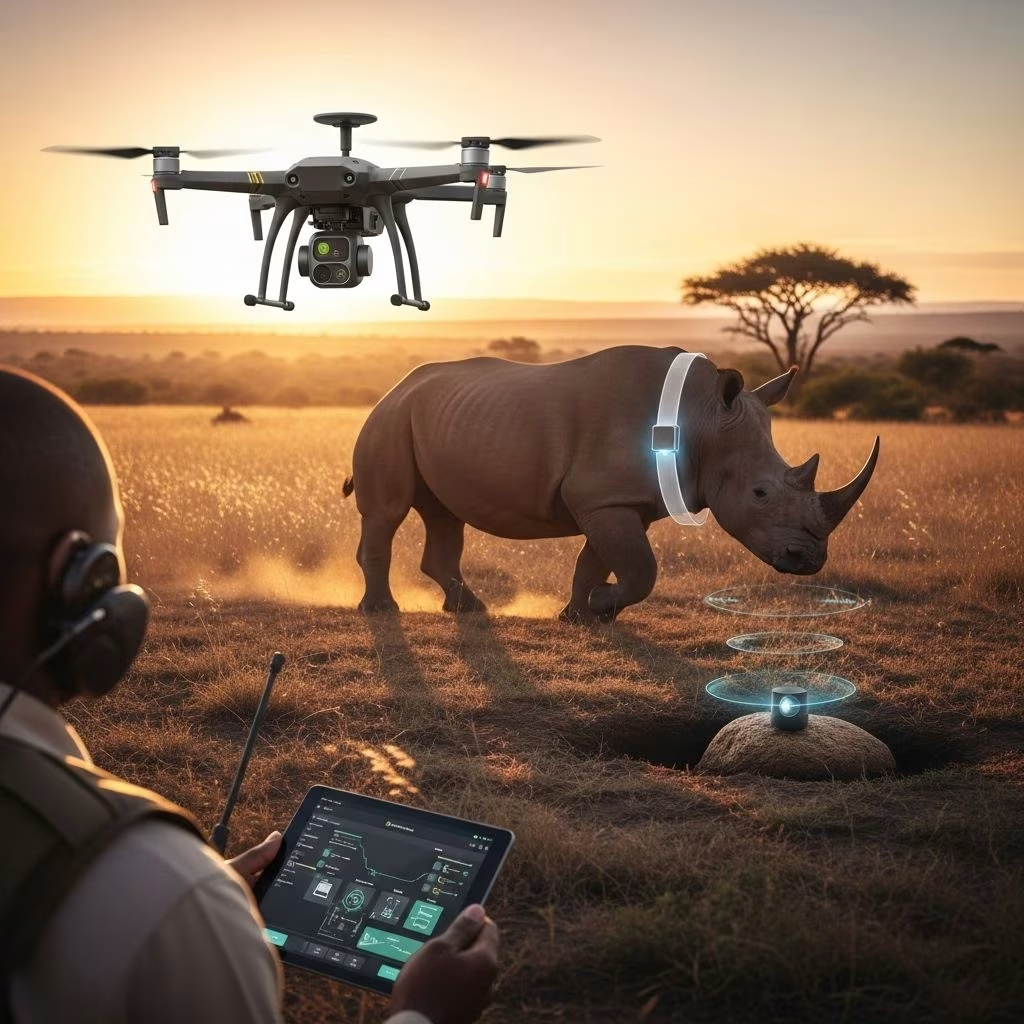
Drones, or unmanned aerial vehicles (UAVs), offer a bird’s-eye view previously impossible with human patrols alone. These high-tech tools are especially effective for rapidly scanning large, remote reserves for signs of suspicious activity—such as unauthorized vehicles or groups moving at night when poachers prefer to strike.
- Day & Night Surveillance: Outfitted with thermal imaging cameras and AI-based analytics, drones can distinguish humans from animals in darkness or dense foliage.
- Instant Communication: Footage and coordinates beam back to ground teams for immediate response.
- Proven Impact: In Kruger National Park, South Africa, a six-week drone trial resulted in zero rhino deaths in patrolled areas—compared to nine deaths in the month prior.
- Broad Application: Drones are used not only for anti-poaching, but in disaster scenarios (such as locating koalas in wildfires) and for monitoring animal health after environmental crises.
While drones require skilled operators and have battery and range limitations, their visible presence alone has been shown to deter poachers, causing them to abandon illegal hunts altogether.
Turning Wildlife Into “Early Warning Systems”
Innovators are now leveraging the behavior of non-target animals themselves as anti-poaching alarms. At Wageningen University & Research, researchers tagged species such as zebras, impalas, and wildebeest—natural sentries that reliably bolt at the first sign of danger.
- Animal-borne Sensors: GPS-transponders attached to these animals transmit location and movement data to central computers.
- AI Behavioral Monitoring: Advanced algorithms compare real-time data to established movement patterns, flagging abnormal behavior (e.g., sudden flight) when poachers are near.
- Field-Tested Results: Pilot programs in South African game reserves detected nine out of ten human intrusions within a 200-meter radius—enabling rapid ranger response.
This approach transforms entire herds into a distributed sensor network, covering wide areas while blending into the ecosystem. As these methodologies expand, expect animal-borne data to become a core pillar of anti-poaching efforts across Africa and Asia.
Tracking the Vulnerable: Animal Tagging and Smart Collars
Equipping high-risk animals like rhinos and elephants with GPS collars or implants not only helps biologists monitor migrations, but also deters poachers by alerting rangers the moment a risk is detected.
- GPS and RFID Collars: Some collars integrate GPS with RFID chips—if the horn (with the chip) separates from the animal, an alarm is triggered, and response teams are dispatched.
- Camera Surveillance: Pilot systems, such as those developed for rhinos, include cameras to document poaching events for prosecution—but face ethical and practical challenges, like the need for invasive surgery and stressed animals.
- Solar-Powered Tech: Durable solar panels on ankle collars extend operational periods, reducing the need for repeated tranquilizations.
However, these tagging initiatives must balance technological ambition with animal welfare—minimizing distress, invasive procedures, and the challenges of maintaining gear in harsh conditions.
Smart Sensor Networks and Barrier Technologies
Many reserves are now testing a layered security approach, using both virtual and physical boundaries:
- Sensor-Equipped Fences: Barriers embedded with vibration, motion, or thermal sensors instantly alert patrols to fence tampering or cross-border incursions.
- Environmental Sensors: Audio sensors can detect gunshots or vehicle engines, while thermal and seismic devices identify the presence of humans on foot or in vehicles.
- Automated Analytics: Integrated AI platforms synthesize data from across barriers, camera traps, drones, and animal-mounted sensors—prioritizing genuine threats and reducing false alarms.
This multi-layered net greatly increases poachers’ risk of detection, making protected areas significantly harder to infiltrate undetected. When combined with human rapid response teams, these systems afford wildlife a much-needed technological edge.
Data Integration and AI: Powering Predictive Protection
Anti-poaching operations now rely on centralized systems that integrate real-time information from multiple sources—drones, camera traps, sensors, and animal trackers—into a single actionable dashboard.
- Pattern Recognition: Machine learning models can analyze years of poaching incident data, highlighting hotspots and anticipating patterns, such as likely routes, times, or seasons for illegal hunting.
- Automated Dispatch: When a likely threat is detected, the system can dispatch rangers, alert law enforcement, or even trigger aerial drones—all within minutes.
- Cloud Connectivity: The use of satellite or GSM networks allows for coverage even in the most remote reserves.
This fusion of data transforms conservation from a reactive to proactive discipline, potentially stopping poaching before it occurs rather than cleaning up after the fact.
Success Stories: Impact Around the Globe
- East Africa: Smart cameras and airborne surveillance have led to dozens of poacher arrests and several months of zero casualties in critical conservation zones.
- Southern Africa: The coordinated use of animal-borne sensors and ground-based teams has reduced poaching incidents to nearly zero in pilot study areas.
- South Asia & Australia: Adapted drone technology is assisting in the aftermath of natural disasters—locating wildlife in bushfires and informing medical intervention teams.
These efforts have proven so impactful that some technologies—such as TrailGuard AI—have been recognized by global innovators’ awards, including TIME’s “Best Inventions” list.
Limitations and Ethical Considerations
While technology offers game-changing potential, its deployment raises important questions:
- Cost and Maintenance: Many developing countries face limitations in purchasing, deploying, and sustaining advanced systems in challenging environments.
- Operator Training: Drones and integrated sensors require skilled technicians and 24/7 monitoring teams.
- Ethics and Safety: Tagging animals for monitoring should be conducted with careful consideration to minimize stress and avoid lasting harm.
Ultimately, technology must be implemented in partnership with local communities, law enforcement, and scientists to ensure effectiveness and long-term sustainability.
Frequently Asked Questions (FAQs)
How do AI-powered camera traps differ from traditional camera traps?
AI-powered traps automatically distinguish between humans, vehicles, and animals in real time, instantly sending alerts to rangers. Traditional cameras require manual review, causing significant delays and risks.
Do drones replace rangers or other conservation staff?
No. Drones act as force multipliers, allowing limited personnel to monitor much larger areas more effectively. Human rangers remain essential for ground response and investigation.
Is animal-borne sensor technology safe for wildlife?
Non-invasive tagging methods, such as GPS collars, are generally considered safe when properly applied by wildlife professionals. However, invasive procedures (such as embedding tags in horns) can raise ethical concerns and are only recommended when essential.
What anti-poaching technology has seen the biggest impact so far?
Multilayered systems—combining AI camera traps, drones, sensors, and animal tags—have collectively achieved the most dramatic reduction in poaching incidents, especially in high-risk areas of Africa and Asia.
Are these high-tech methods used worldwide or only in Africa?
While the highest profile projects are in Africa and South Asia (due to severe poaching threats), these technologies are increasingly adopted in Latin America and Southeast Asia for protecting big cats, primates, turtles, and other species.
Conclusion: Toward Poaching-Free Wildlands
The future of wildlife conservation is inseparable from technological innovation. By fusing AI, drones, and wildlife-borne sensors with human determination, conservationists are inching closer to making poaching a risk too high for any criminal to take. With continued investment and international cooperation, the dream of poaching-free wildlands is moving ever closer to reality.
References
- https://www.cow-shed.com/blog/how-ai-is-helping-catch-animal-poachers
- https://www.wur.nl/en/article/smart-technology-against-poaching.htm
- https://pmc.ncbi.nlm.nih.gov/articles/PMC5982520/
- https://reconeyez.com/us/updates/preventing-poaching-with-security-technology-2/
- https://wildlife-biodiversity.com/index.php/jwb/article/download/752/748
- https://www.nature.com/articles/d44148-025-00273-4
- https://microavia.com/news/unmanned_aerial_vehicles_for_wildlife_protection