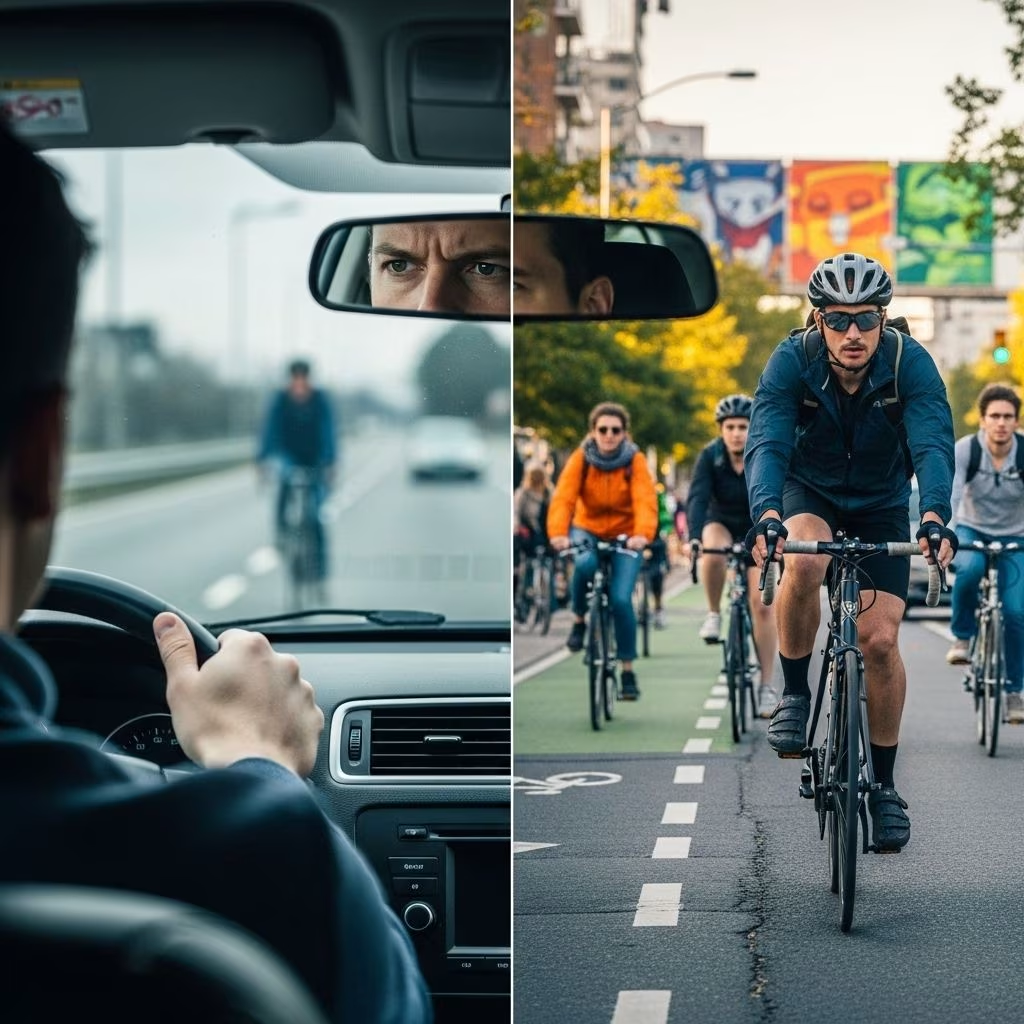
Why Drivers Dehumanize Cyclists—and Why It Matters for Road Safety
Cars and bicycles have long shared a tense coexistence on busy roads, but new research reveals a startling psychological element fueling the conflict: many drivers do not even see cyclists as fully human. This troubling insight not only helps explain the prevalence of aggression toward cyclists, but also highlights a growing need to address the deep-seated biases that shape our roads and communities. This article examines what the studies have uncovered, how dehumanization manifests in everyday life, and how it may be possible to re-humanize the people who choose to travel by bike.
Introduction: Sharing the Road, Sharing the Problem
Anyone who has cycled in a traffic-heavy city knows the uneasy feeling of sharing the road with cars. Despite traffic laws meant to protect all users, explicit animosity and even violent behavior toward cyclists is common. While some motorists and cyclists respect each other’s presence, a significant minority exhibit open hostility. Why is this the case?
Traditionally, studies focused on physical safety, infrastructure, and traffic law. But recent psychological research reveals that the answer might be more profound: dehumanization—the perception that cyclists are somehow less than human—plays a powerful role in driver aggression and dangerous road interactions .
Inside the Research: Cyclist Dehumanization Explored
The key research on this topic emerged from a collaborative study conducted by Monash University, Queensland University of Technology, and the University of Melbourne. Published in Transportation Research Part F: Traffic Psychology and Behaviour, this was the first experiment to examine how dehumanization applies to road user groups, particularly cyclists .
Study Design
- Participants: 442 adults from Victoria, New South Wales, and Queensland, Australia.
- Groups: Both cyclists and non-cyclists were surveyed to compare in-group vs. out-group perceptions.
- Method: Respondents were shown an ‘evolution picture’ (ape-to-human or cockroach-to-human) and asked to rate cyclists’ ‘human-ness’ on this scale.
- Focus: The connection between dehumanization scores and self-reported aggressive actions toward cyclists.
This methodology is notable because studies of dehumanization usually focus on marginalized ethnic, cultural, or gender groups. Applying it to road user groups uncovers a crucial factor in everyday life that was previously overlooked .
Key Findings: Who Sees Cyclists as Less Than Human?
The research uncovered dramatic and unsettling results:
- Over half of car drivers surveyed said cyclists are not fully human .
- Non-cyclists were especially likely to harbor such views, rating cyclists as just 45% human on average (out of 100) .
- Even cyclists themselves rated the ‘average cyclist’ as less than fully human: typically 70% human .
- Notable acts of aggression: 17% of respondents admitted to deliberately blocking a cyclist, 11% to driving their car close to a cyclist on purpose, and 9% to cutting off a cyclist .
- The lowest scores—in some cases as low as 31% human—were observed among non-cycling drivers .
Such findings suggest these attitudes extend well beyond frustrated outbursts; they reflect ingrained biases within both the motoring public and, to a lesser extent, the cycling community itself.
Table: Survey Results at a Glance
| Group | Avg. Human-ness Score (0–100) | % Dehumanizing Cyclists |
|---|---|---|
| All drivers | 49 | 55% |
| Non-cyclists | 45 | Up to 49% |
| Cyclists | 70 | 30% |
Consequences: Dehumanization and Aggression on the Roads
Why does this perception of cyclists matter? Studies show that dehumanization directly predicts aggressive behavior toward the group in question . When drivers see cyclists as less human, they are much more likely to:
- Deliberately block, close-pass, or cut off cyclists with their vehicles
- Yell abuse or engage in threatening gestures
- Support or tolerate aggressive rhetoric toward cyclists—including, in a notorious example, public jokes about violence toward riders
Researchers explained that dehumanization removes natural inhibitions against causing harm to others, making it easier to justify risky or aggressive behavior on the road .
Statistics on Aggressive Behavior
- 17% admitted to purposely using their vehicle to block a cyclist
- 11% intentionally drove close to a rider
- 9% admitted to cutting off someone on a bike
- Those who saw cyclists as less than 90% human were almost twice as likely to admit to such actions
Drivers vs. Cyclists: A Self-Fulfilling Cycle
The research points to a concerning feedback loop. As drivers dehumanize cyclists, aggression increases; as cyclists experience more hostility, they may respond defensively, breaking traffic rules or displaying their own aggression. This ‘us vs. them’ mentality escalates conflict and justifies negative views:
- Dehumanization leads to aggression against cyclists.
- Aggression feeds cyclist resentment and non-compliance.
- Non-compliance or visible anger reinforces motorist stereotypes.
- The cycle repeats, deepening the divide between road users.
Lead author Dr. Alexa Delbosc noted, “If cyclists feel dehumanised by other road users, they may be more likely to act out against motorists, feeding into a self-fulfilling prophecy that further fuels dehumanisation against them.”
The Psychology of Dehumanization
Dehumanization is not new; social scientists have investigated how it plays out across racial, ethnic, and gender lines, typically correlating with increased antisocial behavior, discrimination, and violence. In the context of cycling, several factors contribute to this mindset:
- Stereotyping: Many non-cyclists think of the ‘average cyclist’ as a rule-breaking, Lycra-clad outsider, which adds to the sense of otherness .
- Out-group Bias: People tend to view members of other groups with less empathy, especially in situations characterized by competition—like sharing crowded roads .
- Disconnection: Most motorists do not personally know many cyclists, making it easier to resort to stereotypes or caricatures rather than seeing riders as individuals.
- Anonymity & Visibility: Cyclists are often helmeted and hidden behind gear; this anonymity may further reduce the perception of shared humanity.
- Frustration: In traffic jams or at busy intersections, frustration amplifies negative feelings—and dehumanization can become an emotional shortcut.
Co-author Narelle Haworth advised, “Let’s talk about people who ride bikes rather than cyclists—because that’s the first step toward getting rid of this dehumanisation.”
Moving Forward: Can We Re-Humanize Cyclists?
The research is not just a diagnosis—it is also a call to action. If the problem is rooted in psychology, then cultural, legislative, and personal interventions must work together to restore empathy and safety on our roads.
How to Build Empathy for Cyclists
- Language Matters: Shift from ‘cyclists’ to ‘people who ride bikes’ in media, policy, and conversation to re-emphasize a shared humanity.
- Education Campaigns: Launch initiatives that put a human face to cyclists, highlighting their roles as friends, colleagues, parents, and neighbors.
- Community Events: Organize ‘car-free days’, group rides, or shared events to break down barriers between drivers and riders.
- Inclusive Infrastructure: Design roads, separated bike lanes, and public spaces that protect and integrate all users safely, reducing perceptions of competition.
- Encourage Duality: Celebrate people who are both drivers and cyclists, fostering mutual understanding.
Policy and Legal Initiatives
- Implement safe passing laws and strict penalties for driver aggression toward cyclists.
- Mandate driver education programs that specifically address cyclist safety and the psychology of dehumanization.
- Support research into traffic psychology to better inform policy and road design.
The Role of Media and Public Discourse
- Media outlets can feature real stories and interviews with cyclists of all ages and backgrounds.
- Avoid inflammatory headlines that frame cyclists and drivers as opposing camps.
- Highlight shared experiences—everyone is a pedestrian at some point.
Potential Benefits of Re-Humanization
- Reduced Road Rage: More empathy means less aggression and hostility.
- Fewer Collisions & Injuries: Recognizing cyclists as people increases caution and compliance with road rules.
- Healthier Cities: Improved safety and acceptance make cycling more attractive, driving public health benefits.
- Stronger Communities: Respectful, inclusive roads foster a sense of belonging and togetherness.
Frequently Asked Questions (FAQs)
Q: Why do so many drivers see cyclists as less than human?
A: Research suggests that out-group bias and entrenched stereotypes play major roles. Cyclists are often seen as outsiders or as frustrating obstacles, not individuals, leading to unconscious dehumanization .
Q: Does this problem exist in countries outside Australia?
A: While the primary studies were performed in Australia, anecdotal and survey evidence suggests similar attitudes can be found in many countries with significant car traffic and cultural divides between drivers and cyclists .
Q: How does this compare to dehumanization of other groups?
A: While not as severe as racial or ethnic dehumanization, the study found parallels—especially regarding how dehumanization leads to increased aggression and risky or discriminatory behavior .
Q: What can individuals do to help?
A: Individuals can speak about ‘people who ride bikes’ instead of ‘cyclists,’ practice patience on the road, and encourage open conversation with both drivers and cyclists to reduce stereotypes.
Q: Are cyclists themselves also dehumanizing?
A: Yes, even cyclists, when asked about the ‘average cyclist,’ showed some bias—suggesting that stereotypes run deep, even within communities .
Key Takeaways
- Dehumanization of cyclists by drivers is a major factor in road aggression and safety risks.
- This bias is present in over half of surveyed drivers, and even among cyclists themselves.
- Recognizing cyclists as real people—and changing language, laws, and attitudes—can help reverse this trend.
Taming road rage and making streets safer for all requires more than just new bike lanes. It demands a fundamental shift in how we view and treat people with whom we share the road. When drivers see cyclists as neighbors, family members, or colleagues—not just abstract “others”—roads become safer spaces for everyone.
References
- https://www.cyclingweekly.com/news/racing/half-car-drivers-think-cyclists-not-fully-human-according-new-study-411816
- https://www.edriving.com/three60/half-of-car-drivers-say-cyclists-are-not-human-enough/
- https://www.vice.com/en/article/drivers-think-bikers-are-less-than-human-survey-says/
- https://usa.streetsblog.org/2019/03/28/study-aggressive-driving-is-linked-to-seeing-cyclists-as-less-than-human