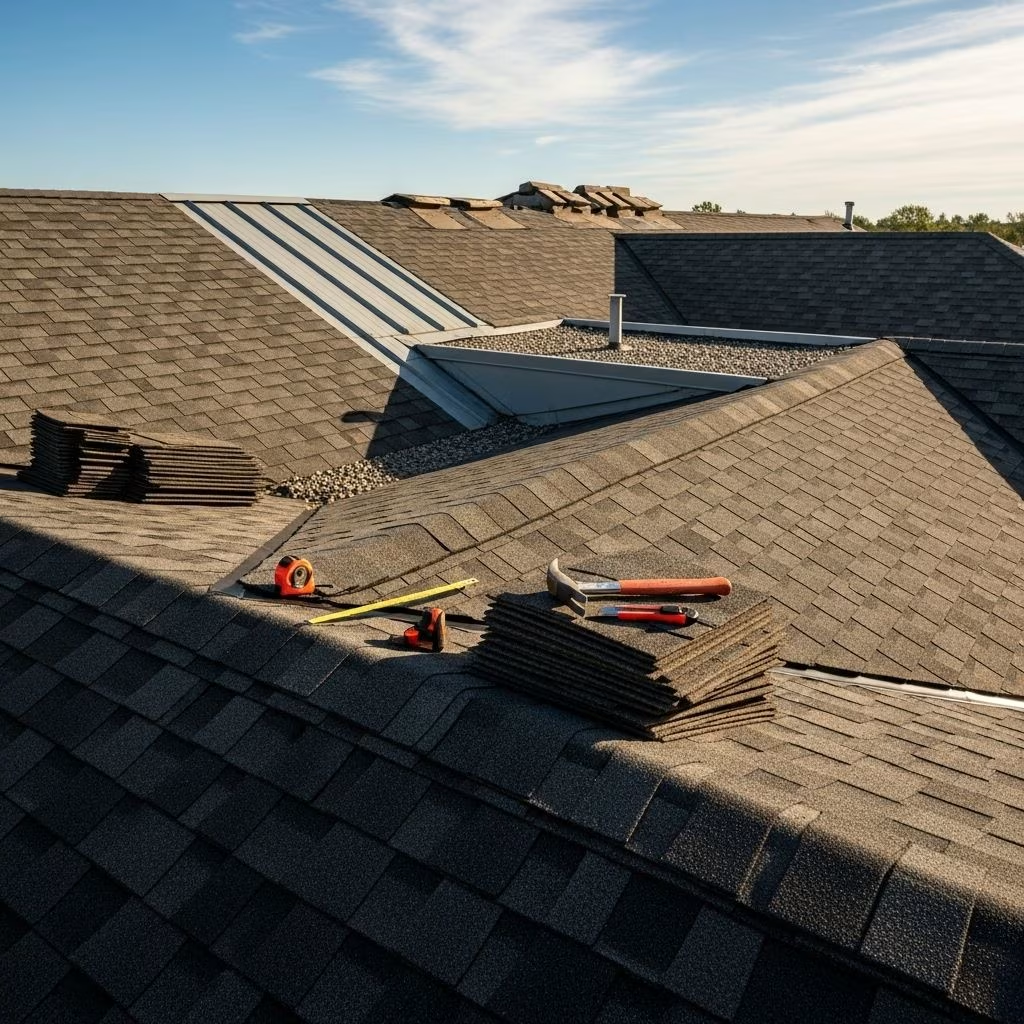
Understanding the tax implications of home improvements is crucial for homeowners planning renovations. While not every project leads to immediate tax benefits, certain upgrades can reduce your tax liability, either in the year you incur the expense or when you sell your property. This guide explains what constitutes a tax-deductible home improvement, how to differentiate between repairs and capital improvements, and the steps you should take to claim eligible deductions or credits.
What Makes a Home Improvement Tax-Deductible?
In general, most home improvements are not tax deductible in the year you complete them. However, substantial renovations may increase your home’s basis—the amount you subtract from your home’s sale price to determine your capital gains tax. Only specific improvements are deductible or can qualify for tax credits in the same year you pay for them. These typically fall under a few main categories:
- Capital improvements that increase your home’s value or extend its useful life
- Upgrades for medical necessity
- Improvements to rental or business properties
- Qualified energy-efficient upgrades
Understanding Capital Improvements
Capital improvements refer to permanent changes or additions that enhance the value of your property, extend its life, or adapt it to new uses. The IRS specifies that these:
- Add value to your home
- Prolong its useful life
- Adapt the property to new uses
Examples include:
- Building additions such as a bathroom, bedroom, garage, deck, or patio
- Installing new roofing, central air conditioning, or ductwork
- Major landscaping projects, such as adding a new driveway, retaining wall, or fence
- Modernizing kitchens, adding built-in appliances, or building fireplaces
- Upgrading plumbing with a new septic system, water heater, or filtration system
- Comprehensive window replacements or installing insulation
- Exterior updates like new siding or storm windows
- New home security or fire protection systems
Important: These improvements are not immediately deductible. Instead, you add their cost to your home’s basis. When selling, you may face a capital gains tax on the profit from the sale. By increasing your basis, you lower the reportable gain, which can yield significant savings, especially if you exceed IRS exclusions for primary residences.
Home Repairs vs. Improvements: What’s Deductible?
Many homeowners confuse home repairs—routine maintenance that keeps your home in working order—with improvements. The distinction is key:
- Repairs (even large ones) fix existing problems but don’t necessarily increase property value or prolong useful life.
- Capital improvements add value or adapt the home for new uses.
| Type | Examples | Tax Treatment |
|---|---|---|
| Improvements | Complete roof replacement, room addition, new HVAC | Add to basis; deductible when you sell |
| Repairs | Fixing leaks, patching roof, painting, replacing single window | Not deductible (unless part of a larger qualified project) |
However, repairs completed as part of a larger remodeling project may count as an improvement if they are inseparable from the larger project (for example, replacing all windows in the home, including broken ones).
Energy-Efficient Home Upgrades and Tax Credits
Some energy-efficient home improvements qualify for valuable tax credits. These credits reduce your tax outlay dollar for dollar and, unlike deductions, are available in the same tax year you complete the project. Eligible improvements typically include:
- Solar panels and solar water heaters
- Geothermal heat pumps
- Small wind turbines
- Qualified energy-efficient doors, windows, roofs, and insulation
- Biomass stoves or advanced heating/cooling equipment
- Upgrades or replacements of outdated plumbing or HVAC systems for better efficiency
The requirements and credit amounts can change annually, so always check the current IRS guidelines or the Energy Efficient Home Improvement Credit and Residential Clean Energy Credit publications.
Special Mention: Restoring Historic Properties
Owners of historic homes may be eligible for unique federal or state tax incentives when restoring original elements in line with preservation guidelines. For instance, replacing deteriorated beams, ornate railings, or original staircases may qualify, provided the work preserves the home’s historic character.
Medically Necessary Improvements and Deductions
If you, your spouse, or a dependent requires accessibility upgrades for medical reasons, you may qualify to deduct certain costs as medical expenses (subject to IRS rules and thresholds). Eligible improvements can include:
- Constructing entry and exit ramps
- Widening doorways or hallways to accommodate mobility devices
- Installing railings, support bars, or modifying bathrooms
- Adding lifts, elevators, or accessible pathways
- Lowering cabinets or light switches
- Grading the landscape for safer access
- Specialized smoke detectors or alarms
Calculation Note: If the improvement increases your home’s value, only the portion that does not add to the value is deductible. For example, if you spend $15,000 for an accessible bathroom, and it raises your home’s value by $8,000, only $7,000 is deductible as a medical expense.
Tax Deductions for Rental and Business Properties
Tax treatment differs for rental properties or portions of your home used for business (like a dedicated home office):
- Some improvements can be deducted over several years through depreciation.
- Repairs for rental properties are usually deductible in the year incurred.
- For mixed-use improvements, deductions may apply only to the percentage of the home used for business or rental.
Consult a tax advisor for specifics, as these distinctions are heavily regulated.
Record-Keeping: Essential for Maximizing Tax Benefits
To leverage tax advantages, keep meticulous records of every qualifying improvement. Essential documents:
- Receipts and invoices for materials and labor
- Contracts and agreements with contractors
- Canceled checks and bank statements
- Blueprints, permits, and inspection reports
- Before-and-after photographs (for documentation or historic preservation)
Tip: Organize records by year and improvement type. The IRS can audit returns well after you’ve sold a home, so maintain your documentation as long as possible.
How to Claim Tax Deductions and Credits
Here’s a step-by-step outline for homeowners wishing to claim a deduction or credit:
- Determine eligibility: Confirm whether your improvement qualifies as a capital, energy-efficient, medical, or rental/business deduction or credit.
- Track costs: Gather and total your permitted expenditures for each qualifying project.
- Keep form references: Use tax forms such as Form 5695 for energy credits or Schedule A for itemizing medical expense deductions.
- Consult IRS publications: For details, reference IRS Publication 523 (Selling Your Home), Publication 551 (Basis of Assets), and relevant annual credits booklets.
- Consult a professional: If your situation is complex or you’ve made substantial upgrades, a tax advisor can help optimize your potential savings.
What Home Improvements Do Not Qualify?
Common projects that are not tax deductible (unless included as part of a larger improvement) include:
- Painting (interior or exterior)
- Minor repairs, such as replacing a broken window pane or fixing leaks
- Routine maintenance to gutters, floors, or plaster
- Replacement of hardware like knobs, hinges, or fixtures
- Any upgrades with a lifespan shorter than one year
Such routine work is generally considered maintenance and keeps the property’s value stable rather than increasing it.
Common Examples of Tax-Deductible Home Improvements
- Adding a new bedroom, bathroom, deck, or garage
- Upgrading key systems: HVAC, plumbing, electrical wiring
- Replacing the roof or comprehensive window installations
- Installing renewable energy sources (solar, wind, geothermal)
- Energy efficiency retrofits (insulation, high-efficiency heating/cooling)
- Medically necessary renovations for accessibility
Frequently Asked Questions (FAQs)
Are any home improvements immediately tax-deductible?
While most improvements only impact your taxes when you sell, qualified energy-efficiency improvements, certain medically necessary upgrades, and repairs to rental units may be deductible or creditable in the same tax year. Always review IRS guidelines or consult a tax professional for your specific case.
What’s the difference between a capital improvement and a repair?
Capital improvements add value, prolong the property’s life, or adapt it for new uses. Repairs return the property to its original state and do not increase its value or lifespan. Only capital improvements can be added to your basis for future tax benefits.
Do energy-efficient upgrades qualify for a tax credit?
Yes, many energy-efficient upgrades (windows, insulation, HVAC systems, solar panels) qualify for federal tax credits. Requirements change often; consult IRS Form 5695 and recent Energy Efficient Home Improvement Credit guidelines for specifics.
Can I deduct improvements made for medical reasons?
Upgrades made for medical necessity—such as ramps, widened doorways, or accessible bathrooms—can be deducted as a medical expense if they do not substantially increase your home’s value. If they do, only the portion above the increase in value is deductible.
How do I keep track of tax-deductible improvements?
Maintain organized records of all improvement-related paperwork: receipts, contracts, permits, before-and-after photos, and payment proofs. Store these securely as long as you own the home or are liable for tax on its sale.
Tips for Homeowners
- Research tax credits and incentives before undertaking major projects
- Save all documentation for every home upgrade
- Consult a tax advisor for large renovations or if you expect a substantial gain on your home sale
- Check annually for updated IRS rules and newly available credits
Being proactive in tracking and understanding which home improvements are tax-deductible can yield significant long-term financial benefits for every homeowner.
References
- https://www.consumeraffairs.com/finance/what-home-improvements-are-tax-deductible.html
- https://www.hrblock.com/tax-center/filing/credits/home-renovation-tax-credit/
- https://www.hometap.com/blog/are-home-improvements-tax-deductible
- https://www.housebeautiful.com/home-remodeling/renovation/a64221931/tax-deductions-home-improvements-2025/
- https://archive.bhg.com/issue/1967/3/
- https://www.youtube.com/watch?v=tkH_GRjzkXc
- https://www.kiplinger.com/taxes/tax-deductible-home-improvements-for-retirement