


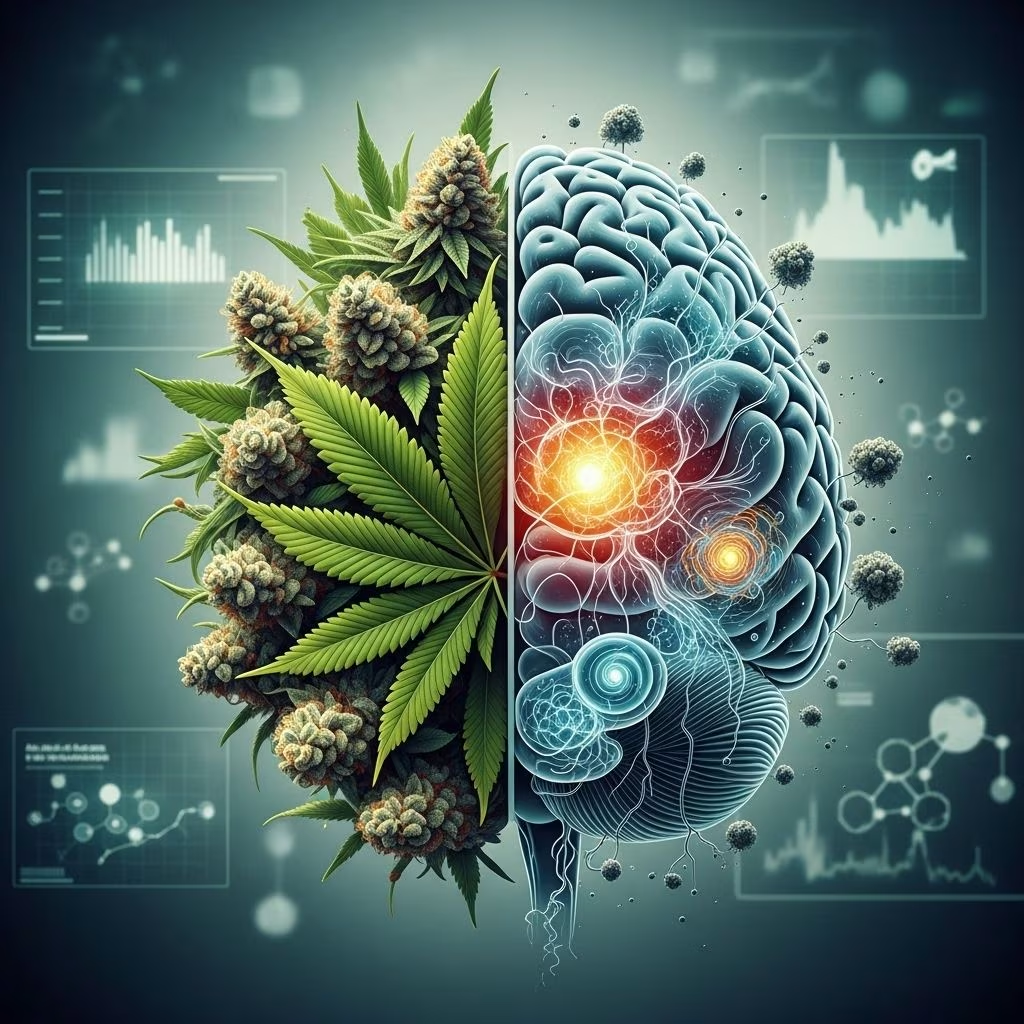
Cannabis, commonly referred to as marijuana or weed, has become a topic of significant interest among individuals with Attention-Deficit/Hyperactivity Disorder (ADHD). While some users claim relief from core symptoms, others and mounting research highlight complex risks including dependence and negative cognitive impacts. This article delves into current scientific understanding, separating fact from myth on the use of cannabis for ADHD.
Understanding ADHD and Cannabis Use
ADHD is a neurodevelopmental disorder characterized by patterns of inattention, hyperactivity, and impulsivity that interfere with functioning or development. Cannabis is a psychoactive drug from the Cannabis plant, commonly used recreationally and sometimes for perceived medicinal effects.
- ADHD Prevalence: ADHD affects about 5-7% of children and 2-5% of adults worldwide.
- Cannabis Popularity: Cannabis is among the most commonly used substances by individuals with ADHD, especially adolescents and young adults.
Despite anecdotal reports of benefit, medical and psychiatric associations generally do not recommend cannabis for ADHD due to insufficient evidence and potential risks.
Why Do People With ADHD Use Cannabis?
Surveys indicate that many individuals with ADHD turn to cannabis to relieve symptoms such as restlessness, hyperactivity, poor impulse control, and frustration. Many believe it provides:
- Reduced restlessness and hyperactivity
- Decreased mental frustration
- Lower anxiety and improved sleep
The notion of self-medication—using cannabis to cope with or manage symptoms—drives much of this usage, despite a lack of strong clinical evidence.
What Does Scientific Research Say?
The relationship between cannabis and ADHD is complicated by limited high-quality research, self-reported data, and difficulty distinguishing between symptom relief and substance-induced changes. Most studies fall into observational cohorts or small clinical trials, with few large randomized controlled trials.
Key Takeaways from Recent Reviews:
- Symptom Relief: Some small studies and anecdotal reports note short-term reductions in hyperactivity, restlessness, or frustration following cannabis use. However, these effects are inconsistent and not universally experienced.
- Cognitive Impact: Many users report that cannabis worsens memory and sometimes inattention, while effects on focus are mixed.
- Long-Term Risks: Chronic use may exacerbate ADHD symptoms, especially in executive functions such as planning, working memory, and impulse control.
How Cannabis Affects the Brain in ADHD
Cannabis contains several cannabinoids (primarily THC and CBD), which interact with the endocannabinoid system—a network involved in regulating mood, cognition, and reward. ADHD itself is linked to alterations in dopamine signaling, which also plays a critical role in the brain’s response to cannabis.
Neurobiological Changes Observed:
- Dopamine Signaling: ADHD involves lower baseline dopamine; cannabis can further alter dopamine release and receptor function, potentially impacting reward sensitivity and impulsivity.
- Brain Structure: Some neuroimaging studies suggest that young people with both ADHD and frequent cannabis use may show differences in brain structure, such as thinner cortical regions or altered hippocampal activation, but findings are inconsistent.
- Executive Function: Both ADHD and chronic cannabis use can impair executive functions, sometimes making it difficult to distinguish the effects of the disorder from those caused by the substance.
| Brain Region | Potential Change (with Cannabis Use in ADHD) | Implication |
|---|---|---|
| Right Hippocampus | Altered activation | May affect memory, impulse inhibition |
| Cerebellar Vermis | Increased activation | Linked to response inhibition |
| Inferior Frontal Gyrus | Narrower regions in frequent users | May relate to persistent ADHD symptoms |
| Temporal Lobes | Reduced blood flow (hypoperfusion) | Associated with changes in attention, memory |
It is important to note that such neuroimaging findings do not establish a direct causal link between cannabis use and brain damage in ADHD, but suggest possible interaction effects that require further study.
Cannabis Use Disorder (CUD) and ADHD
One of the largest risks for individuals with ADHD who use cannabis is the development of Cannabis Use Disorder (CUD), a pattern of problematic use causing impairment or distress. Research shows:
- People with ADHD are up to three times as likely to use cannabis as those without ADHD.
- About 27% of people with ADHD will develop CUD at some point.
- The risk of dependence and withdrawal symptoms—including irritability, sleep disturbance, and cravings—is significantly higher in this group.
- Comorbidity is high: ADHD and CUD commonly occur together, complicating diagnosis and treatment.
Does Cannabis Help or Harm ADHD Symptoms?
Some individuals report improvement in certain ADHD symptoms after cannabis use—mainly in subjective feelings of hyperactivity, impulsivity, or agitation. Yet, controlled trials and systematic reviews generally do not support cannabis as an effective or safe treatment for ADHD.
- Short-Term Effects: A subset of users report feeling calmer and less fidgety or anxious, but these effects are not universal and do not always translate to improved attention or executive function.
- Memory and Inattention: Many report worsening memory, and the effect on inattention is highly variable. Some users experience improvement while others see deterioration.
- Academic and Daily Functioning: Long-term cannabis use is linked to poorer academic performance, absenteeism, and trouble with work or routine activities in people with ADHD.
Possible Explanations for High Cannabis Use in ADHD
Scientists propose several explanations for the increased cannabis use observed among individuals with ADHD:
- Self-Medication Hypothesis: Using cannabis to manage uncomfortable symptoms when prescription treatments are inaccessible, ineffective, or carry undesirable side effects.
- Genetic and Neurobiological Overlaps: Both ADHD and substance use disorders share common risk factors such as impulsivity, reward sensitivity, and difficulties with delayed gratification.
- Environmental and Social Influences: ADHD is associated with psychosocial stress, academic struggles, and peer problems, sometimes leading to substance use as a coping strategy.
Risks and Side Effects: What Are the Dangers?
While some individuals see short-term symptom improvement, cannabis carries distinct risks—especially for those with ADHD:
- Greater Risk of Cannabis Use Disorder (CUD): ADHD greatly increases the risk for cannabis addiction compared to neurotypical peers.
- Impaired Brain Development: Youth with ADHD who use cannabis may be especially vulnerable to changes in brain areas critical for learning, memory, and impulse control.
- Poor Academic and Occupational Outcomes: Frequent or heavy cannabis use is linked to lower grades, higher dropout rates, and employment issues.
- Increased Psychiatric Symptoms: Co-occurring depression, anxiety, and oppositional defiant behaviors may worsen with chronic use.
- Cognitive Impairment: Attention, working memory, and executive function can be negatively impacted, both by ADHD and regular cannabis use.
- Diagnostic Challenges: Cannabis-induced cognitive changes can mimic ADHD symptoms, complicating accurate diagnosis.
Is There Evidence to Support Medical Cannabis for ADHD?
Despite growing popular belief, there is virtually no robust research evidence supporting the use of marijuana as a treatment for ADHD. Most medical organizations do not endorse cannabis or CBD for ADHD management, and prescriptions or recommendations remain rare and controversial.
Emerging research includes a few small clinical trials of nabiximols (a THC:CBD spray) suggesting possible improvements in hyperactivity and impulsivity, but results are preliminary and not generalizable.
Comorbidity: ADHD, Substance Use, and Mental Health
ADHD often co-occurs with:
- Substance use disorders: Individuals with ADHD are at higher risk for misuse of tobacco, alcohol, stimulants, and cannabis.
- Depression and anxiety: These can be exacerbated by or contribute to cannabis use, sometimes as attempts at self-treatment.
- Behavioral disorders: Oppositional defiant disorder (ODD) and conduct disorder also commonly overlap with ADHD and substance misuse.
The Bottom Line: Should People with ADHD Use Cannabis?
Currently, most experts and guidelines urge significant caution. Key points to consider:
- No strong evidence supports cannabis as an effective treatment for ADHD symptoms.
- Risks outweigh unproven benefits, particularly regarding dependence, cognitive impairment, and brain development—especially in youth.
- Consult a healthcare provider before using cannabis for ADHD, particularly if concurrently taking medications or experiencing mental health issues.
- Treatment options for ADHD with stronger evidence include behavioral therapy, organizational skills training, parent/patient education, and prescription stimulant and non-stimulant medications.
Frequently Asked Questions (FAQ)
Does weed help with ADHD symptoms?
Some users report that cannabis temporarily reduces restlessness or frustration, but scientific research does not support cannabis as a reliable or safe ADHD treatment. Many users actually experience worsened memory and sometimes attention. The long-term risks to brain health and higher chance of developing Cannabis Use Disorder outweigh any unproven benefits.
Why do people with ADHD use cannabis more than others?
Research shows that people with ADHD are two to three times as likely to use marijuana as the general population. Self-medication (to relieve symptoms), impulsivity, and overlapping genetic/environmental risks for both ADHD and substance use disorders are believed to drive this association.
Is it safe to use cannabis with ADHD medications?
There is little research on interactions between cannabis and common ADHD medications such as stimulants. However, combining cannabis with prescription drugs can carry unpredictable side effects and is not generally recommended without medical supervision.
Does cannabis use make ADHD worse?
Frequent or early cannabis use can worsen cognitive functions already impaired in ADHD, such as working memory, attention, and planning. It also increases the risk of addiction, poorer academic/work outcomes, and additional psychiatric problems.
Are there any circumstances where cannabis is recommended for ADHD?
Currently, medical cannabis is not recommended for ADHD by major health organizations due to weak evidence and well-documented risks. Individuals are encouraged to seek evidence-based treatments and discuss all options with a qualified healthcare provider.
Key Takeaways
- No strong evidence supports the use of cannabis for ADHD symptom management.
- Individuals with ADHD are substantially more likely to develop problematic use or addiction when using cannabis.
- Potential cognitive, academic, and behavioral complications make routine use of cannabis for ADHD inadvisable.
- Evidence-based treatments—therapy, skill building, and medication—remain the recommended approach.
References
- https://www.healthline.com/health/marijuana-and-adhd
- https://pmc.ncbi.nlm.nih.gov/articles/PMC10370827/
- https://www.additudemag.com/cannabis-use-disorder-marijuana-adhd/
- https://adai.uw.edu/pubs/pdf/2017mjadhd.pdf
- https://pmc.ncbi.nlm.nih.gov/articles/PMC11032069/
- https://www.psychologytoday.com/us/blog/your-brain-on-food/202308/adhd-and-cannabis
- https://journals.sagepub.com/doi/10.1177/10870547251336841?int.sj-full-text.similar-articles.1


